Insulation Company in Rolling Hills Estates, CA
Blown in insulation solves a problem most Rolling Hills Estates homeowners don’t know they have until the marine layer settles in for the summer. Homes on the Palos Verdes Peninsula were built for a climate that most installers don’t understand, so original fiberglass batts settle, compress, and leave gaps that salt-laden air exploits. We carry eight insulation brands and run three installation methods under one roof, which means the recommendation you get is driven by your house, not by whichever material happens to be on the truck. Call (877) 265-5712 for a free estimate and we’ll tell you straight what your attic actually needs.
Why Rolling Hills Estates Homes Are Different
Rolling Hills Estates sits on the Palos Verdes Peninsula, where insulation work is as much about moisture control and wind-driven infiltration as it is about R-value. The marine layer pushes persistent coastal fog into attics from April through early August, and canyon-edge lots along ridgelines take steady onshore wind that no tract-home subdivision ever sees. That wind wicks damp air into roof decks and settles original batts, so our techs routinely find compressed, damp fiberglass and rusted fasteners in attics that look fine from the living room below.
The housing stock compounds the challenge. Most homes here are custom or semi-custom builds from the 1960s through the 1990s, often with vaulted or cathedral ceilings, open-beam roof assemblies, and detached garages. There is no standard attic in Rolling Hills Estates. A 2×4-framed cathedral ceiling in one house behaves nothing like a 2×6 truss attic in the house next door. Original insulation is almost always fiberglass batts that has been disturbed during remodels, chewed through by rodents, or simply settled out of position over four or five decades of coastal humidity.
The peninsula’s mild coastal climate also works against insulation upgrades in a quiet way. Homeowners here rarely feel extreme heat or extreme cold, so insulation gets deferred. But a house that loses conditioned air year-round still pays for it on every Edison bill, even when the thermostat never swings wildly. The conversation we have most often in Rolling Hills Estates is not about comfort in a heat wave. It is about invisible energy loss and moisture management in a climate that never punishes the homeowner loudly enough to notice.
Our Main Rolling Hills Estates Services
Two services dominate the calls we get from Rolling Hills Estates homeowners: attic insulation retrofits in older custom homes, and spray foam applications for the peninsula’s trickier roof assemblies. Here’s what each involves locally.
Attic Insulation in Rolling Hills Estates
Most Rolling Hills Estates attics still hold their original fiberglass batts, and after forty or fifty years of coastal humidity, that material has settled, compressed, or absorbed enough moisture to lose most of its R-value. We pull the old material, air-seal the top plates and penetrations, and install a properly sized system matched to your roof assembly. Vaulted and cathedral ceilings are common here, which changes the approach entirely from a standard flat-truss attic. Attic Insulation in Rolling Hills Estates covers the full scope, including how we handle the peninsula’s wind-driven moisture problem.
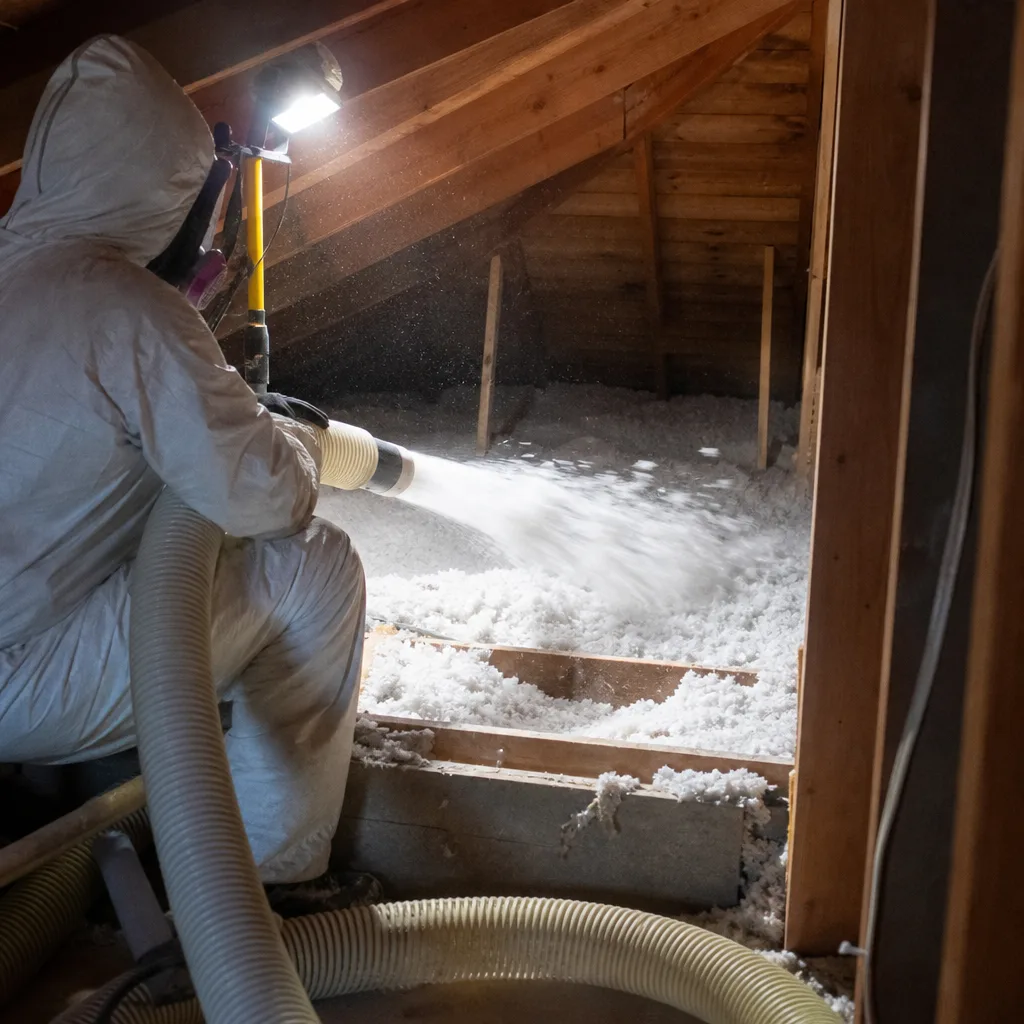
Spray Foam Insulation in Rolling Hills Estates
Spray foam earns its keep on the peninsula in homes where roof assemblies are too irregular for batts and where air-sealing matters more than raw fiber thickness. Canyon-edge lots take steady wind, and open-cell Icynene or Demilec closed-cell foam stops that infiltration at the roof deck instead of just slowing it down. For cathedral ceilings, open-beam designs, and homes with roof-deck condensation issues, foam is frequently the right answer even in a mild coastal climate. Spray Foam Insulation in Rolling Hills Estates explains when foam justifies its higher upfront cost here and when it doesn’t.
What happens when you call
- 1
A real person answersNo phone trees — you reach a local pro.
- 2
You get an upfront price rangeHonest numbers before anyone is dispatched.
- 3
A background-checked tech heads outLicensed & insured, dispatched right away.
- 4
You approve before work beginsNothing starts until you say go.
Blown In Insulation in Rolling Hills Estates
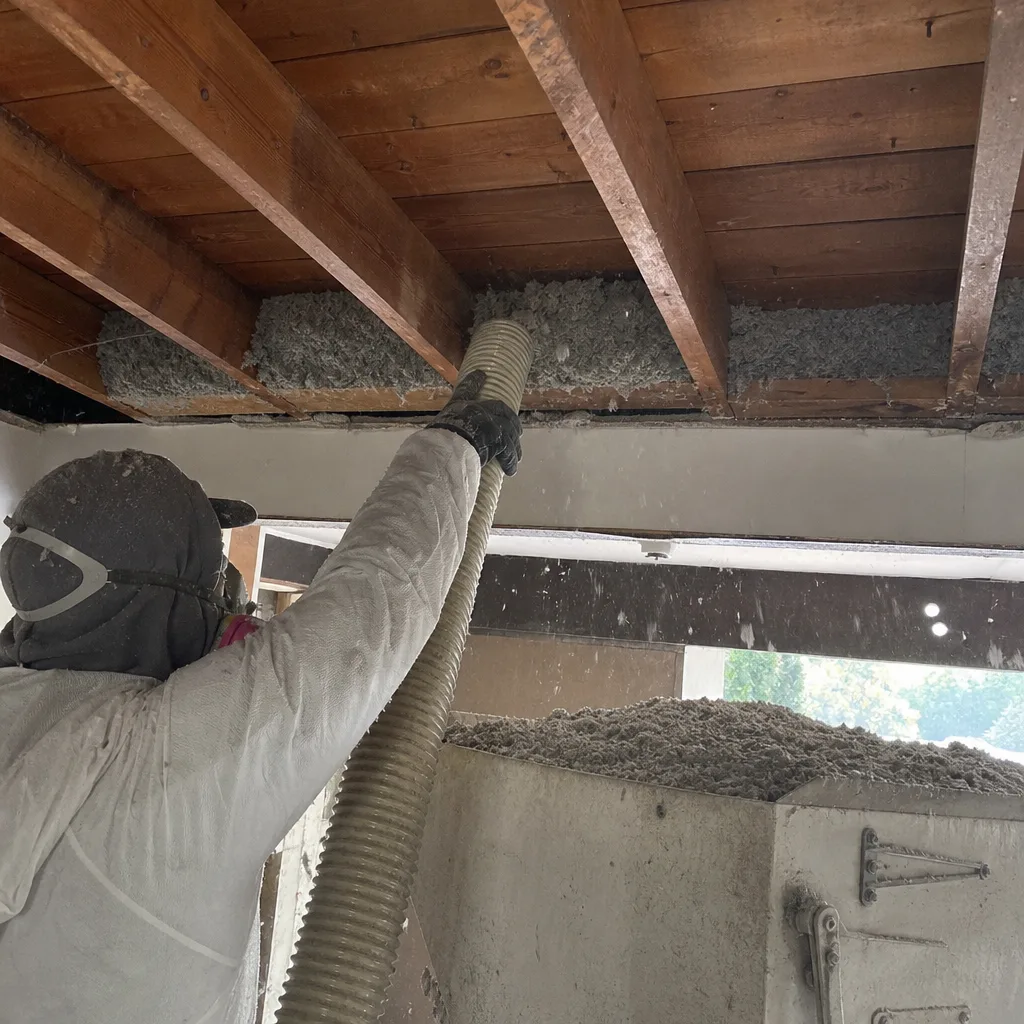
Blown in insulation is the most common retrofit we perform in Rolling Hills Estates because it is the fastest way to restore R-value across an existing attic floor without tearing into the home’s custom architecture. Original batts in these 1960s-through-1990s peninsula homes have settled, been disturbed by electricians and cable installers, or compressed under foot traffic, leaving gaps that let conditioned air escape year-round. Blown in material fills those gaps completely, and on canyon-edge lots it can be installed at a depth that resists the wind-washing we see in exposed attics. We run Blown In Insulation as a dedicated service with three separate material options, so the recommendation follows your attic, not the other way around.
Cellulose Insulation
Signs you need it
Your attic has old fiberglass batts that look flattened or uneven, you feel drafts near ceiling fixtures, or your upstairs rooms run noticeably warmer than the rest of the house in summer.
What it costs in Rolling Hills Estates
Blown in cellulose for a typical Rolling Hills Estates attic runs $1.75 to $3.25 per square foot installed, depending on depth and whether we’re removing old material first.
How we do it
We remove or remediate the old material, air-seal top plates and penetrations, then dense-pack or loose-fill GreenFiber cellulose to the specified R-value with a calibrated blower truck.
Blown In Attic Insulation
Signs you need it
Your attic floor shows bare spots or thin coverage, your energy bills creep up each year, or you can see joist tops sticking above the existing insulation line.
What it costs in Rolling Hills Estates
Blown in attic insulation for a standard 1,500 to 2,000 square foot Rolling Hills Estates attic typically lands between $2,600 and $6,500, with cathedral ceiling jobs running higher.
How we do it
We inspect the attic for air leaks and moisture first, then blow loose fill to an even depth that meets or exceeds current California energy code for the coastal zone.
Loose Fill Insulation
Signs you need it
Your attic has settled material with inconsistent depth, you’ve had pest activity that disturbed the insulation, or rooms under the attic feel drafty on foggy days.
What it costs in Rolling Hills Estates
Loose fill blown-in material for attic floors in Rolling Hills Estates runs $1.75 to $3.25 per square foot installed, with fiberglass at the lower end and cellulose in the middle.
How we do it
We prep the attic floor, install any required baffles and dams, then blow the chosen material to a consistent depth using a calibrated machine and laser checks.
What Blown In Insulation Costs in Rolling Hills Estates
| Item | Typical range in Rolling Hills Estates |
|---|---|
| Loose fill (attic floor) | $1.75 – $3.25 per sq ft |
| Blown in fiberglass | $1.50 – $2.50 per sq ft |
| Blown in cellulose | $1.75 – $3.25 per sq ft |
Is blown in insulation worth it for a coastal home that never gets that hot?
Yes. Rolling Hills Estates homes lose conditioned air year-round, not just in summer. Blown in insulation pays for itself through lower Edison bills and better moisture control, even without extreme temperatures.
Can you blow insulation into walls in an older Rolling Hills Estates home?
Often yes, if the wall cavities are open or we can access them from the attic or crawlspace. Some 1960s custom homes have irregular framing, so we’ll confirm cavity depth and obstructions before recommending the approach. Call for a free attic and wall assessment.
Brands We Service in Rolling Hills Estates
We install GreenFiber recycled cellulose, Owens Corning fiberglass, Rockwool mineral wool, and Icynene or Demilec spray foam. Parts and materials for Rolling Hills Estates jobs are staged at our nearby yard, so scheduling doesn’t stretch while special-order insulation ships. Our brands page breaks down the full eight-brand lineup if you want specifics before we arrive.
Pricing for Insulation Company in Rolling Hills Estates, CA
| Service | Typical range in Rolling Hills Estates |
|---|---|
| Blown in fiberglass | $1.50 – $2.50 per sq ft |
| Blown in cellulose | $1.75 – $3.25 per sq ft |
| Loose fill (attic floor) | $1.75 – $3.25 per sq ft |
| Attic insulation (batts) | $1.25 – $2.75 per sq ft |
| Attic insulation (blown-in) | $1.50 – $3.00 per sq ft |
| Air sealing + attic insulation | $2.50 – $5.00 per sq ft |
| Spray foam (open-cell) | $1.75 – $3.75 per sq ft |
| Spray foam (closed-cell) | $2.50 – $5.00 per sq ft |
| Attic air sealing (standalone) | $1.00 – $2.00 per sq ft |
| Rim joist spray foam | $15 – $25 per linear ft |
Prices in Rolling Hills Estates push toward the upper end on homes with vaulted or cathedral ceilings, steep roof pitches, or attics that need old material removal before we start. Every estimate is line-item upfront, and the number we quote is the number you pay.
Neighborhoods We Serve in Rolling Hills Estates
We cover all of Rolling Hills Estates, 90505, including the canyon-edge lots along Portuguese Bend, the ridgeline homes off Crest Road, and the custom builds throughout the city’s hillside subdivisions.
- Crest Road ridgeline
- Portuguese Bend area
- Rolling Hills Village
- Palos Verdes Drive North corridor
- Silver Spur area
Most jobs in Rolling Hills Estates are scheduled within a week of the estimate, and we stage materials before we arrive so the crew isn’t waiting on a supply run mid-job.
Service Area – Cities Near Rolling Hills Estates
We run crews throughout the South Bay and Palos Verdes Peninsula. Beyond Rolling Hills Estates, we regularly work in Palos Verdes Estates, CA, Torrance, CA, Lomita, CA, and Manhattan Beach, CA. If your home sits near the city line, give us a call and we’ll confirm the schedule.
Serving Rolling Hills Estates, CA — Our Local Coverage Area
We’re based in the Rolling Hills Estates area and know this community well. Use the map below to see our service coverage — if you’re nearby, we can almost certainly help.
FAQs About Insulation Company in Rolling Hills Estates
Not an accurate one. Attics here vary too much house to house, and we won’t guess at depth, air sealing, or moisture issues. We do free on-site estimates, and the quote is line-item so you know exactly what you’re paying for before any work starts.
Most insulation retrofits in Rolling Hills Estates don’t require a city permit unless the job touches the building envelope, but HOA rules in gated communities here can be specific about visible work. We’ll flag anything that needs approval before we schedule, and we handle the communication when the HOA asks for it.
For standard attic-floor retrofits, we can usually start within one to two weeks of the estimate. Larger jobs involving old material removal, air sealing, or cathedral ceilings may take longer to stage. Call (877) 265-5712 and we’ll give you a firm schedule window.
What happens when you call
- 1A real person answersNo phone trees — talk to a local insulation pro.
- 2You get an upfront price rangeHonest numbers before anyone is dispatched. No surprises.
- 3A background-checked tech heads outLicensed & insured, typically same-day.
- 4You approve before work beginsNothing starts until you say go.
What Rolling Hills Estates Customers Say
"Installed baffles at the soffits so the new insulation didn't block the ventilation, which the previous contractor apparently never considered."
— Ryan Rhodes"Spray foam in the rim joists in the basement. The cold floors above them are gone."
— Bethany Ziegler"He did a blower door test before and after and gave me the numbers. I like being able to see the difference rather than being told about it."
— Nathan Padgett