
Fast, Reliable Attic Insulation Across Foothill Ranch
If your Foothill Ranch home still has its original 1990s attic insulation, you’re likely paying for it every August when the upstairs hits 85°F and the AC won’t cycle off. Most homes here were built between 1986 and 2000 with R-11 to R-19 fiberglass batts that have since compressed, sagged, and left cathedral ceilings and bonus rooms under-insulated. We’re North Tustin Insulation, led by Allen Decker, and we specialize in bringing Foothill Ranch attics up to current performance standards with materials matched to your specific home, not whatever happens to be in the truck. Call (877) 265-5712 for a free estimate and we’ll tell you exactly what’s in your attic and what it should be.
Why North Tustin Insulation Is Foothill Ranch’s Preferred Attic Insulation Company
We work in Foothill Ranch constantly, and we know this housing stock inside and out. Nearly every home here is a late-1980s-to-1990s Mediterranean or Spanish-style tract build with stucco exterior, wood-frame construction, concrete tile roof, and the same handful of floor plans repeated across neighborhoods. That repetition means we can walk into a home off Towne Centre Drive and usually predict what’s in the attic before we open the hatch. It also means we’ve seen every failure mode these houses throw at you, from compressed batts in vaulted ceilings to uninsulated knee walls above bonus rooms.
We don’t do roofing. We don’t do HVAC. Insulation is the only trade we practice, which means every technician who arrives at your Foothill Ranch home is focused on one thing: getting your attic performing the way it should. Allen Decker built North Tustin Insulation around material choice, and we carry eight nationally recognized brands including Owens Corning, CertainTeed, Rockwool, Icynene, Demilec, Johns Manville, Knauf, and GreenFiber. That’s not a marketing list. It means when we recommend open-cell Icynene for a cathedral ceiling or Rockwool for a canyon-facing wall assembly, we’re choosing from real options, not selling the one product we happen to stock.
Our team reaches Foothill Ranch quickly from our North Tustin base, typically within the same week for scheduled work. For homes backing to Whiting Ranch Wilderness Park, we’re familiar with the vent screening and ember concerns specific to those lots. Check our Attic Insulation in Foothill Ranch page for more local detail or call (877) 265-5712 to talk to a real person about your attic.
Attic Ventilation in Foothill Ranch
Attic Ventilation in Foothill Ranch is the foundation of any insulation upgrade, because this canyon-edge community sits in a wind and ember corridor that most Orange County attics never have to deal with. During Santa Ana events, wind funnels through the canyon against Whiting Ranch Wilderness Park and drives embers directly at roof vents on wilderness-facing homes. If those vents are unscreened, damaged, or pushed in by wildlife, embers get into the attic where they meet old, dry insulation and decades of dust. Proper ventilation with ember-resistant screening addresses two problems at once: it keeps attic temperatures from cooking your second floor in summer, and it closes the entry point that both embers and animals exploit.
A typical attic ventilation upgrade in Foothill Ranch, including new baffles, ember-resistant vent screens, and soffit-to-ridge airflow correction, runs $450 to $1,200 depending on attic size and how many vent openings need attention. Homes backing to Whiting Ranch typically run toward the higher end because canyon-side vents almost always need screen replacement and wildlife-proofing.
Soffit and Ridge Vent Correction
Most Foothill Ranch tract homes were built with minimal venting, and what was installed in the 1990s has often been painted over, blocked by insulation, or damaged. We restore the soffit-to-ridge airflow path so hot air can escape rather than baking your insulation and migrating into living space.
Wildlife and Ember Vent Screening
Homes on the wilderness boundary regularly show vent screens that raccoons and squirrels have pushed in or chewed through. We install heavy-gauge, ember-resistant screening that keeps animals out and blocks wind-driven embers during red flag days. This is not a cosmetic upgrade; it’s a fire-safety detail specific to Foothill Ranch’s canyon lots.
Radiant Barrier in Foothill Ranch
Radiant Barrier in Foothill Ranch works because this community sits in the inland foothills where summer temperatures routinely hit 95 to 100°F and that heat loads directly onto concrete tile roofs. A radiant barrier stapled to the underside of your roof deck reflects radiant heat before it ever reaches your insulation, which is why south-facing and west-facing roof planes here are the highest-priority candidates. The difference is measurable: we’ve seen attic temperatures drop 20 to 30 degrees with a properly installed radiant barrier, and that directly reduces the heat load on your upstairs rooms.
Installing a radiant barrier in a typical Foothill Ranch home runs $800 to $1,900 depending on attic square footage, roof pitch, and accessibility. Vaulted ceilings and bonus rooms over garages add complexity and may require the radiant barrier to be integrated with knee-wall insulation, which affects cost. The payback shows up in summer AC bills and in how much more comfortable the second floor feels by late afternoon.
South-Facing Roof Deck Installation
The south-facing roof plane takes the heaviest solar gain in Foothill Ranch, and that’s where radiant barrier delivers the biggest return. We staple it cleanly to the underside of the decking, leaving the proper air gap so it performs as designed.
Radiant Barrier with Vaulted Ceilings
Those big vaulted ceilings common in Foothill Ranch’s two-story plans don’t leave much attic cavity to work in, which is exactly why they get so hot. We’ve developed specific installation approaches for tight cathedral-ceiling spaces that pair radiant barrier with open-cell spray foam in the rafter bays.
Trusted Brands We Service in Foothill Ranch
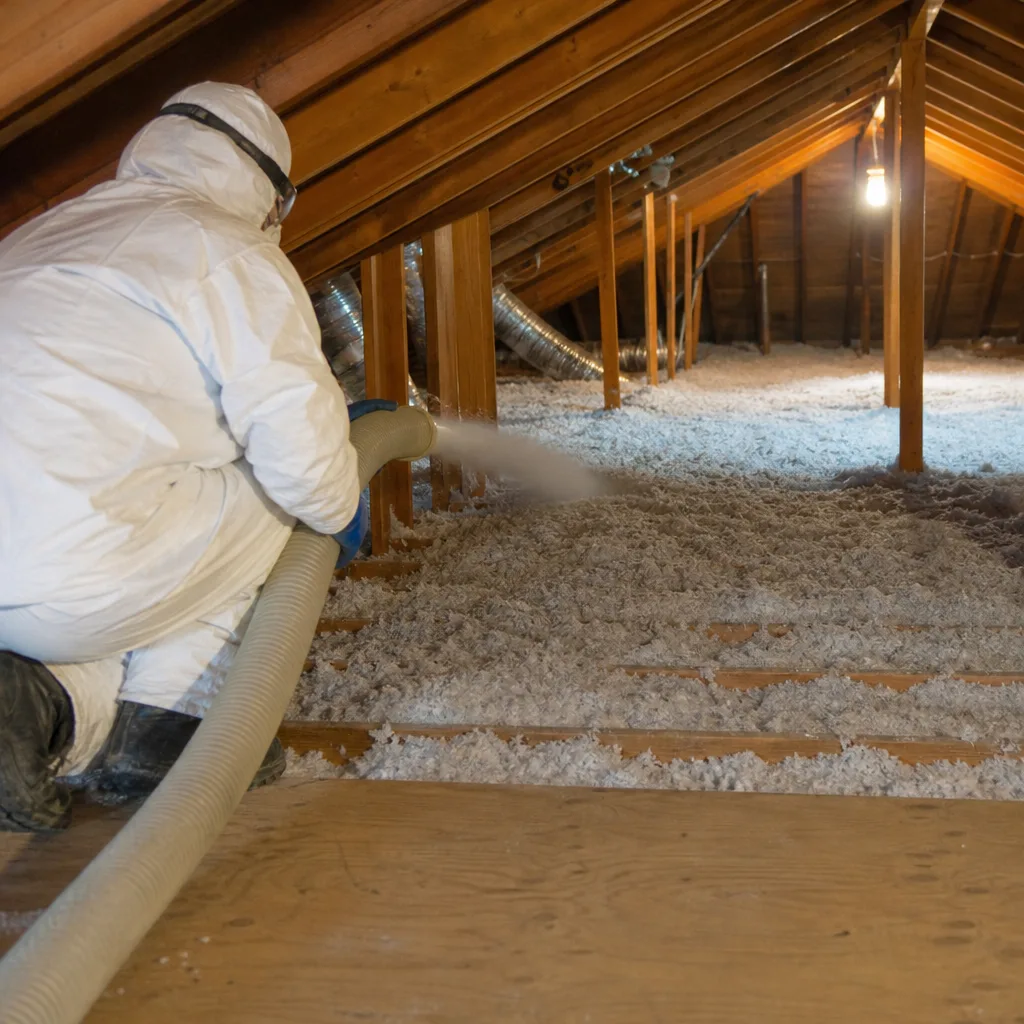
We stock and install materials from eight insulation manufacturers, which matters because Foothill Ranch homes present real material-selection questions. CertainTeed fiberglass batts make sense for standard attic floor retrofits. Icynene open-cell spray foam solves cathedral-ceiling and knee-wall problems that batts can’t. Demilec closed-cell foam handles tight rafter bays where you need R-value per inch. GreenFiber recycled cellulose gives our Foothill Ranch customers a sustainable blown-in option that also performs well in odd-shaped attic cavities. When you call (877) 265-5712, we’ll give you a straight recommendation from that portfolio, not a one-brand pitch. For details on our full Attic Insulation services, see our main service page.
Common Attic Insulation Problems We See in Foothill Ranch Homes
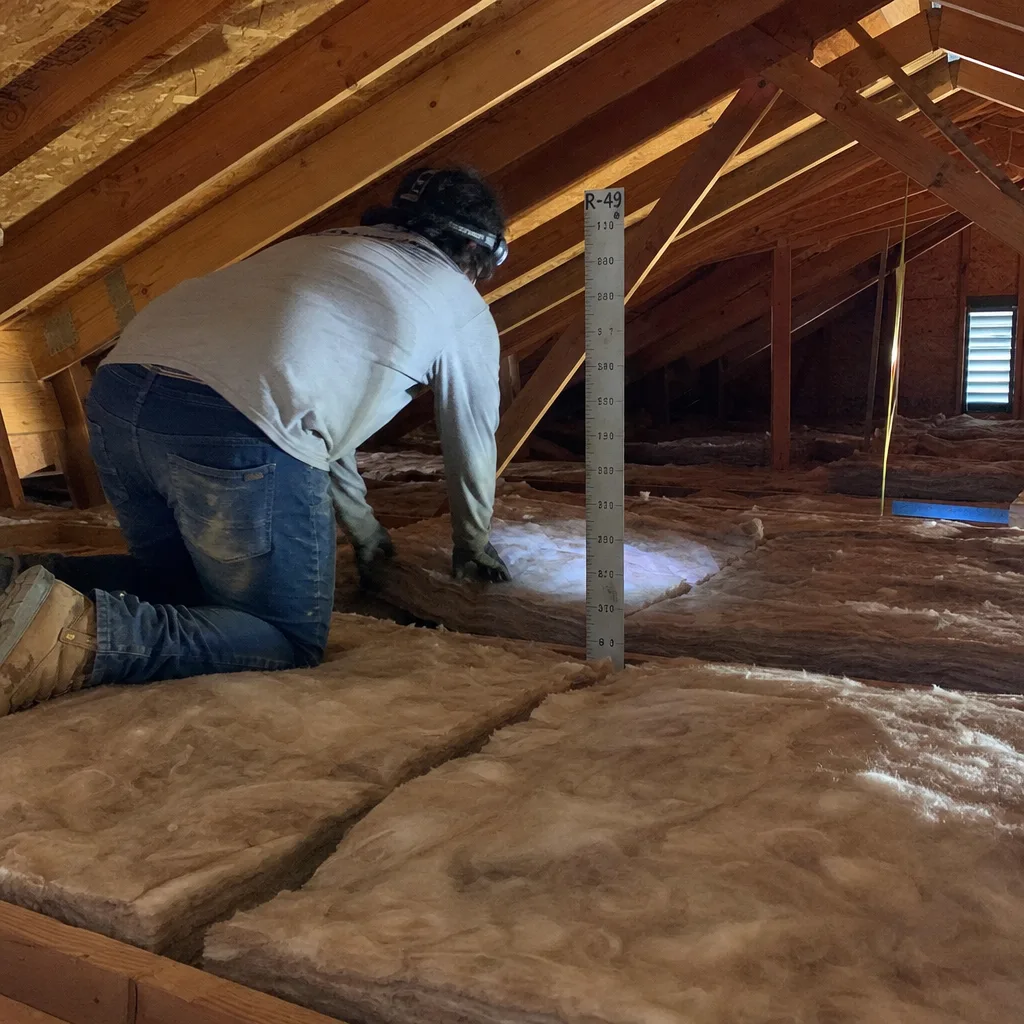
- Compressed original R-11 batts. Homes built between 1986 and 2000 were insulated to 1990s code minimums, and fiberglass compresses over time. In Foothill Ranch’s hot summers, that means R-11 batts performing closer to R-5, with upstairs rooms that won’t hold cool air no matter how long the AC runs.
- Uninsulated knee walls and bonus rooms over garages. Those two-story Mediterranean plans with bonus rooms above the garage look great, but the knee walls and cantilevered floors were rarely insulated properly at original construction. We’ve documented 15 to 20 degree temperature differences between those rooms and the rest of the upper floor.
- Wildlife-damaged vent screens on canyon-facing homes. Raccoons and squirrels push through or chew vent screens on homes backing to Whiting Ranch Wilderness Park. Once a screen is compromised, animals nest in the insulation and compress it further, and the opening becomes an ember entry point during Santa Ana winds.
- Wind-driven ember and debris accumulation. During Santa Ana events, wind funnels through the canyon and carries embers and fine debris directly at attic vents on the wilderness boundary. We routinely find charred leaves, ash, and small ember remnants in attics that back to open space.
Pricing for Attic Insulation in Foothill Ranch, CA
Attic insulation costs in Foothill Ranch follow a predictable range. Blown-in attic insulation to bring a typical 1,500 to 2,200 square foot home up to R-38 runs $1,800 to $3,400. Attic batt insulation replacement lands in the $1,500 to $2,800 range for standard attic floors. Attic insulation top-up, adding 6 to 10 inches over existing batts, runs $900 to $1,600. Full attic insulation replacement, which includes removing old material, air sealing, and new insulation, runs $2,500 to $5,000. Attic baffles and ventilation prep add $450 to $1,200. Call (877) 265-5712 and we’ll give you an exact quote after seeing your attic. Estimates are free.
We Also Serve Cities Near Foothill Ranch
Our service area covers Foothill Ranch and the surrounding communities, including Portola Hills, Lake Forest, Mission Viejo, and Trabuco Canyon. If you’re in one of those areas or anywhere in the Saddleback foothills, the same team and the same multi-brand material selection apply. Call (877) 265-5712 to confirm we serve your street.
Serving Foothill Ranch, CA — Our Local Coverage Area
We’re based in the Foothill Ranch area and know this community well. Use the map below to see our service coverage — if you’re nearby, we can almost certainly help.
FAQs About Attic Insulation in Foothill Ranch
Foothill Ranch homes that back to Whiting Ranch Wilderness Park sit in a wind and ember corridor. During Santa Ana events, wind-driven embers hit attic vents directly, and wildlife routinely pushes in or chews through standard screens. We install heavy-gauge, ember-resistant vent screens as a standard part of our attic work on canyon-facing homes. Call (877) 265-5712 and we’ll inspect your vents during a free estimate.
Probably not. Original R-11 to R-19 batts in 1990s Foothill Ranch tract homes compress over time, often performing at half their rated R-value. We routinely find compressed batts and gaps around vaulted ceilings, knee walls, and bonus rooms over garages. If you haven’t had the attic inspected since original construction, it’s time.
Radiant barrier stapled to the underside of your roof deck reflects radiant heat before it reaches your insulation, which matters when summer temperatures here hit 95 to 100°F. On a 1994 two-story we worked on in Portola Hills adjacent to Foothill Ranch, we found the original R-11 batts compressed to R-5 and a chewed vent screen on the canyon side. After upgrading to R-38 Owens Corning blown-in with an ember-resistant vent screen and adding a radiant barrier on the south-facing roof deck, the homeowner reported a 12°F drop in the upstairs bonus room temperature.
Yes. Because we carry eight brands including Owens Corning, CertainTeed, Rockwool, Icynene, Demilec, Johns Manville, Knauf, and GreenFiber, we can match what’s already in your attic or recommend a better material for the specific problem you’re solving. The recommendation is driven by your home’s needs, not by what brand we happen to have on the truck.
Call us for an inspection before the next wind event. Embers and charred debris in the attic mean a vent screen has failed or was never adequate. We’ll assess the damage, replace or upgrade the screening on canyon-facing vents, and check whether insulation around the vent openings needs attention. This is a fire-safety issue specific to Foothill Ranch’s wilderness-adjacent lots, and it shouldn’t wait. Call (877) 265-5712 and we’ll get out to your home.
Written by Allen Decker, Owner at North Tustin Insulation, serving Foothill Ranch and the surrounding Saddleback foothills communities.