Fast, Reliable Attic Insulation Across Fountain Valley
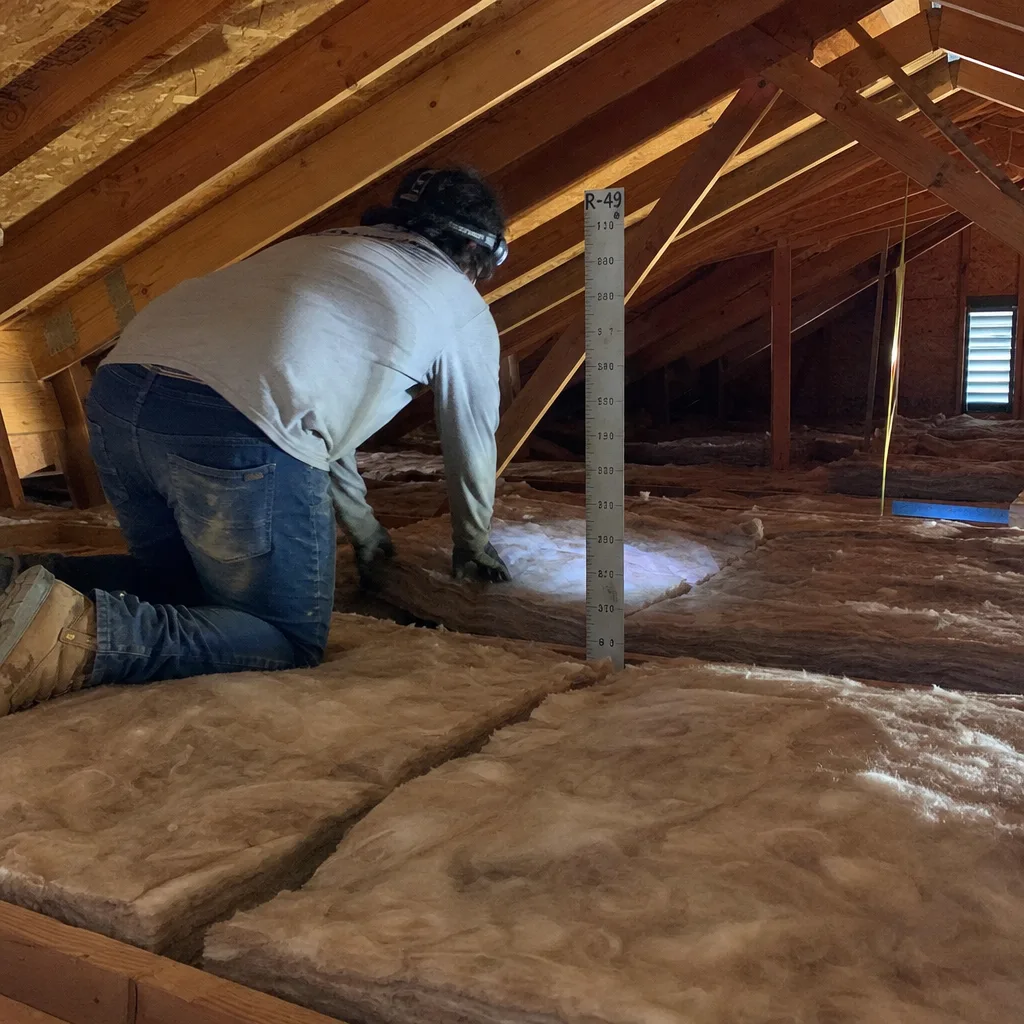
Attic insulation in Fountain Valley usually costs $1,800 to $4,600 for a full retrofit on a 1,200 to 1,800 square foot single-story home, with blown-in fiberglass at the lower end and spray foam at the higher end. Most jobs wrap up in one day. If your Fountain Valley home was built between 1955 and 1975, chances are the attic insulation is original, compacted, and doing almost nothing. We work in 92708 and 92728 every week. Call us at (877) 265-5712 and we’ll give you a straight answer about what your attic actually needs.
Why North Tustin Insulation Is Fountain Valley’s Preferred Attic Insulation Company
Fountain Valley homeowners keep calling us for one reason: we know this housing stock. The single-story tract homes off Brookhurst, Magnolia, and Talbert were built fast in the 1960s, and their attics share the same problems. Original R-7 batts compressed to R-3 or less. Unsealed top plates. Recessed cans from the Nixon era leaking attic air into living rooms. Most insulation contractors treat Fountain Valley like any other Orange County city. We don’t, because the homes here aren’t like anywhere else.
Allen Decker leads our crew, and he’s spent enough time in 92708 attics to know exactly what’s up there before we even pull the ladder down. We carry eight brands, so we’re not married to one material. If your 1963 ranch off Slater needs blown-in GreenFiber cellulose, that’s what we recommend. If your two-story near Mile Square Park needs Icynene spray foam for the roofline, we’ll tell you why. The recommendation follows the house, not the other way around.
Response time to Fountain Valley runs same-week for estimates, and we schedule installation around your timeline, not ours. Our Attic Insulation team knows the difference between a 1958 balloon-framed attic and a 1974 platform-framed one, because that difference changes the whole job. You can’t fake that kind of local reps.
Attic Ventilation in Fountain Valley
Attic Ventilation in Fountain Valley matters more than homeowners expect, because the low-pitch roofs on 1960s tract homes trap heat and marine-layer moisture in ways a steeper newer roof never will. A proper ventilation job here means checking the soffit vents, confirming they’re not buried under old blown insulation, and sizing the exhaust to match. Most original Fountain Valley homes have ridge vents that were added piecemeal over the decades, leaving gable vents and whirlybirds fighting each other instead of moving air. We sort that out. Expect $450 to $1,200 for baffle installation and vent correction on a typical 1,400 square foot single-story, depending on eave access.
Eave Baffles for Low-Pitch Roofs
Fountain Valley’s low-pitch roofs leave very little room at the eave. When insulation gets blown in without baffles, it slides right over the soffit vents and chokes the attic’s airflow. We install rigid baffles against the roof deck before any insulation goes in. It keeps the soffits breathing and gives the blown material a clean backstop.
Balancing Intake and Exhaust
Older Fountain Valley attics often have plenty of exhaust but almost no intake. On a 1964 ranch off Slater, we found four whirlybirds and zero functioning soffit vents. That attic was pulling air from the house through every recessed can and top-plate gap, carrying dust and attic grit into the bedrooms. We sealed the cans, added soffit baffles, and the dust problem disappeared inside a week.
Radiant Barrier in Fountain Valley
Radiant Barrier in Fountain Valley is the single most effective upgrade for cutting attic heat during the Santa Ana afternoons that bake these low-pitch roofs. A radiant barrier is a reflective foil layer stapled to the underside of the roof rafters or laid over the attic floor. It bounces radiant heat back instead of absorbing it. In Fountain Valley’s semi-coastal climate, where ambient air temps stay mild but the sun hits hard, radiant barrier typically drops attic temperatures 20 to 30 degrees. Installed as a standalone upgrade on a 1,500 square foot attic, expect $1,200 to $2,400, depending on roof pitch and access.
Rafter-Mounted Foil for Cathedral Ceilings
Some Fountain Valley homes, especially the two-story models near the 405, have cathedral ceilings with no attic floor. In those cases, we mount the radiant barrier to the bottom of the rafters. It leaves an air gap below the roof deck, which is what makes it work. This is a more intricate install, and it runs toward the top of the range.
Floor-Laid Radiant Barrier for Storage Attics
If you use your Fountain Valley attic for storage, we lay the foil barrier on the attic floor, shiny side up, before blowing insulation over it. It’s durable enough to walk on, and it cuts heat gain just as effectively. The foil also helps stabilize the temperature difference that causes marine-layer moisture to condense on roof sheathing in June and July.
Trusted Brands We Service in Fountain Valley
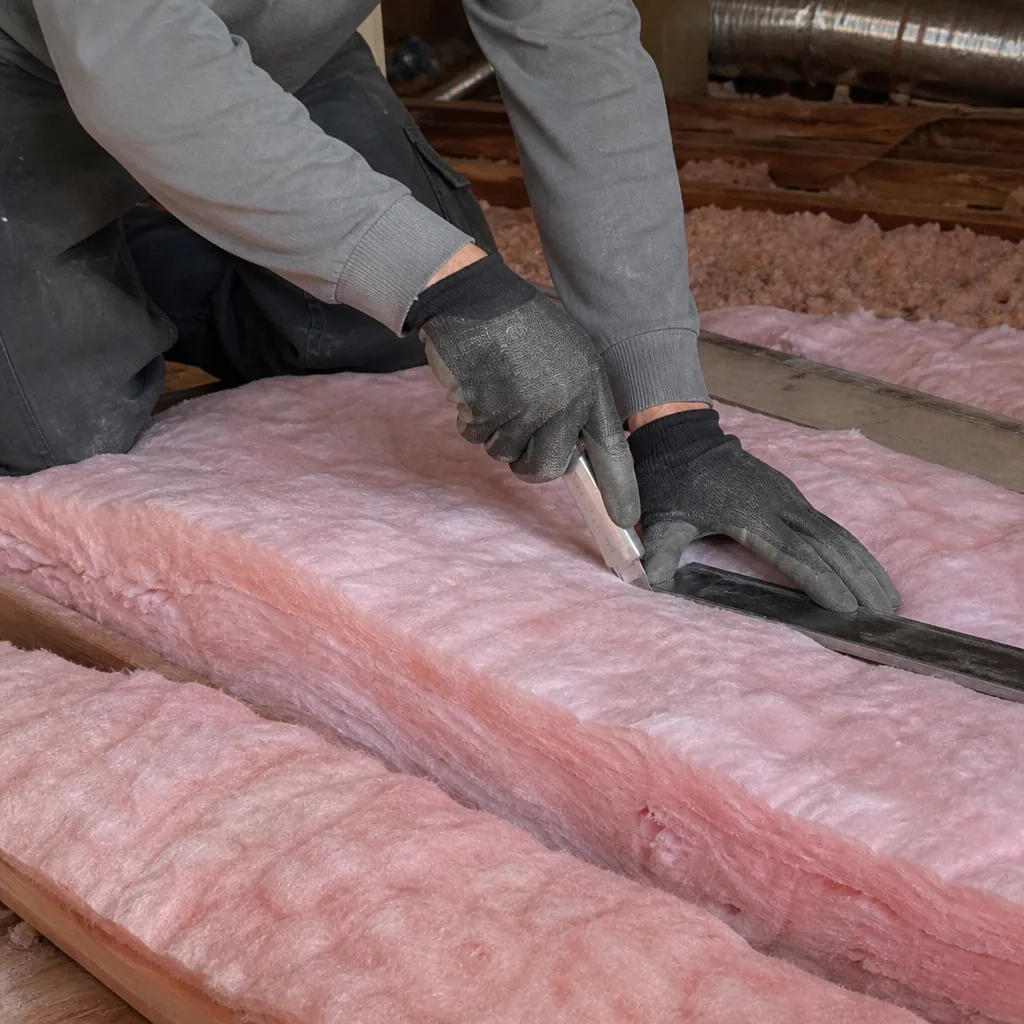
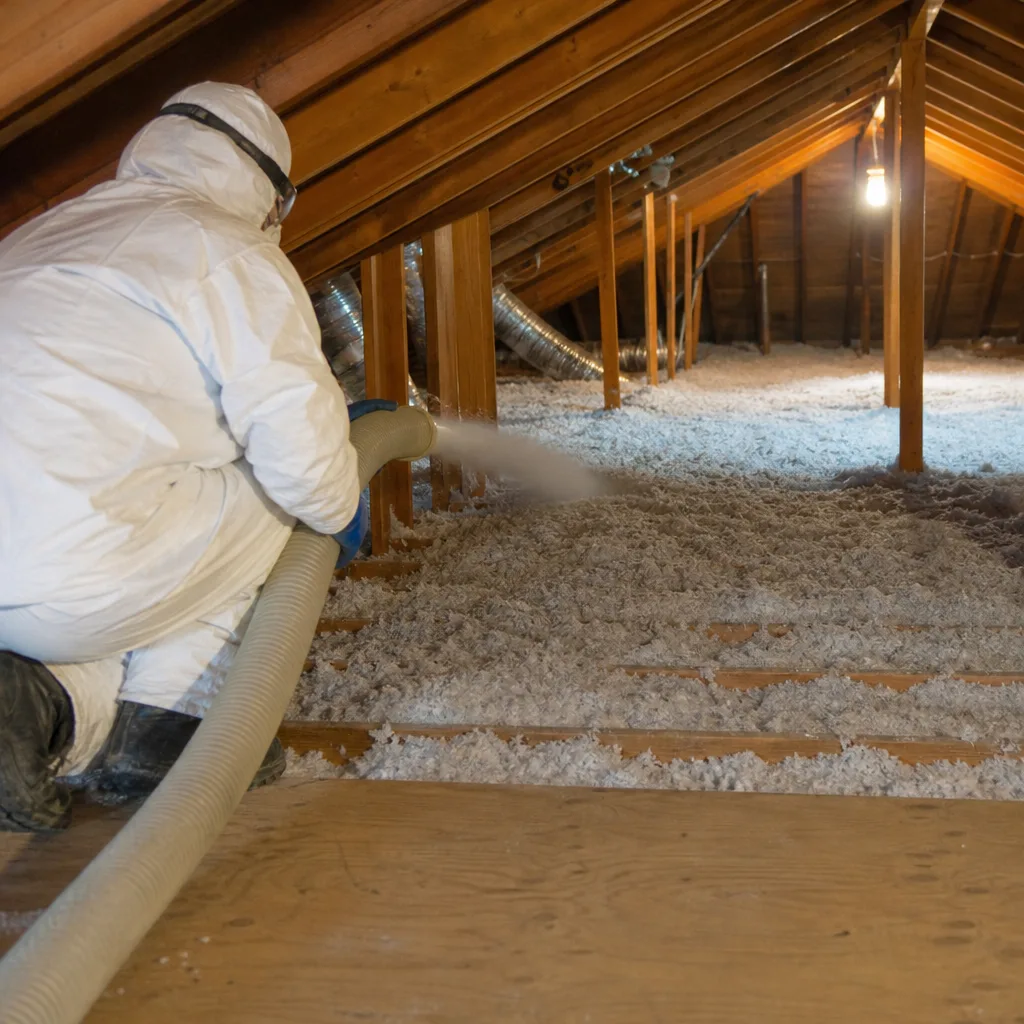
We stock and install CertainTeed fiberglass, Icynene open- and closed-cell spray foam, and GreenFiber recycled cellulose, so Fountain Valley customers get real material choice. Need a top-up to R-38 with blow-in? GreenFiber. Want to air-seal and insulate the roofline of an unconditioned attic room? Icynene. Need a clean batt replacement on a 1962 ranch? CertainTeed. We keep common widths and densities on hand for the 92708 and 92728 area, which means we don’t have to order in for every job. Faster turnaround, and the material matches what the manufacturer specs for your situation.
Common Attic Insulation Problems We See in Fountain Valley Homes
- Collapsed original batts: The R-7 fiberglass batts installed in 1955-1975 tracts have settled and compacted to R-3 or less. They’re covered in decades of dust and doing almost nothing.
- Unsealed non-IC-rated recessed cans: The original can housings in 1960s ceilings have no airtight seal. During Santa Ana winds, attic air and dust pour down through the light trims into the living room.
- Missing eave baffling: Low-pitch roofs leave minimal eave space, and when insulation buries the soffit vents, the attic stops ventilating. Heat and marine-layer moisture build up and degrade whatever insulation is up there.
- Balloon-frame top plates: Late-1950s Fountain Valley homes often have balloon-framed walls with no fire-blocking. Santa Ana wind drives attic air down the wall chases and into the house through outlet boxes and baseboards.
Pricing for Attic Insulation in Fountain Valley, CA
A full attic insulation replacement in Fountain Valley runs $2,200 to $4,600 on a typical 1,200 to 1,800 square foot single-story. Blown-in fiberglass to R-38 is the most common job and sits around $2,200 to $3,200. Blown-in GreenFiber cellulose runs slightly higher, $2,600 to $3,800, due to the denser pack. Icynene open-cell spray foam on the roofline starts around $3,800 and tops out near $5,200, depending on roof pitch and complexity. These ranges include top-plate air-sealing and can-capping where needed, which matters in Fountain Valley more than in newer cities. Every estimate is free, and the quote is the number you pay. Call (877) 265-5712 to schedule one.
We Also Serve Cities Near Fountain Valley
We run crews to Fountain Valley and the neighboring communities of Midway City, Huntington Beach, Costa Mesa, and Westminster every week. If you’re in one of those cities with a 1960s tract home and the same attic problems we see across Fountain Valley, call us at (877) 265-5712. Same crew, same straight answers.
Serving Fountain Valley, CA — Our Local Coverage Area
We’re based in the Fountain Valley area and know this community well. Use the map below to see our service coverage — if you’re nearby, we can almost certainly help.
FAQs About Attic Insulation in Fountain Valley
No, you shouldn’t blow new insulation on top of collapsed original batts in Fountain Valley. The old material is R-3 or worse, dust-laden, and blocking ventilation at the eaves. The right move is to pull the old batts, air-seal the top plates and recessed cans, add baffles, then blow in new material to R-38. That’s a $2,200 to $3,200 job on a typical tract home. Call (877) 265-5712 and we’ll confirm what’s up there before quoting.
Your recessed can housings are almost certainly non-IC-rated and unsealed, which means they’re open holes from the attic into the room below. Santa Ana pressure differentials push attic air and dust down through those cans. We fix this by capping the cans with airtight covers and sealing them to the drywall before adding insulation. It’s part of every attic retrofit we do in Fountain Valley.
Yes, a low-pitch roof in Fountain Valley needs baffles at the eaves before you add blown-in insulation. Without them, the new material slides over the soffit vents and chokes the attic’s airflow, which traps heat and marine-layer moisture. We install rigid baffles against the roof deck as a standard part of the job, typically $450 to $1,200 depending on access.
R-38 is the practical target for most Fountain Valley attics, which averages about 12 to 14 inches of blown fiberglass or cellulose. The semi-coastal climate doesn’t need R-60 like Colorado, but the summer sun on a low-pitch roof makes R-19 feel inadequate. R-38 balances performance with the ventilation constraints of older tract attics. Call (877) 265-5712 and we’ll measure what you have now.
We don’t patch old insulation; we replace it. Matching a 60-year-old batt brand doesn’t make sense when the existing material has collapsed to R-3 and the real issue is air-sealing, not brand continuity. We’ll pull the old material, seal the top plates and cans, and install current CertainTeed, GreenFiber, or Icynene product that actually performs. A full replacement in Fountain Valley runs $2,200 to $4,600.
Written by Allen Decker, Owner at North Tustin Insulation, serving Fountain Valley since the company’s founding.
Ready to fix your Fountain Valley attic? Call North Tustin Insulation at (877) 265-5712 for a free estimate. We’ll crawl up, show you what’s there, and quote you a number that covers the whole job.