Fast, Reliable Attic Insulation Across Fullerton
Attic insulation in Fullerton typically costs $1,800 to $4,200 for a full retrofit, and most jobs are completed in one day. The real variable is what’s hiding in your attic: knob-and-tube wiring, settled 1970s fiberglass, or corroded vent hardware all change the scope. If your cooling bills spike every July and your upstairs rooms never quite catch up, you’re dealing with an attic problem, not an AC problem. Call (877) 265-5712 for a straight answer and a free estimate. We serve every Fullerton zip code: 92833, 92834, 92835, and 92836.
Fullerton homes are not like the rest of Orange County. This city grew up around oil fields and citrus groves, and the housing stock tells that story: pre-war bungalows near downtown, mid-century ranches through the center, and 1970s stucco up in the northern hills. Each era has its own insulation failure patterns, and we know which one you’re dealing with before we climb the ladder.
Why North Tustin Insulation Is Fullerton’s Preferred Attic Insulation Company
We’re an insulation-exclusive contractor. That means every estimate, every tech, and every conversation focuses on one trade: attic performance. Fullerton homeowners call us because we carry eight nationally recognized brands, including Owens Corning, Icynene, and GreenFiber, and we match the material to the house rather than pushing whatever’s on the truck. When you’re dealing with a 1930s bungalow with knob-and-tube wiring, that distinction matters.
Allen Decker leads our team, and he’s built the company around a simple principle: diagnose first, then recommend. In Fullerton, that means understanding whether your home needs a full attic top-up, a radiant barrier to fight inland basin heat, or attic ventilation work to release trapped hot air. We’ve worked in the 92832 and 92833 neighborhoods long enough to know that no two bungalows are identical, and we treat each one as its own project.
We’re also not a roofing company that does insulation on the side. Our Attic Insulation team works exclusively on thermal and ventilation performance. That focus shows up in the details: we inspect for compromised wiring, check for salt-air corrosion on vent hardware, and calculate R-value targets based on Fullerton’s specific climate, not a generic California map.
Attic Ventilation in Fullerton
Attic Ventilation in Fullerton is the difference between an attic that traps 140-degree air and one that actually lets it escape. In this part of inland Orange County, the marine layer burns off by mid-morning and afternoons push into the 90s, which means your attic becomes an oven unless airflow is right. A properly ventilated attic in Fullerton should move hot air out through ridge or box vents while pulling cooler air in through soffit intakes. Most older Fullerton homes fail this test.
Typical attic ventilation work in Fullerton runs $600 to $1,800 depending on the roof size, the existing vent count, and whether salt air has seized the existing hardware. Coastal corrosion is a real factor here, even several miles inland. Screws on vent housings, baffle fasteners, and gable louvers all rust and bind after enough years of exposure to ocean-influenced air. We inspect all of it before recommending a path forward.
When Ventilation Becomes Urgent
If your second floor is consistently 10 degrees warmer than the first floor in August, your attic ventilation is likely failing. Corroded vent flaps that no longer open, broken soffit screens, and original 1950s louver boxes that have rusted shut all contribute.
Fullerton’s older housing stock compounds the issue. A 1930s bungalow with a small gable roof and minimal venting simply wasn’t designed for modern cooling loads. We add vents, replace seized hardware, and fix the airflow before adding insulation, because insulation alone won’t solve a ventilation problem.
Ventilation and Moisture Control
Fullerton’s marine layer means cool, damp mornings even when the afternoon is blazing. Trapped moisture in a poorly vented attic leads to rusted fasteners and mold on the underside of sheathing. We see it most often in the flat-roofed and low-slope sections common on mid-century additions around the 92834 and 92833 areas.
We address moisture with proper ventilation ratios before it becomes a structural problem. The fix is usually straightforward: the right number of intakes and exhausts matched to the attic’s square footage and roof pitch.
Radiant Barrier in Fullerton
Radiant Barrier installation in Fullerton is one of the highest-return insulation upgrades you can make here, precisely because our summers are hot and mostly dry. A radiant barrier reflects radiant heat before it can penetrate the attic floor, which means the insulation below it doesn’t have to work as hard. In a city where afternoons regularly hit the mid-90s, that’s meaningful comfort and a measurable reduction in cooling cost.
Radiant barrier installation in Fullerton typically runs $1,200 to $2,500 for a standard attic, depending on the attic’s accessibility and whether the existing insulation is touching the roof deck. The barrier itself is a reflective material installed against the underside of the roof sheathing. It works best in Fullerton’s climate because the heat we fight is primarily radiant, not humid or conductive.
How Radiant Barrier Works with Existing Insulation
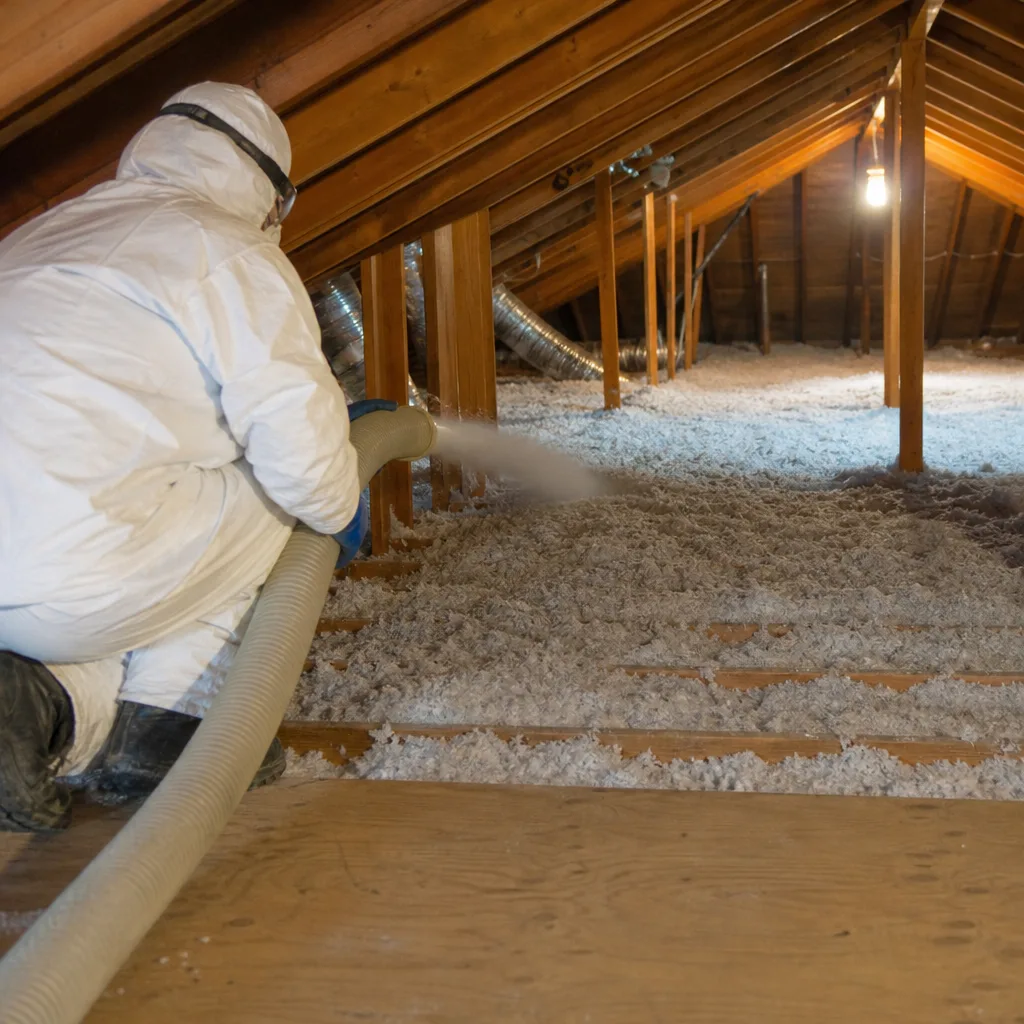
If you already have blown-in fiberglass or cellulose in your attic floor, a radiant barrier layers on top without disturbing it. The two systems solve different problems: the barrier blocks radiant heat gain, while the floor insulation slows conductive heat transfer into your living space.
We often pair radiant barrier with attic ventilation upgrades on Fullerton ranch homes built in the 1950s and 1960s. Those homes have large, flat attic spaces that collect heat all afternoon and radiate it into the house all evening. The combination of radiant barrier and working ventilation drops attic temperatures noticeably.
Radiant Barrier and Coastal Corrosion
Here’s a Fullerton-specific issue most contractors miss: salt air. When radiant barrier panels are fastened with standard steel staples or screws, corrosion from marine-influenced air can loosen them within a few years. Panels sag, gaps open, and the barrier loses effectiveness.
We fasten radiant barrier with coated or stainless hardware in Fullerton jobs. It costs a few dollars more and it’s worth every penny. Otherwise you’re redoing the work in five years.
Trusted Brands We Service in Fullerton
We carry Owens Corning and CertainTeed fiberglass, Rockwool mineral wool, GreenFiber recycled cellulose, Icynene and Demilec spray foam, plus Johns Manville and Knauf. That’s eight brands across four material categories, which means we can be honest about what your Fullerton home actually needs. A 1920s bungalow with tight wall cavities might get GreenFiber blown-in at low pressure. A 1980s stucco home in 92835 might get an Owens Corning attic top-up plus a radiant barrier. We stock local material runs for Fullerton jobs, so we’re not waiting on a distribution center in Riverside when your attic is torn open. Call (877) 265-5712 and we’ll tell you which material fits your house, not our inventory.
Common Attic Insulation Problems We See in Fullerton Homes
- Knob-and-tube wiring in pre-war bungalows. Homes built before about 1945 in the 92832 and 92833 neighborhoods often have live knob-and-tube circuits running through uninsulated wall and attic cavities. We inspect and fish these before blowing in insulation, because covering live knob-and-tube with cellulose or fiberglass creates a fire hazard and violates current code.
- Compressed, settled insulation in mid-century ranches. The 1950s and 1960s ranch homes that fill central Fullerton often have original rock wool or fiberglass batts that have flattened to half their rated R-value. In Fullerton’s heat, that means the attic stops doing its job entirely by late afternoon.
- Corroded vent hardware and baffle fasteners. Fullerton’s proximity to the coast means salt-influenced air reaches further inland than most people think. Gable louvers, ridge vent screens, and soffit baffle clips rust and seize over time, and that kills your attic ventilation. We replace with stainless or coated hardware.
- Uninsulated 2×4 walls in older stucco homes. Many of the 1970s and 1980s homes in the northern hills around 92835 have attic insulation but empty wall cavities. That’s a comfort problem in Fullerton’s summer heat and a common retrofit we handle alongside attic work.
Pricing for Attic Insulation in Fullerton, CA
A full attic insulation retrofit in Fullerton runs $1,800 to $4,200 for most homes between 1,200 and 2,500 square feet. A basic blown-in cellulose top-up in a ranch house might land around $1,200 to $1,800, while a full remove-and-replace with air sealing and new baffles in a bungalow can hit $3,500 to $4,500. Radiant barrier adds $1,200 to $2,500. Attic ventilation work ranges $600 to $1,800. Fullerton labor costs are consistent with the rest of northern Orange County, but material choice and the amount of prep work vary the bill more than anything. If we’re working around knob-and-tube, expect prep time to add to the total, because doing it safely takes longer. Call (877) 265-5712 and we’ll give you a real number for your attic, not a range from a website.
We Also Serve Cities Near Fullerton
While this page covers Attic Insulation in Fullerton, our team also works in Anaheim, La Habra, Placentia, and La Habra Heights. Each city has its own housing stock and its own insulation quirks, but the diagnostic approach stays the same: inspect first, then recommend. If you’re just outside Fullerton in any of those cities, call (877) 265-5712 and we’ll send a tech who knows the area.
Serving Fullerton, CA — Our Local Coverage Area
We’re based in the Fullerton area and know this community well. Use the map below to see our service coverage — if you’re nearby, we can almost certainly help.
FAQs About Attic Insulation in Fullerton
Fullerton’s pre-war housing stock, especially the 1920s and 1930s bungalows around downtown and the 92832 and 92833 zip codes, often has live knob-and-tube wiring running through the same cavities where blown-in insulation goes. We inspect and fish these cavities before drilling or blowing, because covering live knob-and-tube with insulation creates a serious fire risk. Call (877) 265-5712 and we’ll tell you whether your home is likely to have this issue.
The marine layer brings cool, damp air into Fullerton every morning, which means attics here deal with moisture that inland cities like Riverside never see. That moisture accelerates corrosion on vent hardware and staples, and it can promote mold in under-ventilated attics. Insulation choices and ventilation design in Fullerton have to account for this moisture cycle or the work degrades faster than it should.
For most 1950s and 1960s ranch homes in Fullerton, blown-in Owens Corning fiberglass or GreenFiber cellulose is the right call. These homes usually have accessible attics with enough clearance, and blown-in material fills the irregular cavities and settles evenly. Pair it with a radiant barrier and you address the radiant heat load that defines Fullerton summers. We’ll measure your existing R-value before recommending a top-up versus a full replacement.
Yes, and the difference is construction era. Homes near Cal State Fullerton in 92831 and 92835 are mostly 1970s and 1980s stucco construction with larger attic spaces and often no wall insulation. They usually need attic top-ups, radiant barrier, and ventilation work. Downtown bungalows in 92832 and 92833 need careful cavity inspection for old wiring, low-pressure blown-in material, and often a much more surgical approach. Same city, different jobs.
Every three to five years is a good interval in Fullerton, particularly if your home uses radiant barrier panels or has metal vent hardware. Salt-influenced air from the coast reaches Fullerton and accelerates rust on fasteners, staples, and louvers. Annual visual checks from the attic hatch take ten minutes and can catch sagging radiant barrier or seized vents before they cause a real problem. Call (877) 265-5712 if you spot rusted hardware or gaps in the barrier.
We were called to a 1920s bungalow near downtown Fullerton where the attic had no insulation and the homeowner said the upstairs rooms were unbearable from June through October. Before blowing in Owens Corning fiberglass, our tech fished the wall cavities and found live knob-and-tube wiring running through the same space. We rerouted and insulated around it, then added a radiant barrier to cut solar heat gain. The attic temperature dropped noticeably, and the cooling bill followed. That job is a reminder that Fullerton’s old homes reward a careful approach and penalize a rushed one.
If your Fullerton attic is under-insulated, poorly ventilated, or fighting the summer heat without a radiant barrier, call (877) 265-5712. Allen Decker and our team will inspect, explain what’s actually going on, and give you a straight answer with real numbers. Free estimates, no pressure, and a recommendation built around your house, not our inventory.
Written by Allen Decker, Owner at North Tustin Insulation, serving Fullerton and surrounding Orange County cities.