
Attic Insulation in Laguna Beach: What It Costs and Why Coastal Moisture Changes Everything
Attic insulation in Laguna Beach runs $1,800 to $6,400 for a typical 1,200 – 1,800 sq ft home, depending on material and whether the attic needs ventilation or wiring work first. That’s higher than inland Orange County because most Laguna attics were never built for modern insulation, and retrofitting them against marine-layer fog is a different job than a standard blow-in. If your attic has original redwood framing or knob-and-tube wiring, expect the project to take an extra day or two while we coordinate the electrical work before any insulation goes down. Call (877) 265-5712 and we’ll give you a straight answer on your specific attic.
Why Laguna Beach Attics Fail Differently Than Inland Homes
Laguna Beach sits inside a coastal fog belt. From late spring through early fall, marine-layer air pushes up the canyons and against the hillsides, and it carries enough moisture to condense on the underside of a roof deck night after night. Inland attics dry out. Yours doesn’t. A standard blow-in job on a 1930s cottage off Glenneyre or an uninsulated hillside bungalow above Bluebird Canyon will trap that moisture against the original redwood framing, and within a few seasons you’ll have rot where you can’t see it. This is the core reason Attic Insulation work in Laguna Beach is a moisture-management job first and a thermal job second. We plan every Laguna attic around ventilation, vapor movement, and the specific way fog behaves in your canyon or on your ridgeline – because a one-size-fits-all blow-in from an inland playbook fails here. Allen Decker has walked enough of these attics to know the difference between a canyon home that stays damp in August and a hillside home that bakes dry by noon.
Attic Insulation Methods We Use in Laguna Beach
We don’t push one material. We carry eight brands across fiberglass, mineral wool, cellulose, and spray foam, and we match the product to your attic’s actual conditions. In Laguna Beach, that usually means choosing a system that handles humidity without trapping it.
Blown-In Fiberglass and Cellulose
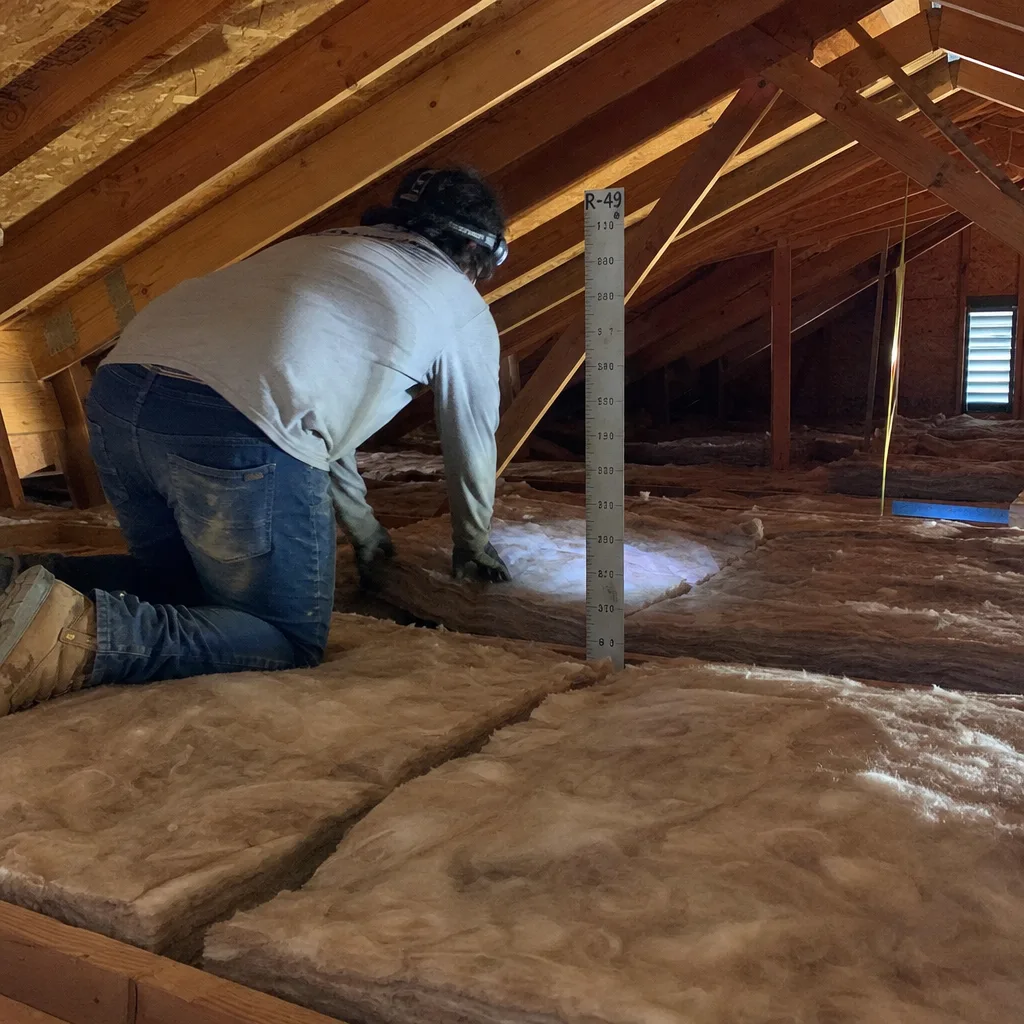
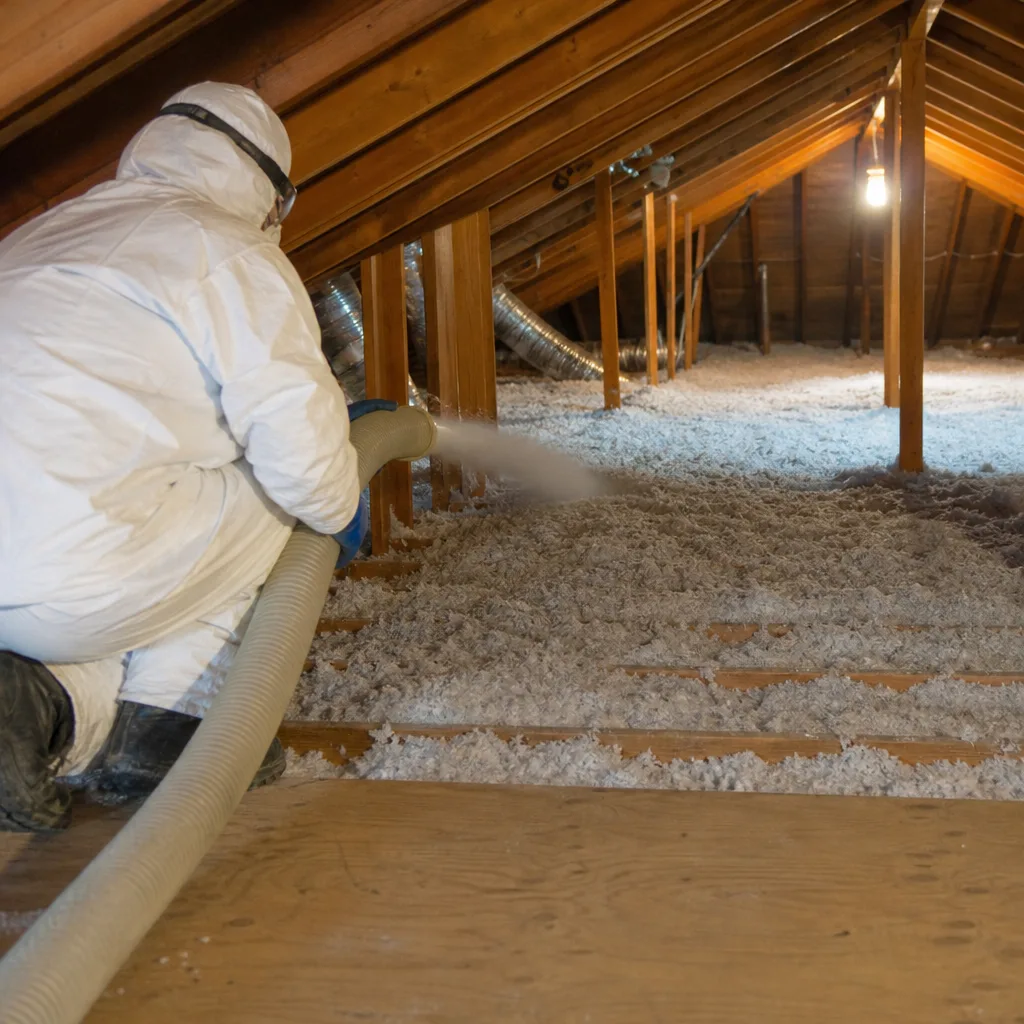
Blown-in works well in Laguna attics with adequate ventilation and newer wiring. We install Owens Corning fiberglass and GreenFiber recycled cellulose, both of which can be blown to a precise depth without tearing up your ceiling. For a 1,200 sq ft attic, blown-in fiberglass in Laguna Beach typically runs $1,800 to $3,200. If you’re off Coast Highway in a 1950s cottage with open-rafter ceilings, this is often the cleanest path. The key is ventilation – we won’t blow insulation into a sealed, fog-trapped attic without addressing airflow first.
Spray Foam for Coastal Air Sealing
Spray foam earns its cost in Laguna Beach when the attic is also the conditioned boundary – think open-rafter ceilings, cathedral attics, or hillside homes where the “attic” is really a crawl space under the roof. We carry Icynene and Demilec open- and closed-cell systems. Closed-cell foam does double duty here: it insulates and acts as a vapor barrier against marine-layer humidity. A spray foam attic retrofit in Laguna Beach runs $4,000 to $7,500 depending on square footage and access difficulty. On a hillside bungalow off Canyon Acres, tight access and steep pitches push cost toward the higher end.
Batt Insulation for Historic Cottages
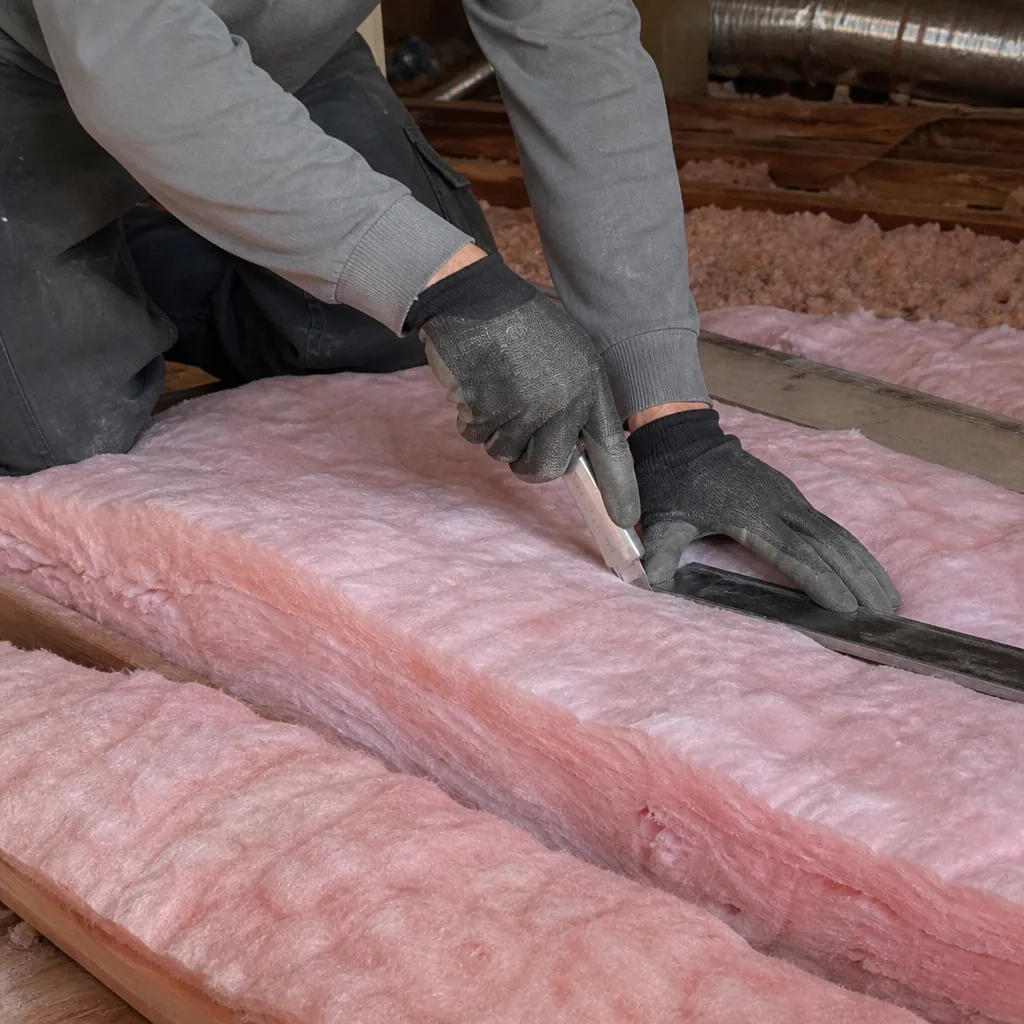
For 1920s and 1930s wood-frame cottages with original redwood rafters, we’ll often recommend Rockwool mineral wool batts instead of blown-in. Rockwool is non-combustible, handles moisture without degrading, and can be cut to fit irregular rafter bays you’ll find in older Laguna construction. Batts in a historic Laguna cottage typically run $2,200 to $4,000. If the attic has knob-and-tube wiring, batts are easier to install around the electrician’s re-route because nothing gets buried. We also use CertainTeed fiberglass batts where budget matters more.
The Historic-Cottage Reality: Knob-and-Tube Wiring and Redwood Framing
In Laguna Beach’s downtown and Canyon historic cottages, attic retrofits routinely hit original redwood framing and knob-and-tube wiring. That changes the job. You can’t legally or safely bury live knob-and-tube under insulation – and you shouldn’t try. We treat these attics as preservation and rewiring-coordination jobs before they become thermal projects. On a 1940s canyon bungalow off Canyon Acres Drive, we pulled back the original redwood roof boards and found decades of coastal fog had soaked the deck through a failed ridge vent, with knob-and-tube wiring sitting right where we needed to blow in Owens Corning fiberglass. We brought in an electrician to isolate and re-route the wiring, then set a custom breathable baffle and radiant barrier before insulating so the marine-layer condensation has somewhere to go instead of pooling against the old redwood. This constraint barely exists in neighboring inland cities like Aliso Viejo or Laguna Hills. In Laguna Beach‘s historic district, it’s the norm.
Attic Ventilation in Laguna Beach
Attic Ventilation in Laguna Beach is the difference between an insulation job that lasts and one that rots your roof deck in seven years. We install ridge vents, soffit vents, gable fans, and breathable baffles sized to move the damp coastal air through the attic rather than letting it settle. What the job involves depends on your roofline: a 1920s cottage in the historic district may need interior-only ventilation because exterior penetrations require design review, while a newer home in Top of the World can take a standard ridge-and-soffit system. Ventilation work in Laguna Beach runs $600 to $1,800 on its own, often bundled with insulation.
Design Review and Venting Constraints
If your home sits in the Laguna Beach historic district, you already know exterior changes need approval from the city’s design review board. Adding a ridge vent or gable vent that changes the roofline is exactly the kind of thing that stalls. We work within that: interior baffles, soffit-based ventilation, and hidden exhaust paths that don’t alter the exterior appearance. It’s more detail work, but it keeps your project moving without a design-review delay.
Canyon Homes and Fog Trapping
Canyon-floor homes in Bluebird Canyon, Canyon Acres, and behind Main Beach hold fog longer than ridge-top homes. If your attic feels damp at 10 a.m. in July, you’re in a fog-trapping pocket. The fix is usually more aggressive ventilation than a standard coastal home needs, combined with insulation that doesn’t wick water. Rockwool and closed-cell spray foam both work here.
Radiant Barrier in Laguna Beach
Radiant Barrier in Laguna Beach is worth considering if your attic gets direct afternoon sun – common on ridgeline homes in Top of the World and up Park Avenue where the marine layer burns off by mid-morning. The barrier is a reflective foil installed under the roof deck; it reflects radiant heat before it ever reaches your insulation. On a hillside bungalow with a south-facing roof deck, a radiant barrier can drop attic temperatures 20 – 30 degrees in summer. Radiant barrier installation in Laguna Beach runs $900 to $2,200 depending on roofline complexity.
Does Radiant Barrier Work With Fog?
Yes, but only if you install it with the right vapor management. A plain foil barrier against a fog-dampened roof deck can trap condensation underneath. We pair the barrier with breathable baffles and ridge ventilation so moisture still moves out. On that 1940s canyon bungalow off Canyon Acres, the radiant barrier went in after the failed ridge vent was replaced – never before.
When a Radiant Barrier Makes Sense
If your summer attic temperature exceeds 120°F by noon and your upstairs rooms won’t hold a set temperature, a radiant barrier is the highest-return addition you can make in Laguna Beach. It’s especially effective on west- and south-facing rooflines. For canyon-floor homes that stay shaded and damp most of the day, it’s lower priority – ventilation comes first there.
How Salt Air Attacks Your Attic Hardware and What We Do About It
In Laguna Beach, the salt air and fog work through attic hardware fast. Roofing nails, vent fasteners, fan housings, even the screws on your gable vents corrode years before the same parts inland would. We see it on every coastal attic we open. The standard fix is replacement with galvanized or coated steel fasteners, stainless hardware on anything exposed, and nylon rollers and hinges where moving parts meet salt air, similar to what we use for Reflectix repair in Laguna Beach. If you hear a gable fan squealing or see rust streaks on your attic access hatch, that’s the salt air already at work. On an insulation retrofit, we’ll inspect and replace corroded attic hardware as part of the job – because there’s no point insulating a space where the vents are rusting shut.
Trusted Brands We Service in Laguna Beach
North Tustin Insulation carries and installs Owens Corning, CertainTeed, Johns Manville, Knauf, Rockwool, Icynene, Demilec, and GreenFiber. For Laguna Beach customers, that eight-brand lineup means we’re never pushing whatever happens to be on the truck. A historic cottage with redwood framing gets Rockwool batts. A newer hillside home with an unvented roof deck gets Icynene or Demilec spray foam. A budget-conscious homeowner in a 1970s tract off Laguna Canyon Road gets GreenFiber cellulose. We stock the parts and products for all of it, so turnaround on a Laguna Beach attic is usually a matter of days, not weeks. Allen Decker built the company around carrying genuine material choice – eight brands, one contractor, the right fit for your home.
Common Attic Insulation Problems We See in Laguna Beach Homes
- Fog-driven condensation rotting roof decks. The marine layer condenses against the underside of the roof deck for weeks at a time in June and July. Without ventilation, that moisture soaks into the wood and starts the rot clock.
- Knob-and-tube wiring entangled with old insulation. 1920s – 1950s cottages around downtown and the Canyon still have knob-and-tube circuits running through attic bays. Burying them under new insulation is a fire risk, and skipping the rewire means you can’t insulate at all.
- Uninsulated open-rafter ceilings leaking conditioned air. Many vintage Laguna cottages have no attic at all – just exposed rafters under the roof deck. These homes bleed heat in winter and absorb it in summer, and they need spray foam or careful batts rather than a blow-in.
- Design review blocking standard ventilation fixes. You can’t just add an exterior ridge vent or soffit vent to a historic-district roofline. We work around the review process with interior ventilation paths that don’t change the exterior look.
Pricing for Attic Insulation in Laguna Beach, CA
Here are straight numbers for Laguna Beach’s market. Blown-in fiberglass for a 1,200 sq ft attic: $1,800 – $3,200. Blown-in cellulose: $2,000 – $3,400. Rockwool batts in a historic cottage: $2,200 – $4,000. Spray foam on an unvented roof deck: $4,000 – $7,500. Attic ventilation as a standalone service: $600 – $1,800. Radiant barrier: $900 – $2,200. What moves the price in Laguna Beach specifically? Access on steep hillside lots, knob-and-tube rewire coordination, and design-review-sensitive ventilation all add labor. If your attic is a straightforward blow-in with existing ventilation, you’ll land at the low end. Call (877) 265-5712 for a free estimate – we’ll walk your attic, show you what’s there, and give you a number before we leave.
We Also Serve Cities Near Laguna Beach
North Tustin Insulation handles attic insulation jobs in Aliso Viejo, Laguna Woods, Laguna Hills, and San Joaquin Hills as well. If you’re just outside Laguna Beach proper, the same eight-brand lineup and coastal-moisture expertise applies. Call and we’ll tell you whether your attic has the same fog-trapping pattern we see in Attic Insulation in Laguna Beach homes or a drier inland profile.
Serving Laguna Beach, CA — Our Local Coverage Area
We’re based in the Laguna Beach area and know this community well. Use the map below to see our service coverage — if you’re nearby, we can almost certainly help.
FAQs About Attic Insulation in Laguna Beach
Because the marine layer condenses against your roof deck for weeks at a time, and insulation that traps that moisture rots your framing. You need ventilation and vapor management before you add R-value. Call (877) 265-5712 and we’ll check whether your attic is fog-trapped before quoting anything.
Yes, but not by burying the wiring. We coordinate with an electrician to isolate and re-route the knob-and-tube first, then insulate around the new wiring. It adds a day or two, but it’s the only safe way. Estimates are free – call (877) 265-5712.
Yes. If your home is in the historic district, exterior vent changes may need design review approval. We use interior ventilation paths that don’t alter the roofline, so your project doesn’t stall on city review.
Salt air corrodes fasteners, vent housings, and fan hardware much faster than inland. Insulation itself is unaffected, but the structure around it fails. We replace corroded hardware with stainless and coated parts as part of the retrofit. Call (877) 265-5712 for an inspection.
If your roof deck gets full afternoon sun and your summer attic temperature exceeds 120°F, yes. The barrier drops attic heat 20 – 30 degrees when installed correctly with ventilation. For shaded canyon-floor homes, ventilation matters more. Call (877) 265-5712 and we’ll tell you honestly which one your home needs.
Written by Allen Decker, Owner at North Tustin Insulation, serving Laguna Beach and surrounding Orange County communities.