Fast, Reliable Attic Insulation Across Monterey Park
Attic insulation in Monterey Park usually runs $1,400 – $2,800 for a full retrofit on a 1,200-square-foot home, with removal and air-sealing adding $600 – $1,200 when the original 1960s material has failed. Most jobs here start with inspection, not a simple top-up, because the city’s postwar tract homes carry decades of changed wiring, DIY remodels, and compressed legacy insulation. We’re North Tustin Insulation, led by Allen Decker, and we’ve worked enough Monterey Park attics to know exactly what’s up there before we recommend a single product. Call (877) 265-5712 for a free estimate and we’ll tell you straight what your attic actually needs.
Why North Tustin Insulation Is Monterey Park’s Preferred Attic Insulation Company
We’re an insulation-only contractor. That focus matters in Monterey Park, where a generalist might glance at the attic and quote a blow-in over whatever’s already there, compressed or not. Our crews open the hatch, inspect the deck, check the top plates and any bath-fan or patio-room ducts, then match the material to the house. We carry eight brands across fiberglass, mineral wool, cellulose, and spray foam, including Owens Corning, CertainTeed, Rockwool, GreenFiber, Icynene, and Demilec. That means when a 1958 stucco bungalow in the 91755 flats needs cellulose and a newer addition needs closed-cell spray foam, we don’t force one product into both. We carry both. Allen Decker built this company around the idea that Monterey Park homeowners deserve a recommendation based on the building, not on what’s sitting in the truck. That’s the whole reason for our Attic Insulation team’s approach: inspect first, explain clearly, install precisely.
Monterey Park customers call us for the same reasons they’d call a specialist for anything else. The houses here are specific. The problems repeat. We know the difference between a 1963 tract attic with original mineral wool batts and a 1980s addition with fiberglass that was never properly baffled. We know which ZIP codes see the worst June-through-October heat gain in the San Gabriel Valley, and we know that a home near Garvey Avenue in 91754 faces different attic conditions than one up toward Monterey Park’s hillier 91756 pockets. Being local to the San Gabriel Valley matters. Being insulation-focused matters more. We’re both.
Attic Insulation Removal in Monterey Park
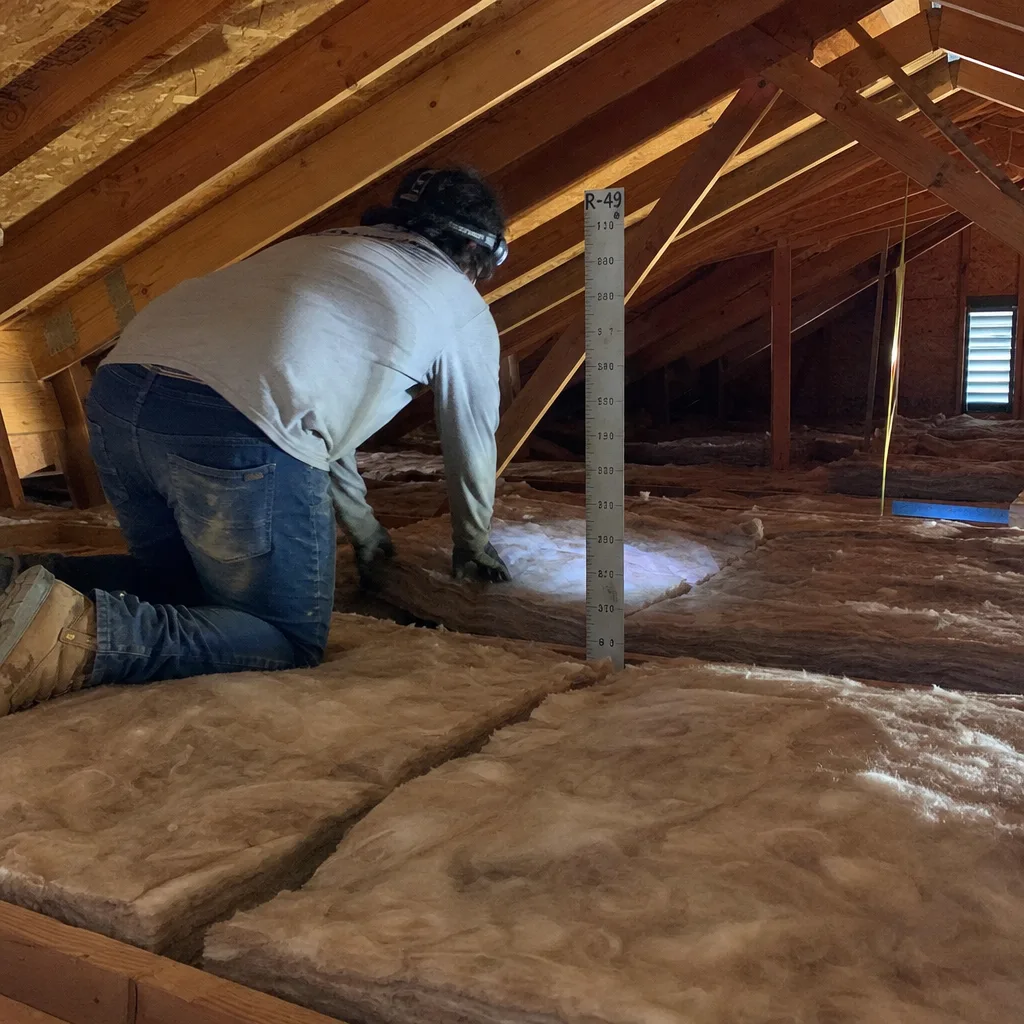
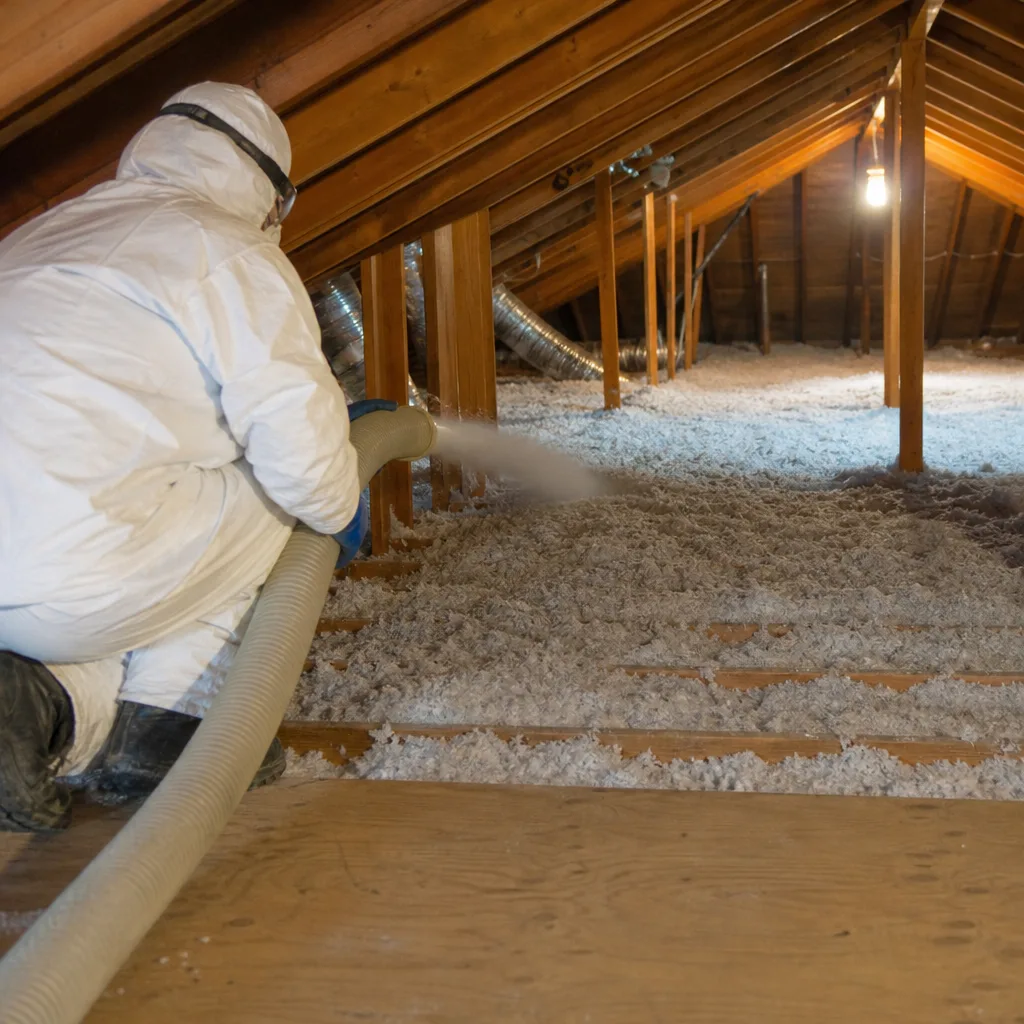
Attic Insulation Removal in Monterey Park is the step most retrofits here actually need, because the original 1960s mineral wool in these tract homes has usually been flattened, matted, or contaminated beyond any performance value. We vacuum out the old material with commercial extraction equipment down to the deck, inspect the cavities, then prep for new insulation. In Monterey Park this costs $600 – $1,200 for a typical 1,000 – 1,400-square-foot attic, depending on depth, debris, and whether there are storage platforms or old ducting to work around. If your attic reads insulated but the upstairs rooms still bake from June through October, the material up there is probably dead. Removal is the honest fix.
Legacy Material Removal
Monterey Park’s 1950s and 60s housing was built fast, and the insulation that went in was often the cheapest mineral wool or loose fill available at the time. After fifty or sixty years, that material settles, compresses under storage platforms, and loses its air-trapping structure. We remove it completely and give you a clean deck to build on.
Contamination Cleanup
DIY bath-fan ducts and enclosed patio rooms venting into the attic are so common in Monterey Park that we expect to find moisture-damaged, matted insulation on many jobs. Wet insulation stops insulating. It also holds odor and promotes corrosion on framing and fasteners. Removal fixes the symptom, but we always recommend sealing the duct correctly so the new insulation doesn’t suffer the same fate.
Insulation Contractors in Monterey Park
Insulation Contractors in Monterey Park split into two groups: general remodelers who sub out insulation, and dedicated insulation companies like North Tustin Insulation. We’re the latter. When you hire us, the person who inspects your attic is the same team that installs, and every conversation is about thermal performance, air sealing, and material choice, not about whether we can also re-roof the garage. For a full attic retrofit in Monterey Park including removal, air-sealing, and new blown-in or batt insulation, budget $2,000 – $4,000 for a standard 1950s – 60s tract home, with spray foam projects at the higher end. The number shifts with attic size, access difficulty, and how much legacy material has to come out first.
Inspection-First Estimates
We won’t quote a Monterey Park attic over the phone without seeing it. There’s too much variation in these homes. Two houses on the same block, both built in 1961, can have completely different attic conditions depending on whether someone added a second bath, enclosed a patio, or cut a new gable vent forty years ago. Our estimate starts with opening the hatch and looking.
Air-Sealing Before Insulation
Before we blow in anything new, we seal top plates, wire penetrations, and any interior ducts that terminate in the attic. This is the difference between an insulation job that works and one that just adds R-value on paper. In Monterey Park’s Mediterranean climate, unsealed attic air leaks pull furnace-heated or air-conditioned air right out of the living space. Seal first. Insulate second. Never skip step one.
Trusted Brands We Service in Monterey Park
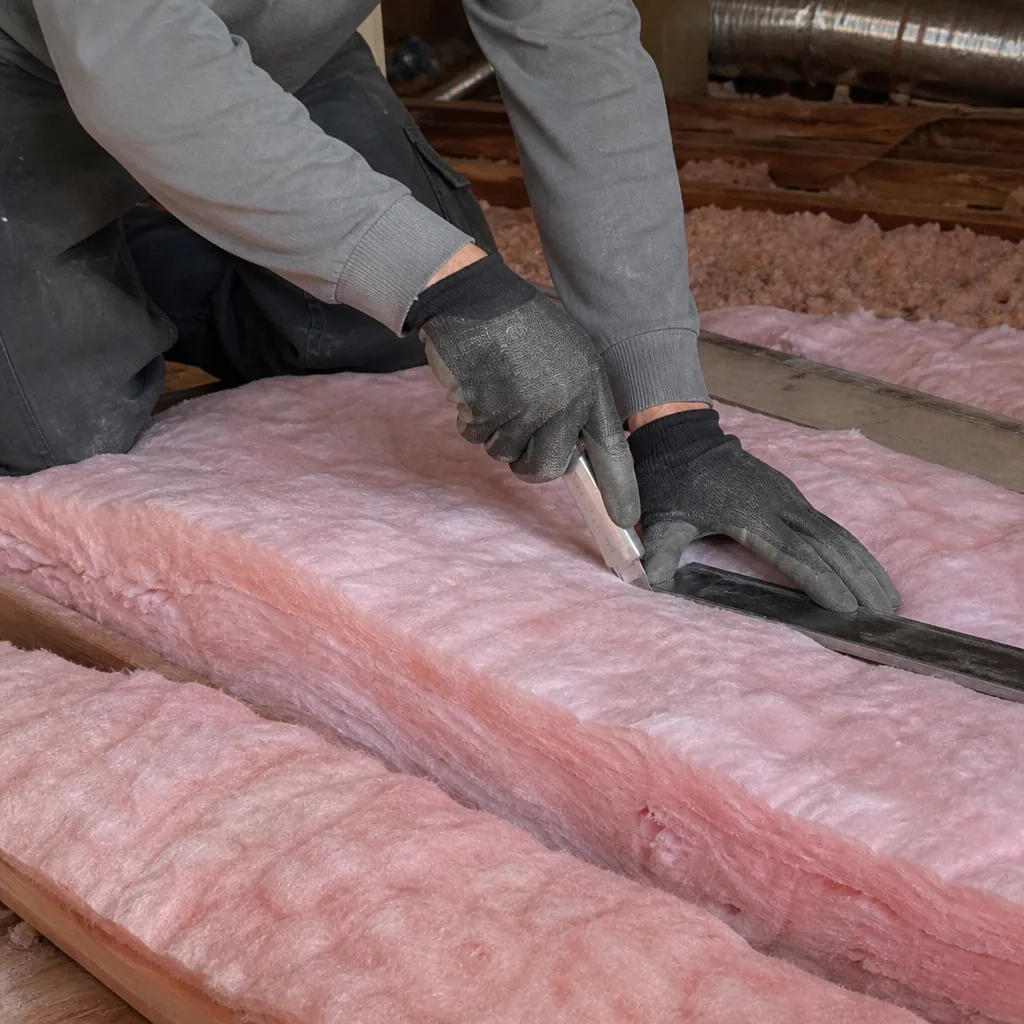
We install and service the full range of insulation brands across every Monterey Park job we take, and we keep material access local so we’re not waiting on a distributor in Riverside County. That means Owens Corning and CertainTeed fiberglass for standard batt replacements, GreenFiber recycled cellulose for blown-in retrofits, and Demilec spray foam for enclosed patio rooms or irregular cavities where air sealing is the priority. If your Monterey Park home has specific demands, like Rockwool for fire resistance near a garage party wall or a radiant barrier against the San Gabriel Valley’s summer sun, we carry that too. Eight brands. One contractor. The right fit for your home.
Common Attic Insulation Problems We See in Monterey Park Homes
- Compressed 1960s mineral wool under storage platforms. These attics often look insulated from the hatch, but the material has been flattened to a fraction of its original depth. Compressed insulation doesn’t trap air, and without trapped air, it doesn’t insulate. We see this constantly in the 91754 and 91755 tracts.
- Low-pitch roofs trapping summer heat. Monterey Park’s original tract homes were built with shallow roof pitches and minimal attic clearance, especially those from the late 1950s. From June through October, that shallow cavity becomes an oven, driving heat down through the ceiling and pushing air conditioners harder than they should work.
- DIY bath-fan and patio-room ducts venting into the attic. Unpermitted additions and owner-installed bath fans often vent directly into the attic cavity instead of through the roof. That pumps warm, moist air into the insulation, matting it down and inviting mildew. We open the attic and find this on a large share of Monterey Park retrofits.
- Enclosed patio rooms with no thermal boundary. Many Monterey Park homes added enclosed patios or sunrooms in the 1970s and 80s, and those spaces almost never got proper insulation. They leak heat in summer and cold in winter, and they pull conditioned air from the main house. The attic above them is often an uninsulated void.
Pricing for Attic Insulation in Monterey Park, CA
For Monterey Park homes, attic insulation pricing runs in clear bands: a simple blown-in top-up over existing, functional material runs $900 – $1,500 for a standard 1,000 – 1,400-square-foot attic. Full removal of legacy 1960s insulation followed by air-sealing and new blown-in cellulose lands at $2,000 – $3,200. Batt replacement with Owens Corning or CertainTeed fiberglass sits at $1,600 – $2,800 depending on R-value. Spray foam, which we use selectively for enclosed patio rooms, vaulted spaces, and rim-joist sealing, starts around $3,500 and goes up by cavity area. Every estimate is free. Call (877) 265-5712 and Allen Decker’s team will walk your attic, show you what’s there, and quote you a number before any work begins.
We Also Serve Cities Near Monterey Park
Our insulation crews cover the San Gabriel Valley and the eastern edge of Los Angeles, so if you’re in South San Gabriel, Alhambra, East San Gabriel, or East Los Angeles, we’re close by. The same team that serves Monterey Park handles those routes weekly, and we know the housing stock in each city well enough to anticipate what’s in the attic before we arrive.
Serving Monterey Park, CA — Our Local Coverage Area
We’re based in the Monterey Park area and know this community well. Use the map below to see our service coverage — if you’re nearby, we can almost certainly help.
FAQs About Attic Insulation in Monterey Park
Because the original 1960s mineral wool or early blown-in material in these tract homes has usually compressed to R-values far below what a simple top-up would fix. Blowing new cellulose over flattened, matted, or moisture-damaged legacy material traps the problem underneath. In Monterey Park specifically, five-plus decades of owner storage platforms, rewiring projects, and DIY duct modifications mean the old insulation is rarely worth saving. Removal costs more upfront but performs dramatically better. Call (877) 265-5712 and we’ll tell you honestly whether your attic is a removal candidate or a straight top-up.
Yes, and we see this on a large share of Monterey Park jobs. Enclosed patio rooms usually were not insulated to any meaningful standard, and the attic void above them is often disconnected from the main house attic. These spaces need their own thermal boundary, which often means spray foam on the underside of the roof deck or dense-pack cellulose in the framing. We carry Demilec spray foam and GreenFiber cellulose for exactly this kind of irregular cavity work. The fix is more involved than a standard attic job, but it’s the difference between a sunroom you can use in August and one that sits empty six months a year.
Focus on the attic. Monterey Park’s warm-summer Mediterranean climate means the dominant heat load runs from June through October, and that heat enters through the roof, not the walls. Most of these 1950s – 60s stucco homes have uninsulated or minimally insulated wall cavities, but retrofitting walls is invasive and expensive relative to the comfort gain. The attic retrofit, including air-sealing and a radiant barrier, delivers far more comfort per dollar here. If you’re doing a gut remodel, that’s a different conversation, and we’d include wall insulation in the plan. For an occupied Monterey Park home, attic first. Always.
We install Owens Corning and CertainTeed fiberglass, GreenFiber recycled cellulose, Rockwool mineral wool, and Demilec or Icynene spray foam, plus Johns Manville and Knauf where those offer the right spec. That’s eight nationally recognized brands across every major insulation category. We match the material to your Monterey Park home, not the other way around. For a typical 1960s tract house with a low-pitch attic, blown-in GreenFiber cellulose is often the right call. For an enclosed patio room with steep heat gain, Demilec open-cell spray foam seals and insulates in one step. You get a recommendation based on your attic, not on what we happen to stock one deep.
We can match it, but the better question is whether matching it is the right move. If your existing material is original 1960s mineral wool that’s compressed flat, matching it would mean reinstalling a product that already failed once. What we can do is inspect what’s up there, tell you what it was, what R-value it achieved when new, and what it’s actually performing at now. Then we quote options: remove and replace, or air-seal and top up with new material if the original is still functional. For a free attic inspection in Monterey Park, call (877) 265-5712.
A Note on Monterey Park’s Specific Attic Conditions
Monterey Park is a mid-century postwar build-out. Most of the housing in 91754, 91755, and 91756 went up in the 1950s and 1960s during the suburban expansion that later made this one of the first majority-Asian cities in the U.S. These are low-slung stucco tract homes and small bungalows with low-pitch roofs, often still carrying their original insulation. The generational turnover now underway means many of these homes are changing hands for the first time in decades, and new owners are finding attics that were never really addressed by the previous generation. Original mineral wool, owner-built storage platforms, unpermitted additions, and bath fans venting straight into the attic cavity are the norm here, not the exception. On a recent job off Garvey Avenue in the 91754 flats, a 1960 bungalow still held its original mineral wool, sagging and compressed under decades of storage decking and a DIY bath-fan duct that dumped directly onto the insulation. We removed the collapsed material, sealed the top plates and the fan duct to code, blew in GreenFiber cellulose to even depth, and added a radiant barrier against the June-to-October San Gabriel Valley heat gain. That’s what a Monterey Park attic retrofit looks like: less about adding new material, more about fixing what was never done right the first time.
Call North Tustin Insulation for Your Monterey Park Attic
If your Monterey Park home still has its original 1960s attic insulation, or if someone added a patio room or bath fan decades ago and you’ve never opened the hatch, we should talk. We’ll inspect the attic, show you what’s up there, and give you a straight answer on what needs removal, what needs sealing, and what new insulation will actually perform in this climate. Call (877) 265-5712 for a free estimate. Allen Decker and the North Tustin Insulation team know Monterey Park attics because we’ve worked in them. We’ll treat yours the same way.
Written by Allen Decker, Owner at North Tustin Insulation, serving Monterey Park and the San Gabriel Valley.