Fast, Reliable Attic Insulation Across Whittier
Attic insulation in Whittier typically costs $1,800 to $4,600 for a full retrofit on an older single-story home, with blown-in projects on 1920s-1960s bungalows landing between $2,200 and $3,800. Most jobs take one day, and we schedule Whittier work with the parking and alley-access constraints of Uptown and the hills in mind before we ever show up. Call (877) 265-5712 for a free estimate from a contractor who actually knows what’s inside Whittier attics.
Whittier’s housing stock is not like the newer suburbs east of the 605. You’re dealing with pre-1950 plaster-and-lath bungalows, Spanish-revival cottages, and early post-war tract homes across 90601, 90602, 90603, 90604, 90605, and 90606 – most of them built decades before anyone thought about Title 24 energy code. The attics up there are shallow, the wiring is often original, and the insulation, if any, has settled into something closer to a felt pad than a thermal barrier. That’s exactly the kind of retrofit work we focus on.
Why North Tustin Insulation Is Whittier’s Preferred Attic Insulation Company
We’re an insulation-only contractor, which means every conversation we have in Whittier is about one trade. That matters when you call about a 1920s Uptown bungalow with knob-and-tube wiring in the attic and want to know whether it can even be insulated safely. Our answer comes from doing that job, not from a generalist’s guess. We carry eight nationally recognized brands across fiberglass, mineral wool, cellulose, and spray foam – Owens Corning, Johns Manville, Knauf, Rockwool, CertainTeed, Icynene, Demilec, and GreenFiber – so the recommendation you get is driven by your home’s construction, not by whatever single product we happen to stock.
Allen Decker leads our team, and he’s built the company around a simple rule: match the material to the home, not the other way around. In Whittier, that usually means air-sealing before anything gets blown in, and choosing cellulose or mineral wool where wiring and shallow bays make batts a bad fit. We work Whittier every week, from the historic district around Philadelphia Street down to the tract homes off Lambert Road and the neighborhoods east of Whittier College. Our familiarity with the parking constraints on Painter Avenue and the alley-load access behind Greenleaf Avenue storefront-to-residential conversions means we arrive knowing how to stage the job without blocking your driveway or your neighbor’s.
Radiant Barrier in Whittier
Radiant barrier in Whittier is one of the highest-impact upgrades you can make to an older attic, because the city’s inland summer heat in the East LA County basin routinely pushes into the high 90s and 100s, and your roof deck becomes a radiant heater pointed straight at your living space. The marine layer burns off by late morning, and by 2 p.m. an under-insulated attic in Whittier can sit at 140°F or higher. A radiant barrier stapled to the underside of the roof rafters reflects that heat back out instead of letting it radiate down into the insulation and then into your rooms.
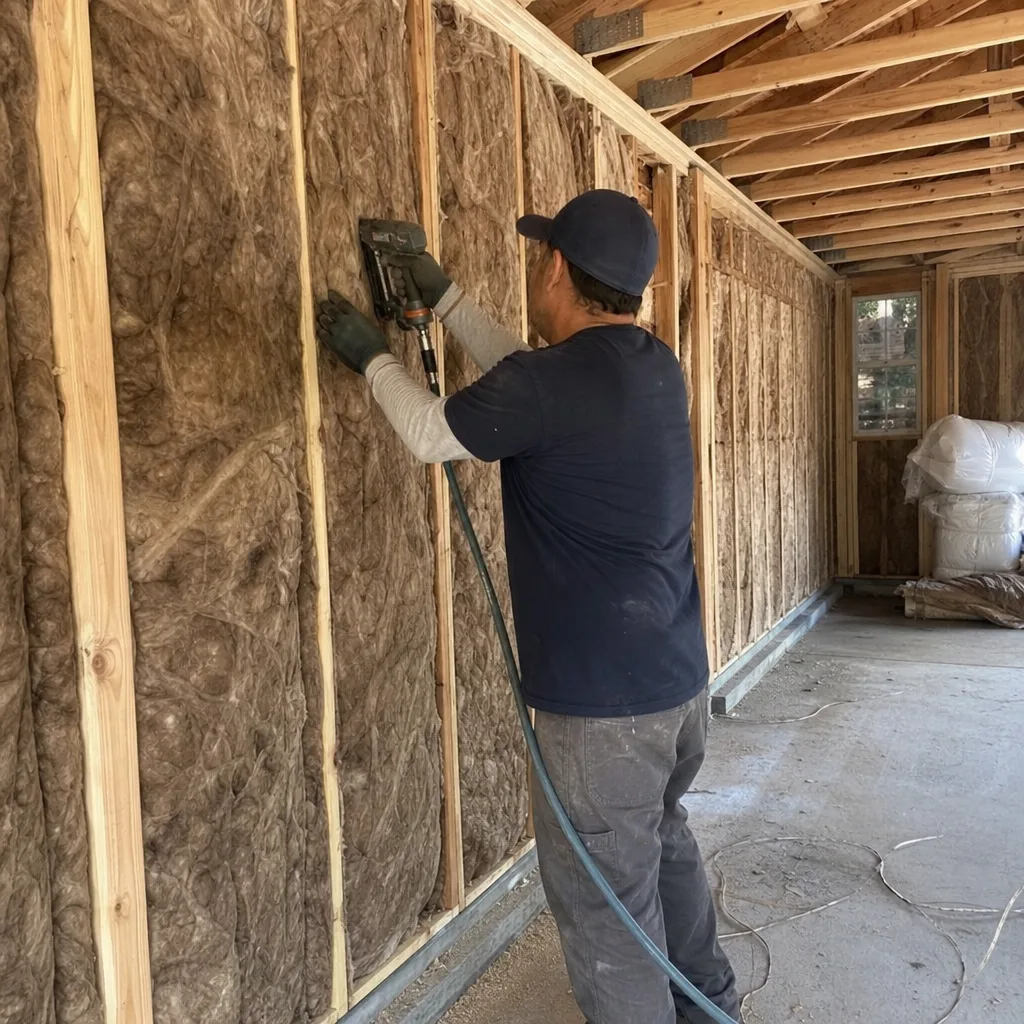
In Whittier, we install radiant barrier as a foil-faced material attached to the rafters, typically paired with an attic insulation upgrade rather than as a standalone band-aid. The combination is what actually moves the needle on upstairs comfort and cooling bills. On a typical Whittier bungalow with 1,200 to 1,600 square feet of attic floor, radiant barrier runs $1,200 to $2,200 depending on roof pitch and access.
When Older Whittier Homes Need It
If you live in a 1920s-1950s home near Uptown or the historic district, your attic probably has settled fiberglass batts or blown cellulose that’s compacted to a fraction of its original R-value. Adding more insulation without addressing radiant heat gain means you’re still cooking the top layer of insulation all summer. Radiant barrier breaks that cycle, especially on homes with dark composition shingle roofs that absorb and re-radiate inland sun.
Pairing Radiant Barrier With Insulation
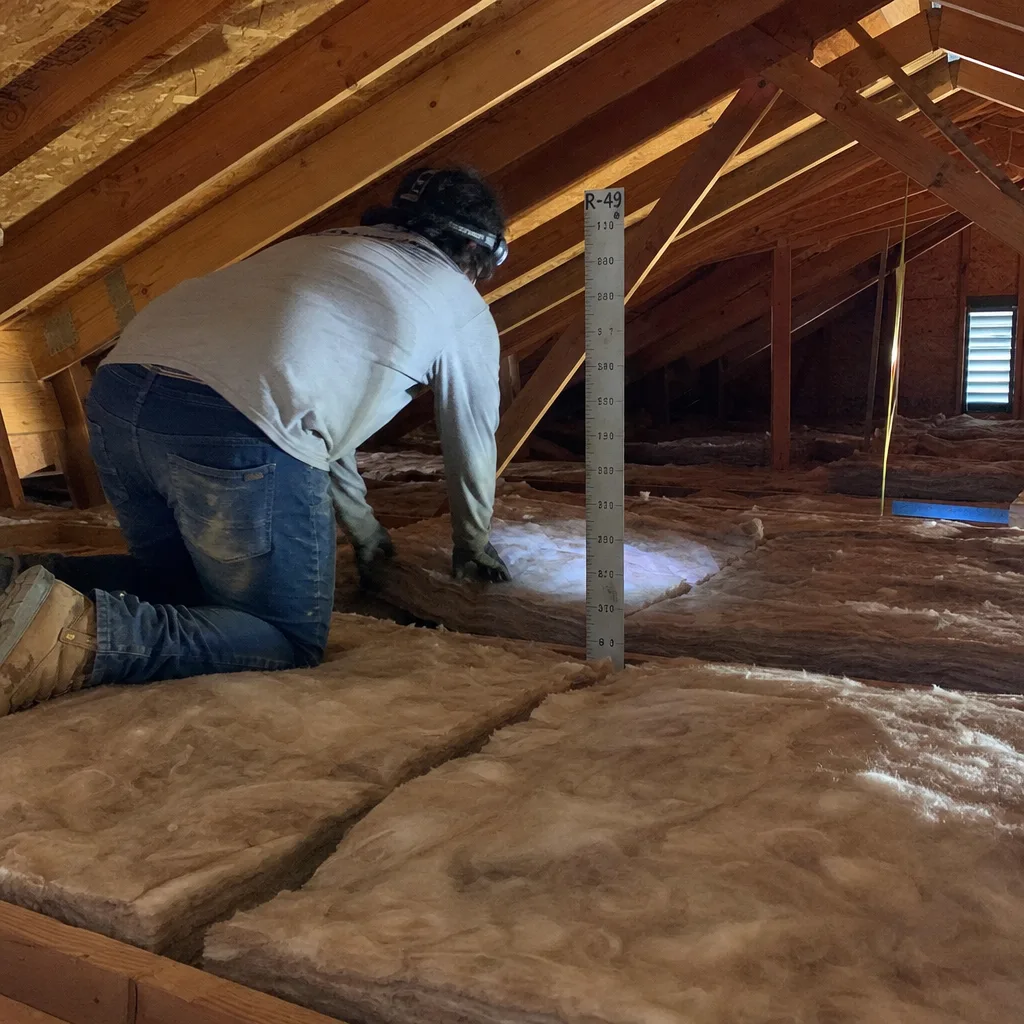
We don’t sell radiant barrier as a miracle fix. It works, but only as part of a system: air-sealed attic floor, proper insulation depth, adequate ventilation, and then the barrier at the roofline. In Whittier’s shallow attic bays, where you can’t always stack insulation deep enough to hit modern R-38 or R-49 targets, the radiant barrier becomes even more important because it compensates for the depth you physically can’t add.
Attic Cleaning Services in Whittier
Attic cleaning services in Whittier are rarely a luxury – in homes built before 1960, they’re often a prerequisite to insulation work. Decades of inland heat cycling, dust intrusion through original wood lath and plaster walls, and the occasional rodent or roof leak leave attics full of contamination that traps moisture against the joists and shortens the life of any insulation you put on top of it. We clean attics before insulating because blowing new material over old filth is a waste of money.
A typical attic cleaning in Whittier runs $900 to $2,400 depending on attic size, depth of contamination, and whether we’re dealing with old insulation removal, rodent debris, or both. Most cleaning projects take one day with a two-person crew. We bag and remove everything, sanitize the deck, and leave the space ready for air-sealing and new insulation.
Old Insulation Removal Before Retrofit
If your Whittier home still has original rock wool or disintegrating fiberglass batts from the 1940s or 50s, that material needs to come out before new insulation goes in. Leaving it in place means the old material continues to trap dust and moisture, and depending on its condition, it can harbor mold or pest waste. We remove it completely, so the new insulation performs from day one.
Air-Sealing While We’re In There
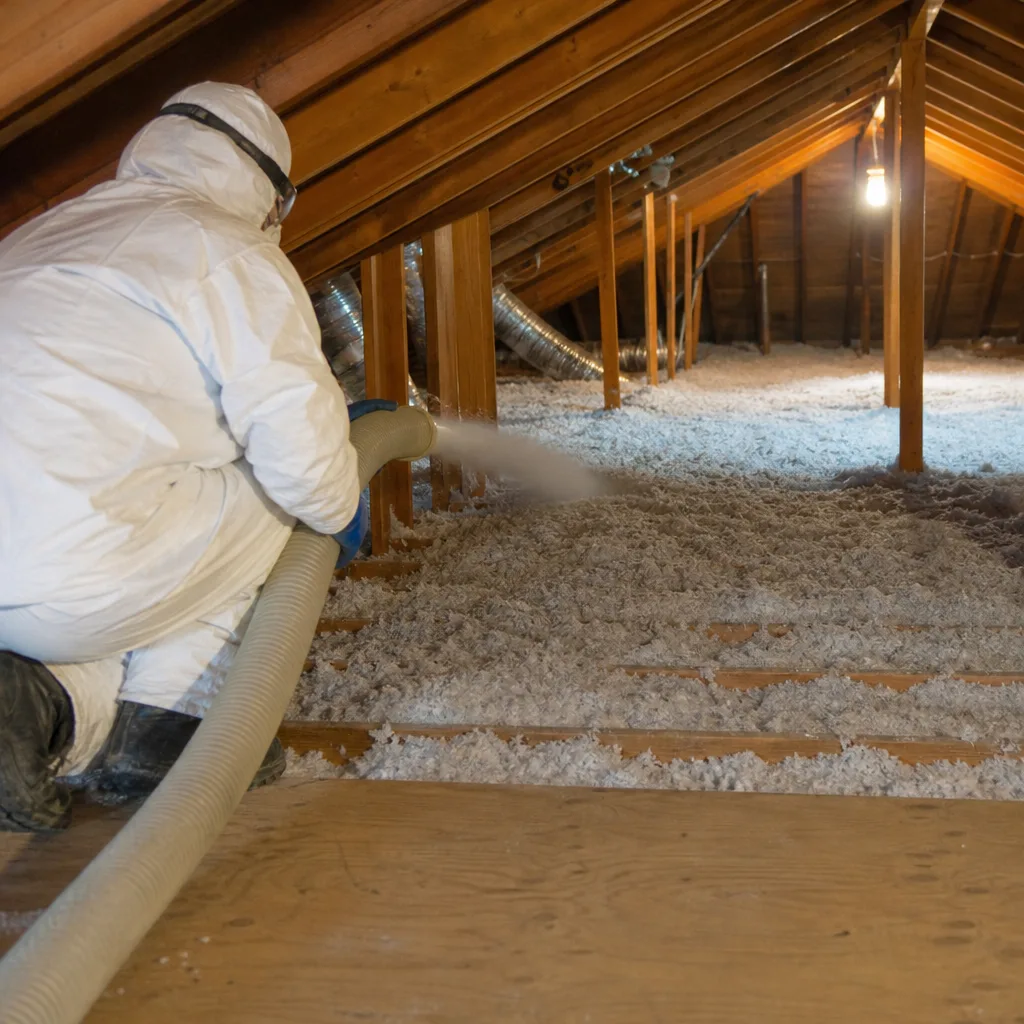
Cleaning puts us right at the attic floor, which is the ideal time to air-seal top plates, plumbing penetrations, and any gaps around old wiring before insulation covers them. In Whittier’s older homes this step is non-negotiable – without it, you’re paying to condition air that leaks straight into the attic through gaps in the framing. Sealing first is what our Attic Insulation team does on every retrofit, and the difference shows up on the first summer utility bill.
What happens when you call
- 1
A real person answersNo phone trees — you reach a local pro.
- 2
You get an upfront price rangeHonest numbers before anyone is dispatched.
- 3
A background-checked tech heads outLicensed & insured, dispatched right away.
- 4
You approve before work beginsNothing starts until you say go.
Trusted Brands We Service in Whittier
We install and service insulation from eight nationally recognized manufacturers, which means you get a real choice instead of a one-brand pitch. For Whittier’s older housing stock, GreenFiber cellulose is often the best fit because it can be dense-packed and blown around existing wiring without leaving gaps. Rockwool mineral wool works well in shallow bays where you need insulation that won’t compress and lose R-value. For homeowners who want maximum air-sealing and moisture control, we install Icynene and Demilec spray foam systems. We stock parts and materials for all of these brands and can usually begin a Whittier project within days of the estimate.
Common Attic Insulation Problems We See in Whittier Homes
- Knob-and-tube wiring in the attic. Uptown and Historic Whittier bungalows from the 1920s and 30s frequently still have live knob-and-tube wiring running through the attic floor. Blowing insulation over it without air-sealing or addressing clearances creates a fire hazard, and we treat every one of these as a wiring-aware retrofit.
- Shallow joist bays that won’t hold enough insulation. Many Whittier homes built between 1920 and 1965 have 2×4 or 2×6 attic joists, which physically limit insulation depth before you start compressing material and losing R-value. The fix often involves air-sealing plus cellulose or mineral wool, not just adding more batts on top.
- Neglected attic ventilation. Whittier’s inland heat doesn’t stop at the roof deck. Attics without proper soffit and gable ventilation trap heat and moisture, which degrades insulation and shortens the life of your roofing. We inspect ventilation as part of every insulation estimate.
- Settled and compacted insulation from decades of heat cycling. Original blown cellulose or fiberglass from the 1950s through 80s has typically settled to half or less of its original depth. What looks like an insulated attic often performs like an uninsulated one, which is why a top-up or full replacement is the single most common job we do in Whittier.
Pricing for Attic Insulation in Whittier, CA
Attic insulation projects in Whittier run between $1,800 and $4,600 for a complete retrofit on a typical single-story home. Blown-in cellulose or fiberglass across a 1,200-square-foot attic lands from $2,200 to $3,800 including air-sealing. Attic batt replacement runs $1,800 to $3,400 depending on access and existing material removal. If you’re adding a radiant barrier, budget $1,200 to $2,200 more. Attic cleaning adds $900 to $2,400, and if knob-and-tube wiring is present, we’ll quote the air-sealing work separately so you know exactly what the safety portion of the job costs. Every estimate is free, and we’ll give you line-item pricing before you commit to anything. Call (877) 265-5712 and we’ll come out, get in the attic, and tell you what’s actually up there and what it’ll cost to fix it.
We Also Serve Cities Near Whittier
Our crews regularly work from Whittier out into South Whittier, West Whittier-Los Nietos, East La Mirada, and Santa Fe Springs. If you’re just outside the city line, the same material selection, air-sealing standards, and retrofit experience apply, and our scheduling works the same way. Call us at (877) 265-5712 and tell us what part of the area you’re in.
Serving Whittier, CA — Our Local Coverage Area
We’re based in the Whittier area and know this community well. Use the map below to see our service coverage — if you’re nearby, we can almost certainly help.
FAQs About Attic Insulation in Whittier
Yes, but the job has to be done correctly. We air-seal and install insulation around live knob-and-tube wiring with proper clearances, using blown cellulose or mineral wool that can be placed without compressing against the conductors. In Uptown Whittier, our crew air-sealed around live knob-and-tube wiring in a 1920s Spanish-revival cottage’s shallow attic before blowing in GreenFiber cellulose to R-38, working carefully through a cramped alley-load access. The homeowner immediately noticed the upstairs bedrooms stayed 8-10°F cooler during a July heat wave. Not every contractor will touch knob-and-tube; we’ve done enough of it in Whittier that it’s a normal part of our day. Call (877) 265-5712 and we’ll assess your specific wiring situation.
Whittier’s inland summer heat is the dominant force on your attic, pushing high-90s and 100-degree temperatures that bake your roof deck and radiate heat downward into the attic space. Because the marine layer burns off by late morning, the heat load starts early and stays intense all afternoon. That means cooling-side performance, radiant barriers, and ventilation matter more here than heating-side cold protection. We size insulation for Whittier’s heat first.
For shallow joist bays in 1950s Whittier tract homes, dense-packed GreenFiber cellulose or Rockwool mineral wool batts are usually the best fit. Both materials maintain their R-value without the compression you get from trying to force thick fiberglass batts into bays that are too shallow for them. We’ll match the material to your specific joist depth and existing framing conditions. Call us for a free attic inspection and we’ll tell you exactly what’ll work.
Yes, and in Whittier’s older homes it’s often necessary rather than optional. Decades of dust, settled debris, and the occasional pest issue mean the attic floor needs to be cleared and sanitized before new insulation goes down. Attic cleaning in Whittier runs $900 to $2,400, and we do the cleaning and air-sealing in the same visit before blowing in the new material.
We typically schedule Whittier work within 3 to 7 days of the estimate, and we plan each job for the parking and alley-load access realities of your specific street. Whether that means staging equipment on a side street off Painter Avenue or coordinating alley access near Greenleaf, the crew arrives knowing where to put the truck and how to get materials to your attic without disrupting the whole neighborhood. Call (877) 265-5712 for a free estimate and a firm schedule.
Stop letting your attic bake your house all summer. Call North Tustin Insulation at (877) 265-5712 for a free attic assessment in Whittier. We’ll get up there, show you what’s going on, and give you a straight answer on what it costs to fix.
Written by Allen Decker, Owner at North Tustin Insulation, serving Whittier and surrounding areas.