
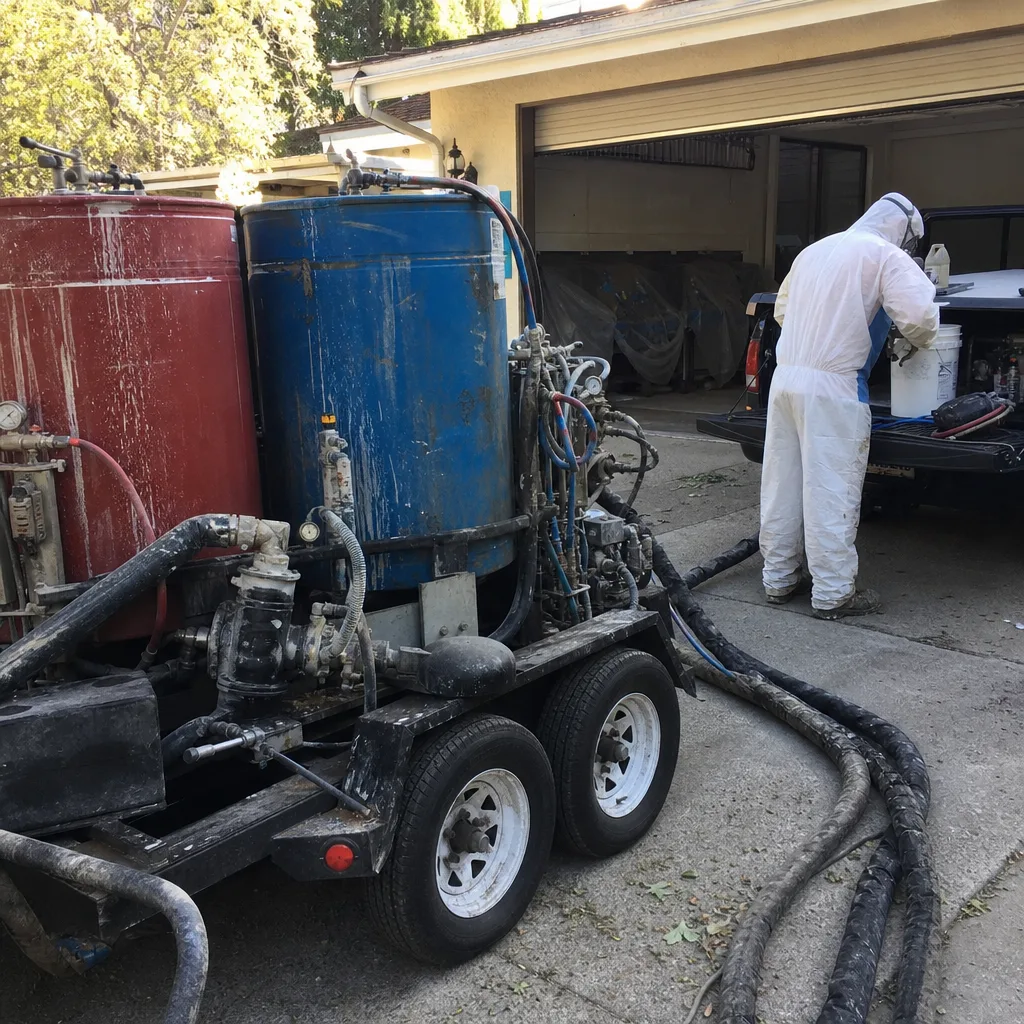
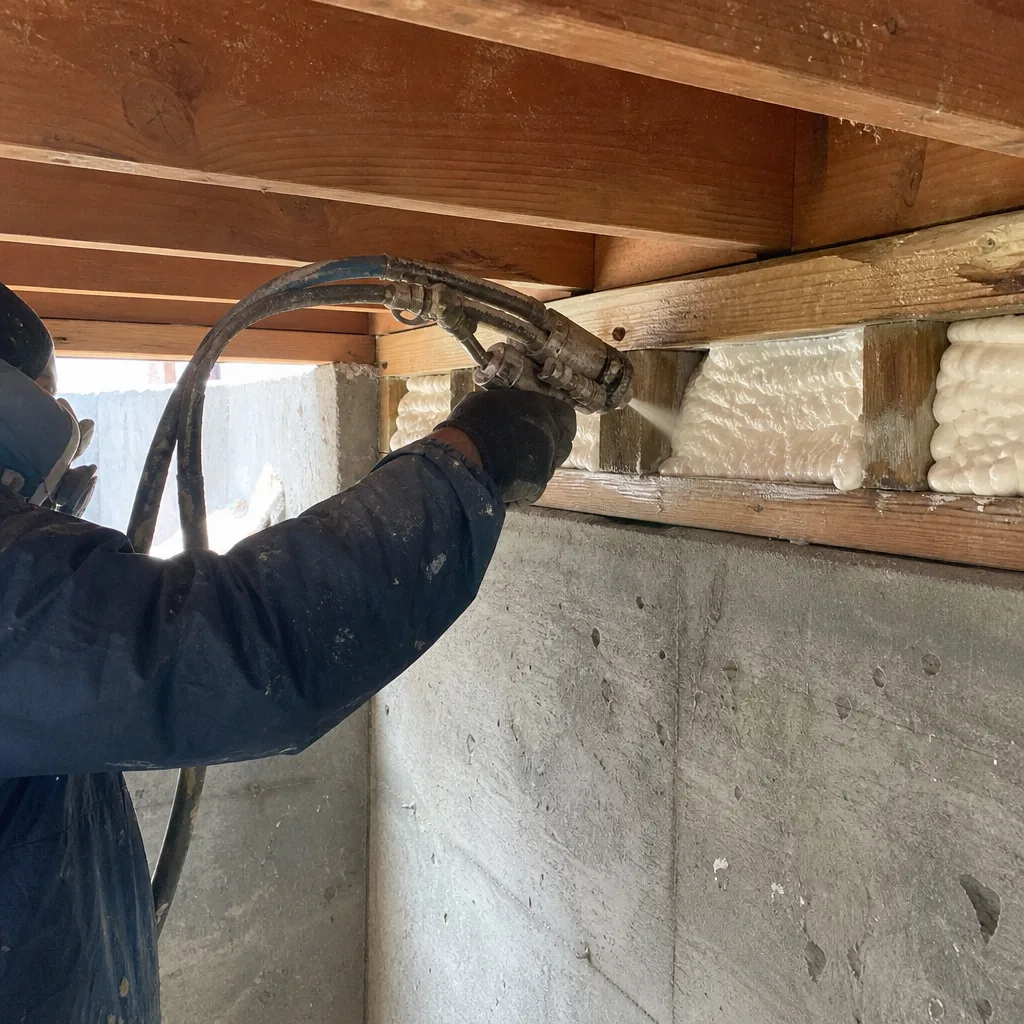
Fast, Reliable Spray Foam Insulation Across Coto De Caza
Spray foam insulation in Coto De Caza typically runs $2.40 – $5.10 per board foot for open-cell and $3.20 – $6.80 per board foot for closed-cell, with most attic projects landing between $3,800 and $9,600 depending on square footage and access. Our crews work throughout 92690 on a regular rotation, so we can usually schedule an estimate within a few days and start work the following week. Call (877) 265-5712 and we’ll give you a straight answer on what your home actually needs, not what happens to be on the truck.
Why North Tustin Insulation Is Coto De Caza’s Preferred Spray Foam Insulation Company
We’ve worked enough homes off Coto de Caza Drive, Vista del Verde, and the canyon-side lots near the golf course to know that every house here has its own thermal story. The 1980s and 1990s semi-custom builds that dominate the community share a few recurring problems: settled attic fiberglass, unsealed rim joists, and cathedral ceilings that bake in August. We carry Icynene and Demilec spray foam systems, which means we can match open-cell or closed-cell to your specific roof assembly instead of forcing one product onto every job.
Allen Decker built North Tustin Insulation around a simple conviction: the material should fit the house, not the other way around. Eight brands across every major insulation category. One crew focused only on insulation. When you call us about spray foam in Coto De Caza, you’re talking to someone who knows the difference between a Chapter 7A WUI assembly and a standard attic retrofit, and why that distinction matters at final inspection.
We show up when we say we will. We leave the job cleaner than we found it. And we don’t disappear when the inspector has questions.
Spray Foam Insulation Contractors in Coto De Caza
Spray Foam Insulation Contractors in Coto De Caza handle everything from cathedral ceiling bays in a 1994 semi-custom to a detached workshop on a two-acre lot off Antonio Parkway. The job means more than hosing foam into an open cavity. On the typical wood-frame, stucco-exterior home here, we’re working around multi-zone HVAC ducting, recessed can lights, and existing fire-rated closures that may or may not be intact. We check all of it before we foam.
Open-cell foam in a standard attic over living space in Coto De Caza usually lands between $3,800 and $6,200 for a 1,800-square-foot footprint. Closed-cell runs higher because the material costs more per board foot and the application is denser, so figure $5,500 to $9,000 for the same footprint. Cathedral ceilings cost more than flat attics. So do rim joists in finished basements and garage ceilings with tight clearances.
Whole-Attic Air Sealing
Homes in Coto De Caza were built before builders treated attic air sealing as a standard. The gap between drywall and top plates leaks conditioned air all summer. We foam the perimeter of the attic floor, seal the can light penetrations, and close the chase gaps before adding the insulation layer.
Rim Joist and Band Board Sealing
Multi-zone HVAC in these larger floorplans means more duct runs through exterior band boards. Every penetration is a leak. We use closed-cell foam on rim joists where moisture from stucco walls is a concern, then air seal around each duct boot. It’s detail work most generalists skip.
Spray Foam Attic Insulation in Coto De Caza
Spray Foam Attic Insulation in Coto De Caza is the single highest-impact upgrade for older semi-custom homes with settled fiberglass. A 1992 build off Weatherly Drive might show 4 to 6 inches of original blown fiberglass when the attic is checked, which is nowhere near current code and does nothing to stop radiant heat from the concrete tile roof baking the living space below. We pull the old material, inspect the sheathing, and foam the assembly properly.
Cost for a full attic foam job in Coto De Caza, including old insulation removal and disposal, typically runs $4,200 to $8,400 for open-cell. Closed-cell on a roof deck runs $6,800 to $11,500. If you’re only doing a garage ceiling or a small bonus room over the garage, you’re looking at $1,400 to $2,800.
Cathedral Ceiling Bays
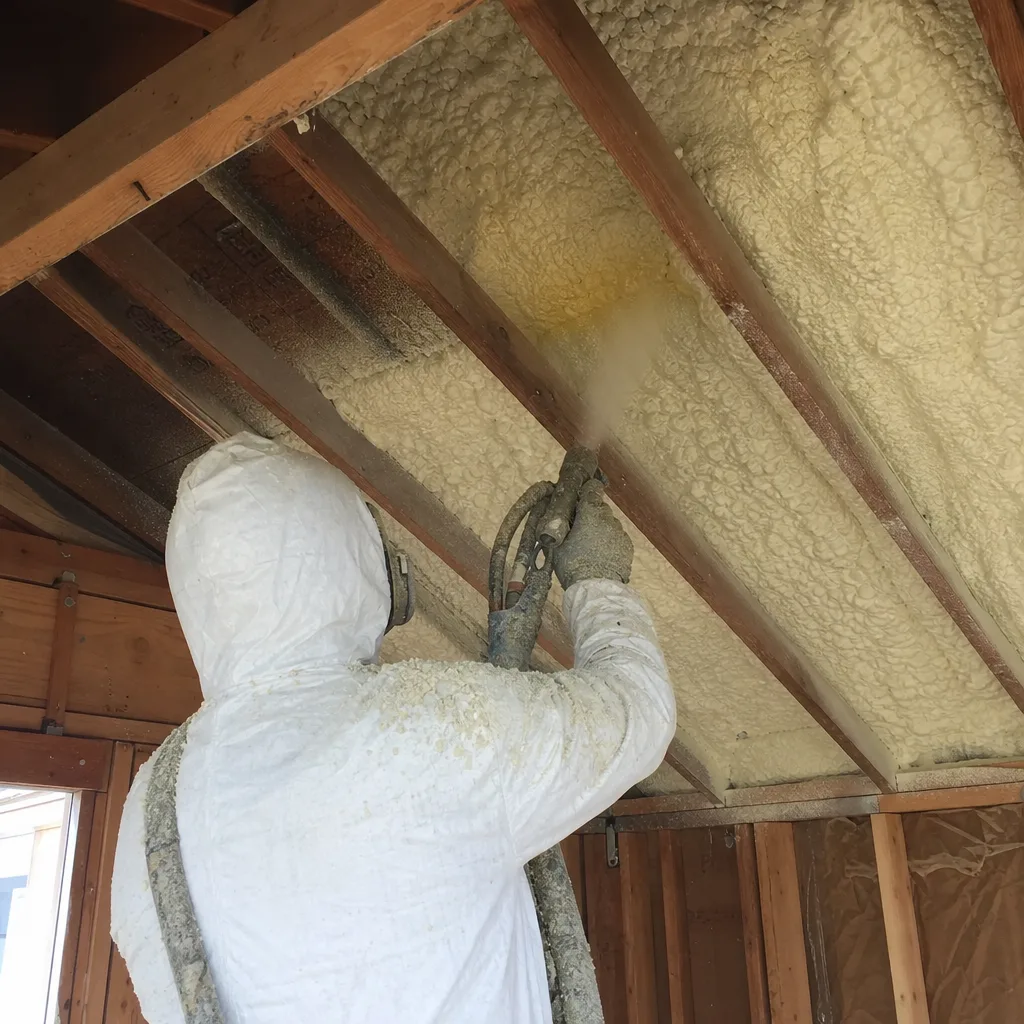
These 1980s and 1990s floorplans love cathedral ceilings in the great room and master suite. The original batt insulation in those bays has slumped, and the roof deck radiates heat straight down. Open-cell foam fills the cavity fully, cutting both conductive and convective heat gain. We mask carefully, spray in lifts, and trim flush. That’s the only way to avoid the sagging and gaps you get with poor technique.
Ember-Resistant Vent Upgrades
If your spray foam job in Coto De Caza involves the attic, the venting question comes up at inspection. Always. We recommend swapping original 1980s ridge and eave vents for ember-resistant units with proper screening before the foam goes in. It’s the detail that passes Chapter 7A the first time.
Trusted Brands We Service in Coto De Caza
We stock Icynene open-cell and Demilec closed-cell systems for Coto De Caza jobs, along with Owens Corning and GreenFiber for homeowners who need a hybrid approach, like a spray-foam attic with cellulose elsewhere. “We carry eight brands so the recommendation comes from what your house needs, not what’s in the warehouse,” Allen Decker says. That means we won’t push closed-cell on a job where open-cell is the smarter call, and we’ll tell you if spray foam isn’t the right tool for a particular space. For Coto De Caza customers, we keep material on hand specifically for WUI-compliant assemblies, so we’re not waiting on a special order when inspection is on the calendar. One contractor. Multiple systems. The right fit for your home.
Common Spray Foam Insulation Problems We See in Coto De Caza Homes
- Settled original attic insulation that hides a bigger code issue. Most 1990s homes in the Coto De Caza gates still have original blown fiberglass, now 4 to 6 inches deep. The R-value looks bad on paper, but what actually fails inspection is the unsealed fire-rated closures and the non-ember-resistant venting, not the thin fiberglass.
- Spray foam installed without a venting plan. We see jobs where a previous contractor foamed the attic deck but left the original 1990s ridge vents. The foam is compliant, the assembly isn’t. The fire marshal flags it, and the homeowner pays for remediation.
- Moisture trapped against stucco walls and concrete tile roofs. These wood-frame homes breathe differently than modern builds. Closed-cell foam packed wrong against a cathedral ceiling bay can trap interstitial moisture that only shows up as a musty smell after a Santa Ana cycle. It’s a technique problem, not a product problem.
- Detached workshops and garages foamed with the wrong product. Acreage lots in Coto De Caza often have a detached structure with an oversized garage door and uninsulated walls. Open-cell foam in an unconditioned, unconditioned space that sees big temperature swings can hold moisture. Closed-cell is usually the correct call there, and it’s not what a generalist would automatically spray.
Pricing for Spray Foam Insulation in Coto De Caza, CA
Here’s what you should budget in Coto De Caza. Open-cell spray foam: $2.40 to $5.10 per board foot installed. Closed-cell spray foam: $3.20 to $6.80 per board foot installed. A standard attic over a 2,000 to 2,600 square foot Coto de Caza home runs $3,800 to $9,600 for open-cell. Closed-cell roof deck jobs on those same homes run $6,800 to $12,900. Rim joist sealing: $1,200 to $2,400. Garage ceiling foam: $1,400 to $2,800. Removal and disposal of old blown fiberglass adds $900 to $2,200 depending on attic depth and access.
What moves the number is access, existing vent work, and whether the assembly needs fire-rated closure upgrades. A flat attic with a pull-down stair is the least expensive. A cathedral ceiling with tile roof decking and no knee wall access is the most. Call (877) 265-5712 and we’ll walk the space and give you a fixed number, not a range with a wink.
We Also Serve Cities Near Coto De Caza
Beyond Coto De Caza, our crews cover Mission Viejo, Lake Forest, Laguna Hills, and Rancho Santa Margarita on the same rotation. If you’re in one of those cities and need the same WUI-aware approach to Spray Foam Insulation, we can usually get to you within the week. See more about our local coverage at Spray Foam Insulation in Coto De Caza.
Serving Coto De Caza, CA — Our Local Coverage Area
We’re based in the Coto De Caza area and know this community well. Use the map below to see our service coverage — if you’re nearby, we can almost certainly help.
FAQs About Spray Foam Insulation in Coto De Caza
Yes. Every home in Coto de Caza sits inside a designated wildfire hazard zone, so any spray foam job that touches the attic assembly has to satisfy Chapter 7A WUI requirements. The foam itself can be compliant, but the assembly also needs ember-resistant venting and intact fire-rated closures. We were called to a semi-custom home off Coto de Caza Drive where the 1990s blown-in fiberglass had settled to about 5 inches and the attic ridge vent was still the original unscreened unit. Our crew pulled the old fiberglass, foamed the cathedral-ceiling bays and rim joists, and swapped in an ember-resistant vent so the assembly met Chapter 7A before final inspection. The homeowner passed on the first walk-through, which rarely happens when the venting detail gets skipped. Call (877) 265-5712 and we’ll check your venting before we ever open a foam kit.
Because the R-value was never the problem. In most 1990s tract and semi-custom homes in Coto de Caza, the inspection failure comes down to fire-rated closures and venting that don’t meet current Chapter 7A standards. The original blown fiberglass can read R-19 on paper and still fail because the attic has unscreened vents, missing closure strips at the eave line, and penetrations that were never sealed. A top-off adds more insulation to an assembly that still won’t pass. The fix is removing the old material, sealing and closure work, then insulating to current code with a product that fits the assembly.
Yes, and we do it regularly. Detached structures on larger lots in Coto de Caza usually aren’t conditioned, so the right foam is usually closed-cell on the walls and ceiling. Open-cell in an unconditioned space that cycles through big temperature swings can hold moisture and cause the buckled drywall and musty smell we’ve been called to correct. We also handle oversized garage doors with the right air sealing detail around the jambs. For a detached shop, figure $1,800 to $4,200 depending on square footage and access.
Open-cell for most cathedral ceiling bays on wood-frame, stucco homes in Coto de Caza. The concrete tile roof over these 1980s and 1990s builds radiates heat straight down into the great room, and open-cell fills the entire bay so you get both air sealing and thermal resistance in one pass. Closed-cell is the right call if the roof deck has moisture concerns or if you’re specifically trying to create a conditioned attic. We carry Icynene open-cell and Demilec closed-cell, and we’ll recommend one over the other after looking at your roof assembly, not before.
Hot, dry summers and cold winter nights mean the foam has to handle big temperature swings, but the wild card is Santa Ana wind and the wildfire-driven demands it brings. Open-cell performs well for most attic and ceiling applications in Coto de Caza because it handles thermal movement in these wood-frame assemblies well. Closed-cell is favored on rim joists and any surface where stucco wall moisture or an unconditioned space is in play. Every recommendation we make in 92690 starts with the fire assembly question, because that’s what the inspector is going to ask, and it’s what keeps you safe when the wind picks up.
Ready for a straight answer on spray foam for your Coto de Caza home? Call North Tustin Insulation at (877) 265-5712. We’ll schedule a walk-through, check your venting and closures, and give you a fixed quote for the right foam system for your house. Estimates are free, and we work around your schedule, not ours.
Written by Allen Decker, Owner at North Tustin Insulation, serving Coto De Caza and surrounding Orange County communities.