
Fast, Reliable Spray Foam Insulation Across Culver City
Spray foam insulation in Culver City typically runs $3.50 to $7.00 per board foot depending on whether you need open-cell or closed-cell, and most garage or attic projects wrap up in one to two days. If you’re in 90230, 90231, 90232, or 90233 and tired of rooms that never hold temperature, the fix is usually air sealing, not just more insulation. Call us at (877) 265-5712 and we’ll give you a straight answer about what your home actually needs.
We know Culver City homes because we’ve worked on them from the flats near downtown to the hillside pockets by Baldwin Hills. The marine layer changes how insulation performs here. That’s not a marketing line. It’s a materials reality, and it drives every recommendation we make for Spray Foam Insulation in this specific climate.
Why North Tustin Insulation Is Culver City’s Preferred Spray Foam Insulation Company
We’re an insulation-only contractor. That means every estimate, every tech, and every product conversation is focused on one trade: insulation performance. We don’t split attention between roofing, HVAC, or general remodeling. Allen Decker built North Tustin Insulation around the idea that a home’s thermal and moisture performance deserves a specialist, not a generalist who happens to carry insulation on the truck.
We carry eight nationally recognized brands: Owens Corning, Johns Manville, Knauf, Rockwool, CertainTeed, Icynene, Demilec, and GreenFiber. For Culver City homes specifically, we lean on Icynene and Demilec spray foam systems because both offer open-cell and closed-cell formulations that handle marine-layer moisture differently. The choice matters here more than in, say, Burbank or Pasadena, where heat rejection is the dominant concern.
We match the material to your home, not the other way around. That’s the whole point of carrying multiple brands and multiple methods, including Reflectix service in Culver City. If your attic needs closed-cell foam on the roof deck but open-cell on the rim joists, we spec it that way. If fiberglass batts are the smarter call for a wall cavity, we’ll tell you that too. You won’t get a one-brand push from us.
Garage Spray Foam Insulation in Culver City
Garage Spray Foam Insulation in Culver City is a different animal than garage insulation inland. Many Culver City garages sit on the ocean-facing side of the house, which means the garage ceiling and shared wall with the living space take direct hits from fog-driven damp air. A standard fiberglass batt job in a garage like that can sag and compress within a few seasons if the air sealing isn’t done right. Spray foam, applied to the garage ceiling and rim joists, stops the air movement that carries moisture into the assembly in the first place. A typical attached garage in Culver City runs $2,800 to $5,400 for a full spray foam treatment, depending on square footage and whether we’re doing open-cell or closed-cell.
Shared Wall and Ceiling Sealing
When a garage shares a wall or ceiling with conditioned living space, the air barrier matters as much as the R-value. We focus on the rim joist and the band board where the garage meets the house. Those gaps are how fog-damp air gets pulled into the wall cavity every time your HVAC cycles.
Detached Garage Conversions
Culver City has a growing number of detached garages being converted to ADUs, studios, and home offices. Those conversions trigger new insulation requirements under California’s Title 24 energy code. Closed-cell foam is usually the right call here because it adds structural rigidity to the existing frame and acts as a built-in vapor barrier.
Closed Cell Spray Foam Insulation in Culver City
Closed Cell Spray Foam Insulation in Culver City is the heavy hitter for coastal homes. At roughly R-6.5 to R-7 per inch, it delivers the highest R-value per inch of any insulation option we install, and it doubles as a Class II vapor retarder. That second part is what makes it so valuable in Culver City’s fog belt. Spray foam that manages vapor is doing two jobs at once: it’s insulating and it’s keeping marine-layer moisture from condensing inside your attic or wall assembly. A closed-cell attic roof deck job in Culver City typically runs $5,000 to $9,500, with the range driven largely by roof area and access conditions. Homes with low-slope roofs or difficult attic access fall on the higher end.
Roof Deck Applications
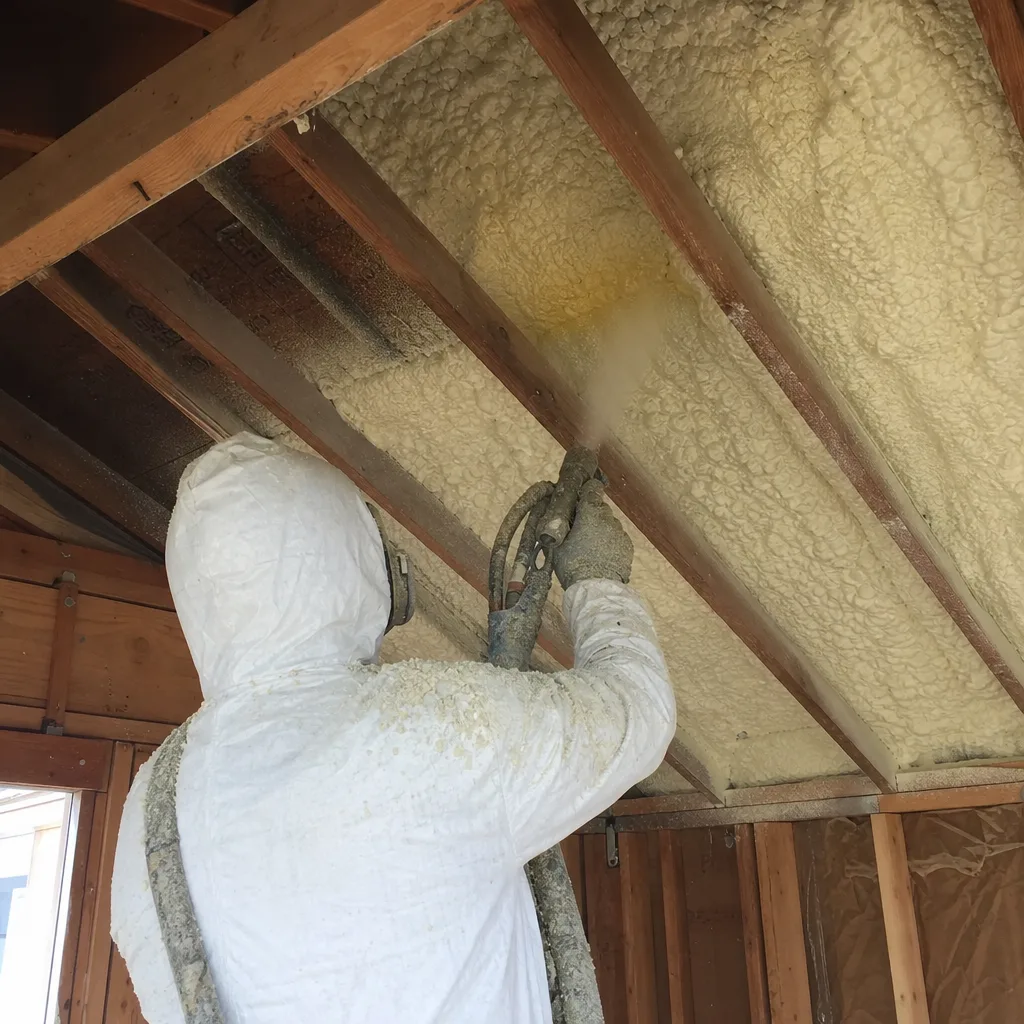
Applying closed-cell foam to the underside of the roof deck turns your attic into a semi-conditioned space. That matters in Culver City because it moves the thermal boundary to the roofline, where the fog condenses. The attic stops being a damp, vented box and becomes part of the conditioned envelope.
Rim Joist and Crawlspace Work
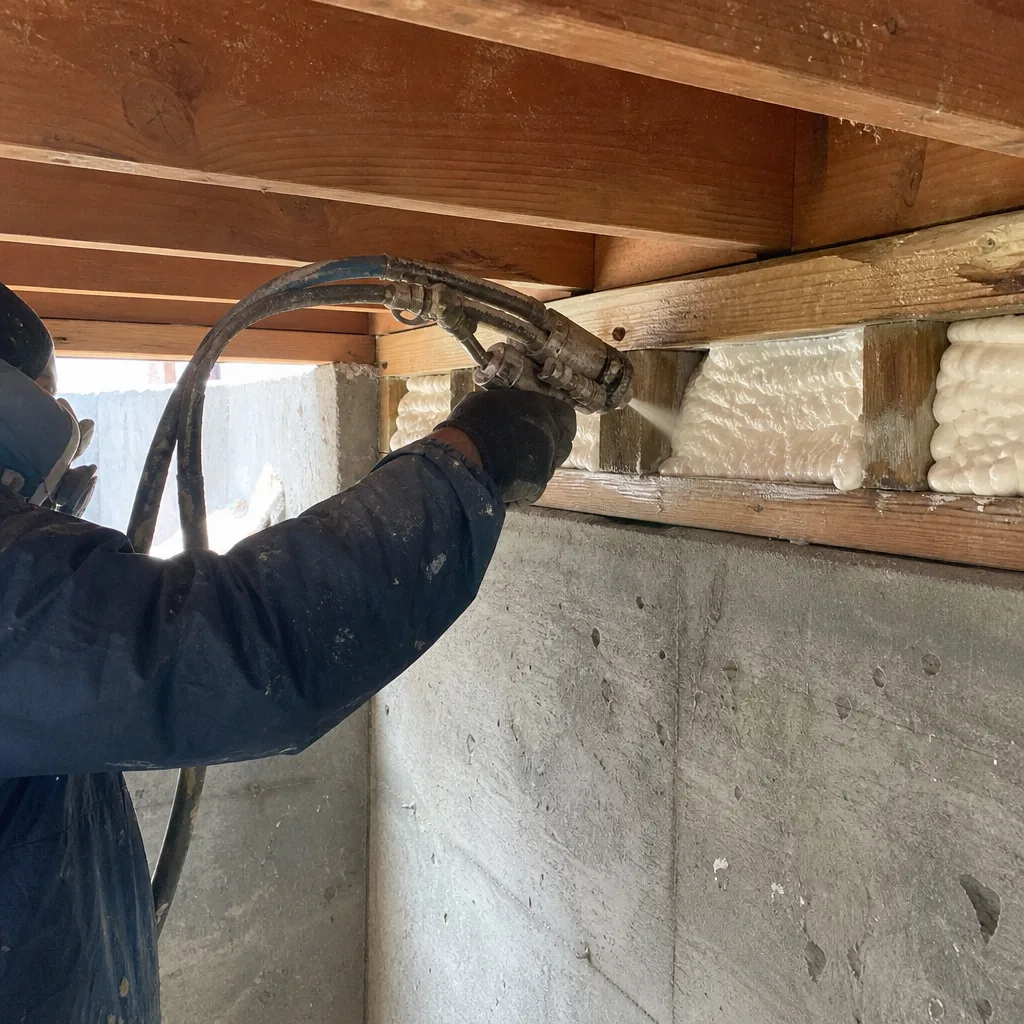
Older Culver City homes often have rim joists that were never insulated at all. The rim joist is where the floor framing meets the foundation wall, and it’s a notorious air leak point. Closed-cell foam locks that gap down. In crawlspaces, which are common in the older bungalows near downtown, closed-cell keeps soil moisture from migrating up into the floor assembly.
Trusted Brands We Service in Culver City
We’re authorized to install Owens Corning and CertainTeed products, two of the most recognized names in residential insulation, and our spray foam lineup includes both Icynene and Demilec. Those two foam systems are industry leaders for a reason: Icynene’s open-cell formulation is forgiving in existing wall cavities, while Demilec’s closed-cell products bring serious vapor control to the equation. For Culver City homeowners who want a sustainable option, we also carry GreenFiber recycled cellulose and Rockwool mineral wool. Eight brands. One contractor. The right fit for your home.
Common Spray Foam Insulation Problems We See in Culver City Homes
- Fog-damp batts hiding under the sheathing. On a 1930s stucco bungalow near Baldwin Hills, we found the original fiberglass batts on the ocean-facing slope sagging and damp from years of fog-driven condensation. From inside the attic, everything looked fine. The damage was sitting against the roof deck where nobody had looked in decades.
- No continuous air barrier. Older stucco homes in Culver City were built before air sealing was part of the conversation. Spray foam applied without sealing electrical penetrations, plumbing chases, and top plates can still allow marine-layer moisture to migrate into the assembly. The foam is only as good as the prep work.
- Attic conversions that don’t meet current ventilation codes. Culver City’s small-footprint homes are getting expanded upward. When an attic becomes living space, the ventilation strategy changes completely. If the new assembly isn’t designed for an unvented, spray-foamed roof deck, the foam can trap moisture in a tight space that has nowhere to dry.
- Spray foam trapping moisture in unvented assemblies. Closed-cell foam is a vapor barrier. That’s usually a feature in Culver City’s damp climate, but if the rest of the assembly isn’t designed to manage moisture properly, the foam can hold damp air against wood framing. The fix is always the same: correct the air sealing first, then apply the foam.
Pricing for Spray Foam Insulation in Culver City, CA
Here’s what you should expect to pay in Culver City. Open-cell spray foam runs $3.50 to $5.50 per board foot installed. Closed-cell runs $5.00 to $7.00 per board foot installed. A rim joist job in a typical 1940s bungalow lands between $1,800 and $3,200. A full attic roof deck runs $5,000 to $9,500. Garage ceilings run $2,800 to $5,400. ADU and addition work gets quoted by square footage against the Title 24 requirements. Call (877) 265-5712 for an exact quote. Estimates are free, and Allen Decker will walk you through the numbers in plain language.
We Also Serve Cities Near Culver City
Beyond Culver City, we regularly work in Culver City‘s neighboring communities: Ladera Heights, Century City, Venice, and Beverly Hills. Same team, same brands, same insulation-only focus. If you’re in one of those cities, we’re close by and can schedule around the same marine-layer conditions we deal with here every day.
Serving Culver City, CA — Our Local Coverage Area
We’re based in the Culver City area and know this community well. Use the map below to see our service coverage — if you’re nearby, we can almost certainly help.
FAQs About Spray Foam Insulation in Culver City
Most spray foam failures in Culver City aren’t foam failures at all. They’re prep failures. When you apply spray foam over damp, compressed batts or into an assembly that hasn’t been air sealed, the foam traps marine-layer moisture inside the cavity. The foam itself is doing its job; the installation didn’t address what was already wrong. We remove saturated existing insulation and seal penetrations before we spray. Call (877) 265-5712 and we’ll tell you what your attic actually needs before quoting anything.
Yes. A 1920s stucco bungalow takes spray foam well, especially closed-cell on the rim joist and roof deck. The key is checking the existing assembly for moisture damage before spraying. Original stucco over wood lath means the wall cavities are shallow, so open-cell foam is often the better fit there. The short answer: it’s absolutely doable, and done right, it transforms how those old homes hold temperature and manage moisture.
Closed-cell spray foam acts as a vapor barrier, which stops the damp air from condensing inside your attic or wall cavity in the first place. Open-cell foam manages moisture differently, allowing vapor to pass through while still stopping bulk air movement. In Culver City, we typically recommend closed-cell for roof decks and rim joists and open-cell for interior wall cavities. The right choice depends on where the foam is going and what’s on the other side of the assembly.
Closed-cell foam delivers about R-6.5 to R-7 per inch, acts as a vapor barrier, and adds structural rigidity. Open-cell delivers about R-3.5 to R-4 per inch, allows vapor to pass through, and is more forgiving in existing framed walls. For Culver City’s fog-belt conditions, closed-cell earns its premium on roof decks and anywhere marine-layer moisture is a factor. Open-cell works well in interior walls where you want the assembly to breathe.
Culver City ADUs must meet California Title 24 energy requirements, and spray foam is one way to get there, though not the only one. For detached garage conversions and stick-built ADUs, closed-cell spray foam on the roof deck and rim joists is a practical path to compliance because it packages high R-value and air sealing in one application. We quote ADU insulation against the specific plan set, not a generic square-foot price. Call (877) 265-5712 for a free estimate, and Allen Decker will review your plans with you.
Written by Allen Decker, Owner at North Tustin Insulation, serving Culver City and surrounding areas.