
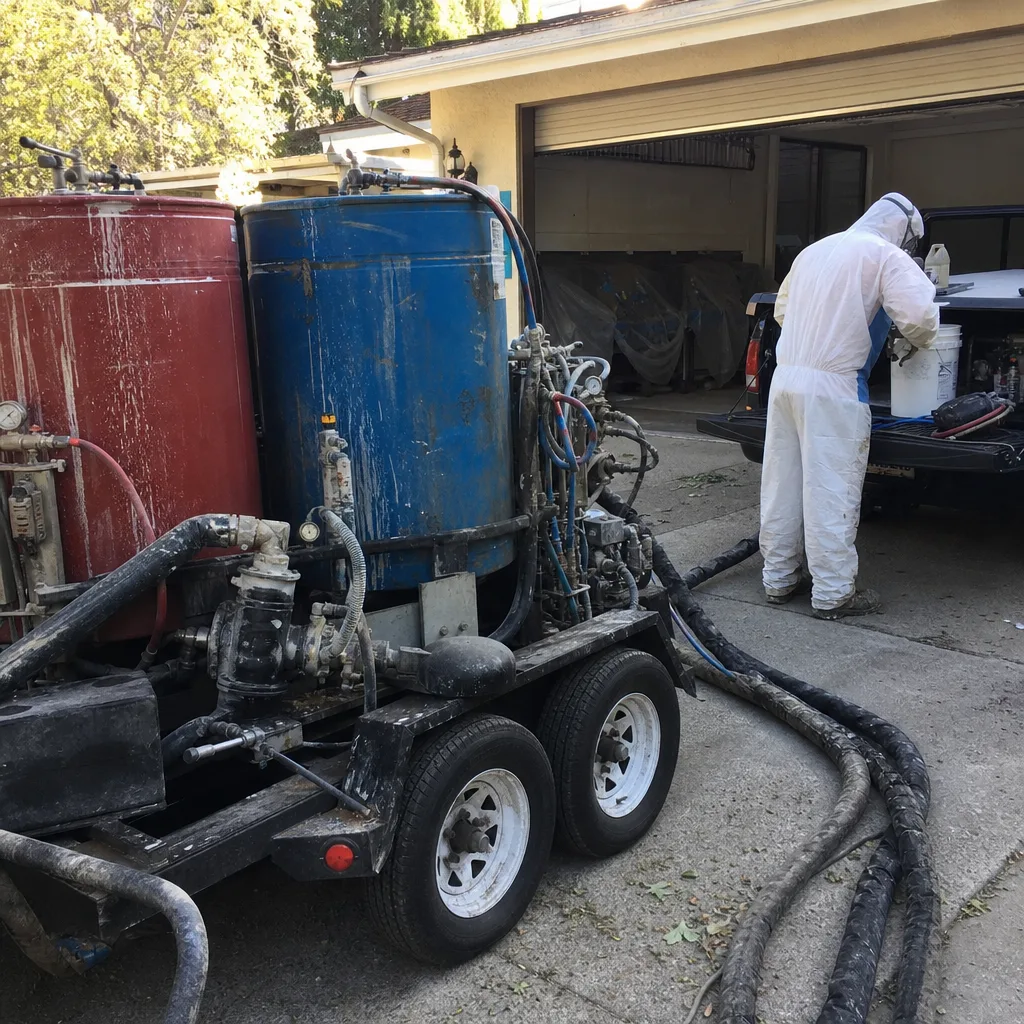
Fast, Reliable Spray Foam Insulation Across Riverside
Spray foam insulation in Riverside costs $1.90 to $3.80 per board foot for open-cell and $2.90 to $5.60 for closed-cell, which translates to roughly $4,500 to $9,800 for a typical 1,500-square-foot attic. Most Riverside homes we see are either citrus-belt bungalows with almost no original insulation or dense stucco tracts with the builder’s minimum R-value, and both need a real fix, not a topping-off. Our Spray Foam Insulation team works throughout 92503, 92504, 92505, and 92506, and we know what Riverside attics actually look like in August. Call Allen Decker’s team at (877) 265-5712 for a free estimate, and we’ll tell you straight what your home needs.
Why North Tustin Insulation Is Riverside’s Preferred Spray Foam Insulation Company
Riverside homeowners don’t want a contractor who does roofs and happens to install insulation on the side. They want someone who knows why a Wood Streets bungalow and a 1998 tract home in 92504 need entirely different foam applications. We carry both Icynene and Demilec spray foam, and we’re authorized to install Owens Corning and CertainTeed fiberglass when the job calls for a hybrid approach rather than full foam. That matters in Riverside, where the housing stock swings from knob-and-tube-era attics to 1990s truss roofs within a few blocks.
Our reputation in Riverside is built on showing up with the right material and telling homeowners when spray foam is the wrong call. We don’t push closed-cell foam into a tight attic that needs open-cell for ventilation, and we don’t tell someone with a sealed 2005 attic that they need a full removal when a targeted air seal would do. Allen Decker built this company around one trade: insulation. Every estimate, every crew, every brand relationship is concentrated on that single job. When you call (877) 265-5712, you’re talking to a specialist, not a dispatcher.
Spray Foam Insulation Contractors in Riverside
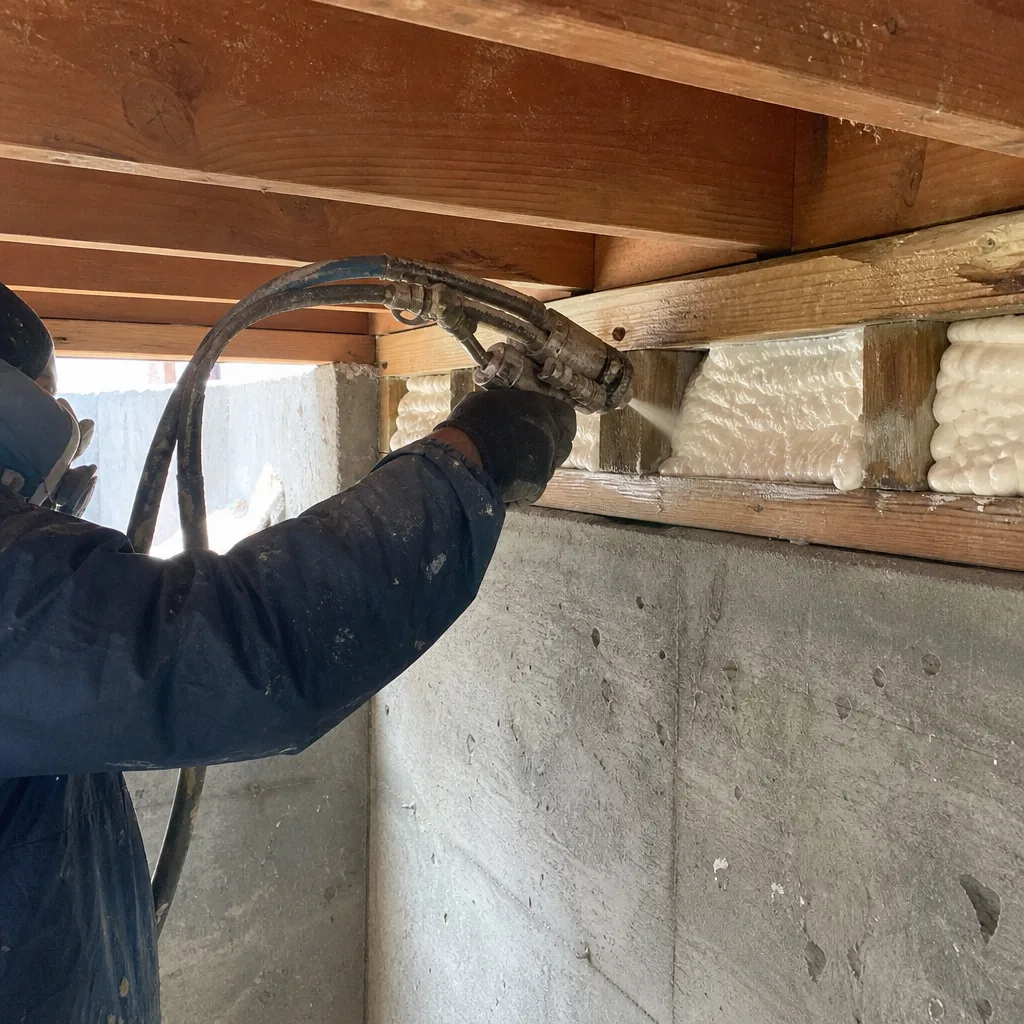
Spray Foam Insulation Contractors in Riverside work inside some of the tightest attic spaces in the Inland Empire. The job involves air-sealing every top plate, rim joist, and penetration, then applying open- or closed-cell foam at a consistent depth. In Riverside’s older citrus-belt homes, that often means removing decades of dust, debris, and compressed loose-fill first, because foam applied over dirty or sagging material performs poorly and traps heat. In newer tract homes, the work is cleaner: we seal the rim joists and roofline, then build the R-value up to what the original builder should have installed.
Riverside homeowners call us when they feel drafts in winter despite running the heater, when the upstairs is 12 degrees hotter than the downstairs in July, or when they open the attic hatch and feel a wall of heat. The fix is rarely complicated, but it has to match the specific roof geometry and the existing insulation layer. We’ve sprayed garage ceilings in 92503, unconditioned bonus rooms in 92505, and rim joists in crawlspace homes near Arlington Avenue where the floorboards whistled every time the Santa Anas kicked up.
Open-Cell and Closed-Cell Options
Open-cell foam breathes, costs less per board foot, and works well in Riverside attics where you still want some vapor movement. Closed-cell adds structural strength and blocks moisture completely, which matters in unvented roof decks and in crawlspaces that see winter condensation. We carry both Demilec and Icynene systems, so the choice is based on your home, not on which can we happen to have on the truck.
Rim Joist and Garage Foam Jobs
Rim joist spray foam in Riverside runs $1,400 to $2,600 for a typical two-story home, and it’s one of the least expensive ways to stop floor-level drafts. Garage ceiling foam, especially under a conditioned bonus room, usually costs $2,000 to $4,200 depending on square footage and access. These are smaller jobs, but they solve complaints we hear constantly from Riverside homeowners in 92504 and 92509.
Spray Foam Attic Insulation in Riverside
Spray Foam Attic Insulation in Riverside is the single highest-impact upgrade for homes built before 1990 and for any attic that bakes above 140°F from June through September. In the citrus-belt bungalows around downtown and the Wood Streets, we regularly pull out original loose-fill that has settled to a thin, dusty layer and batts that are compressed into sagging mats, baked flat by decades of inland heat. Spray foam solves two problems at once: it air-seals the gaps that let Santa Ana wind dust pour into the living space, and it insulates the roofline so the attic stops acting as a heat radiator.
We work differently in the 1980s-2000s stucco tracts across 92503 and 92504, where the builder’s minimal R-19 batts sit in a vented attic. There, the right move is often a hybrid: seal the top plates and penetrations with foam, then blow in GreenFiber cellulose over the batts to reach R-49. Pure closed-cell on the roof deck is an option, but it changes the attic’s ventilation profile and has to be done correctly in Riverside’s winter moisture conditions.
Unvented Roof Deck Application
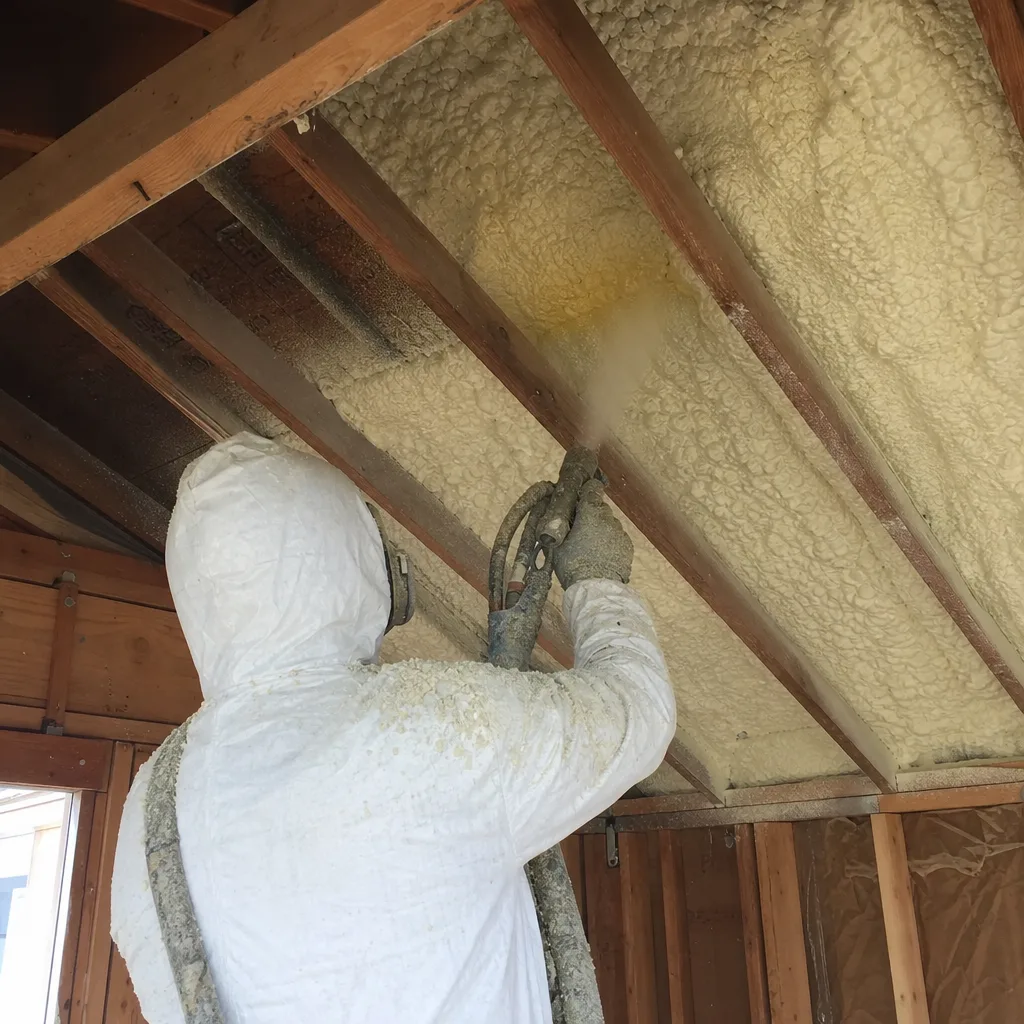
When Riverside homeowners want to turn the attic into usable space or stop dust intrusion entirely, we apply closed-cell foam to the underside of the roof deck. This creates an unvented, sealed attic that tracks closer to the home’s interior temperature. In the Wood Streets, we sprayed Icynene closed-cell into a 1940s bungalow where the original loose-fill had settled to almost nothing and added batts had baked into useless mats. We removed the debris, air-sealed the knob-and-tube-era top plates, and applied 2 inches of foam to the roof deck. The attic temperature dropped by over 30°F within a week, and the dust intrusion from Santa Ana winds stopped entirely.
Existing Insulation Removal and Prep
Riverside’s old attics aren’t clean. We remove compressed fiberglass, rodent droppings, and decades of dust before applying foam, because foam needs a clean, stable substrate to bond correctly. Skipping this step is exactly how Riverside get foam that peels, sags, and traps moisture. Our crews handle the full prep, including sealing around the old knob-and-tube wiring boxes where foam must never contact live conductors.
Trusted Brands We Service in Riverside
North Tustin Insulation carries eight nationally recognized product lines, and our Riverside clients benefit from real choice on every job. For spray foam specifically, we install both Demilec and Icynene systems, covering open-cell and closed-cell applications with two of the industry’s most proven formulations. When a Riverside attic calls for a hybrid approach rather than full foam, we pair those foam systems with Owens Corning fiberglass or Johns Manville batts for the fill layers. We keep materials stocked for Riverside jobs, not just Orange County, so a bungalow in 92506 doesn’t wait on foam that has to ship from Texas. Call (877) 265-5712 to talk through which system fits your home’s specific roof and wall assembly.
Common Spray Foam Insulation Problems We See in Riverside Homes
- Foam applied over compressed or dirty batts: In the older citrus-belt attics, we find foam that was sprayed directly over sagging fiberglass without removal. The foam can’t bond, heat gets trapped between layers, and the foam degrades within a few years. This is the most common failure we correct in 92501 and 92506.
- Moisture buildup in dense tract homes: In 92503 and 92504 stucco tracts, unvented foam retrofits sometimes create winter condensation issues when ventilation isn’t rebalanced. The foam seals the attic, but if the home’s existing air handler isn’t adjusted, damp air stays inside. We always evaluate the whole attic’s air profile before recommending closed-cell on the roof deck.
- Alley-load townhomes with tight clearances: Many Riverside townhomes and alley-load properties have attic hatches smaller than 22 inches and rooflines with barely enough room to kneel. Foam applied too thickly in one pass traps solvent fumes and creates a fire hazard during cure. We layer foam in controlled passes and verify ventilation before spraying.
- Knob-and-tube wiring buried in foam: Riverside’s pre-1950 homes still have active knob-and-tube circuits in some walls and ceilings. Spray foam must never encapsulate live K&T wiring, because the foam traps heat and increases fire risk. We identify and isolate these runs before foam touches the space, and we’ll tell you if an electrician needs to address anything first.
Pricing for Spray Foam Insulation in Riverside, CA
Open-cell spray foam in Riverside runs $1.90 to $3.80 per board foot installed, and closed-cell runs $2.90 to $5.60. A full attic air seal plus open-cell roof deck application for a 1,200-square-foot citrus-belt bungalow typically lands between $5,200 and $7,800. The same home treated with closed-cell for an unvented attic conversion runs $8,000 to $11,500. Rim joist work is usually $1,400 to $2,600, and garage ceiling foam sits between $2,000 and $4,200. The biggest cost drivers in Riverside are access through tight attic hatches, how much old material has to be removed, and whether the home has knob-and-tube circuits that need isolation. We give you a line-item estimate before we spray anything, and the estimate is free. Call (877) 265-5712 and Allen Decker’s team will walk you through it.
We Also Serve Cities Near Riverside
Our spray foam crews cover Riverside’s ZIP codes and the surrounding Inland Empire neighborhoods, including Rubidoux, Glen Avon, Pedley, and Sunnyslope. If you’re in one of these nearby communities and searching for Spray Foam Insulation in Riverside or the immediate area, the same team and same brand lineup cover your job. Call (877) 265-5712 and we’ll confirm service to your street.
Serving Riverside, CA — Our Local Coverage Area
We’re based in the Riverside area and know this community well. Use the map below to see our service coverage — if you’re nearby, we can almost certainly help.
FAQs About Spray Foam Insulation in Riverside
Yes, spray foam can be installed in a Riverside bungalow with knob-and-tube wiring, but only after the live wiring is identified and isolated so the foam never contacts energized conductors. We coordinate with a licensed electrician when needed, and we’ll be straight with you if the wiring needs remediation before insulation makes sense. Call (877) 265-5712 for an inspection.
Closed-cell spray foam handles Riverside’s climate extremes well because it blocks both radiant heat gain in summer and cold-air infiltration during winter mornings in the 30s, but the system has to match the attic’s ventilation design. In vented attics, we typically recommend open-cell on the roofline or a foam-plus-cellulose hybrid rather than making the roof deck unvented without evaluating moisture risk. The foam also stops dust from Santa Ana winds far better than fiberglass alone, because it air-seals the gaps, not just insulates over them.
Open-cell foam in Riverside typically cures enough for re-entry within 1 to 2 hours, and closed-cell within 4 to 12 hours, but we recommend staying out of the space for 24 hours, especially in tight Riverside attic hatches where fumes can linger. We verify ventilation before and after every spray. In Riverside’s low-humidity air, foam actually cures faster than coastal jobs, which helps keep project timelines short.
In most Riverside single-family homes, adding spray foam to an existing attic or rim joist does not require a building permit, but converting a vented attic to an unvented assembly can trigger permit requirements under California energy code. We handle the paperwork when it’s needed and tell you up front if your project requires city review. Call (877) 265-5712 and we’ll check your specific address and scope.
Spray foam helps alley-load Riverside townhomes by sealing the shared wall gaps and rim joists that transmit sound and let air bypass insulation, which is a common issue in older attached units. We work around the tight access these properties present, using smaller spray rigs and controlled passes so the foam goes where it’s needed without causing ventilation problems or damaging finished surfaces. For attached units with shared walls, the foam also limits air and odor transfer between units.
Ready to get answers specific to your Riverside attic? Call North Tustin Insulation at (877) 265-5712 for a free, line-item estimate from Allen Decker’s team. We’ll tell you what your home actually needs, and we’ll stand behind the work.
Written by Allen Decker, Owner at North Tustin Insulation, serving Riverside and the Inland Empire with focused spray foam and insulation expertise.