
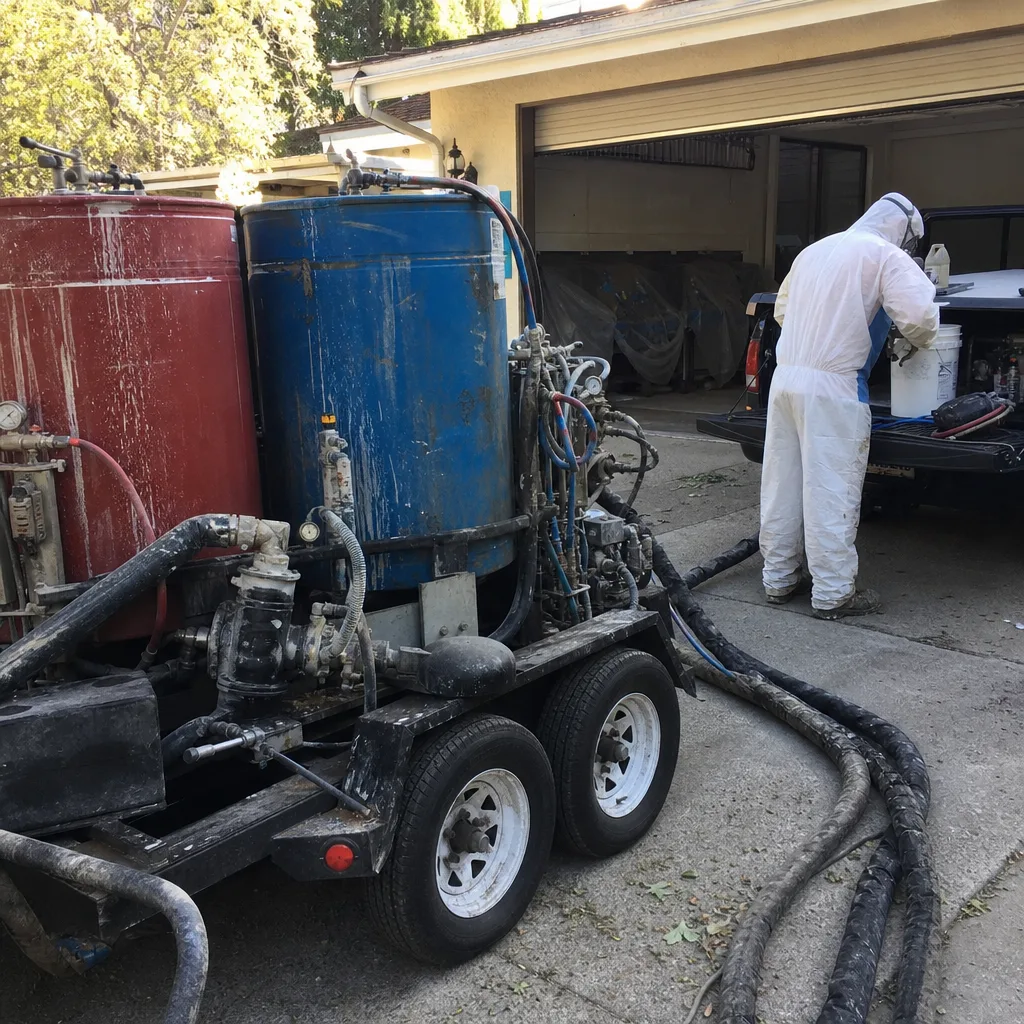
Fast, Reliable Spray Foam Insulation Across Rowland Heights
Spray foam insulation in Rowland Heights is the single most effective way to stop heat gain through your roof and seal the hidden air leaks common in 1960s – 1980s tract homes. Most attics off Colima Road and Fullerton Road hit 150°F or higher by mid-afternoon in summer, and that heat doesn’t stay in the attic. It pushes into living spaces through unsealed top plates, recessed lights, and compressed fiberglass. We install open-cell and closed-cell spray foam systems from Icynene and Demilec, matched to how your specific home was built and where it leaks. Call (877) 265-5712 for a free estimate and a straight answer about what your Rowland Heights attic actually needs.
Why North Tustin Insulation Is Rowland Heights’s Preferred Spray Foam Insulation Company
Our Spray Foam Insulation team has spent enough time in Rowland Heights attics to know the local housing stock inside out. The 1960s – 1980s tract builds that dominate 91748 share a set of recurring problems: wood-frame construction, stucco exteriors, low-pitch roofs, and decades of retrofits that have wrecked the original insulation. Homeowners here don’t have a generic house, so a generic recommendation won’t work. We carry eight insulation brands across fiberglass, mineral wool, cellulose, and spray foam categories, including Demilec and Icynene for spray foam, Owens Corning for fiberglass, and GreenFiber for recycled cellulose. That means the material recommendation is driven by your home’s actual condition, not by whatever system we happen to stock.
Allen Decker leads our team, and he’s particular about how spray foam gets applied in Rowland Heights’s older homes. The framing is original. The drywall is original. The top plates were never sealed. When we spray foam here, we’re not just adding R-value; we’re fixing the air-sealing problems that a 1972 tract home was never designed to address. That’s the difference between an insulation company that shows up with one product and a specialist who understands how Rowland Heights homes actually fail.
Closed Cell Spray Foam Insulation in Rowland Heights
Closed Cell Spray Foam Insulation is the workhorse solution for Rowland Heights homes because it delivers high R-value per inch and acts as an air barrier, a vapor barrier, and a structural adhesive all at once. In the low-pitch attics off Colima Road and throughout 91748, closed-cell foam bonds directly to the underside of the roof deck and seals the framing gaps that let 150°F air pour into the living space. For unpermitted additions and bonus rooms, it’s often the only way to create a continuous thermal boundary without tearing out drywall. A typical closed-cell spray foam job in Rowland Heights runs $1,400 – $3,600 for a standard attic roof deck or rim joist application, depending on square footage and foam depth.
Rim Joist Sealing in Tract Homes
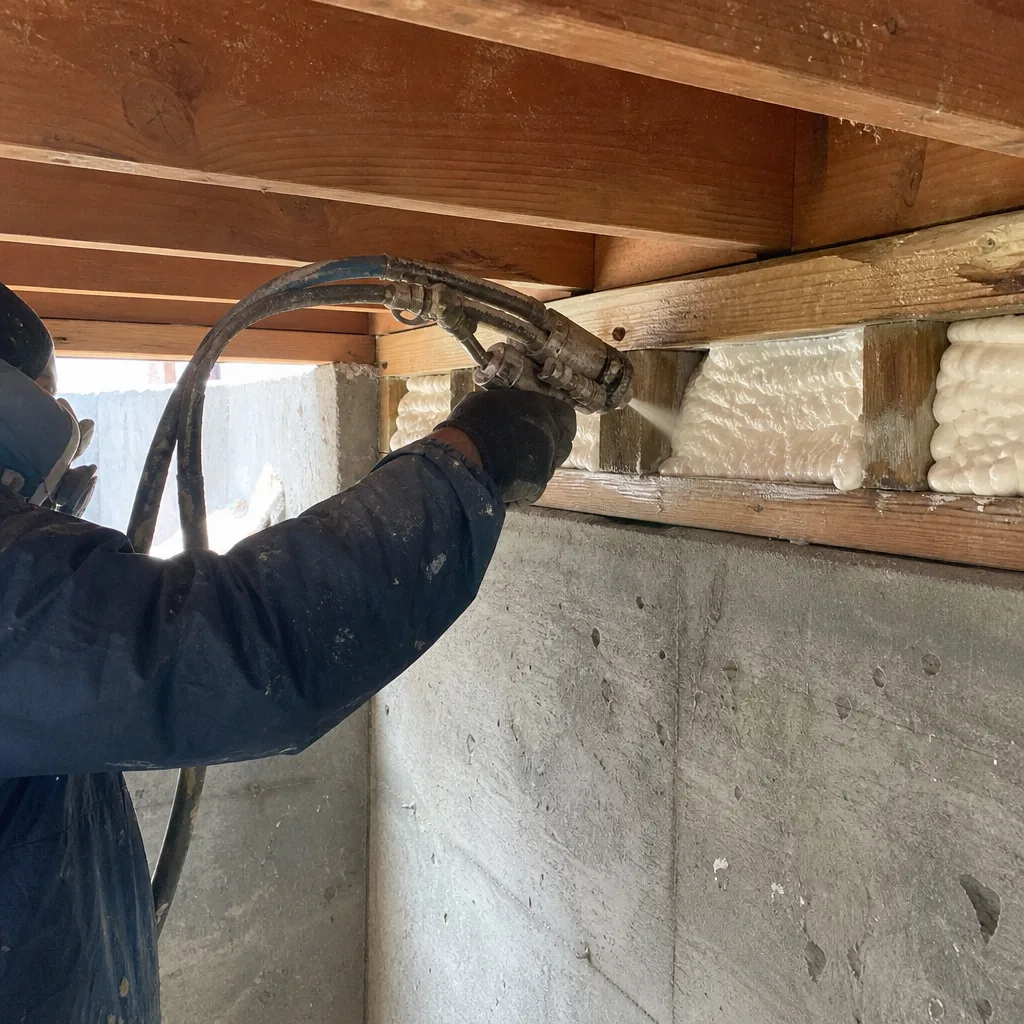
Rim joists in Rowland Heights’s older wood-frame homes are a major source of air infiltration and dust. Closed-cell foam sprayed along the rim joist seals the joint between the foundation and framing, stops outside air from entering, and reinforces the structural connection in one pass.
Roof Deck Applications
For homes with HVAC equipment or storage in the attic, spraying closed-cell foam directly on the roof deck moves the building envelope to the roofline. This keeps the entire attic space within the conditioned envelope, which matters in Rowland Heights where attic temperatures routinely exceed 150°F from late May through October.
Open Cell Spray Foam in Rowland Heights
Open Cell Spray Foam is the right choice for Rowland Heights homeowners who need serious air sealing and noise reduction at a lower material cost than closed-cell. It expands aggressively to fill odd cavities, warped framing, and bonus-room knee walls where fiberglass batts leave gaps no matter how carefully they’re installed. In the tract neighborhoods off Fullerton Road, where evening marine-layer air meets the next day’s inland heat, open-cell foam on attic floor top plates creates an air seal that stops convective loops cold. Expect to pay $900 – $2,800 for a typical open-cell spray foam project in Rowland Heights, with attic floor and knee wall applications on the lower end and full roof deck coverage on the higher end.
Knee Walls in Added Rooms
Bonus rooms and garage conversions often have knee walls that were never insulated or air-sealed properly. Open-cell foam fills the entire cavity and adheres to every surface, eliminating the bypass paths that let hot attic air migrate around the insulation.
Attic Floor Top Plate Sealing
Before adding or re-leveling blown insulation in a Rowland Heights attic, the top plates need to be sealed. Open-cell foam is applied along every framing intersection and around every ceiling penetration, cutting off the pathways that make blown-in insulation underperform in older homes.
Trusted Brands We Service in Rowland Heights
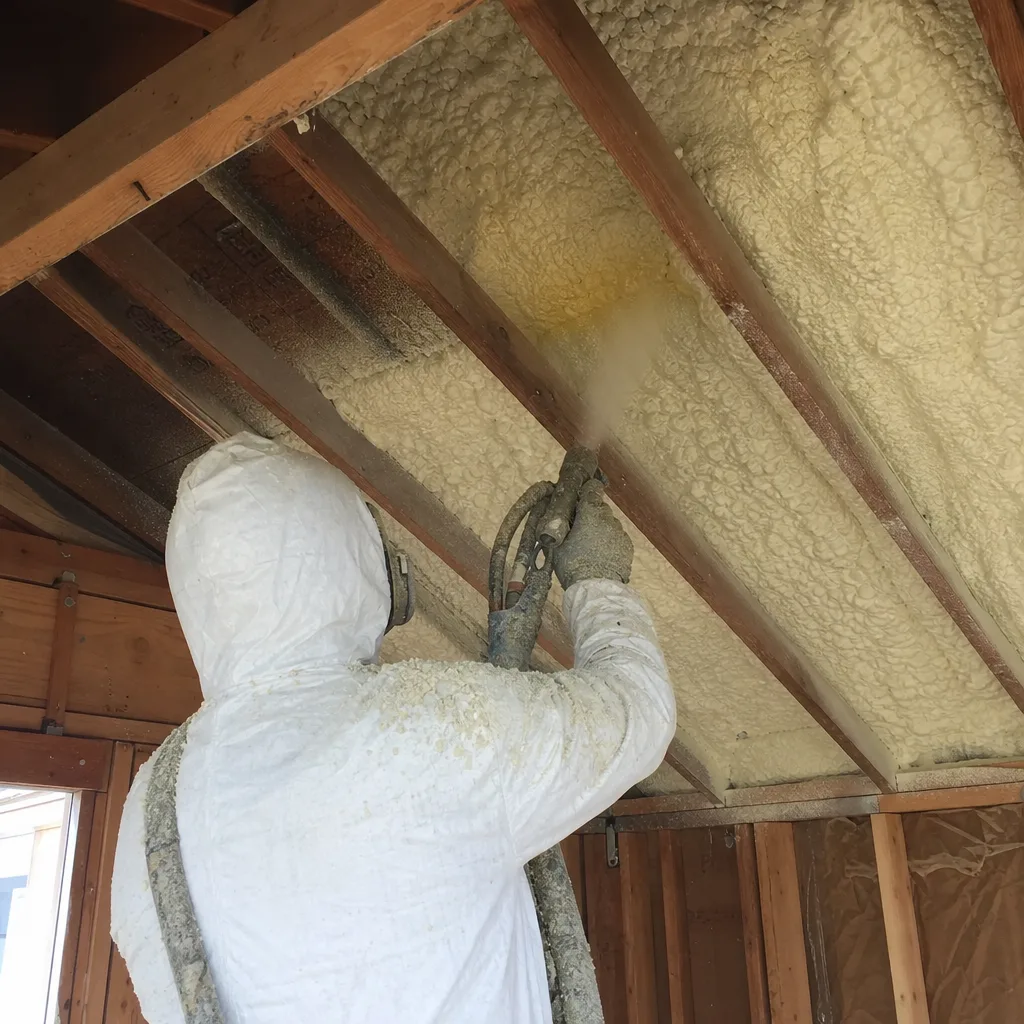
We install and service spray foam systems from Demilec and Icynene, two of the most respected names in open-cell and closed-cell insulation. For Rowland Heights homes where blown-in or batt insulation is the better fit, we carry Owens Corning, Johns Manville, Knauf, Rockwool, CertainTeed, and GreenFiber. That’s eight nationally recognized brands across four insulation categories, which means we don’t have to talk you into a product because it’s the only one we stock. When you call us about Rowland Heights spray foam, we’ll tell you honestly whether closed-cell on the roof deck, open-cell on the top plates, or a re-level with GreenFiber cellulose is the smarter spend for your home.
Common Spray Foam Insulation Problems We See in Rowland Heights Homes
- Unsealed top plates from decades of retrofits. Every HVAC change, plumbing re-route, and electrical upgrade in a 1960s – 1980s tract home leaves the top plates unsealed. Hot attic air bypasses whatever insulation is up there and pours into the rooms below.
- Compressed or displaced blown-in fiberglass. Additions built off the original framing – kitchens, bathrooms, bonus rooms – almost always displace the original attic insulation. We find bare spots over the new rooms and compressed fiberglass everywhere else.
- Radiant heat gain on western-facing garage roofs. Garage roofs that face the afternoon sun off Fullerton Road absorb enormous radiant heat. Without a radiant barrier or closed-cell foam on the roof deck, the garage becomes an oven that heats the whole house.
- Missing or inadequate attic stair covers. A surprising number of Rowland Heights homes have no insulated cover over the pull-down attic stair. That open hole is a direct thermal leak, and combined with the marine-layer return and next-day heat, it’s one of the fastest-payback fixes we do.
Pricing for Spray Foam Insulation in Rowland Heights, CA
Closed-cell spray foam in Rowland Heights typically runs $1.15 – $2.10 per board foot for standard applications, which puts a rim joist job around $1,200 – $2,500 and a full attic roof deck at $2,800 – $5,500. Open-cell lands lower, usually $0.45 – $0.85 per board foot, so a standard attic floor air-seal and top plate application falls between $900 and $2,100. What moves the number: roof pitch and accessibility, how much existing insulation needs to be removed or re-leveled, and whether we’re sealing bonus-room knee walls. Call (877) 265-5712 for a free inspection. Allen Decker will give you an exact number before any work starts, and the estimate is free whether or not you move forward.
We Also Serve Cities Near Rowland Heights
Our spray foam crews work throughout the eastern San Gabriel Valley. If you’re in South San Jose Hills, Walnut, Valinda, or Hacienda Heights, you’ll get the same brand-matched, home-specific spray foam recommendation we provide in Rowland Heights. Same team, same eight-brand lineup, same straight answers.
Serving Rowland Heights, CA — Our Local Coverage Area
We’re based in the Rowland Heights area and know this community well. Use the map below to see our service coverage — if you’re nearby, we can almost certainly help.
FAQs About Spray Foam Insulation in Rowland Heights
Closed-cell spray foam is better because it air-seals while it insulates, and air sealing is the core problem in Rowland Heights tract homes from the 1970s. Blown-in fiberglass slows conductive heat transfer but does nothing to stop the convective loops created by unsealed top plates, recessed lights, and displaced insulation from decades of retrofits. In an attic that hits 150°F, hot air finds every gap. Closed-cell foam fills those gaps and bonds to the framing, cutting off the bypass paths that make fiberglass underperform in older wood-frame construction. Call (877) 265-5712 and we’ll show you exactly where your home is leaking before recommending any material.
No, spray foam should not be applied over existing blown-in insulation. The foam needs direct contact with the framing or roof deck to bond properly, and loose-fill insulation blocks that bond. What we do in Rowland Heights attics is remove or re-level the existing blown-in material first, then apply spray foam to the top plates, knee walls, or roof deck, and then re-install the blown-in material where appropriate. We re-level existing fiberglass with GreenFiber cellulose regularly. The result is better than just adding more insulation on top of a mess.
Yes. The evening marine-layer return and cold winter mornings put Rowland Heights homes through a daily temperature swing that punishes any insulation with gaps. Spray foam’s continuous air seal keeps the conditioned air in regardless of what’s happening outside. During winter mornings in the 30s and low 40s, the sealed envelope prevents warm air from escaping through the attic. During summer, it blocks the 150°F attic air from entering. The same air seal works for both problems because it stops the air movement that drives both heat loss and heat gain. Call us at (877) 265-5712 for a free assessment.
Spray foam, particularly closed-cell applied to the underside of the garage roof deck, blocks radiant heat gain by creating a low-permeability thermal break that stops the heat from ever entering the garage space. Homes off Fullerton Road with western-facing garages absorb hours of direct afternoon sun, and a standard batt or blown-in job in the garage ceiling can’t stop that heat from radiating into the space below. Closed-cell foam on the roof deck or a radiant barrier combined with top-plate sealing is the fastest-payback upgrade we quote in that part of Rowland Heights. Get a free quote at (877) 265-5712.
The best approach for a bonus room over a garage is closed-cell spray foam on the ceiling and knee walls, plus open-cell or closed-cell sealing of the rim joists and top plates where the addition meets the original framing. These additions were rarely insulated or air-sealed properly when they were built, and the underside of the room over the garage gets hit with heat from below and from the roof above. Closed-cell foam on the roof deck creates a continuous thermal boundary, and sealing the framing intersections stops the air bypass that makes those rooms freeze in winter and bake in summer. Call (877) 265-5712 and we’ll inspect the actual construction before quoting a number.
Written by Allen Decker, Owner at North Tustin Insulation, serving Rowland Heights and the surrounding San Gabriel Valley communities.