
Fast, Reliable Spray Foam Insulation Across Santa Monica
Spray foam insulation in Santa Monica homes is a different job than it is ten miles inland. That marine layer you wake up to most mornings? It’s carrying moisture into your walls and attic, and standard insulation methods don’t always account for it. We work on bungalows from Ocean Park to Sunset Park, mid-century stucco homes north of Montana, and everything in between. If you’re tired of damp-feeling rooms, cool drafts near baseboards, or an attic that smells musty after every fog cycle, call us at (877) 265-5712. We’ll walk the house with you and tell you what’s actually going on.
Why North Tustin Insulation Is Santa Monica’s Preferred Spray Foam Insulation Company
We’re insulation-only contractors. That’s not a slogan; it’s the whole business. When we show up to a Santa Monica home, we’re not also bidding a roof or HVAC replacement. Every conversation is about one thing: what the walls and attic need. We carry eight national insulation brands across fiberglass, mineral wool, cellulose, and spray foam, so when we recommend something, it’s because the material fits the house, not because it’s the only option on the truck.
For spray foam specifically, we install Icynene and Demilec systems. Both are industry leaders in open-cell and closed-cell foam, and having both in our lineup matters more in Santa Monica than most places. The coastal moisture problem we see in 90402, 90405, and down through Ocean Park means the foam chemistry and installation method have to be selected carefully. Allen Decker, our owner, has spent enough time inside Santa Monica wall cavities to know exactly what we’re dealing with: old wood lath, single-wall construction, and moisture patterns tied to the marine layer.
We’ve worked in homes across 90401, 90402, 90410, and 90411, and the recurring theme is the same. Older bungalows with no insulation in the walls, damp framing hidden behind lath and plaster, and homeowners who’ve been told fiberglass batts will solve it. Sometimes they will. Often they won’t. We’ll tell you which one applies to your house before we quote anything.
Spray Foam Attic Insulation in Santa Monica
Spray Foam Attic Insulation in Santa Monica homes usually means one of two things: sealing the roofline (the attic becomes a conditioned space) or sealing the attic floor and top plates to stop air movement between the living space and the attic. For most older Santa Monica houses, the second one matters more. The morning marine layer dumps moisture into attic air every single day. If the top plates, can lights, and plumbing penetrations aren’t sealed, damp air finds its way into the insulation and framing. If the insulation doesn’t seal against air movement, the whole assembly underperforms and the house feels humid even when temperatures are mild.
A typical spray foam attic job in Santa Monica runs $2,800 – $6,500 depending on attic size, access, and whether we’re sealing the floor deck or the roofline. Open-cell Icynene runs on the lower end for larger areas; closed-cell costs more per board foot and is used when roof flashing, flat roof decks, or a specific vapor profile calls for it.
Sealing Top Plates and Penetrations
This is the step most insulation contractors skip in Santa Monica because it’s tedious. We don’t skip it. If the top plates aren’t sealed, the foam’s air-sealing benefit is mostly wasted. We foam around every electrical penetration, plumbing stack, and can light before the main attic application.
Conditioned Attics for Coastal Homes
Some Ocean Park and Santa Monica Canyon homeowners choose to move the thermal boundary to the roof deck itself. That means spray foam on the underside of the roof sheathing, which keeps the attic space within the home’s conditioned envelope. It also means roof repairs or re-roofing down the line requires cutting into foam, so we discuss the trade-offs with you honestly before moving forward.
Spray Foam Wall Insulation in Santa Monica
Spray Foam Wall Insulation in Santa Monica is where this job gets genuinely specialized, especially in the pre-1940s bungalow stock that dominates Ocean Park, Sunset Park, and the streets south of Montana. Many of these homes have single-wall or wood-lath construction with no insulation whatsoever. The wall cavity, if you can call it that, is often only two to three inches deep. The problem isn’t heat loss; it’s moisture. Onshore Pacific air flows through the wall assembly, and when it hits a cold surface inside the cavity, it condenses. Spray foam can be the right answer, but it has to be installed with vapor management in mind, or you’ve created a rot chamber behind the lath.
A typical spray foam wall insulation job in Santa Monica runs $3,200 – $8,400 depending on the number of exterior walls, access to the cavities, and whether knob-and-tube wiring is present. Working around old wiring adds time and labor because the wiring runs must be isolated before foam goes in.
What Happens Behind the Wall
On a 1930s single-wall bungalow in Ocean Park, we opened a wall to find original wood lath over knob-and-tube wiring, with damp framing that had been soaking up morning marine layer moisture for years. We rerouted and isolated the wiring runs, then used Icynene spray foam in the wall cavities with a vapor-aware approach so the assembly could manage moisture rather than trap it. The homeowner’s persistent musty smell and cool-morning drafts were gone at the next walkthrough. That’s the kind of problem you only solve by opening the wall and looking.
Closed-Cell vs. Open-Cell in Coastal Walls
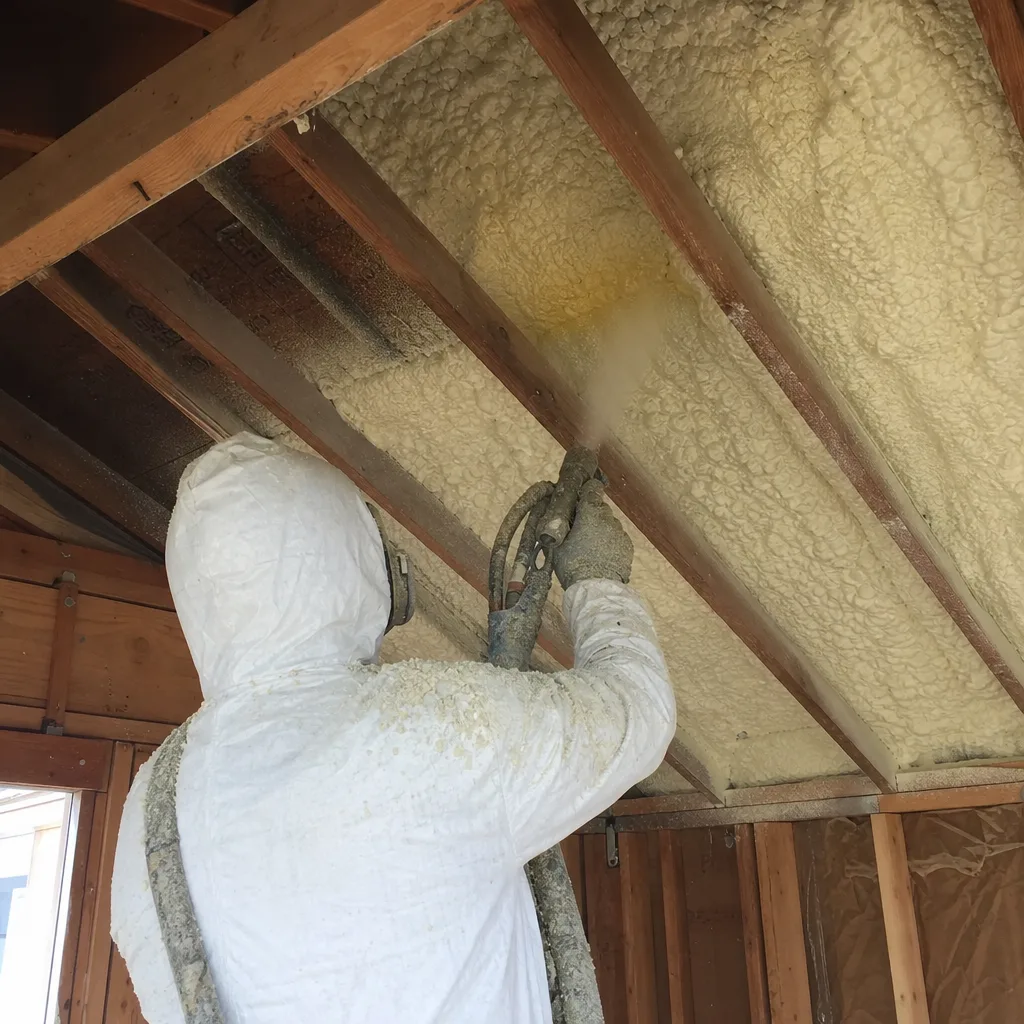
Closed-cell foam is a vapor barrier. Open-cell isn’t. In an inland climate, that distinction rarely comes up. In Santa Monica, it’s the entire conversation. If we put closed-cell into a single-wall bungalow cavity without a clear vapor strategy, we’re sealing moisture against old framing. That’s how rot starts. We use open-cell Icynene in many of these walls because it allows the assembly to breathe and dry. We may choose Demilec closed-cell where a conditioned attic or crawlspace boundary needs a stronger air and vapor seal. The choice follows the wall, not the marketing brochure.
Trusted Brands We Service in Santa Monica
We install Spray Foam Insulation from Icynene and Demilec, both of which we’ve chosen for specific coastal applications. Icynene open-cell handles the moisture-breathing walls of older bungalows well. Demilec closed-cell covers higher-moisture barriers like rim joists and flat roof decks. We also carry CertainTeed and GreenFiber for Santa Monica homes where a fiberglass or recycled cellulose solution makes more sense than foam. We keep our material orders local and scheduled, so Santa Monica jobs don’t stall waiting on supply runs from inland warehouses.
Common Spray Foam Insulation Problems We See in Santa Monica Homes
- Marine-layer moisture trapped against single-wall framing: Closed-cell foam applied without a vapor strategy in a 1920s – 40s bungalow can hold Pacific moisture against old wood framing, accelerating rot instead of preventing it. We vet the wall assembly before choosing foam type.
- Knob-and-tube wiring buried under spray foam: Pre-1940s Ocean Park and Sunset Park homes often still have active or abandoned knob-and-tube. Foaming over live wiring without isolation creates a concealed heat problem and a moisture trap. We inspect and isolate wiring before insulating.
- Unsealed top plates making attic foam sweat: If the attic floor penetrations aren’t sealed before the foam goes in, the morning marine layer’s damp air migrates into the new insulation and reads as ceiling sweating. The fix is proper air sealing first, then foam.
- Single-wall construction with no cavity to fill: Some Santa Monica bungalows don’t have a standard stud cavity at all. In these cases, spray foam may go onto the wall’s interior plane or inside a new build-out, and the approach must be adapted to the actual construction. One-size-fits-all estimates are a red flag.
Pricing for Spray Foam Insulation in Santa Monica, CA
Here’s what we’re seeing on current Santa Monica bids. Spray foam attic insulation: $2,800 – $6,500. Spray foam wall insulation: $3,200 – $8,400. Rim joist spray foam in a crawlspace: $900 – $2,200. Garage ceiling spray foam: $1,500 – $3,800. Roof deck spray foam: $4,500 – $9,000. What moves the number in Santa Monica specifically is the age of the house and whether we’re working around knob-and-tube, single-wall framing, or an existing insulation layer that has to come out first. Every estimate is free, and every quote is line-itemed so you can see exactly where the money goes. Call (877) 265-5712 to schedule a walkthrough.
We Also Serve Cities Near Santa Monica
Our crews cover the full coastal stretch from Santa Monica north into Venice and south through Culver City, Century City, and Beverly Hills. If you’re a few blocks over the city line, we’ll still come out. The homes are often the same era with the same marine-layer moisture patterns, so what we know from Santa Monica applies directly.
Serving Santa Monica, CA — Our Local Coverage Area
We’re based in the Santa Monica area and know this community well. Use the map below to see our service coverage — if you’re nearby, we can almost certainly help.
FAQs About Spray Foam Insulation in Santa Monica
Spray foam seals air movement, which is the actual problem in most Santa Monica bungalows. Fiberglass slows heat transfer but allows damp marine air to pass through it, carrying moisture into the wall cavity. In a single-wall 1920s bungalow, that air movement is exactly what keeps rooms feeling damp and drafty. Spray foam stops that airflow at the source. Call (877) 265-5712 and we’ll explain what your specific wall type needs.
No, not directly over live knob-and-tube. We inspect the wall first, coordinate with a licensed electrician to either decommission or reroute the wiring, then isolate the remaining runs and foam the cavity. It’s more work, but burying live wiring under foam is a fire hazard and a moisture trap. We won’t do it to hit a lower price.
It can, if the wrong foam is used and installed without a vapor strategy. Closed-cell foam is a vapor barrier; in a single-wall bungalow with no sheathing, it can seal damp against the framing and cause rot. We typically recommend open-cell Icynene for these walls because it allows the assembly to dry toward the interior. Call (877) 265-5712 for a free assessment of your wall type.
Yes, but only if the top plates and penetrations are sealed before the foam goes in. The marine layer’s damp air enters the attic through gaps around plumbing, wiring, and framing. Foam seals those gaps and stops the air movement that carries moisture. Without the air sealing step, the foam underperforms. We do the sealing as part of every attic job.
Yes, we install both. Icynene open-cell is our default for moisture-breathing bungalow walls. Demilec closed-cell goes into rim joists, flat roof decks, and anywhere a stronger air and vapor seal is required. Having both systems on the truck means we match the foam to the wall, not the wall to the foam. Call (877) 265-5712 and we’ll tell you which one fits your house.
Get Your Santa Monica Spray Foam Estimate
If your Santa Monica home has damp walls, a musty attic, or rooms that never quite feel comfortable, spray foam might be the right fix. Or it might not be. We’ll tell you the truth, show you the wall cavity if we can, and quote the work with real numbers. Call North Tustin Insulation at (877) 265-5712 and schedule a free estimate. We’ll bring the moisture meter, the scope, and an honest recommendation.
Written by Allen Decker, Owner at North Tustin Insulation, serving Santa Monica and the surrounding coastal communities.