
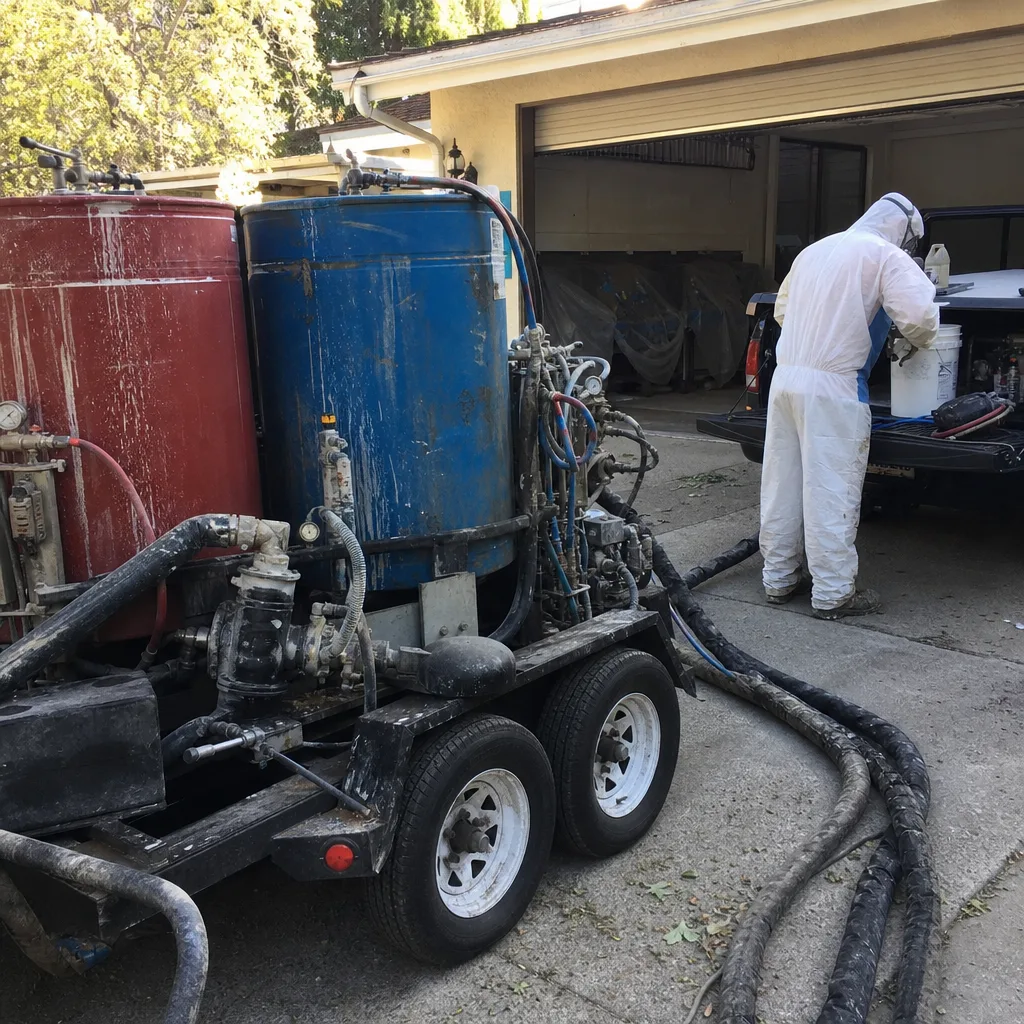
Fast, Reliable Spray Foam Insulation Across Signal Hill
Spray foam insulation in Signal Hill typically runs $3.50 to $7.00 per square foot installed, depending on whether you need open-cell for interior walls or closed-cell for rim joists, roof decks, and exterior sheathing. Most Signal Hill homes we work on are 1940s – 1960s stucco bungalows and tract houses with little to no existing cavity insulation, so the performance jump after a retrofit is immediate: cooler bedrooms in August, drier attics during marine-layer season, and utility bills that stop spiking every summer. We’ve foamed attics, walls, and rim joists all across 90755, from homes along Cherry Avenue up to the hillside streets above the Panorama Promenade. If you’re tired of rooms that never hold temperature, call us at (877) 265-5712 for a free estimate.
Why North Tustin Insulation Is Signal Hill’s Preferred Spray Foam Insulation Company
We’re an insulation-only contractor. That matters in Signal Hill because the homes here demand more than a generic blow-and-go job. Allen Decker runs every project with a simple rule: match the material to the house, not the other way around. That’s why we carry Icynene and Demilec spray foam systems side by side, with Owens Corning and GreenFiber in the lineup when fiberglass or cellulose is the better call. When you call us, the recommendation is driven by your walls, your wiring, your exposure to fog and sun, and your budget. Not by whatever happens to be loaded on the truck.
Our Spray Foam Insulation team has worked on Signal Hill homes where attics sit directly above active or capped oil wellheads. That’s not a detail you learn from a franchise playbook. Around Hill Street, Temple Avenue, and the slope facing Long Beach, vent lines and casing stubs poke through ceilings and rim joists in ways neighboring cities never see. We know to address those penetrations first, because spraying foam over them seals in exactly what you want kept out.
Signal Hill homeowners tell us the same things: the house never felt right in summer, the attic smelled musty after foggy mornings, or the energy audit showed massive air leakage at the rim joist. We see those conditions every week here. The housing stock, the coastal moisture, and the oil-field infrastructure combine to create insulation problems that are specific to this two-square-mile city.
Key Takeaways for Signal Hill Homeowners
- Spray foam retrofits in Signal Hill require sealing around attic vent lines and oil-field penetrations before foaming, a step most contractors skip.
- Closed-cell foam is the standard choice for rim joists and roof decks in 1940s – 1960s homes with original wood-frame construction.
- Marine-layer fog off the Port of Long Beach creates a real condensation risk if open-cell foam is sprayed against exterior stucco without a moisture assessment.
- We carry both Icynene and Demilec so the foam recommendation fits your home’s specific exposure and age.
- Free estimates at (877) 265-5712, and we know 90755 well enough to quote accurately the first time.
Spray Foam Wall Insulation in Signal Hill
Spray Foam Wall Insulation in Signal Hill usually means retrofitting an original 1940s – 1960s stucco home that was built with empty wall cavities. Many of these houses went up during the oil boom, when insulation wasn’t code-required and energy wasn’t a line item anyone thought about. The job involves drilling access points through exterior stucco or interior drywall, injecting foam into each stud bay, and sealing around every penetration before the foam cures. For most Signal Hill homes, closed-cell foam is the right call: it adds structural rigidity to old wood framing, blocks air movement completely, and won’t sag or settle over time. A typical wall cavity retrofit here runs $4.50 to $7.00 per square foot of wall area, depending on access and how much prep the existing wiring requires.
Why Closed-Cell Wins in Signal Hill’s Fog Zone
The marine layer that rolls in off the harbor most mornings puts moisture against your exterior walls for hours at a stretch. Closed-cell foam acts as a vapor retarder and air barrier in one pass. Open-cell sprayed directly against stucco in this climate can allow that damp air to reach the foam surface and condense, which degrades adhesion over time. In Signal Hill, we default to closed-cell for exterior-facing cavities unless a specific project calls for open-cell’s breathability on interior partition walls.
Working Around Old Wiring
A lot of Signal Hill’s original homes still have knob-and-tube or early romex in the wall cavities. Foam can be safely sprayed around older wiring, but the job has to be planned first. We identify where circuits run before drilling, and we’ll pause the wall foam if an electrical upgrade is on your short list. Foaming first and rewiring later means cutting back into fresh foam. Better to sequence the work once, correctly.
Rim Joist Spray Foam in Signal Hill
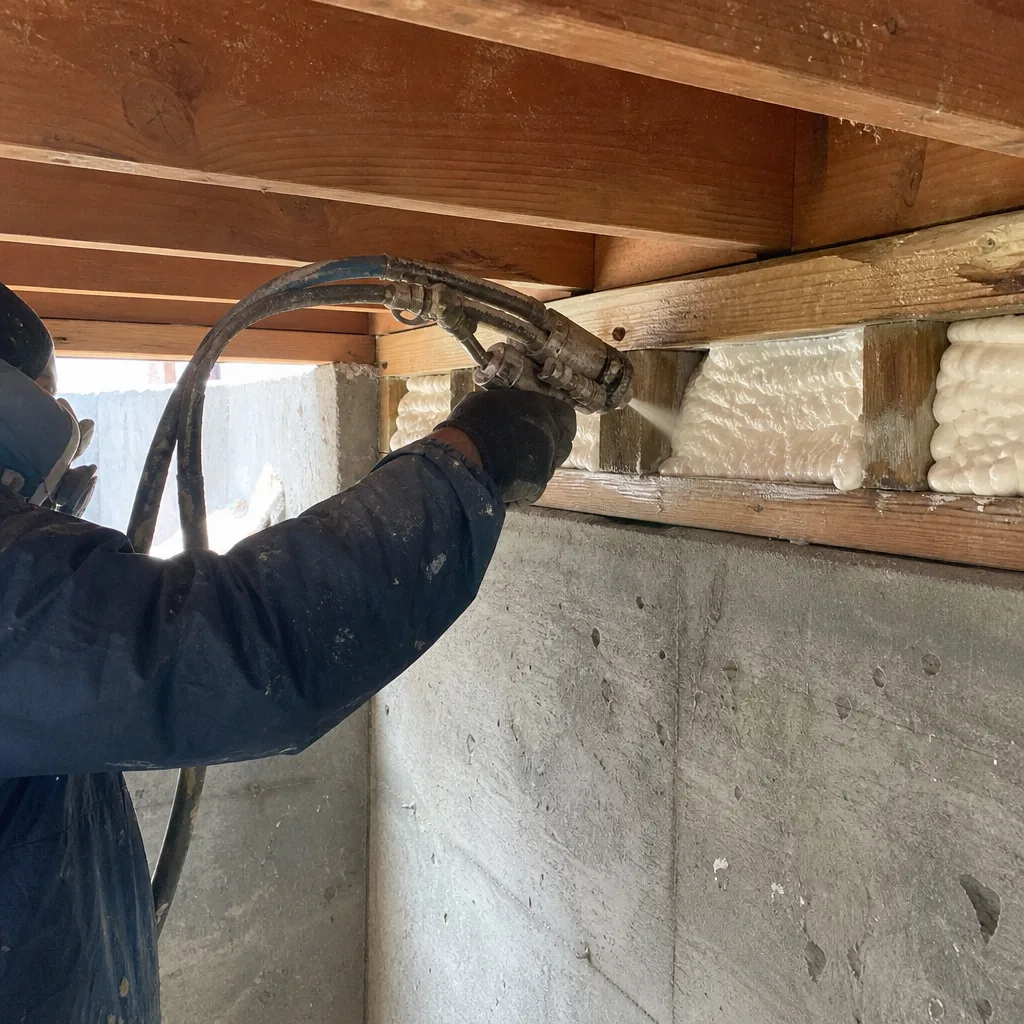
Rim Joist Spray Foam in Signal Hill is the single highest-return air-sealing project most of these mid-century homes can get. The rim joist is the band of framing where your floor meets the foundation, and in original 1940s – 1960s construction it’s almost never sealed. That gap lets draft in year-round, pulls petroleum-zone odors up from crawl spaces near the oil field, and invites moisture into the floor framing. For Signal Hill specifically, rim joist foaming also blocks the damp marine air that pushes up through the soil and into the house on foggy mornings. Closed-cell foam applied at the rim joist runs $3.50 to $5.00 per linear foot in this market, depending on joist depth and accessibility.
Odor and Air-Quality Sealing
If your crawl space or basement picks up odors from the active or capped wells that dot Signal Hill, rim joist foaming is one of the most effective fixes available. That petroleum-zone air moves through unsealed rim joist cavities like a highway. Closed-cell foam stops the air exchange, which keeps both the odor and the humidity out of your floor system. It’s not a replacement for proper vent line sealing at the attic, but in many Signal Hill homes the rim joist is the bigger offender.
Sequencing With Electrical Work
Before we foam any rim joist in a Signal Hill home with original wiring, we check the panel and the circuits that run through that band. If you’re planning an electrical upgrade anyway, it’s cheaper to pull the new romex before the foam goes in. We’ll tell you plainly if that’s the sequence we’d follow in your house. Sealing a rim joist around knob-and-tube that you’re going to replace in a year is wasted money and rework.
Trusted Brands We Service in Signal Hill
We install and service Icynene and Demilec spray foam, and we keep those systems’ specifications current for the exact conditions Signal Hill throws at insulation. When you’re dealing with marine-layer moisture, radiant heat on south- and west-facing roof lines, and oil-field penetrations in the same house, there’s no universal foam recipe. Icynene’s open-cell excels at interior sound and air sealing. Demilec’s closed-cell brings the moisture resistance and structural strength that old Signal Hill stucco homes need at the rim and roof deck. Because we carry both, we don’t have to bend your home to fit one product line. That’s the whole point of Signal Hill work: read the house first, then pick the foam.
Common Spray Foam Insulation Problems We See in Signal Hill Homes
- Foam sprayed over unsealed vent lines and casing stubs. Signal Hill attics often sit directly above active or capped oil wellheads. The vent pipes and casing stubs that pass through attic floors and rim joists carry petroleum-zone air upward. If foam is applied over these penetrations without proper sealing and ventilation detailing first, you’ve trapped that odor and moisture inside the building envelope instead of blocking it. We address every vent line and wellhead-adjacent penetration before spraying.
- Open-cell foam against original stucco walls causing condensation. The harbor fog that sits on Signal Hill each morning is not a small detail. When open-cell foam is sprayed against the interior face of 1940s – 1960s stucco without a moisture assessment, damp air reaches the foam surface and condenses, which breaks down the bond over time. Closed-cell is the default recommendation for exterior-facing cavities in this city, and a moisture assessment always comes first.
- Foam applied before knob-and-tube or early romex is addressed. Mid-century Signal Hill homes routinely still carry original wiring. Foaming wall cavities or rim joists around that wiring creates a problem later when the electrical system has to be upgraded. Spraying first means cutting back into cured foam, which costs more and never looks as clean. We flag this during the estimate, not after the gun is cleaned up.
- Attic foaming that ignores the radiant heat load on south- and west-facing roofs. Signal Hill gets strong afternoon sun on the slope facing away from the harbor, and original homes here were built for gas heat, not cooling loads. A closed-cell roof deck foam decision has to factor in how exposed your roofline is. Foaming the wrong depth or the wrong face can leave upstairs rooms hot while the utility bill barely moves. We walk the roof line before we quote.
Pricing for Spray Foam Insulation in Signal Hill, CA
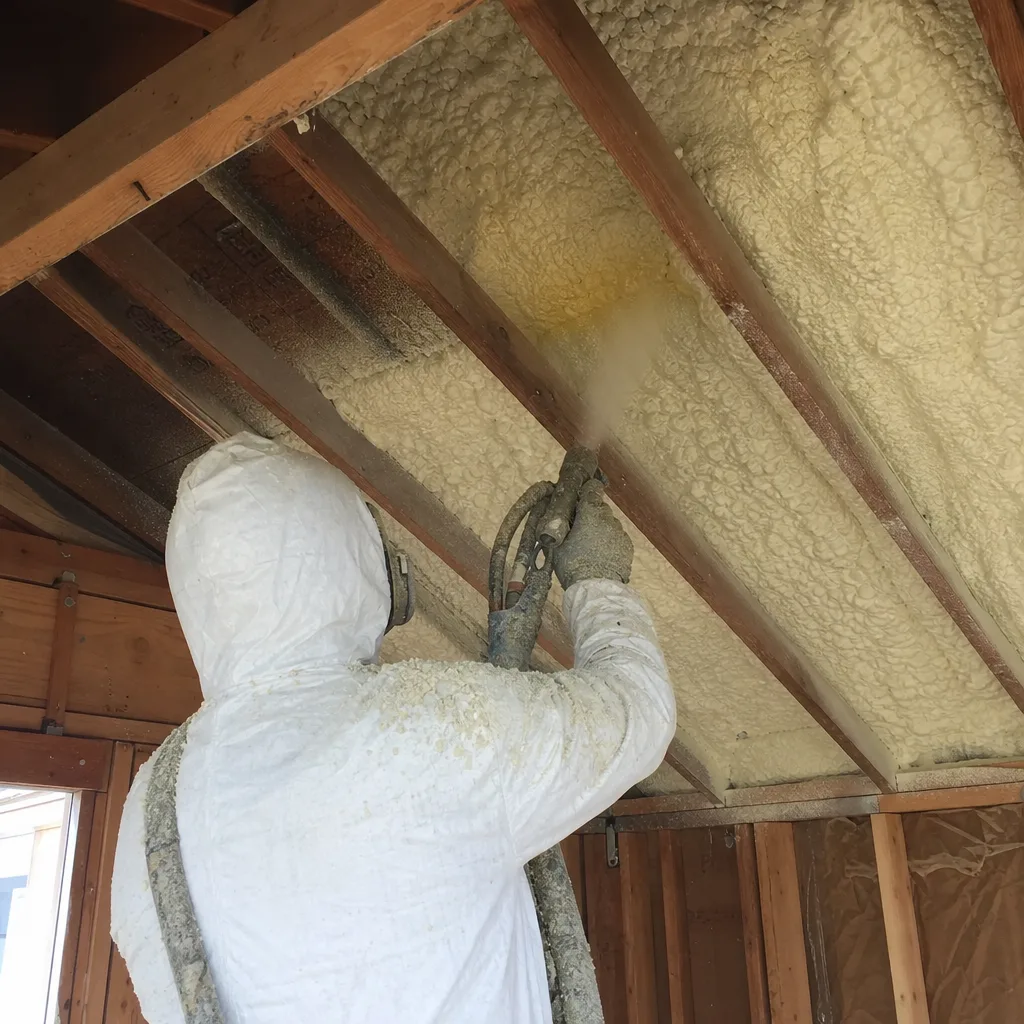
Wall cavity spray foam retrofits in Signal Hill run $4.50 to $7.00 per square foot of wall area. Rim joist foaming lands between $3.50 and $5.00 per linear foot. Roof deck applications range from $4.00 to $6.50 per square foot depending on rafter depth and whether the attic is conditioned or vented. Garage ceiling foam, when the garage sits under living space, typically runs $3.75 to $5.50 per square foot. What moves the number in Signal Hill is access and prep: homes on the hillside with tight crawl spaces, old wiring in the way, or vent lines needing sealing before foam can be applied will cost more than a clean open attic. That prep is exactly the work that separates a correct Signal Hill retrofit from a cheap one, and it’s the same careful approach we bring to every Reflectix repair in Signal Hill. Call (877) 265-5712 and we’ll give you a specific number for your house, free.
We Also Serve Cities Near Signal Hill
North Tustin Insulation works throughout the LA Basin communities surrounding Signal Hill. If you’re in Long Beach, Lakewood, Carson, or Hawaiian Gardens, we can handle your spray foam retrofit with the same brand options and the same attention to local conditions. Coastal moisture issues don’t stop at the Signal Hill border, and neither do we. Call (877) 265-5712 from any of these cities for a free estimate.
Serving Signal Hill, CA — Our Local Coverage Area
We’re based in the Signal Hill area and know this community well. Use the map below to see our service coverage — if you’re nearby, we can almost certainly help.
FAQs About Spray Foam Insulation in Signal Hill
Yes, and it’s one of the best retrofit investments you can make in this housing stock. Original 1950s wood-frame walls in Signal Hill were built with empty stud bays, so your home has been losing conditioned air through the walls since the day it went up. Closed-cell spray foam fills those cavities, air-seals the entire wall plane, and adds structural rigidity to old framing. The upgrade is most noticeable in July and August, when afternoon heat pushes against south- and west-facing stucco. Call (877) 265-5712 and we’ll walk you through what your specific home would cost.
We seal and detail every vent line, casing stub, and wellhead-adjacent penetration before any foam is applied. That means identifying where petroleum-zone air is moving through the attic, sealing the gap around each pipe with an appropriate material, and confirming the ventilation path is correct. Only after that prep is done do we spray. This is the step that generic spray foam pages skip entirely, and it’s why Spray Foam Insulation in Signal Hill work has to be done by someone who knows the oil-field conditions here.
It can, if the wrong foam is applied to the wrong surface. Open-cell foam sprayed against the interior face of an original stucco wall can allow that damp morning air to reach the foam and condense, which damages the bond over time. Closed-cell foam acts as both an air barrier and a vapor retarder, which is why we default to it for exterior-facing cavities in Signal Hill. Every estimate includes a moisture assessment before we recommend foam type. Call (877) 265-5712 for a free inspection.
We can, but we’ll likely recommend sequencing differently. Spraying closed-cell foam around knob-and-tube wiring locks that wiring in place and makes future electrical work more expensive and more invasive. If you’re planning to upgrade the circuits that run through your rim joist, it’s cheaper to pull new wire before the foam goes in. We’ll flag this during the estimate, and if the wiring is staying as-is, we’ll foam around it properly. The point is doing it in the right order, not just doing it fast.
We install Icynene and Demilec spray foam systems, chosen based on the specific job. Icynene’s open-cell foam is our go-to for interior sound control and air sealing where moisture isn’t a structural concern. Demilec’s closed-cell foam handles the moisture resistance, vapor control, and structural reinforcement that Signal Hill’s older stucco and wood-frame homes need at the rim joist, roof deck, and exterior walls. Carrying both means the recommendation comes from your home’s conditions, not from a single-brand sales pitch. Call (877) 265-5712 to talk through which one fits your house.
Written by Allen Decker, Owner at North Tustin Insulation, serving Signal Hill and the surrounding LA Basin communities.