
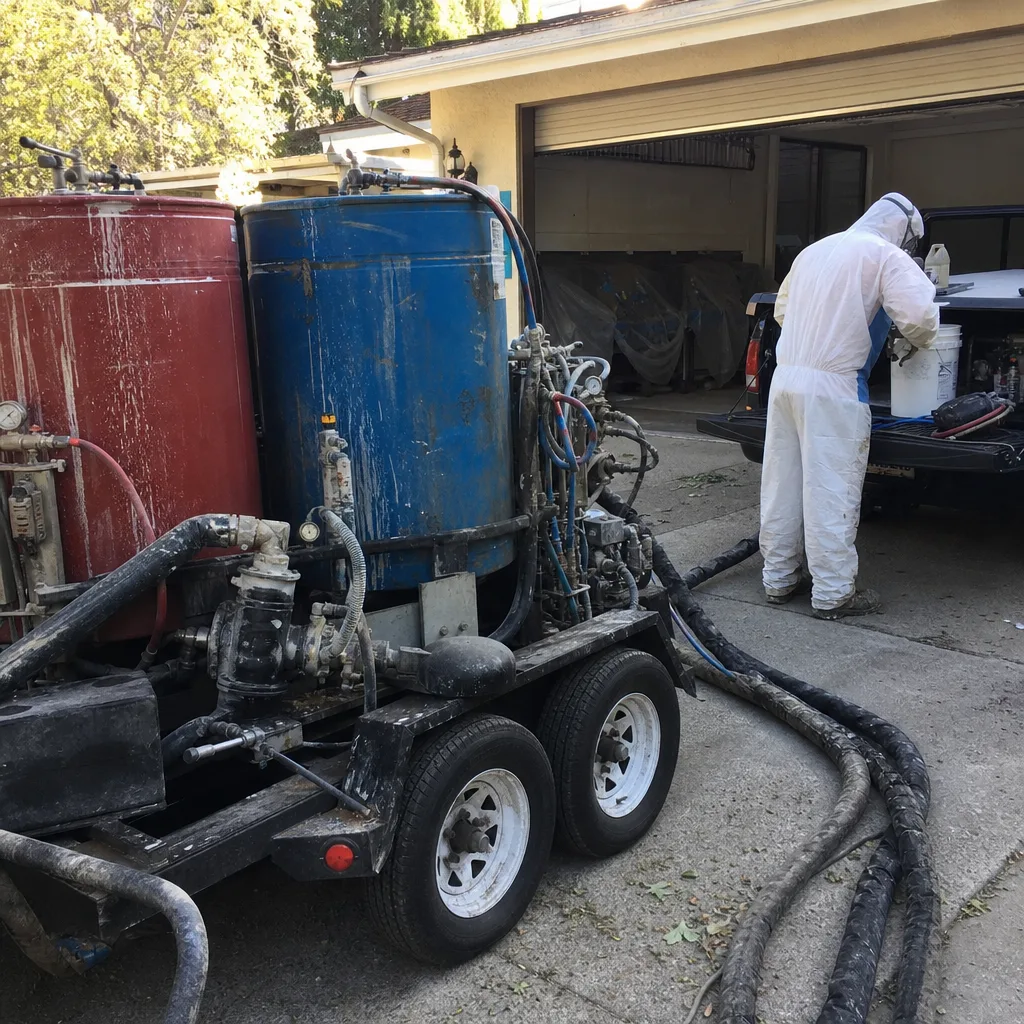
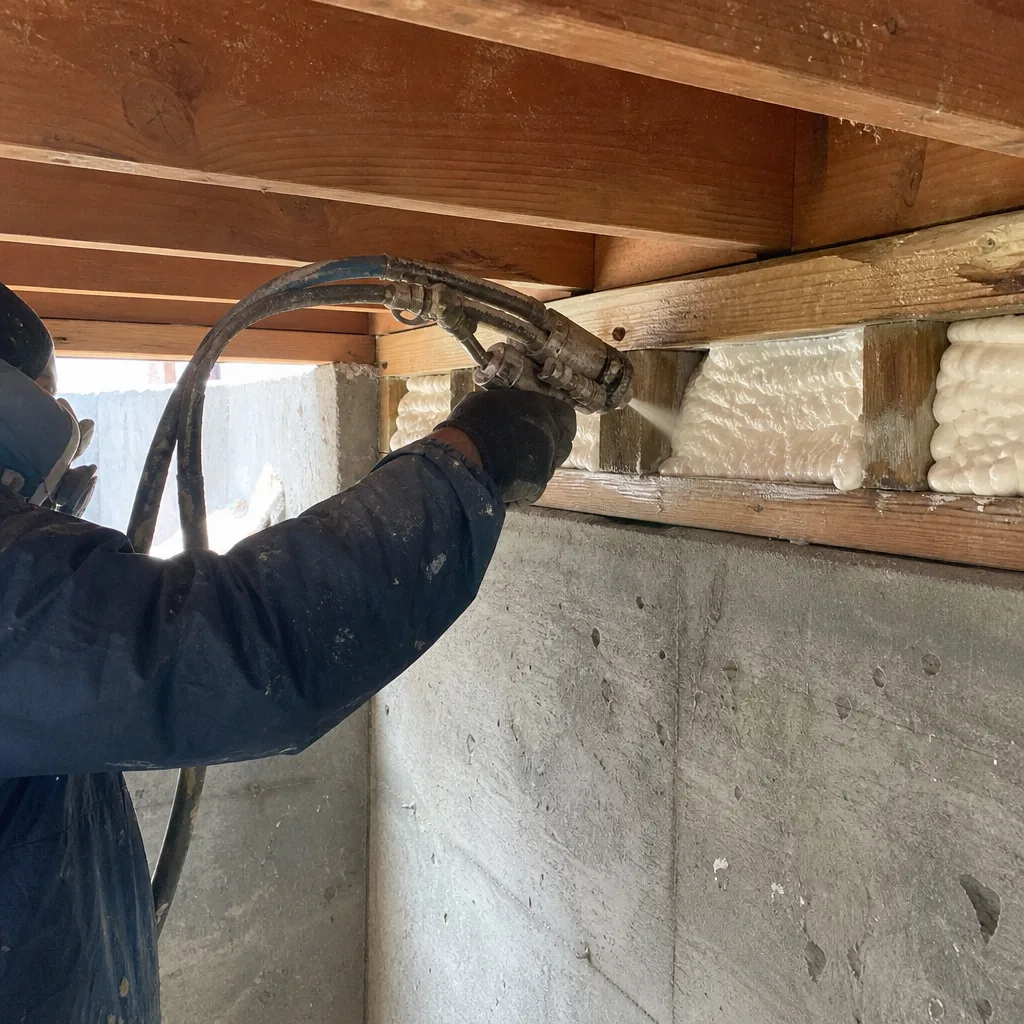
Fast, Reliable Spray Foam Insulation Across Venice
Spray foam insulation in Venice, CA typically costs $2.50 – $4.50 per board foot for closed-cell and $0.80 – $1.80 for open-cell, depending on the cavity and access conditions. Most Venice homes we work on are 1920s – 50s stucco bungalows or courtyard apartments where the real problem isn’t just heat loss, it’s salt air and marine-layer condensation attacking whatever insulation is already there. We’re North Tustin Insulation, led by Allen Decker, and we’ve spent enough time in Venice’s beach bungalows to know that spray foam specification here has to start with moisture, not just R-value. Call (877) 265-5712 for a straight answer and a free estimate.
Why North Tustin Insulation Is Venice’s Preferred Spray Foam Insulation Company
Venice homeowners don’t need a generalist who shows up with whatever insulation fits the truck. They need someone who understands what the marine layer does to a 1930s low-slope roof cavity, and who carries the right open- and closed-cell systems to actually fix it. Allen Decker and our team carry both Icynene and Demilec spray foam, two of the more demanding systems in the industry, because a beach bungalow near the Venice Canals needs a different foam than a 1970s courtyard unit further inland on Lincoln Boulevard.
We work in the 90291 and 90294 ZIP codes regularly, from the Walk Streets to the neighborhoods off Abbot Kinney and the blocks along Rose Avenue. That matters because Venice’s building stock changes block by block. A 1940s bungalow with a raised floor and a low-slope beach roof presents different problems than a 1960s stick-frame apartment with a flat roof and minimal cavity depth. Knowing which you’re walking into before the truck unloads is half the job.
Our focus is insulation only. No roofing, no HVAC, no general remodeling. Every estimate we write for a Venice home is built around the insulation method and brand that actually fit the structure, not the other way around. That’s how we work across every Spray Foam Insulation project we take on, from a single garage ceiling to a full roof deck.
Garage Spray Foam Insulation in Venice
Garage Spray Foam Insulation in Venice is usually a combination job: the garage ceiling gets closed-cell foam to stop heat gain and condensation, while the walls get sealed at the rim joist and any shared wall with the house. In Venice, garages are often detached or semi-attached structures built in the same 1920s – 50s era as the bungalows, which means the roof assembly is usually unvented or minimally vented and the framing has been through decades of salt air.
A typical garage ceiling spray foam job in Venice runs $1,800 – $3,200 for a single-car garage and $2,800 – $4,800 for a two-car, depending on access and the condition of the existing framing. If the garage has living space above it, or if the garage door faces west or south, that changes the specification: the sun load is higher, so closed-cell with a higher R-value per inch becomes the better call. We carry the materials to do it right. Call (877) 265-5712 for an exact quote.
Detached Garage Ceilings on Tight Venice Lots
Detached garages in Venice are often built on narrow side-yard setbacks, with barely enough clearance to walk around them. That means we’re usually spraying from inside, through the ceiling joists, and sealing the perimeter with a smaller rig than you’d see on a big new-build.
The goal is an air seal, not just a thermal blanket. Salt air gets into every gap and corrodes whatever it touches, so we focus on sealing the rim joist and the top plate cleanly before we spray the cavity. A garage that’s been sealed properly stays noticeably cooler on the days the Santa Anas hit.
Garage Conversions and ADUs off the Alley
A lot of Venice garages have become home offices, studios, or accessory units without ever getting proper conditioning. Spray foaming one of these spaces changes how it feels year-round. Closed-cell foam on the underside of an old garage roof deck also adds structural rigidity, which matters when the framing has been flexing in coastal wind for 70 years.
Closed Cell Spray Foam Insulation in Venice
Closed Cell Spray Foam Insulation in Venice is the right specification for most roof cavities because it doesn’t just insulate, it seals the condensing surface. That’s the key difference in a climate where the marine layer holds the dew point within a few degrees of the daily low for much of the year. Open-cell foam in the wrong assembly here stays damp, loses R-value, and invites mold. Closed-cell doesn’t wick moisture the same way, and its vapor retarding properties make it the safer choice for unvented low-slope roof decks over a beach bungalow.
For a typical Venice roof deck, closed-cell spray foam runs $2.50 – $4.00 per board foot installed, which puts a 400-square-foot low-slope roof at roughly $3,200 – $5,400 depending on deck condition and foam depth. The prep work matters more than the foam itself on older decks: we inspect for corroded fasteners, treat any fungal staining, and confirm the deck is sound enough to bond to.
Unvented Beach Roof Decks
Venice’s 1920s – 50s bungalows frequently have what locals call a ‘beach roof’: a low-slope or flat roof over framing that was never designed for mechanical ventilation. These assemblies cook under west-facing sun during Santa Ana events, then condense on the underside of the deck when the marine layer rolls in that same week. That daily condensation cycle is what kills old batt insulation in Venice.
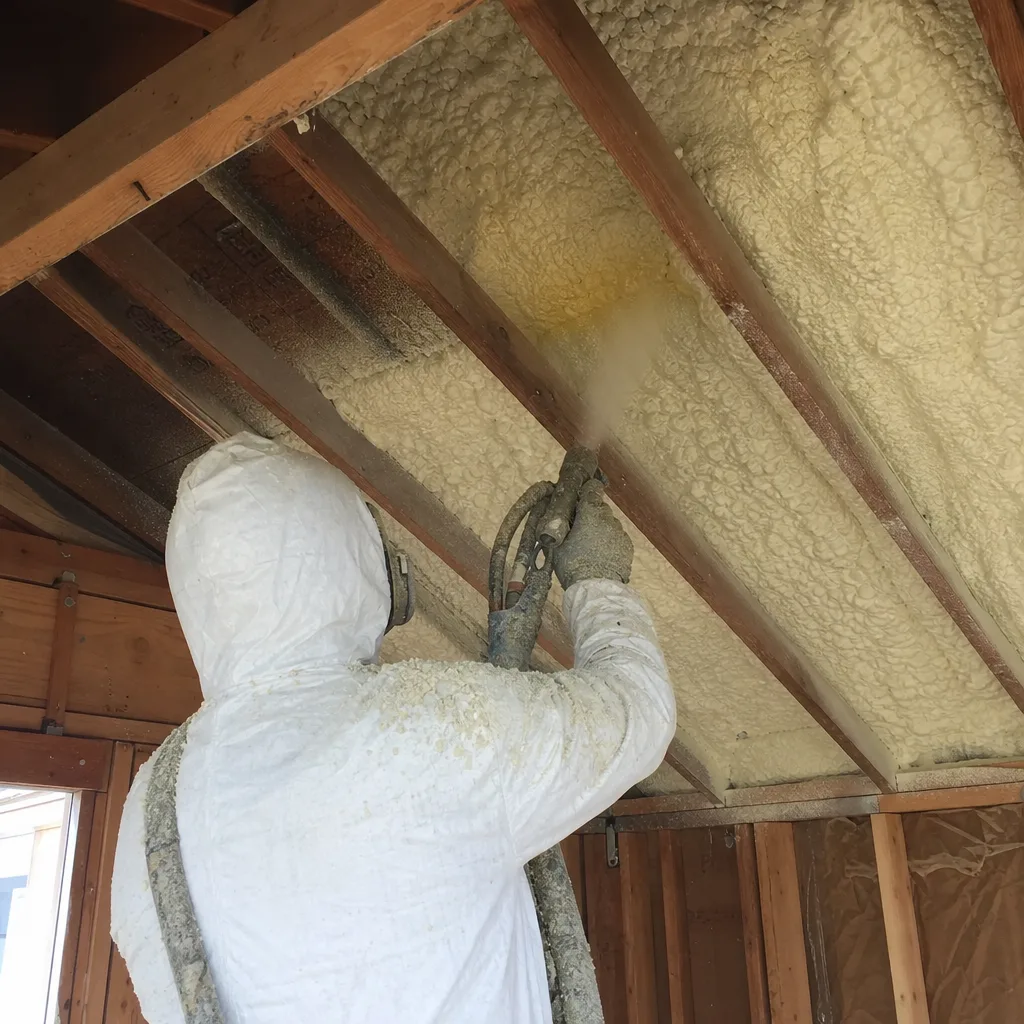
Closed-cell foam applied directly to the underside of a clean, dry roof deck eliminates the condensing surface by keeping the deck above the dew point. It also adds measurable structural strength, which helps older bungalow framing resist the flex that decades of coastal wind have worked into the ridge and rafter connections.
Salt Air and Fastener Corrosion
Salt-laden air off the Pacific eats through standard fasteners years faster than anything inland. We see it in the foil facings of old batt insulation and in the screws holding subfloor and roof decking. When we prep a Venice deck for closed-cell foam, we check the fastener pattern before we spray. You can’t un-spray foam if a corroded deck connection needs repair later.
Trusted Brands We Service in Venice
We stock and install Icynene and Demilec spray foam systems, which means Venice homeowners get a real choice in foam chemistry and performance rather than a single-brand default. Demilec’s closed-cell products perform well on damp-prone older roof decks, while Icynene’s open-cell formulations suit interior wall cavities and sound control between units in courtyard apartments. For projects where spray foam isn’t the right tool, we also carry CertainTeed fiberglass and GreenFiber recycled cellulose, so the recommendation always follows the home, not the other way around.
Common Spray Foam Insulation Problems We See in Venice Homes
- Marine-layer condensation in unvented roof cavities. The underside of a low-slope beach roof stays near the dew point for much of the year, so any cavity that isn’t sealed and insulated properly sweats. We most often find moldy, sagging batts in 1930s – 50s bungalows near the canals and the Walk Streets.
- Salt air corroding batt fasteners and foil facings. The closer a home sits to the beach, the faster old insulation systems fail structurally. Foil facings delaminate and sag, which means the batt pulls away from the deck and creates a thermal void exactly where you don’t want one.
- Open-cell foam in damp crawlspaces wicking ground moisture. Venice’s older blocks have raised floors and crawlspaces that stay humid when the marine layer hangs around for days. Open-cell foam in those conditions soaks up ambient moisture like a sponge, so we recommend closed-cell or a moisture barrier detail instead.
- Santa Ana heat stress on sealed roof assemblies. A spray-foam-sealed roof expands and contracts with temperature swings that can exceed 40 degrees in a day. Improperly applied foam can blister or pull away from a hot deck. Prep and application temperature matter more in Venice than the spec sheet suggests.
Pricing for Spray Foam Insulation in Venice, CA
Closed-cell spray foam in Venice runs $2.50 – $4.50 per board foot. Open-cell runs $0.80 – $1.80. Rim joist spray foam for a typical raised-floor bungalow runs $1,200 – $2,800. Garage ceiling spray foam runs $1,800 – $4,800 depending on size and access. A roof deck spray foam job on a low-slope beach roof is typically $3,200 – $5,400. The factors that move the price are deck condition, cavity access, foam depth, and whether we’re dealing with corroded fasteners that need addressing before we spray. Estimates are free, and we’ll give you a firm number before any material leaves the truck. Call (877) 265-5712 to schedule a walkthrough of your Venice property.
We Also Serve Cities Near Venice
Our service area includes Venice and nearby Santa Monica, Culver City, Ladera Heights, and Century City. If you’re just outside Venice or managing a property across a few of these cities, we coordinate multi-property estimates so you’re not juggling vendors up and down the coast. Same crew, same standards, same straight answers.
Serving Venice, CA — Our Local Coverage Area
We’re based in the Venice area and know this community well. Use the map below to see our service coverage — if you’re nearby, we can almost certainly help.
FAQs About Spray Foam Insulation in Venice
Closed-cell foam makes more sense because it doesn’t wick moisture the way open-cell does, and Venice’s marine layer keeps roof cavities near the dew point for much of the year. An unvented low-slope beach roof needs a foam that seals the condensing surface and adds structural strength. Open-cell in that same assembly stays damp and loses performance. Call (877) 265-5712 and we’ll help you sort out which foam fits your roof.
Yes, spray foaming a garage with corroded hardware is common in Venice, and the foam work doesn’t interfere with door maintenance or replacement. Salt air is hard on garage door springs, hinges, rollers, tracks, and opener chains in beach neighborhoods, so we see rusted hardware on a lot of the garages we insulate. We recommend addressing the door hardware separately with a garage door specialist, then we seal the ceiling and rim joist from the inside.
Old batt insulation in a Venice beach roof has usually sagged, absorbed damp from the marine layer, and grown mold in the parts of the cavity closest to the deck. We inspect, remove the failed batts, treat any fungal staining on the deck, and then spray closed-cell foam directly to the roof deck.
Yes, raised floors and crawlspaces in Venice need moisture prep before any foam goes in. The marine layer keeps ambient humidity in those cavities high for days at a time, and open-cell foam will wick ground moisture and stay damp. We typically recommend closed-cell foam or a vapor barrier detail where moisture is present, and we check the access before recommending a system.
Santa Ana heat creates rapid deck temperature swings that test the adhesion of any spray foam applied to a Venice roof. Closed-cell foam applied to a clean, properly prepped deck holds up well through those cycles. Poor prep or damp decking is what causes blistering and pull-away, which is why we don’t skip the deck inspection on older beach roofs.
Call North Tustin Insulation at (877) 265-5712 for a free estimate on spray foam insulation anywhere in Venice. Allen Decker and our team will walk the property with you, explain what you’re actually dealing with, and give you a straight recommendation based on the home, not the inventory. We serve all of Venice, including the 90291 and 90294 ZIP codes, from the canals to the Walk Streets to the blocks off Abbot Kinney and Rose Avenue.
Written by Allen Decker, Owner at North Tustin Insulation, serving Venice and the surrounding coastal communities.