
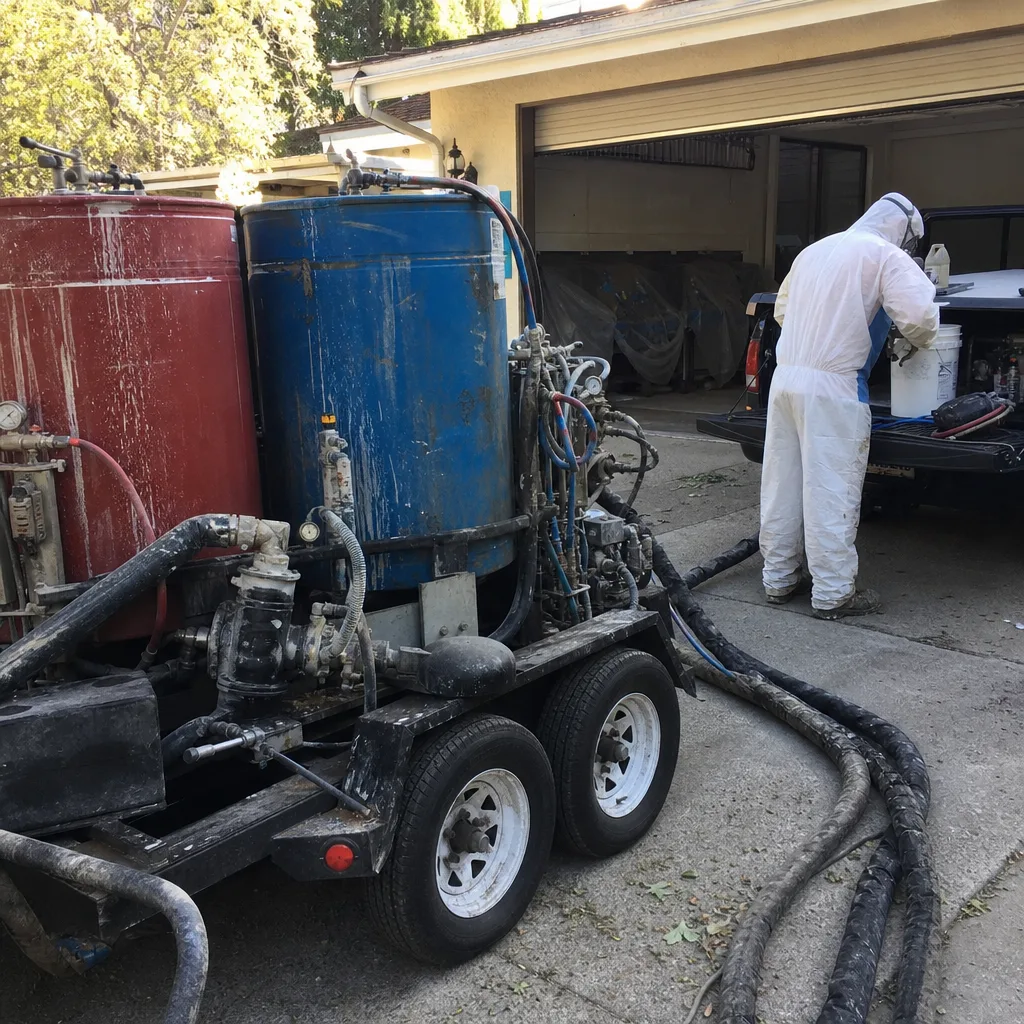
Fast, Reliable Spray Foam Insulation Across Villa Park
Spray foam insulation in Villa Park typically runs $2.50 to $6.50 per board foot installed, and most attic projects on the large custom homes here land between $4,800 and $14,000 depending on foam type and square footage. We work Villa Park weekly, usually reaching homes off Villa Park Road or Santiago Boulevard within 24 to 48 hours of a call. If your attic hits 140°F in August and your upstairs rooms can’t keep up, call us at (877) 265-5712 for a straight answer and a free estimate.
Why North Tustin Insulation Is Villa Park’s Preferred Spray Foam Insulation Company
Villa Park isn’t a tract-home market, and that changes how insulation work gets done. Nearly every home we inspect here is a custom build from the 1960s through the 1980s, often extensively remodeled, with vaulted ceilings, multiple roof planes, and additions that original attic insulation never addressed. Our team knows what hides in those attics, because we open them regularly.
Homeowners in Villa Park hire us for one reason more than any other: we carry eight nationally recognized insulation brands, including Icynene and Demilec for spray foam, and we match the material to the home instead of pushing whatever is on the truck. That matters when you need open-cell foam for a sound-sensitive interior wall and closed-cell foam for a rim joist. Same day estimates are free, and we stock parts and materials locally so a Villa Park project doesn’t wait on a warehouse in Riverside.
You’ll find our Spray Foam Insulation work throughout Villa Park, from homes backing the Villa Park Hills to the properties along Santiago Creek. Allen Decker runs every estimate. When someone from our crew walks your attic, they’re accountable to him, not a call center.
Spray Foam Attic Insulation in Villa Park
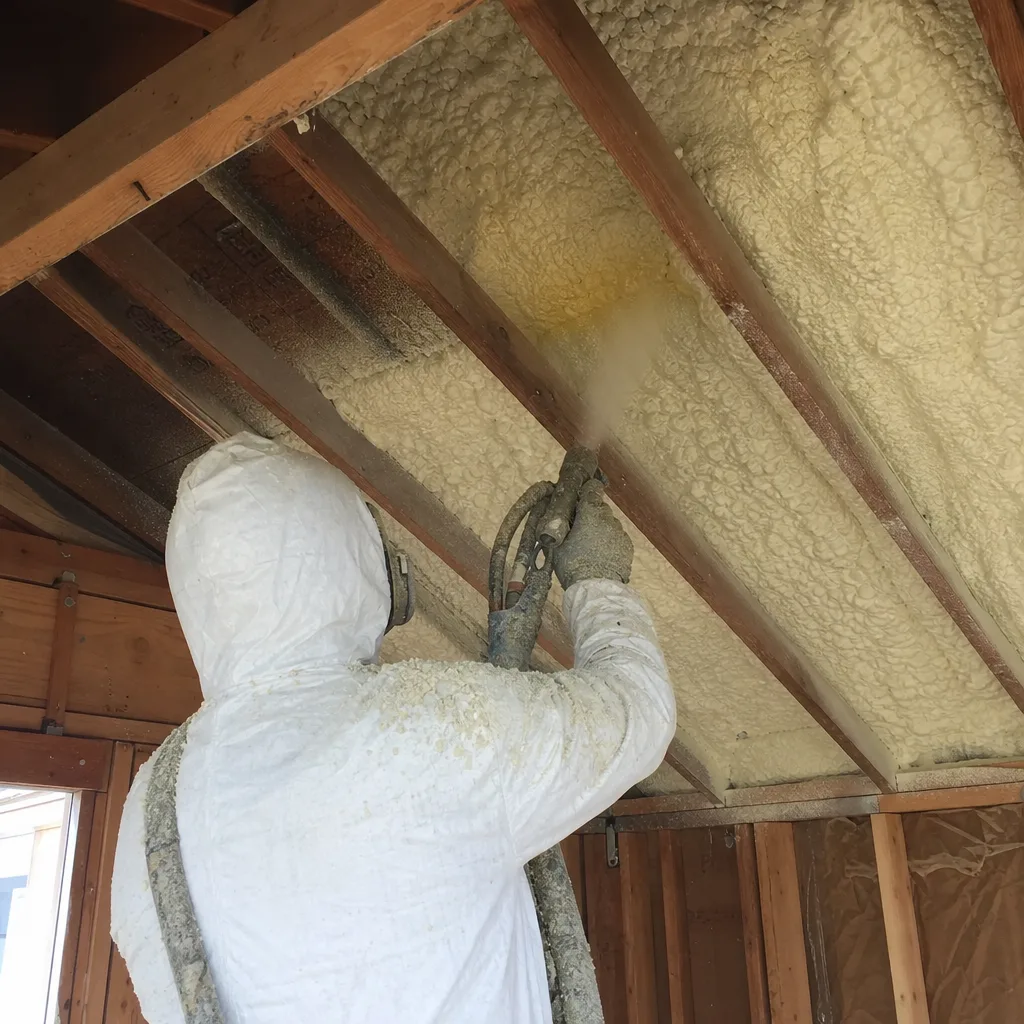
Spray Foam Attic Insulation in Villa Park means sealing the underside of the roof deck so the attic stays within a few degrees of the living space instead of baking at 140°F. On the large custom homes here, that often includes working around skylights added during remodels, recessed light housings, and the irregular intersections where a new roof plane ties into an old one. Open-cell foam in a Villa Park attic usually runs $2.50 to $3.75 per board foot; closed-cell runs $4.25 to $6.50. Most Villa Park attics land between $5,000 and $12,000 all-in, depending on the multiple roof planes involved.
Roof Deck Sealing for Multi-Plane Homes
The moment an attic has three or four roof planes meeting above a remodeled wing, spray foam becomes the only material that conforms to every angle. Batts leave seams at those intersections. Foam doesn’t. We pay close attention to the area where original framing meets addition framing, because that’s where Villa Park homes leak air most consistently.
Ventilation Repair Before Foam Application
We won’t spray over failed ventilation. In Villa Park, soffit vents get crushed by oak debris or blocked by generations of leaf fall, and that changes attic humidity. If your ventilation is compromised, we clear or replace the chutes first, then apply the foam. Skipping that step traps moisture inside a sealed attic, which is the exact opposite of what you’re paying for.
Spray Foam Wall Insulation in Villa Park
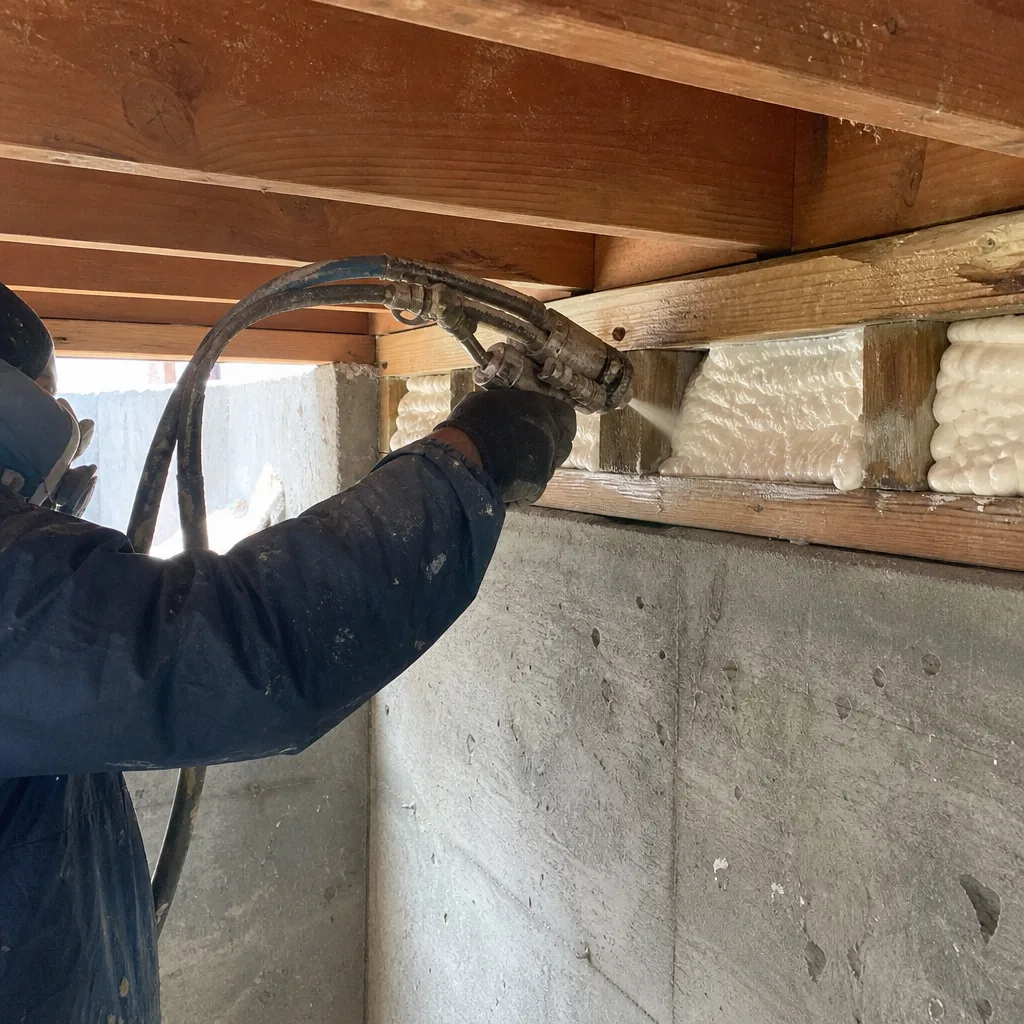
Spray Foam Wall Insulation in Villa Park addresses two things homeowners here mention constantly: sound transfer between large rooms and drafts around remodeled wall assemblies. When stud cavities are exposed during a kitchen or addition project, spraying open-cell foam into the bays gives you an air barrier and a sound barrier in one pass. Closed-cell wall applications are more common where moisture is a concern, like walls facing the shaded, oak-covered north exposures near Santiago Creek. Expect $2.50 to $4.00 per board foot for open-cell wall cavities and $4.25 to $6.00 for closed-cell, with most Villa Park wall projects running $2,000 to $7,000 depending on total cavity area.
Sound Isolation Between Expansive Rooms
Villa Park floor plans are sprawling. A living room with 20-foot ceilings next to a first-floor office means every footstep and conversation passes through the drywall unless the cavity is genuinely sealed. Open-cell Icynene spray foam absorbs sound in a way fiberglass batts cannot, and it expands into every electrical outlet penetration and bottom plate gap. That’s the difference our clients notice within the first week.
Draft Sealing for Remodeled Wall Assemblies
Custom homes from the 1970s that got a 2000s-era remodel often have new drywall over old, uninsulated framing. We see this weekly. The only practical fix is drilling and injecting spray foam into the closed cavities, or spraying open-cell into exposed bays when walls are already down to studs. Either way, the result is a wall that actually blocks air movement instead of letting conditioned air escape through can light cutouts and outlet boxes.
Trusted Brands We Service in Villa Park
We install both Icynene and Demilec spray foam systems, and the choice between them comes down to the application. Icynene open-cell is our go-to for interior sound isolation and attic roof decks that need to breathe. Demilec closed-cell handles rim joists, knee walls, and any surface where moisture resistance or maximum R-value per inch is the priority. We also carry GreenFiber and Owens Corning for jobs where spray foam isn’t the right fit. Because we stock local material for Villa Park projects, we’re not tripping over brand availability when your project is ready to start. You get the material that fits the house, sourced from brands we’re authorized to install.
Common Spray Foam Insulation Problems We See in Villa Park Homes
- Crushed soffit vents under oak canopy. Homes near Santiago Creek and the Villa Park Hills often have decades of leaf and acorn debris blocking ventilation chutes. Foam sprayed over those failed vents seals moisture into the attic, causing condensation and degrading insulation.
- Foam gaps at multi-plane roof intersections. The bespoke architecture here means irregular valleys and dormers. A spray job without careful detailing leaves hairline air paths that defeat the foam’s purpose in vaulted ceiling areas.
- Poor adhesion around added skylights and recessed lights. Remodeled Villa Park homes frequently have newer skylight shafts and dozens of recessed fixtures. Improper substrate prep means foam peels or leaves voids, and those voids become pathways for sound and drafts between rooms.
- Shaded attic cavities with trapped moisture. Oak shade keeps attics cooler, which sounds good but can raise relative humidity in dead air pockets. Closed-cell foam applied correctly prevents that moisture from reaching the roof sheathing, but only if the ventilation is working first.
Pricing for Spray Foam Insulation in Villa Park, CA
A typical open-cell attic roof deck in Villa Park runs $5,000 to $9,000. Closed-cell runs $7,500 to $14,000 for the same square footage, driven by the higher material cost per board foot. Wall cavity work lands between $2,000 and $7,000 depending on how many linear feet of wall you’re opening or injecting. What moves the number most on these homes is the irregular attic geometry: a 2,800-square-foot rancher with two roof planes is a much faster job than a 4,500-square-foot two-story with four planes, dormers, and skylight shafts. We quote line-item, free, and Allen walks you through what’s actually worth doing versus what isn’t. Call (877) 265-5712.
We Also Serve Cities Near Villa Park
Our team covers the surrounding area with the same brand transparency: Orange, North Tustin, Placentia, and Anaheim. Each of those markets has different housing stock, and we approach them differently. For details on our work across the broader area, see Villa Park and the neighborhoods we serve.
Serving Villa Park, CA — Our Local Coverage Area
We’re based in the Villa Park area and know this community well. Use the map below to see our service coverage — if you’re nearby, we can almost certainly help.
FAQs About Spray Foam Insulation in Villa Park
The mature oaks along Santiago Creek and Villa Park Hills shade roofs and keep attics cooler, but their debris crushes soffit vent chutes and blocks attic airflow. That debris buildup is a Villa Park-specific condition tract homes in Orange and Anaheim rarely face, and it must be cleared before spray foam is applied so the sealed attic doesn’t trap moisture.
Yes. Open-cell spray foam absorbs sound more effectively than fiberglass batts, and it expands into the small gaps around outlets, joists, and plumbing penetrations that let noise travel between rooms. For sound transfer between large rooms, the difference is immediate.
We prep the substrate around each skylight shaft and recessed fixture so foam bonds correctly, then spray in layers to avoid oversaturation. Improper prep is the most common reason those areas leak air and sound, and on remodeled custom homes the details are more complex because original framing and addition framing don’t always line up.
Both. Icynene open-cell goes into interior sound isolation and ventilated attic roof decks, while Demilec closed-cell handles rim joists, knee walls, and moisture-sensitive areas. The home’s construction and exposure determine the material, not the other way around.
We inspect every roof intersection first, because that’s where air leaks concentrate in Villa Park homes with bespoke architecture. Our crew sprays each plane continuously rather than in discrete sections, which is the only way to get a continuous air barrier across valleys, dormers, and the transition from vaulted ceiling to flat attic.
Contact North Tustin Insulation for Spray Foam in Villa Park
If your Villa Park home is fighting the August heat, or your remodeled second floor echoes like a banquet hall, we’re the crew to call. We’ll assess your attic, check the ventilation under that oak shade, and give you a straight recommendation with real numbers. No brand push. No boilerplate attic blow-in. Call (877) 265-5712 for a free estimate, and ask for Allen Decker.
Written by Allen Decker, Owner at North Tustin Insulation, serving Villa Park and Orange County’s custom home communities.