Reflectix Insulation in Valley Glen, CA | North Tustin Insulation
We install, diagnose, and repair Reflectix radiant barrier products throughout Valley Glen. The quick answer: if your postwar ranch home off Hazeltine Avenue or Coldwater Canyon has original 1940s or 1960s attic insulation, Reflectix foil stapled to the underside of your roof rafters is one of the highest-impact upgrades you can make before next summer. Call (877) 265-5712 for a free attic assessment and an honest recommendation, not a brand pitch.
We’re an independent insulation contractor. We carry Reflectix because it works on low-pitch Valley Glen roofs, not because anyone authorized us to sell it. Our team handles Reflectix sales & service for attic radiant barriers, crawl spaces, and duct wraps, and we match the foil spec to your actual attic, not to whatever’s on the truck.
Why Valley Glen Residents Choose Us for Reflectix Service
Most Valley Glen homes were built between 1940 and 1965, and almost none of them had wall insulation or adequate attic coverage the day they were finished. What they got was a stucco shell, a low-pitch rafter roof, and a summer that turns the attic into an oven by noon. That’s the exact condition Reflectix foil was designed to fix, and it’s the condition we see every week in Valley Glen.
Allen Decker, our owner, learned the trade through the Building and Construction Technology program at Santiago Canyon College, then spent years on residential jobs across Foothill communities before starting North Tustin Insulation. He’s the one who will walk your attic with a flashlight and a tape measure and tell you straight whether your foil needs re-tensioning or full replacement. “If you can’t name the product and the R-value, you don’t have a quote – you have a guess.”
We serve the 91404 ZIP and surrounding Valley Glen blocks same-week in most cases. Estimates are free, and the recommendation you get is based on what your attic actually shows us.
Common Reflectix Insulation Problems We Solve in Valley Glen
- Foil delamination and bubbling. Attic deck temperatures in Valley Glen regularly pass 150°F from June through September. That sustained heat cycling separates the reflective mylar face from the polyethylene bubble core, and we find whole rafters where the foil has blistered loose within a few summers. This isn’t a product defect; it’s what 100°F-plus valley heat does to any foil-faced barrier installed without adequate venting above it.
- Dust and soot fouling on upward-facing foil. Valley Glen’s older tract attics are dusty places. Fine dust settles on the reflective surface, and once it dulls, emissivity climbs. A foil that looks intact but has a tan coating is often reflecting less than half the heat it did when new. We test it, and if the dulling is bad enough, the fix is replacement, not cleaning.
- Sagging and peeling stapled installs. Earlier retrofits, often done in the 1990s or 2000s, used lightweight staples into dry rafters. Time and heat expansion pull those staples loose. We find foil hanging in sheets between rafters, leaving gaps where 100°F-plus attic air radiates straight down through the ceiling drywall.
- Moisture trapping over old venting. When foil gets laid tight against a 1940s or 1950s roof deck with marginal soffit vents, condensation builds between the foil and the deck. The result is rusted staples, stained sheathing, and sometimes mold on rafter tails. Valley Glen’s original ranch homes rarely had enough soffit vent area to support a full foil deck, so we correct venting before stapling anything up.
- The R-4 problem hiding above the ceiling. In Valley Glen’s postwar tract homes, we regularly find original blown-in insulation that’s settled to R-4 or R-6 where R-38 is needed. Homeowners call us about Reflectix, but the real problem is both: degraded foil overhead and near-zero floor insulation below. We address both so the ceiling actually stops leaking heat into the living space.
Reflectix Service in Valley Glen: What Local Conditions Mean for Your Equipment
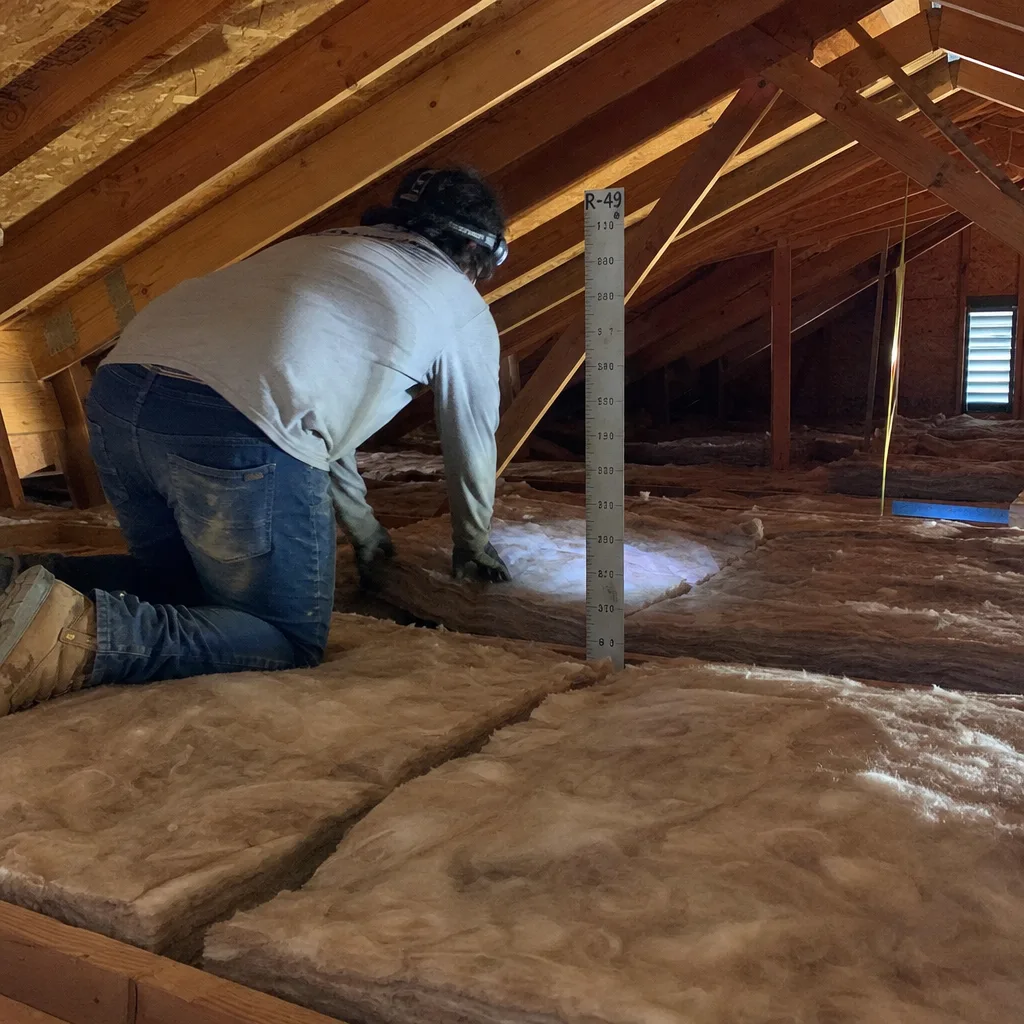
Here’s what makes Valley Glen different from North Hollywood or Reflectix repair in Sherman Oaks, and it changes how Reflectix gets installed. Valley Glen’s postwar tract attics are often only 3 to 4 feet high at the ridge, sometimes less at the eaves. That means Reflectix radiant barrier has to be stapled to the underside of the roof rafters in a crawl-space crouch, and the foil ends up sitting close to the deck where heat buildup is worst. In a taller attic, there’s more air gap above the foil and more room for the heat to stratify away from the ceiling. In Valley Glen, there isn’t. The fix isn’t just stapling foil; it’s making sure soffit intake and ridge or gable outflow are moving enough air that the foil isn’t just trapping heat against the deck. On a 1950s ranch house off Hazeltine Avenue, our crew crawled a 3-foot attic where the original blown-in had settled to roughly R-4 and the homeowner’s old stapled Reflectix had peeled off the rafters in sheets. We pulled the failed foil, added baffles and soffit venting, installed new Reflectix double reflective foil across the roof deck, and topped the attic floor back toward R-38. The upstairs bedrooms stopped baking by early afternoon. That’s the order of operations in Valley Glen: vent first, foil second, floor insulation third. Skip the venting and the new foil will fail the same way the old foil did.
We’ve been doing this work throughout our Valley Glen service area long enough to know which 1940s tract layouts have usable soffit access and which need gable-end work-arounds. That local pattern knowledge is the difference between a foil install that lasts five summers and one that lasts fifteen.
Reflectix Models & Products We Service in Valley Glen
We install and repair the full Reflectix lineup, including the Double Reflective Insulation Roll in 16-inch and 24-inch widths, the Double Reflective Foil with white polyethylene face for exposed applications, the Reflective Foam Core R-8 foil-faced foam board, and reflective duct insulation wrap for exposed HVAC runs in attics and crawl spaces. We also provide Encino Reflectix service with the same product range. When existing foil needs replacement, we use genuine Reflectix rolls and foam-core boards, not generic foil-bubble imports. The branded product holds its reflective face and staple tear-strength better under Valley Glen heat cycling, and in a 3-foot attic you only want to do this job once. We stock common widths and board sizes locally, which keeps turnaround fast for Valley Glen jobs in the 91404 ZIP.
When the foil is delaminated or dust-fouled past recovery, we recommend replacing the failed runs, not patching them. If the foil is intact and the attic floor insulation has simply settled, a top-up plus re-tensioning is the honest call. We’ll tell you which one you’re looking at and prove it with photos from your own attic.
Reflectix Service Pricing in Valley Glen
Attic radiant barrier installation in Valley Glen typically runs $1.50 to $3.25 per square foot depending on rafter spacing, access height, and whether we’re also correcting venting. A full attic floor top-up with blown-in fiber or cellulose adds $1.00 to $2.50 per square foot. Duct wrap for exposed attic HVAC runs usually lands between $4 and $8 per linear foot. Low-clearance attics under 36 inches at the ridge add some labor because everything gets installed from a crouch. These are straightforward ranges, not line-item fiction; your free estimate will be the only real number that matters. Call (877) 265-5712 and we’ll walk your attic, write up a specific scope of work, and email you a proposal with product names and R-values on it.
Serving Valley Glen, CA — Our Local Coverage Area
We’re based in the Valley Glen area and know this community well, and we also offer North Hills Reflectix service. Use the map below to see our service coverage — if you’re nearby, we can almost certainly help.
FAQs – Reflectix Insulation in Valley Glen
Does Reflectix radiant barrier actually help in a Valley Glen attic that already has some insulation?
It depends on what’s already there. If your attic floor has settled to R-4 or R-6, adding Reflectix to the roof deck will reduce radiant heat gain, but the bigger win is topping up the floor insulation first. We test the existing R-value and check the foil’s condition before recommending anything. In most Valley Glen ranches, the answer is both: new foil overhead and R-38 on the attic floor. Call (877) 265-5712 and we’ll tell you exactly what your attic needs.
My 1950s Valley Glen attic is only about 3 feet tall – can you still install Reflectix up there?
Yes. We work in low-clearance attics all the time across Valley Glen’s postwar ranch homes. The install takes longer because the work happens from a crouch, and we may need to add baffles and soffit venting before the foil goes up, but it’s completely doable. We’re not turning down a job because the attic is short.
Why is the Reflectix in my attic turning brown and flaking off the rafters?
That’s delamination from heat cycling. Valley Glen summer attic temperatures over 150°F repeatedly expand and contract the foil, separating the reflective face from the bubble core. Once it starts peeling in sheets, the reflective performance is gone and replacement is the only real fix. Dust fouling on the upward-facing surface produces a similar brown cast and cuts reflectivity just as badly.
Can Reflectix be used in a Valley Glen crawl space instead of a vapor barrier?
No. Reflectix is a radiant barrier and insulation product, not a ground-moisture vapor barrier. A crawl space in Valley Glen still needs a proper vapor barrier on the earth, and Reflectix can be used on walls or floor joists for thermal performance, but it should never replace the moisture barrier. They solve two different problems.
How do I know whether I need a radiant barrier or just more attic insulation?
That’s exactly what a free attic assessment answers. If your attic floor insulation is below R-38 and you can see the ceiling joists, more insulation is the first move. If your foil is delaminated and the attic is venting properly, radiant barrier replacement makes sense. In many Valley Glen homes we find both problems at once and quote both together so the ceiling stops leaking heat for good. Call (877) 265-5712 for a free look at yours.
Service Areas Near Valley Glen
North Tustin Insulation provides Reflectix service throughout Valley Glen and nearby communities, including Tustin, Orange, Villa Park, Santa Ana, and Irvine. We also serve mountain and desert-adjacent areas where Reflectix conditions differ from the Valley floor, including Reflectix service in Lake Arrowhead and Reflectix service in Oak Hills.
Book Your Reflectix Service in Valley Glen Today
Summer heat in Valley Glen doesn’t wait, and neither should your attic. If you need Reflectix repair in Van Nuys, we cover that area too. Call North Tustin Insulation at (877) 265-5712 for a free Reflectix assessment and a straight recommendation. We’ll tell you what’s wrong, what it costs to fix, and what you don’t need to buy.
Written by Allen Decker, Owner at North Tustin Insulation, serving Valley Glen since day one.