
Fast, Reliable Attic Insulation Across Corona
If your Corona home’s upstairs stays hot through August no matter how hard the AC runs, the attic insulation is usually the culprit, not the HVAC. Most Corona attics – especially in the 1990s tract neighborhoods off the 15 and 91 – were insulated with builder-grade blown fiberglass that has now compacted, settled, and quietly lost most of its R-value. We’re North Tustin Insulation, and we fix that specific problem for Corona homeowners with the right material matched to the house, not whatever happens to be on the truck. Call (877) 265-5712 for a free estimate.
Why North Tustin Insulation Is Corona’s Preferred Attic Insulation Company
Corona homeowners call us because we speak the language of their homes. We know the late-1980s and 1990s tract builds along Green River Road, the older ranches near downtown off Sixth Street, and the newer construction in the 92882 and 92883 zip codes. Each housing era has different attic insulation problems, and we diagnose them honestly. We’re an insulation-only contractor. Every technician we send to Corona, every estimate we write, and every brand relationship we hold is focused on one trade. That focus means we don’t push a single material. We carry Owens Corning and CertainTeed for fiberglass, Rockwool for mineral wool, GreenFiber for recycled cellulose, and Icynene and Demilec for spray foam. Eight brands across every major insulation category, so the recommendation comes from your attic’s actual condition and Corona’s climate, not from what our crew happens to know.
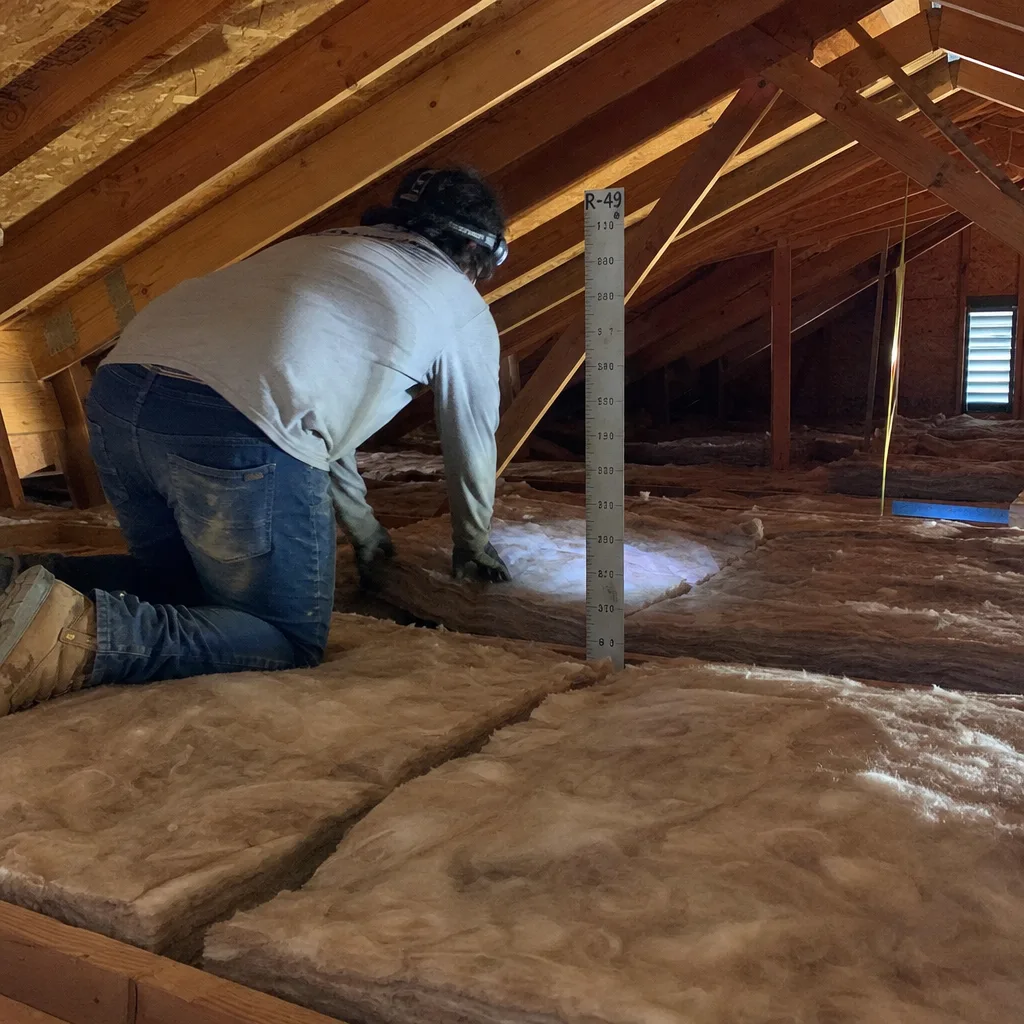
Our work in Corona has earned a strong local reputation because we do the job right the first time. Homeowners in neighborhoods from Sierra Del Oro to the tracts near Dos Lagos tell us the same thing: the upstairs finally holds temperature after we re-insulate. Allen Decker leads our team, and he’s built the company around a simple principle: match the material to the home. If your attic needs blown-in fiberglass to R-49, we quote that. If it needs open-cell spray foam for a tight cathedral ceiling, we quote that instead. You get the right answer for your Corona home, not a sales pitch.
Attic Mold Removal in Corona
Attic mold removal in Corona is a common request for us, especially in homes where bathroom fans vent into the attic instead of through the roof, or where Santa Ana wind-driven heat traps moisture against the underside of the roof deck. We remove contaminated insulation and surface mold, treat the affected framing, and address the ventilation or air-sealing problem that caused it in the first place. The cost for attic mold removal in Corona typically runs $1,800 to $4,500 depending on the size of the affected area and how much insulation has to come out. Call (877) 265-5712 and we’ll assess it directly.
What Mold Removal Actually Involves
We don’t just spray something and leave. We remove the moldy insulation down to the drywall or lath, clean the framing with a proper fungicidal treatment, and then figure out why moisture was trapping up there. Often in Corona it’s a bathroom exhaust fan venting straight into the attic or a roof vent that’s been blocked by re-roofing work.
When Corona Homeowners Should Act
If you smell a musty odor coming from the attic hatch, or you see dark staining on the roof sheathing, don’t wait. Mold in a Corona attic spreads fast during our hot, dry summers because the attic becomes an oven and the spores go dormant, then reactivate with winter condensation. The sooner you address it, the less insulation you lose.
Attic Insulation Removal in Corona
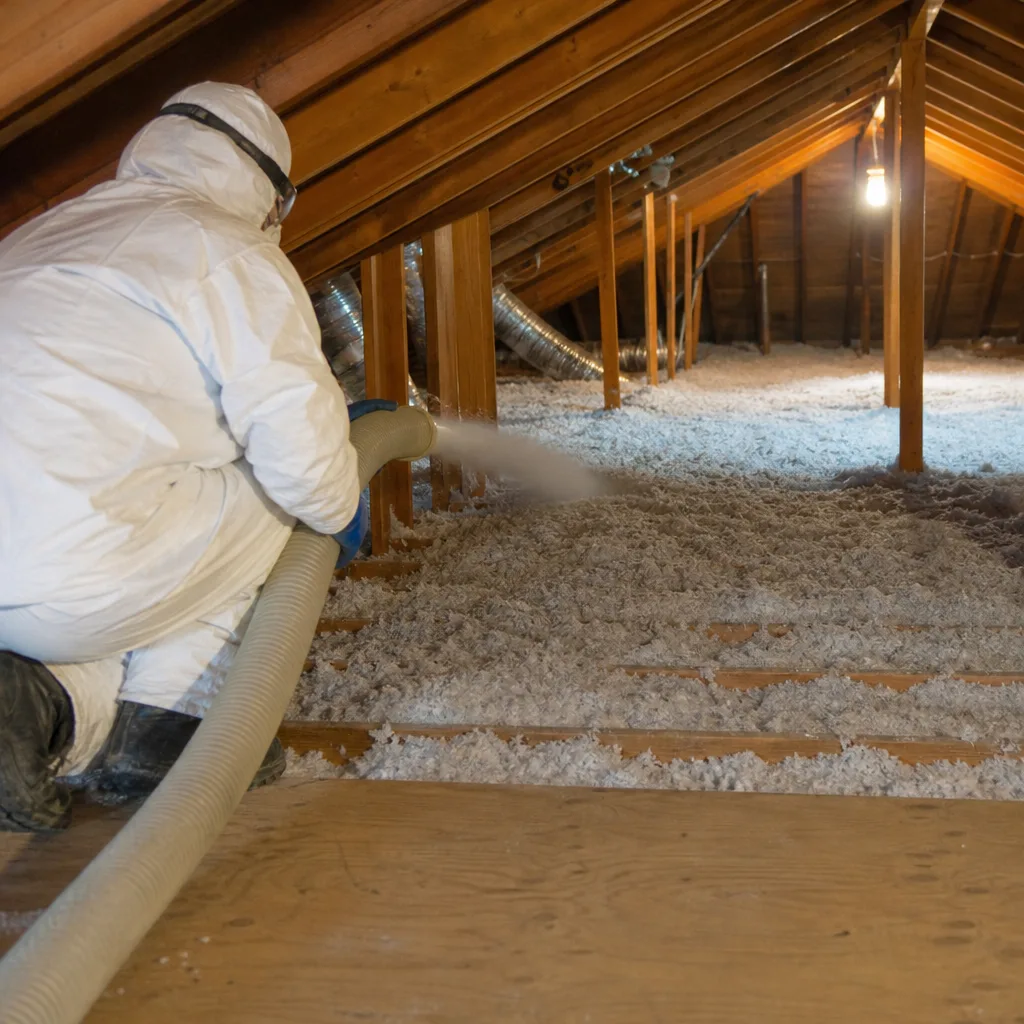
Attic insulation removal in Corona is the first step for most of the 1990s tract homes we work on. Those original blown fiberglass installations have settled from R-30 to something closer to R-10 or R-15, and topping them up without removing the old, compressed material just buries the problem. We remove the old insulation with HEPA-filtered vacuums, inspect the attic floor for air leaks, and start fresh. Attic insulation removal in Corona typically runs $1,200 to $2,800 for a standard two-story tract home, before new insulation goes in. Call (877) 265-5712 for an exact number.
Why Removal Beats Just Adding More
You can’t fix compaction by piling more on top. The old fiberglass is dense, dusty, and often full of rodent droppings and blown-in debris. In Corona specifically, that original builder-grade insulation has also been baked by Santa Ana heat for 25 to 35 years. Removal gives you a clean attic floor, a chance to air-seal, and a fresh installation that actually performs at its rated R-value.
What We Find Under Old Insulation
Almost every Corona attic we open up has gaps around top plates, can lights, and wire penetrations that let hot air pour up from the walls. That’s the hidden air leak that keeps upstairs rooms hot even when the attic looks insulated. We seal those before we blow in new insulation. It’s the difference between a job that looks right and one that actually works.
Trusted Brands We Service in Corona
We install and service every major insulation brand in Corona, with genuine material choice across all categories. Owens Corning and CertainTeed fiberglass, Rockwool mineral wool, GreenFiber recycled cellulose, Icynene and Demilec spray foam, plus Johns Manville and Knauf. If a previous contractor put in a specific product and you want it matched or upgraded, we can do that. We’re authorized to install Owens Corning and CertainTeed products, and our spray foam certifications cover both Icynene and Demilec systems. For Corona homeowners who want a sustainable option, GreenFiber cellulose and Rockwool mineral wool are part of our standard lineup – not a special order. Eight brands. One contractor. The right fit for your home.
Common Attic Insulation Problems We See in Corona Homes
- Compacted 1990s builder-grade blown fiberglass. Those tract homes off Green River Road, McKinley Street, and California Avenue were insulated with the cheapest product available. Twenty-five to thirty-five years later, it’s settled to a fraction of its original depth and the upstairs is permanently hot in summer.
- Santa Ana wind heat loads baking ductwork. When dry, hot air pushes through attic vents during Santa Ana events, it heats the ductwork sitting in the attic. Without proper R-value and radiant-heat control, the attic becomes a convection oven for your AC’s distribution system.
- Missing air sealing in older ranches near downtown Corona. The post-war ranch homes around Sixth Street and Main Street often have minimal insulation and zero air sealing. Heat leaks straight through top plates, can lights, and wall penetrations, which no amount of attic insulation alone can fix.
- Mold and moisture from poor bathroom venting. Many Corona homes vent bathroom fans directly into the attic. In our hot, dry climate, that moisture condenses against the cool roof deck in winter and feeds mold growth, which then requires insulation removal and treatment.
Pricing for Attic Insulation in Corona, CA
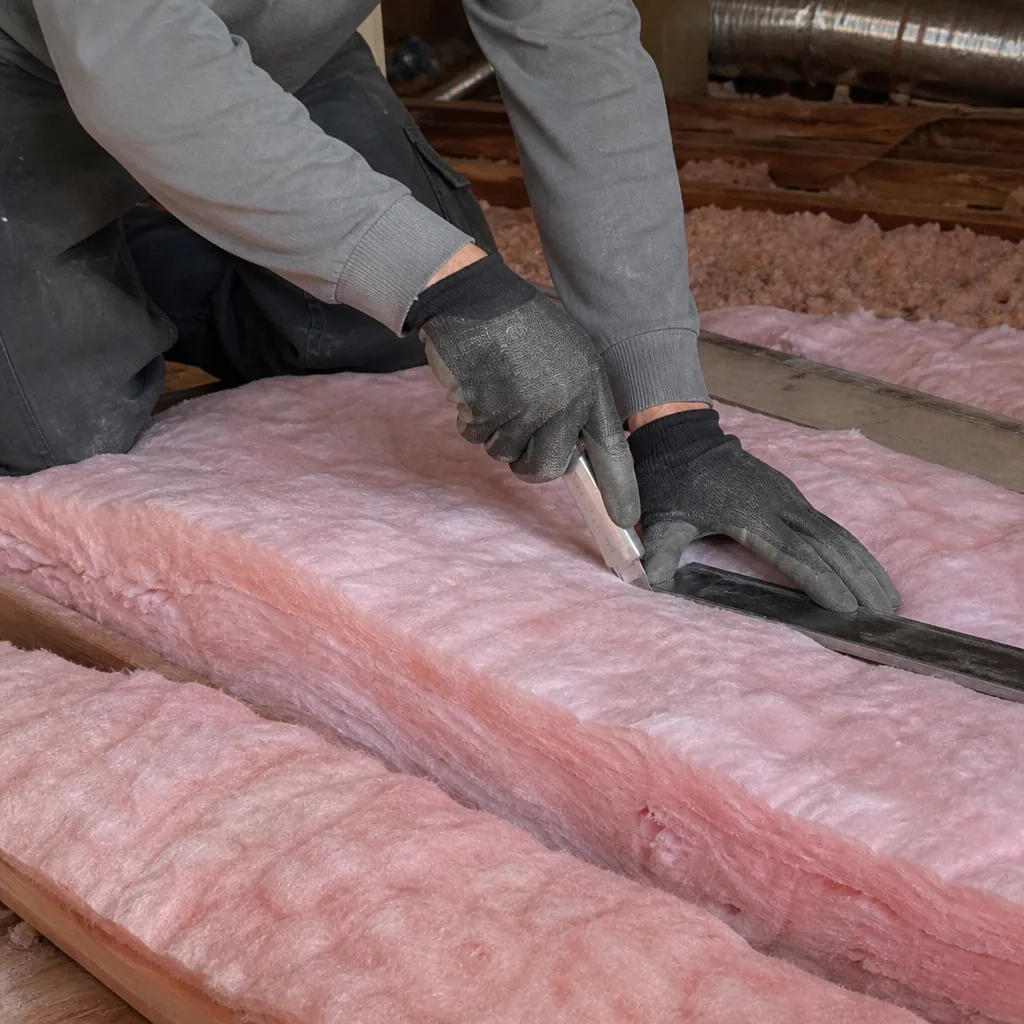
A full attic insulation removal and replacement in a typical Corona tract home runs $3,200 to $6,500, depending on square footage and target R-value. Blown-in fiberglass to R-49 in a 1,500-square-foot attic typically runs $2,000 to $3,500. Attic batt insulation for open attic floors runs $1,800 to $3,200. If you just need a top-up without removal, expect $1,500 to $2,500, though we rarely recommend that in Corona’s 1990s homes because the old material is too far gone. Spray foam insulation in Corona runs $3.50 to $7.00 per board foot. The biggest variables are attic size, access difficulty, and whether air sealing is needed first. Estimates are free. Call (877) 265-5712 and we’ll give you an exact number for your Corona home.
We Also Serve Cities Near Corona
North Tustin Insulation serves Corona and the surrounding communities, including Home Gardens, El Cerrito, Eastvale, and Norco. If you’re in one of those areas and need the same brand-matched, material-specific approach to Attic Insulation, call us at (877) 265-5712. We’ll bring the same Corona-level knowledge of Inland Empire housing stock and heat loads to your home.
Serving Corona, CA — Our Local Coverage Area
We’re based in the Corona area and know this community well. Use the map below to see our service coverage — if you’re nearby, we can almost certainly help.
FAQs About Attic Insulation in Corona
Because your attic insulation has likely compacted from its original R-30 to somewhere around R-10 to R-15, so the heat radiating through the attic floor is overwhelming the cooling capacity of your upstairs air handler. We see this constantly in Corona’s late-1980s and 1990s tract homes, where the original builder-grade blown fiberglass has settled over decades and the attic is now dramatically under-insulated while the HVAC still works fine. The fix is removal, air sealing, and re-insulating to R-49 with a product that handles Corona’s heat loads. Call (877) 265-5712 for a free attic inspection and we’ll tell you exactly what R-value your attic currently has.
Yes. Santa Ana winds bring dry, hot air that pushes through attic vents and bakes the ductwork and living space below. If your attic has old, compacted insulation or no radiant-barrier protection, the attic temperature can climb so high that the insulation stops functioning effectively. We often include a radiant-barrier underlayment or high-R-value blown insulation specifically to handle Santa Ana heat loads in Corona homes. Call (877) 265-5712 and we’ll assess what your attic needs for our wind and heat patterns.
Almost certainly not at its original R-value. The blown fiberglass used in Corona’s late-1980s and 1990s building boom was installed at minimum code, which was R-19 to R-30 depending on the year. After 25 to 35 years of settling, compression, and degradation, most of those attics are at R-10 to R-15. We recently re-insulated an attic in Sierra Del Oro off Green River Road where the original fiberglass had settled to about 4 inches, and the upstairs bedrooms were baking even with the AC running full tilt. After removal, air sealing, and blowing in Owens Corning fiberglass to R-49 with a radiant barrier, the homeowner’s upstairs held temperature with the thermostat set two degrees higher. Call (877) 265-5712 and we’ll measure your attic’s actual depth and R-value.
Yes. The post-war ranch homes near downtown Corona, around Sixth Street and Main Street, often have minimal insulation – sometimes just a thin layer of old batts – and almost never have air sealing. That means heat leaks straight through top plates, can lights, and wall penetrations. These homes often need a combination approach: air sealing first, then blown-in insulation to bring the attic up to spec. The older the house, the more important the air sealing step becomes. Call (877) 265-5712 for an estimate that accounts for your home’s era and construction style.
Yes, we handle both. We remove old, contaminated, or compacted insulation with HEPA-filtered vacuums, then treat any mold on the framing and address the moisture source. For Corona homes with bathroom fans venting into the attic, we fix that too, because otherwise the mold comes back. Attic insulation removal and mold remediation together typically run $3,000 to $7,000 depending on the attic size and extent of the problem. Call (877) 265-5712 and we’ll schedule an inspection.
Get Your Corona Attic Fixed Right
If your Corona home’s upstairs is hot through August, the Santa Ana winds are baking your attic, or you suspect the 1990s insulation has quietly failed, we’re the contractor who can tell you exactly what’s going on and fix it with the right material. We serve all Corona zip codes – 92882, 92883, 92877, and 92878 – and the surrounding cities. Call (877) 265-5712 today for a free estimate. Allen Decker and our team will walk you through what your attic needs, what it costs, and why the material we recommend is the right one for your specific house.
Written by Allen Decker, Owner at North Tustin Insulation, serving Corona and the Inland Empire.