
Fast, Reliable Attic Insulation Across Indian Wells
Attic insulation in Indian Wells typically costs $2,200 to $6,500 for a full retrofit, and it’s the single highest-impact upgrade you can make on a desert home with vaulted ceilings and a flat or low-slope roof. We run crews into Indian Wells weekly from our North Tustin base, and we know the housing stock here: 1960s through 1990s golf-course customs with big glass, big rooms, and attic spaces that turn into ovens from May through October. If your upstairs runs 10 degrees hotter than your living room or your AC never shuts off in August, the problem is almost always overhead. Call (877) 265-5712 and we’ll put a real number on fixing it.
Why North Tustin Insulation Is Indian Wells’s Preferred Attic Insulation Company
Indian Wells homeowners don’t call us for a lowest-bid patch job. They call because the house was expensive, the energy bills are worse, and they want the right material specified for a desert roof assembly, not whatever a generalist happens to carry. We’re an insulation-only contractor. Every estimate, every technician, every conversation is about one trade. That matters when you’re deciding between open-cell Icynene spray foam on a vaulted ceiling, CertainTeed fiberglass batts in a vented attic, or a radiant barrier retrofit over a low-slope roof. We carry eight nationally recognized brands, which means the recommendation is driven by your home’s actual geometry and heat load, not by what’s on the truck.
Allen Decker leads our team, and the standard he sets is simple: specify the material that actually solves the problem, explain why, and install it clean. No upselling to spray foam when cellulose would work. No pushing batts because the crew doesn’t know how to run a foam rig. Indian Wells houses are too particular for a one-size answer.
Insulation Contractors in Indian Wells
Insulation contractors working in Indian Wells need to understand one thing that separates this city from Palm Desert or La Quinta: the roof is the problem. This is a town of flat and low-slope roofs over big, open, vaulted rooms. Attic heat gain through the roof assembly dominates cooling loads. Wall-cavity insulation is almost irrelevant here. That means a competent contractor in Indian Wells thinks in terms of roof-focused strategies: high-R attic insulation, radiant barriers, and attic ventilation that actually moves air in a house built before modern energy codes existed.
Retrofit Work for 1960s to 1990s Custom Homes
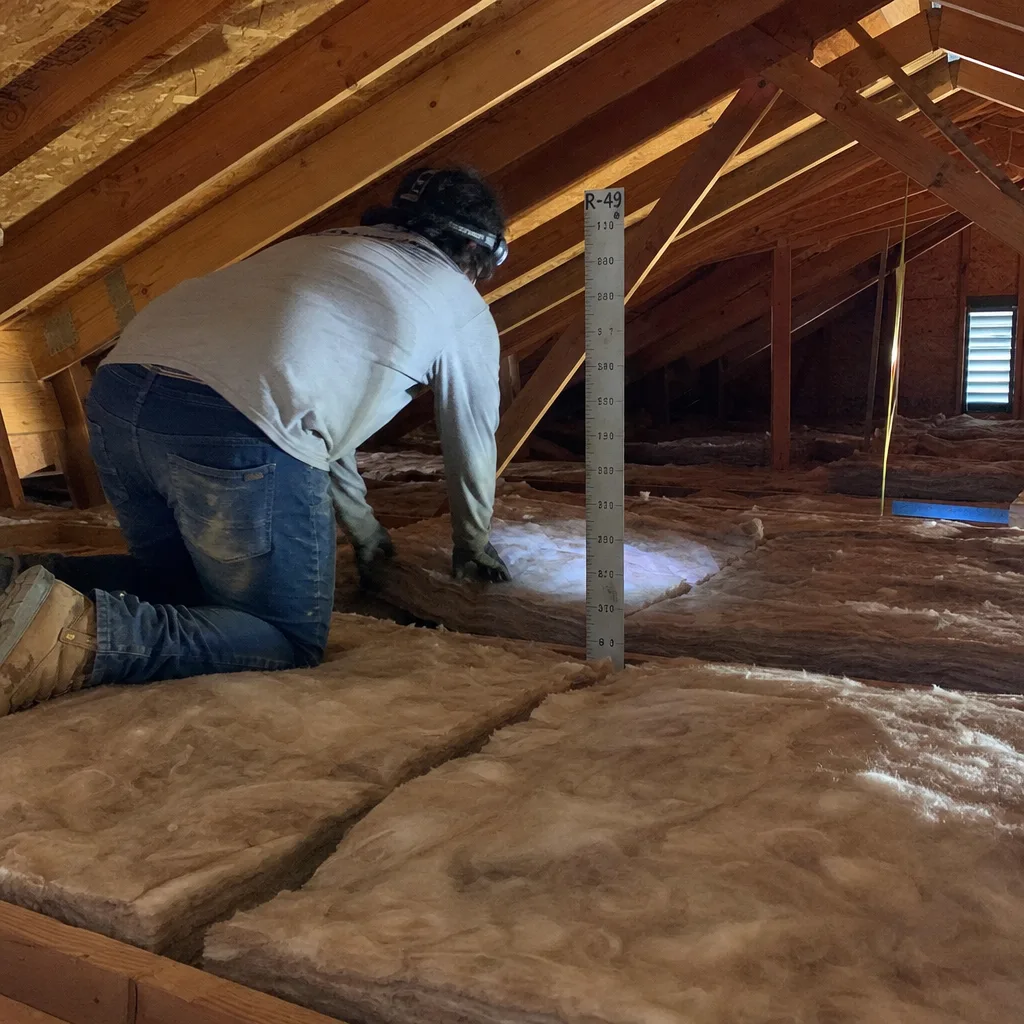
Most Indian Wells homes were built between the 1960s and 1990s, and the original attic insulation in many of them has compressed to R-8 or R-10. We see it constantly: fiberglass batts that settled into the ceiling joists, leaving the upper third of the attic cavity as a hot, uninsulated void. A proper retrofit means removing degraded material, air-sealing the ceiling plane at every penetration, and bringing the assembly up to R-38 or better.
Vaulted Ceilings and Hard-to-Reach Attics
Vaulted ceilings are great to live under and terrible to insulate. The cavity is shallow, the access is limited, and standard batts often can’t hit the required R-value. In these situations, Icynene open-cell spray foam is frequently the right call because it expands into irregular framing cavities and air-seals as it insulates. We carry Icynene and Demilec spray foam systems for exactly this reason.
Attic Ventilation in Indian Wells
Attic ventilation in Indian Wells is the difference between an attic that stays at 120°F and one that hits 150°F or higher. Flat and low-slope roof designs trap heat in ways that standard gable-vented attics in other cities don’t. When hot air can’t escape, it radiates down into the living space, accelerates the degradation of whatever insulation is up there, and forces your AC to work harder than the square footage warrants. Ventilation alone isn’t a fix, but paired with high-R insulation and a radiant barrier, it changes the whole thermal profile of the house.
Flat-Roof Venting Challenges
Flat-roof Indian Wells homes often have minimal vent opening area, and what’s there gets clogged with desert dust. That’s a common failure mode we correct: soffit vents blocked by years of dust and debris, paired with inadequate exhaust area at the ridge or roof edge. The fix is usually a combination of restoring intake airflow and adding powered or passive exhaust, sized to the attic volume, not guessed.
Radiant Barrier Assessment
A radiant barrier in a 1980s Indian Wells home may have lost its reflectivity years ago. Dust coating on the foil facing kills performance. Torn facing kills performance. If your attic has a radiant barrier that’s been up there for 20 years, we check it as part of any insulation upgrade. In a desert climate like Indian Wells, a functioning radiant barrier is worth R-5 to R-10 of effective resistance against solar gain, so it’s not an add-on; it’s core to the system.
Trusted Brands We Service in Indian Wells
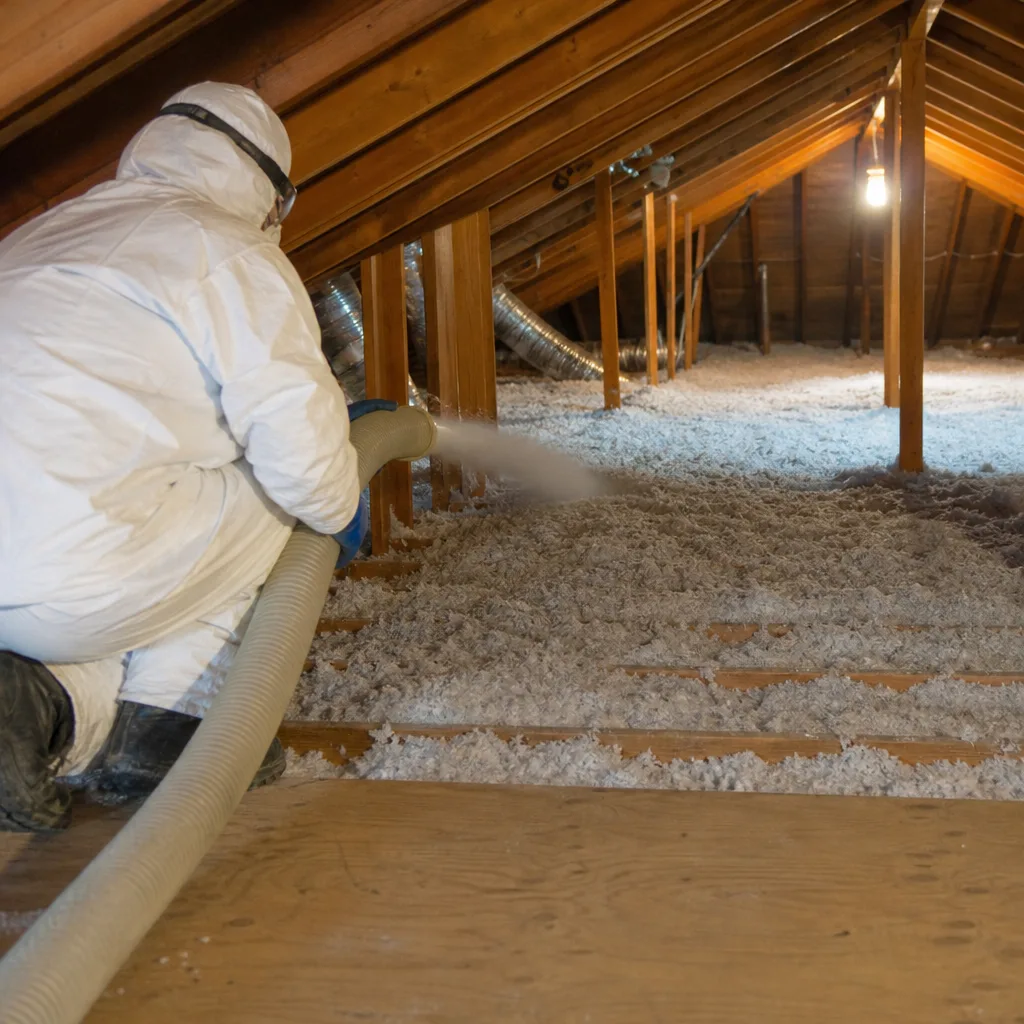
Indian Wells customers get access to the full North Tustin Insulation brand portfolio: Owens Corning and CertainTeed fiberglass, Johns Manville and Knauf batt insulation, GreenFiber recycled cellulose, Rockwool mineral wool, plus Icynene and Demilec spray foam. We don’t stock a single brand and call it a day. The right product for a flat-roof 1970s custom near Eldorado Country Club is often not the right product for a 1990s country-club home with a vented attic. We stock materials specific to the Indian Wells climate and building style, so turnaround on estimates and installs is faster than you’d expect from a company based in Orange County.
Common Attic Insulation Problems We See in Indian Wells Homes
- Compressed fiberglass in low-slope roof assemblies. Original batts installed in the 1970s and 1980s settle and compress over decades. R-19 becomes R-8, and the attic becomes a heat reservoir that radiates into the house all night.
- Dead radiant barriers. Foil facing from the 1980s era is often torn or coated in a layer of desert dust. It stops reflecting. Solar gain goes straight into the attic cavity and the insulation below it.
- Clogged or undersized flat-roof ventilation. Hot air has nowhere to go. Soffit vents pack with Coachella Valley dust, exhaust area is minimal, and attic temps climb past 150°F in July and August.
- Air leakage at ceiling penetrations. Recessed lights, HVAC registers, and vent stacks in pre-1990s homes were rarely sealed at the ceiling plane. Cooled air escapes into the attic, pulling hot air down through wall cavities in return.
Pricing for Attic Insulation in Indian Wells, CA
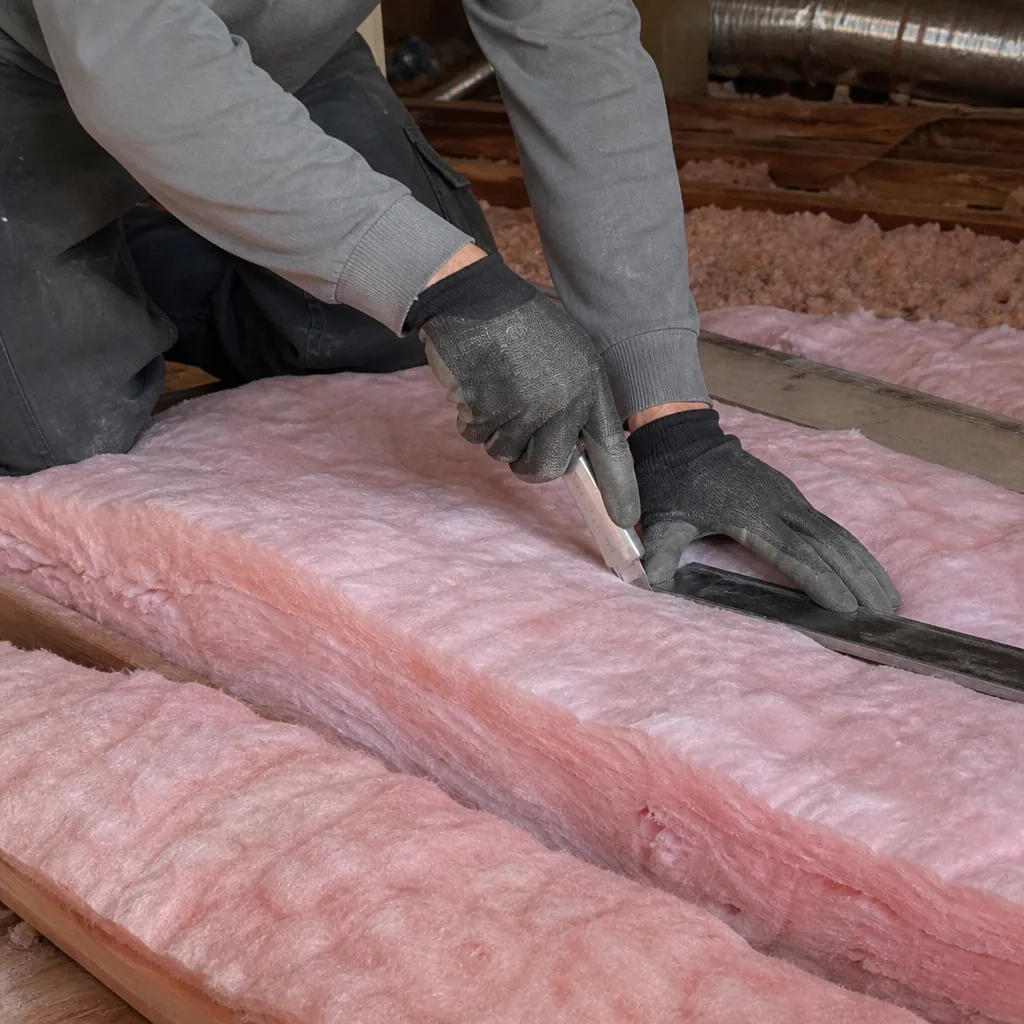
Attic insulation pricing in Indian Wells depends mostly on roof geometry and the condition of what’s already up there. A straightforward blown-in cellulose top-up in a vented attic runs $1,800 to $3,200. Attic batt removal and replacement with Owens Corning R-38 fiberglass runs $2,800 to $5,500 for a typical 2,500 to 3,500 square foot custom home. If you’re dealing with vaulted ceilings that need Icynene spray foam, plan on $4,500 to $8,500 depending on square footage and cavity depth. Radiant barrier installation adds $1,200 to $2,800. These are real ranges for the Indian Wells market, not national averages. Call (877) 265-5712 for a free estimate, and Allen or one of our team leads will give you an exact number based on your attic, not a brochure guess.
We Also Serve Cities Near Indian Wells
Our crews cover the entire Coachella Valley. Besides Indian Wells, we run insulation jobs regularly in Palm Desert, La Quinta, Bermuda Dunes, and Rancho Mirage. Same team, same eight-brand lineup, same roof-focused approach to desert heat. If you’re outside Indian Wells proper, ask about scheduling a combined visit for a neighbor or family member’s home.
Serving Indian Wells, CA — Our Local Coverage Area
We’re based in the Indian Wells area and know this community well. Use the map below to see our service coverage — if you’re nearby, we can almost certainly help.
FAQs About Attic Insulation in Indian Wells
Yes, you can, and it’s one of the most common jobs we do in Indian Wells. Low-slope and flat-roof homes in this city were often built with minimal attic clearance, but there’s almost always an accessible cavity or a path to insulate from above or below. We use a combination of high-R blown-in products and, where the cavity is really tight, Icynene spray foam to get the R-value up without major structural changes. Call (877) 265-5712 to have us look at your specific roofline.
A working radiant barrier should look like clean, intact foil facing stapled to the underside of the roof decking. If the foil is torn, sagging, or covered in a layer of dust or debris, it’s not reflecting solar heat and you’re losing most of the benefit. In Indian Wells, dust accumulation from desert winds is the biggest killer. We include a radiant barrier assessment with every attic insulation estimate.
R-38 is the baseline we recommend for vented attics in Indian Wells, and R-49 is worth considering for homes with large open rooms and vaulted ceilings that trap heat. The bigger variable is radiant heat. In this climate, a radiant barrier paired with R-38 often outperforms R-49 without a radiant barrier. We specify based on roof orientation, attic volume, and the home’s existing ventilation.
In most cases, yes. We use Icynene or Demilec spray foam applied through small access points or directly into the rafter bays when the ceiling is being refinished. It expands to fill the cavity and air-seals in one step. If the drywall is staying in place, we can often access the cavity from the attic side or through carefully placed openings that get patched by your finish contractor. It’s not a zero-demo job every time, but it’s far less invasive than ripping out a vaulted ceiling.
Usually remove it, especially in Indian Wells homes from the 1960s through 1990s where the original material has compressed to R-10 or worse. Adding batts on top of compressed fiberglass doesn’t restore lost R-value and can trap dust and debris that accelerates further degradation. We remove the old material, inspect the ceiling plane for air leaks and damage, seal what needs sealing, and then install fresh material to the correct R-value. It’s the cleaner, longer-lasting approach.
Need a straight answer on attic insulation in Indian Wells? Call North Tustin Insulation at (877) 265-5712. We’ll walk through what’s in your attic, what it should be, and what it costs to fix it. Free estimates, no guesswork.
Written by Allen Decker, Owner at North Tustin Insulation, serving Indian Wells and the Coachella Valley with roof-focused attic insulation solutions.