Fast, Reliable Attic Insulation Across West Covina
Attic insulation in West Covina isn’t a coastal afterthought – it’s the single highest-impact upgrade you can make to a pre-code San Gabriel Valley tract home. Most houses here went up between the 1950s and 1970s with R-11 to R-19 at best, and after sixty-plus summers of 100-degree attic temperatures, that material is settled, compacted, or chewed through. North Tustin Insulation, led by Allen Decker, specializes exclusively in insulation – not roofing, not HVAC, not remodeling. We carry eight industry-name brands and match the material to your home, not the other way around. If your upstairs rooms turn into ovens by noon in August, call us at (877) 265-5712 for a free estimate. We know exactly what’s under the stucco in the 91790, 91791, 91792, and 91793 zip codes, and we’ll tell you straight what it takes to fix it.
Why North Tustin Insulation Is West Covina’s Preferred Attic Insulation Company
Homeowners across West Covina call us because we speak in materials and performance numbers, not vague promises. When a homeowner near Cortez Park tells us their second story hits 85 degrees by 3 p.m., we know before opening the attic hatch that they’re dealing with either settled fiberglass, unsealed top plates, or a low-pitch roof trapping radiant heat. We don’t guess. We inspect, measure, and recommend – then install. Reviews from West Covina customers consistently mention that we showed up on time, left the home cleaner than we found it, and explained exactly which brand went in and why. That level of transparency matters in a city where most homes need retrofit work, not new construction.
Our response time to West Covina is same-week for most estimates and installations. The 10 Freeway and the 60 put us within easy reach of every neighborhood from the 919 Freeway corridor up to Amar and Azusa. Local knowledge drives everything: we know which tract developments off Grand and Glendora have the thinnest original insulation, which post-1970 additions have vaulted ceilings that complicate blow-in coverage, and which homes along Lark Ellen and Vine have rodent activity in the eaves. That’s not data you pull from a national database – it’s what you learn from doing Attic Insulation work in this city week after week.
Attic Insulation Removal in West Covina
Attic Insulation Removal is the step most West Covina homes need before anything new goes in, and it’s the step generic contractors skip. After decades of summer heat cycling through a low-pitch stucco roof, the original fiberglass or rock wool in these 1950s-1970s tract attics has done one of three things: settled to two inches or less, compacted under its own weight, or been shredded and tunneled by rodents. You don’t blow new insulation over that. You remove it, inspect the ceiling plane, air-seal every penetration, and start clean. A typical removal job in West Covina runs $1,200 to $2,800 depending on attic size and access. It’s the difference between a real thermal envelope and a nicer-looking version of the same leak.
Why Removal Matters Here
West Covina attics bake. Summer afternoons push attic temperatures past 140 degrees, and that heat cooks old insulation until it loses loft and R-value. What’s left behind is a thin, dusty layer that looks like insulation but doesn’t perform like insulation. Removal lets our crew see what’s actually happening on the ceiling plane – cracks in top plates, gaps around wiring, holes behind can lights – before new material covers it all back up.
What We Do With What We Pull Out
We bag, HEPA-vac, and haul away the degraded material, including rodent nests and droppings. Then we inspect the decking and framing for moisture damage before insulating. If your attic shows signs of rat or squirrel activity – common in the 91790s around mature citrus trees – this is the only way to know the extent of the damage. You can’t evaluate what you can’t see.
Insulation Contractors in West Covina
Insulation Contractors come in two flavors in West Covina: generalists who’ll insulate your attic between a tile job and a kitchen remodel, and insulation-only specialists like North Tustin Insulation. The difference shows up in the details. Allen Decker’s team thinks about R-value per inch, air-sealing sequences, radiant-barrier performance on low-pitch roofs, and whether Icynene open-cell foam or GreenFiber cellulose makes more sense for a particular 1960s tract home. A typical attic insulation install in West Covina runs $1,800 to $4,500 for blow-in fiberglass or cellulose at R-38, and $3,500 to $8,000 for spray foam on the roofline. We’ll tell you which number applies to your house and why.
What Sets Our Approach Apart
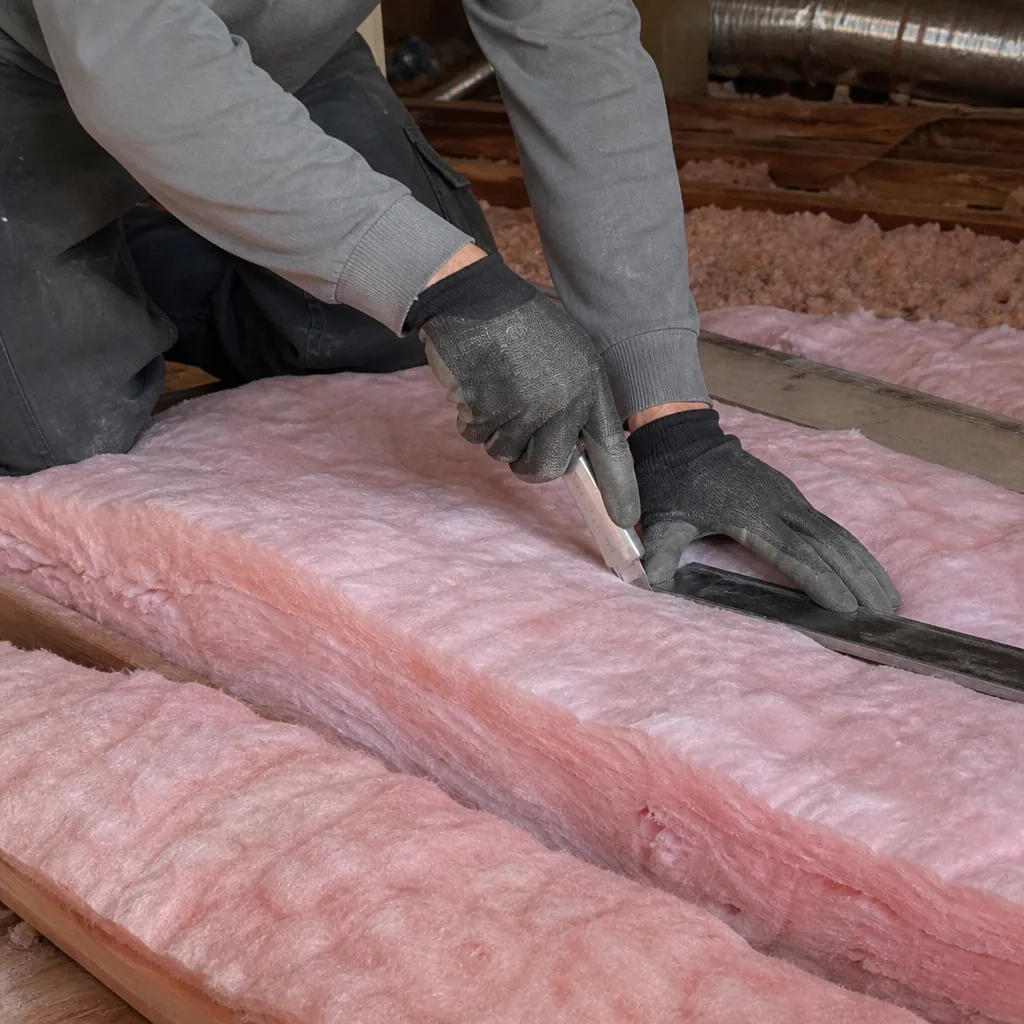
We carry three distinct installation methods – attic batts, blown-in, and spray foam – so the recommendation is driven by your home’s construction, not by which method our crew happens to know. A home with a converted garage or attic storage space has different needs than an open, unvented attic. Carrying both Icynene and Demilec spray foam systems means we’re not pushing a single product line on every house.
How We Handle Pre-Code Attics
Most West Covina homes were built before California’s first meaningful energy codes, which means the original insulation target was minimal at best. We treat every pre-1980 home as a retrofit project: measure existing depth, test for air leaks, and recommend the right removal-and-replace sequence rather than a quick blow-over. That’s what the home actually needs.
Trusted Brands We Service in West Covina
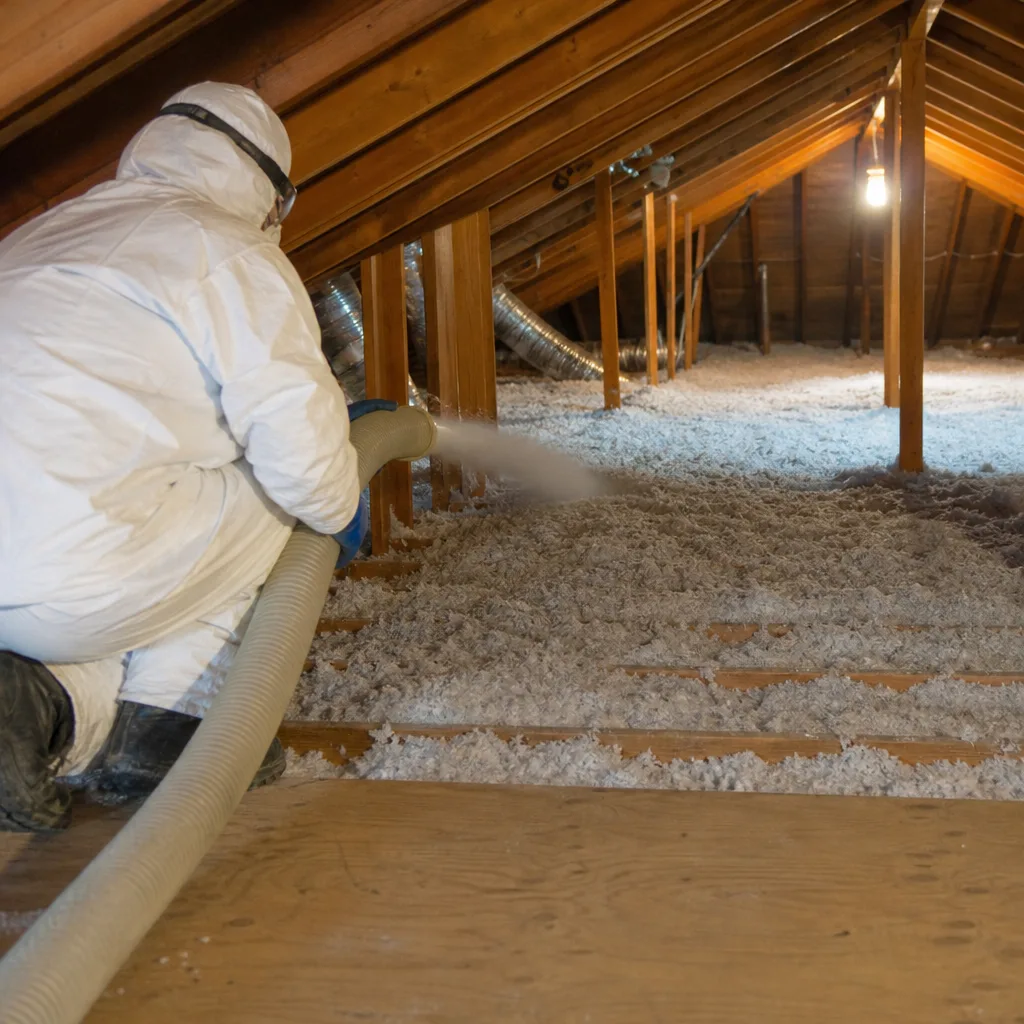
We’re authorized to install Owens Corning and CertainTeed fiberglass, and we stock the full product lines at our facility near North Tustin. For West Covina’s inland heat, we often recommend Owens Corning R-38 blown-in fiberglass with a radiant barrier for low-pitch roofs, or Demilec closed-cell spray foam when the homeowner wants the attic sealed and conditioned. GreenFiber recycled cellulose is a strong fit for the older tract homes where air-sealing and dense-packing into wall cavities helps with both thermal performance and sound. We service every brand we install – no orphaned warranties, no finger-pointing. If there’s an issue, we come back.
Common Attic Insulation Problems We See in West Covina Homes
- Settled and compacted original insulation: Most 1950s-1970s stucco tract homes in West Covina started with R-11 to R-19 fiberglass batts or rock wool. Sixty years of gravity and summer heat have crushed that material to a fraction of its original loft, and much of it is now doing almost nothing.
- Unsealed top plates and penetration gaps: In homes along the 10 Freeway corridor, conditioned air pours into the attic through unsealed framing joints, wiring holes, and can lights. We see this in nearly every pre-code home we open up – and it’s why blow-in alone won’t solve the comfort problem.
- Rodent-damaged insulation: The mature landscaping around neighborhoods like South Hills and the areas north of Cameron Park means rats and squirrels are a constant presence. Their nests and tunnels through fiberglass batts destroy R-value and leave behind waste that belongs in a HEPA bag, not under new insulation.
- Low-pitch roof heat trapping: West Covina’s classic single-story ranch homes have low-pitch roofs with minimal attic ventilation. Without a radiant barrier or spray foam on the deck, attic temperatures climb 30 to 40 degrees above outdoor air, and the insulation below absorbs that heat for hours after sundown.
Pricing for Attic Insulation in West Covina, CA
Here’s what homeowners should expect to pay in West Covina’s market. Blown-in fiberglass or cellulose at R-38 for a typical 1,200-square-foot attic runs $1,800 to $3,200. Attic batt insulation, which we use less often in retrofit settings but recommend for certain open attics, runs $2,000 to $4,000 installed. A full attic insulation top-up with air-sealing runs $1,500 to $2,800. Complete removal and replacement, which most West Covina tract homes need, runs $2,800 to $5,500. Spray foam roofline applications run $3,500 to $8,000 depending on square footage and whether it’s open-cell or closed-cell. Those are real, current numbers for this market. Call (877) 265-5712 for an exact quote on your home – estimates are free, and we’ll walk you through the numbers in plain English.
We Also Serve Cities Near West Covina
Our crews work throughout the San Gabriel Valley, including Valinda, South San Jose Hills, La Puente, and Irwindale. If you’re in any of these neighboring cities and need Attic Insulation in West Covina expertise applied to your own pre-code tract home, we’ll bring the same removal-first, air-seal-everything approach. Call us and mention your neighborhood – we likely know your street.
Serving West Covina, CA — Our Local Coverage Area
We’re based in the West Covina area and know this community well. Use the map below to see our service coverage — if you’re nearby, we can almost certainly help.
FAQs About Attic Insulation in West Covina
Your attic gets so hot because the low-pitch roof absorbs direct San Gabriel Valley sun all afternoon, and the original insulation below it is either too thin or too degraded to resist that heat transfer. West Covina attics routinely hit 130 to 150 degrees in July and August, especially in the 91790 and 91791 zip codes where the housing stock has minimal roof ventilation. Insulation slows that heat from entering the living space, but it can’t stop the attic itself from getting hot. That’s why we often recommend a radiant barrier in this climate. Call (877) 265-5712 for a free attic assessment.
You can, but we typically advise against it in West Covina tract homes. Blowing over settled or rodent-damaged material without removal means you’re layering fresh insulation on top of a leaky, degraded base, and the unsealed top plates and can lights below all of it will keep leaking conditioned air into the attic. The honest answer is that most homes in the 91790 and 91792 zip codes need removal and air-sealing first, then a clean blow-in. We’ll tell you if your attic is an exception. Estimates are free.
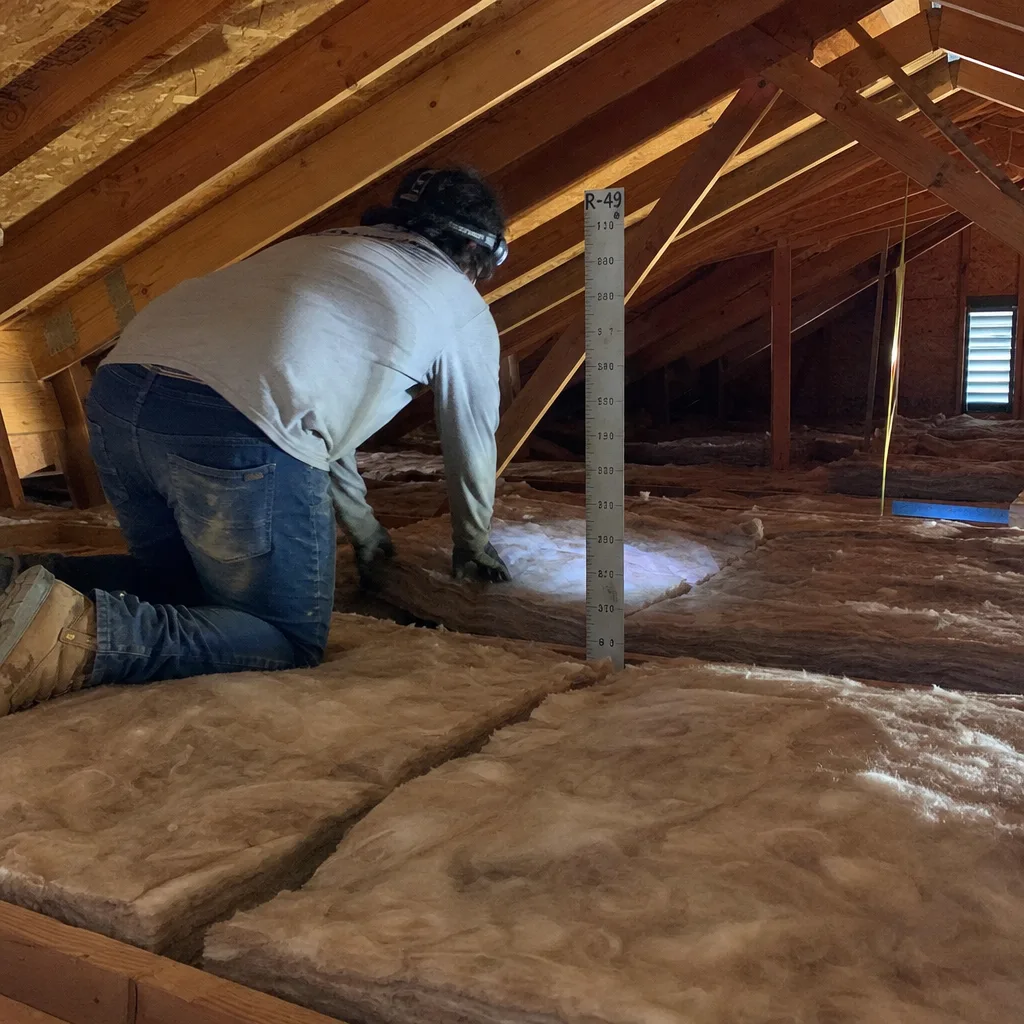
We recommend R-38 as the minimum for West Covina’s inland heat, with R-49 often justified for single-story ranch homes with large ceiling areas and low-pitch roofs. The California energy code sets R-30 as a baseline, but that’s not enough for this climate’s cooling-season dominance. Allen Decker and our team factor in your roof pitch, attic ventilation, and whether you run air conditioning daily when we make the recommendation. Call (877) 265-5712 and we’ll measure what you have now.
You’ll see tunnels and burrows through the insulation surface, droppings scattered on top of and inside the material, and sometimes shredded paper or nesting debris in the corners. In West Covina’s older neighborhoods with big trees and mature landscaping, this is one of the most common findings we make during a removal job. If you’ve heard scratching at night or seen rodent activity around your eaves, don’t disturb the insulation yourself – let us inspect and remove it safely with HEPA filtration. Call (877) 265-5712 to schedule an inspection.
Yes. We offer full attic insulation removal, HEPA vacuuming, sanitizing, and haul-away throughout West Covina, including the 91790, 91791, 91792, and 91793 zip codes. Most pre-code tract homes in this city benefit from starting clean rather than layering over degraded material. Removal is included in our quotes for replacement jobs, and we’ll itemize it so you see exactly what it costs. Call (877) 265-5712 for a free, itemized estimate.
Our Work in the West Covina Neighborhoods We Serve
We recently worked on a 1962 stucco tract home near the intersection of Azusa and Amar in West Covina where the original attic insulation had settled to less than two inches in places. After removing the degraded material and air-sealing the top plates and can lights, we blew in Owens Corning R-38 fiberglass and installed a radiant barrier on the low-pitch roof deck to cut the intense summer heat gain. The homeowner reported their second-story rooms, previously unbearable in August, were noticeably cooler within the first week. That’s the outcome we design for on every West Covina job: measurable cooling-season improvement, not just a deeper layer of fluff.
Written by Allen Decker, Owner at North Tustin Insulation, serving West Covina and the San Gabriel Valley.