Fast, Reliable Attic Insulation Across West Puente Valley
Attic insulation in West Puente Valley is a retrofit job, not a new-construction afterthought. Most homes in the 91746 ZIP were built between 1950 and 1975, and many still carry their original R-7 to R-11 batts, if that. We know these houses because we work in them every week: stucco over wood frame, low-slope or flat roofs, shallow exterior-access attics, and ducts that have been buried in blown material for decades. When you call (877) 265-5712, you’ll talk to someone who knows the difference between a West Puente Valley scuttle hatch and a standard pull-down stair, and who plans the job accordingly.
Why North Tustin Insulation Is West Puente Valley’s Preferred Attic Insulation Company
We’re an insulation-only contractor, which means every tech we send to West Puente Valley spends their entire day thinking about thermal boundaries, air sealing, and ventilation. Not roofing. Not HVAC. Just insulation. That focus shows up in the details: we carry eight brands across four material categories so the recommendation is driven by your home’s construction, not by whatever product happens to be on the truck. For older West Puente Valley attics with shallow clearances and exterior access, we’ll often recommend blown-in GreenFiber cellulose or Rockwool mineral wool because both materials conform to cramped, irregular cavities better than batt products. For homes where the attic is also the thermal envelope, Icynene or Demilec spray foam changes the equation entirely.
We know the specific failure patterns in this unincorporated pocket of the San Gabriel Valley. Original batts compressed to R-7. Ducts half-sunk in old, contaminated cellulose. Top plates that were never sealed when the house was framed in 1962. A generic contractor sees a quick blow-in job. We see a removal-and-air-seal retrofit, and we plan it as a single trip so you’re not juggling multiple crews across multiple days.
Attic Insulation Removal in West Puente Valley
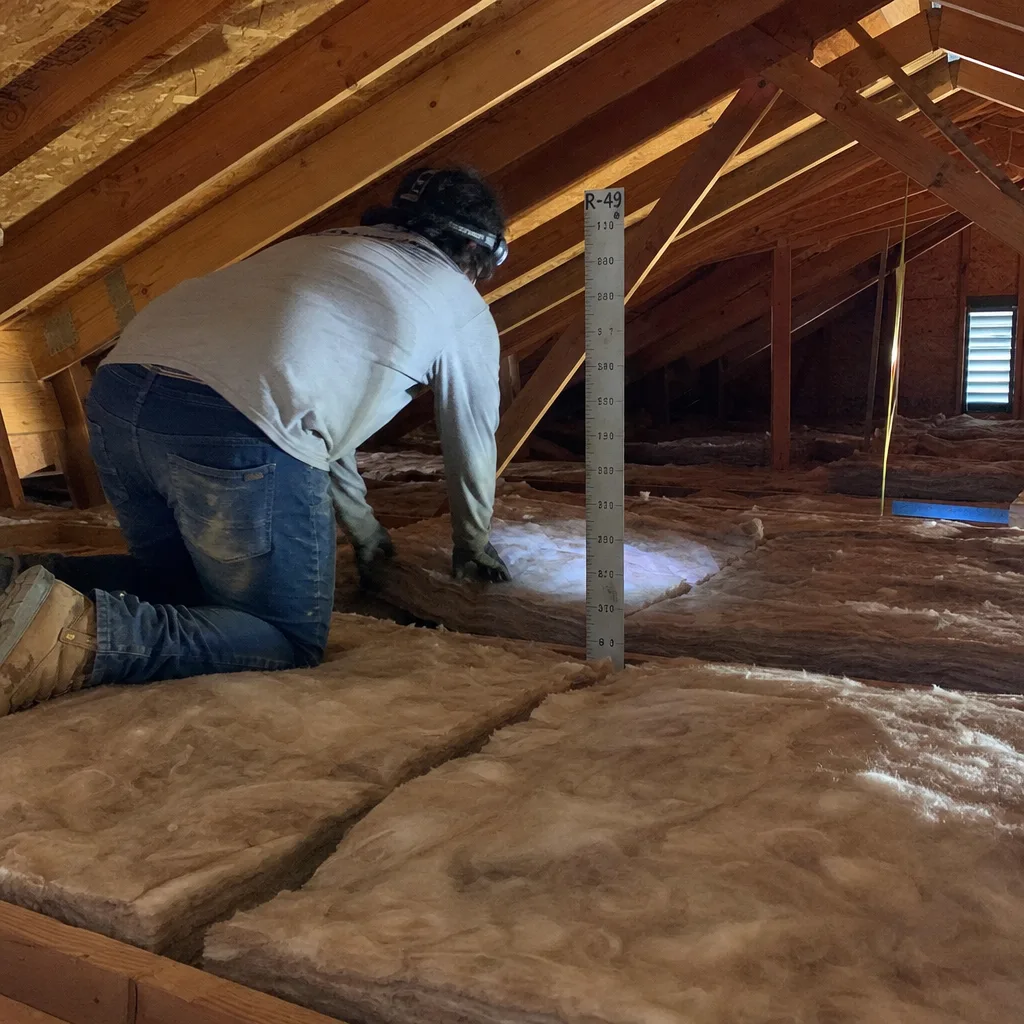
Attic Insulation Removal in West Puente Valley is the step most homes here actually need before any new material goes in. In the 1950s and 60s tracts off Valley Boulevard, it’s common to find original fiberglass batts that have been compressed by decades of HVAC swaps and rodent traffic, often layered over with contaminated cellulose from a past era’s upgrade. Adding fresh blow-in on top of that doesn’t fix anything; it buries the problem deeper and hides your duct runs. Removal clears the deck so air sealing and vent baffle installation can be done properly.
When Removal Makes Sense
If your attic has never been cleared and you’re seeing dust in the house, rodent droppings in the insulation, or ducts that disappear into a layer of old material, removal is the right call. We handle the full job: pull the contaminated material, bag it, seal top plates and wiring penetrations, install baffles to keep soffit vents clear, then blow in fresh insulation to the depth your low-slope attic can actually support.
What Removal Costs Here
Attic insulation removal in West Puente Valley typically runs $1.50 to $3.00 per square foot depending on access, depth, and contamination level. A standard 1,100-square-foot ranch with exterior scuttle access and R-7 batts usually lands between $1,800 and $3,300 for complete removal, disposal, and prep. The cramped access changes the labor math, so expect flat-roof and exterior-hatch homes to sit at the higher end.
Insulation Contractors in West Puente Valley
Insulation Contractors in West Puente Valley fall into two groups: generalists who’ll insulate your attic between a roof job and a bathroom remodel, and insulation-only specialists like us. The difference matters here more than in newer cities. These 1950s-to-70s tracts have shallow attics, knob-and-tube-era wiring, buried ducts, and ventilations that were never designed for modern cooling loads. You want a contractor who has pulled material through an exterior hatch on a 1963 stucco ranch before, not one who’s guessing at the access route from the driveway.
One-Trip Retrofit Planning
We stage the job differently for West Puente Valley. Because many attics here are accessed via a shallow scuttle or exterior hatch rather than an interior pull-down stair, removal equipment goes in through the roof or garage. Blow-in hoses get routed the same way. We plan material delivery, removal, air sealing, baffle install, and blow-in as a single sequence, one trip. That saves you the cooling days you’d lose waiting for a second crew.
Why Material Choice Matters Here
Not every insulation belongs in a flat-roof San Gabriel Valley attic. Cellulose and mineral wool conform to the irregular cavities these older homes always have. Spray foam, when attic geometry allows, creates an air seal and moisture barrier that low-pitch vented attics struggle to achieve on their own. Carrying GreenFiber, Rockwool, Icynene, and Demilec means we can be honest about what fits your home rather than pushing what’s in the truck.
Trusted Brands We Service in West Puente Valley
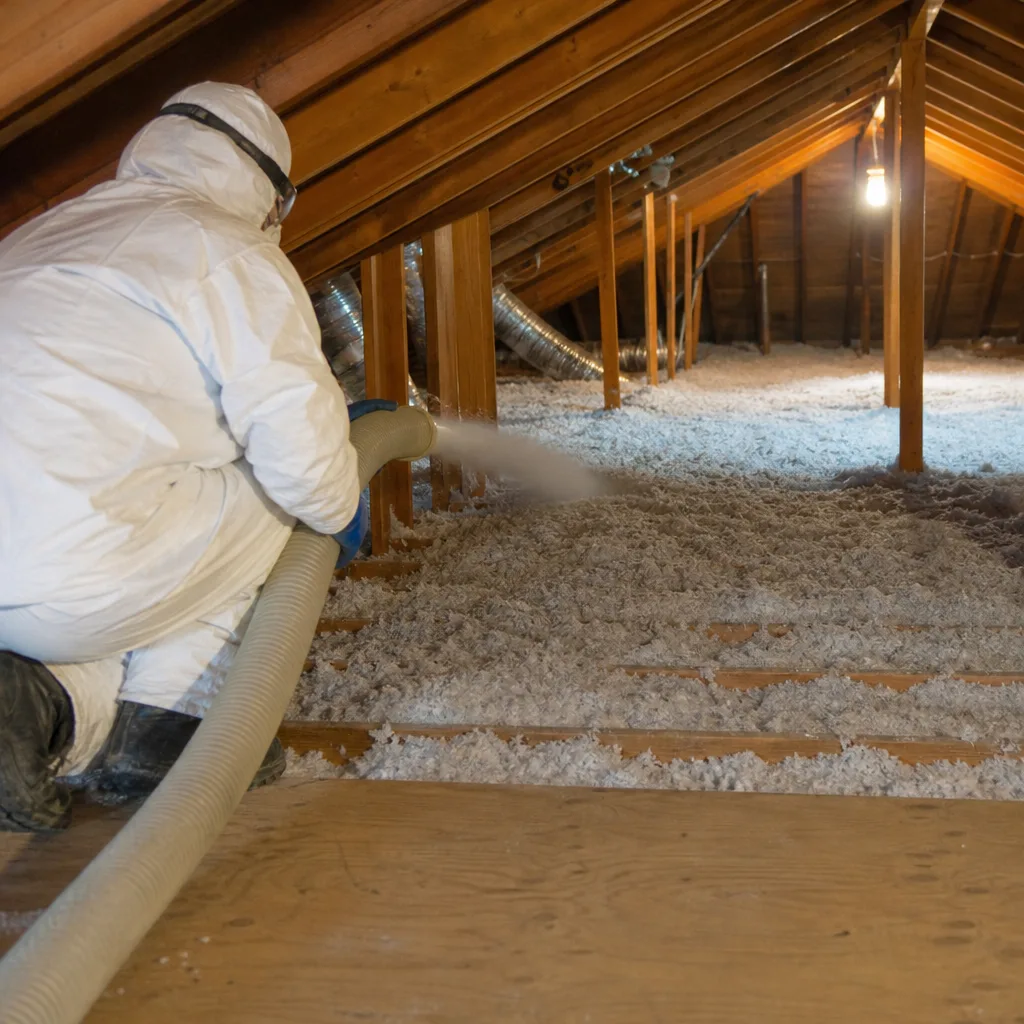
We carry and install insulation from eight nationally recognized manufacturers, but for West Puente Valley’s older housing stock, three get specified most often. GreenFiber recycled cellulose handles the cramped, irregular cavities and shallow clearances of these low-slope attics better than rigid batts. Rockwool mineral wool brings non-combustible, moisture-resistant performance to homes where ducts and wiring share tight space with the insulation. And for unvented flat-roof applications where the attic is the thermal boundary, Icynene and Demilec spray foam solve air infiltration and radiant heat gain in a way loose-fill never can. We keep material staged for fast turnaround on 91746 jobs.
Common Attic Insulation Problems We See in West Puente Valley Homes
- Original batts compressed to R-7 or R-11. Decades of HVAC work and rodent traffic flatten the loft out of old fiberglass. At that point it’s doing almost nothing for cooling-season heat gain, and it’s often contaminated.
- Ducts buried in old cellulose or batts. It’s rare to open a Valley Boulevard-area attic and find the duct runs visible. They’re usually sunk under material put down during some past retrofit, which means the new insulation smothers the ducts instead of insulating the ceiling plane.
- Shallow exterior-access attics. Many of these homes have no interior pull-down stair. The hatch is outside, the clearance is tight, and equipment has to be staged from the roof or garage. Experience with that access pattern matters.
- Radiant heat through unvented low-pitch roofs. Summer attic temps in this basin routinely push past 140°F. Without vent baffles and air sealing, the top layer of insulation gets cooked and the ducts heat up along with it, which drives cooling bills up through August and September.
Pricing for Attic Insulation in West Puente Valley, CA
A full attic insulation project in West Puente Valley, including removal of old material, air sealing, baffle installation, and new blown-in insulation, typically runs $3,500 to $8,500 depending on square footage, access route, and material choice. Blow-in only over a relatively clean attic on a standard 1,200-square-foot rancher starts around $1,500 to $2,800 for cellulose or mineral wool to modern R-value. Spray foam retrofits on flat-roof homes run higher, usually $6,000 to $14,000, because of the prep work and material density involved. Attic insulation top-up jobs on homes that already have decent material start around $900 to $1,600. Call (877) 265-5712 and we’ll give you an exact number based on your attic’s actual condition – the estimate is free, and you’ll talk to Allen Decker’s team, not a call center.
We Also Serve Cities Near West Puente Valley
Our West Puente Valley work keeps us on the roads through Avocado Heights, La Puente, Valinda, and El Monte most weeks. If you’re just across the border in any of those communities, the same team and the same eight-brand material lineup applies. For a deeper look at what we do, see our Attic Insulation page.
Serving West Puente Valley, CA — Our Local Coverage Area
We’re based in the West Puente Valley area and know this community well. Use the map below to see our service coverage — if you’re nearby, we can almost certainly help.
FAQs About Attic Insulation in West Puente Valley
No, and here’s why. In the older 91746 tracts, what’s under the new blow-in is usually contaminated material and buried ducts. Trapping that under fresh insulation doesn’t improve thermal performance; it hides the duct runs and locks in whatever’s been living up there for 60 years. We recommend removal first, then air sealing, then new material. Call (877) 265-5712 for a free attic inspection and we’ll tell you exactly what you’re working with.
We stage from the roof or garage. These exterior-hatch and scuttle-access attics are the norm in West Puente Valley’s 1950s-to-70s tracts, and our approach is built around them. Equipment goes in through the hatch or a roof opening, removal bags come out the same way, and blow-in hoses run the same route. We plan it as a single trip so you’re not losing cooling days to a multi-crew schedule.
West Puente Valley sits in the San Gabriel Valley basin, and summer attic temps regularly exceed 140°F. That radiant heat load drives your cooling bill from June through September, and it cooks the ducts sitting in that heat. Winter is mild, so the return on insulation here is overwhelmingly about blocking attic heat gain, improving ventilation, and keeping the duct runs from absorbing 140-degree air. Call (877) 265-5712 and we’ll walk you through what that means for your specific roof geometry.
We carry eight brands across fiberglass, cellulose, mineral wool, and spray foam. For West Puente Valley’s shallow, irregular attic cavities, we specify GreenFiber cellulose and Rockwool mineral wool most often. For unvented flat-roof situations, Icynene and Demilec spray foam handle the air seal that loose-fill can’t achieve. We match the material to the home, not the other way around.
Yes. On a 1961 stucco-over-frame tract home near Valley Boulevard, we found the original batts compressed to roughly R-7 and the HVAC ducts half-sunk in the old material. We pulled the contaminated insulation through the exterior hatch, air-sealed around the knob-and-tube-era wiring, blew in GreenFiber, and re-hung the ducts clear of the new blanket, all in one visit so the homeowner didn’t lose another day of cooling. That’s the standard procedure on these jobs, not a special case.
Call North Tustin Insulation for Attic Insulation in West Puente Valley
If your West Puente Valley attic still has original 1960s insulation, buried ducts, or a shallow exterior-access hatch, we know exactly what that job looks like. We’ll inspect it for free, give you a straight answer on removal versus top-up, and quote you a number you can actually plan around. Call (877) 265-5712 to schedule an estimate with Allen Decker’s team. One trip. The right material for your roof. Done.
Written by Allen Decker, Owner at North Tustin Insulation, serving West Puente Valley since day one of our San Gabriel Valley work.