Reflectix Insulation in Covina, CA | North Tustin Insulation
North Tustin Insulation provides independent Reflectix service across Covina, CA, including Reflectix in Azusa and nearby areas, with radiant barrier installation, attic top-ups, and foil remediation for homes in 91722, 91723, and 91724. We’re not affiliated with Reflectix, but we’ve installed their Double Reflective rolls and Radiant Barrier Roof Decking in enough San Gabriel Valley attics to know exactly how these products behave when summer roof decks push past 140°F.
If your Covina home is fighting radiant heat, call us at (877) 265-5712. Allen Decker grew up in an Orange County tract home, so he knows what a bare roof deck does to a living room by 3 p.m. We’ll give you a straight answer about whether Reflectix service in Irwindale and Covina is the right first step or a waste of money for your specific attic.
Why Covina Residents Choose Us for Reflectix Service
Most insulation companies treat Reflectix as an add-on. We don’t. We’ve installed Reflectix sales & service products in enough Covina attics to know where the product shines and where it fails, and we’ll tell you before you spend a dollar. That’s the Allen Decker approach: if you can’t name the product and the R-value, you don’t have a quote, you have a guess.
Covina’s housing stock is heavy with 1950s and 60s single-story stucco tract homes. Those attics were not designed for radiant barrier retrofits. They have low-pitch roofs, tight access hatches, and original framing that sometimes fights you. We’ve worked around those quirks long enough that nothing surprises us anymore, and our crews know which roof deck configurations in Covina make Reflectix worth installing and which ones need a different approach entirely.
We show up with genuine Reflectix rolls and foil tape when the job calls for them, and we’re upfront when a comparable aftermarket barrier will deliver the same performance for less. The point is getting your house comfortable, not pushing one brand.
Common Reflectix Insulation Problems We Solve in Covina
Reflectix works well when installed correctly and fails predictably when it isn’t. Here’s what we routinely see across Covina attics:
- Foil delamination and bubbling against hot roof sheathing: When Reflectix Double Reflective Insulation gets stapled directly to the underside of a roof deck without an air gap, it can’t reflect heat properly. In Covina attics that routinely exceed 140°F, the foil layers start to separate and bubble within a few summers. The barrier becomes a conductor, not a reflector.
- Surface oxidation and dust buildup on exposed foil: A Reflectix barrier that’s been in place for a decade in Covina’s dry, dusty conditions loses emissivity as the foil face oxidizes and collects a fine layer of dust. The radiant barrier doesn’t just underperform; it basically stops doing its job. This is a wear item in our climate, not a defect.
- Perforated Reflectix installed in the wrong orientation: The perforations exist to let moisture escape. When installed with perforations facing down against the insulation layer, winter condensation gets trapped between the foil and the roof deck. We see this frequently in Covina homes where a previous contractor or homeowner didn’t check the roll direction.
- Foil tape failure at seams and edges: Thermal cycling in Covina’s hot-attic environment is brutal on adhesives. The Reflectix Reflective Foil Tape that seals seams and edges loses adhesion after a few summers of expansion and contraction. Gaps open up, and a barrier with gaps is no barrier at all.
- Incomplete coverage from DIY or rushed installs: We regularly find Reflectix barriers that stop halfway across the attic, skip the gable ends, or were never sealed at the ridge. In Covina’s single-story tracts, that’s the difference between a 12-degree drop in afternoon temperature and asking why you spent money at all.
Reflectix Service in Covina: What Local Conditions Mean for Your Equipment
Here’s the Covina-specific reality that changes everything: a lot of homes in the 91722 and 91723 ZIPs were built with no attic insulation at all. Not inadequate insulation. None. The original builders put the roof on, framed the house, and left the attic as a void. When summer afternoons push past 100°F and the roof deck heats to 140°F, that void radiates heat straight into the living space below. Homeowners feel the heat building through the ceiling and assume something is wrong with their walls or windows. It’s not. It’s a bare roof deck acting like a broiler.
What that means for Reflectix work in Covina is straightforward: radiant barrier on the underside of the roof sheathing needs to happen before any R-value is added. Blowing in insulation on top of a bare, unshielded roof deck just buries the problem. We see this sequence misunderstood constantly. A homeowner gets a quote for blown-in fiberglass, the contractor never mentions radiant barrier, and the insulation goes in without addressing the primary heat source. Then the house is cooler by a few degrees but still hot by 4 o’clock, and nobody can figure out why. In Covina’s older tracts near Citrus Avenue and throughout 91723, the standard fix we recommend is a Citrus Reflectix service using perforated radiant barrier stapled to the underside of the roof deck with a 3/4-inch air gap, top plates sealed, and then blown-in insulation to the appropriate R-value. In that order.
We recently worked on a 1958 single-story tract home near Citrus Avenue where the homeowner complained of unbearable heat in the living room despite a new AC unit. Our crew found zero attic insulation and bare roof sheathing, so we stapled Reflectix perforated radiant barrier to the underside of the roof deck with a 3/4-inch air gap, sealed the top plates, and topped up with blown-in fiberglass to R-38. The homeowner reported a 12°F drop in peak afternoon room temperature within the first week. That’s the sequence working the way it should in a Covina attic.
Reflectix Models & Products We Service in Covina
We work with the full Reflectix product line that applies to residential attics in Covina. That includes the Double Reflective Insulation Roll (foil-bubble-foil), the perforated Radiant Barrier Roof Decking, Double Reflective Foil Insulation with adhesive backing, and Reflective Foil Tape for seams and edges. Each product has a specific application, and using the wrong one is a common reason Reflectix underperforms here.
For parts, we stock genuine Reflectix rolls and tape because the foil thickness and emissivity ratings are consistent, which matters when we’re calculating performance. But we’re not brand loyal when a comparable aftermarket barrier makes more sense for the job or the budget. The air gap and the installation quality matter more than the logo on the roll. If your existing Reflectix barrier is more than 15 years old and showing surface oxidation or delamination, replacement usually makes more sense than repair. We’ll tell you straight, either way.
Reflectix Service Pricing in Covina
Reflectix radiant barrier installation in Covina typically runs $1.50 to $2.50 per square foot for materials and labor on a standard single-story attic. A full attic radiant barrier for a 1,200 to 1,500 square foot Covina tract home commonly lands between $1,800 and $3,750. Roof deck applications with complex framing, multiple gables, or difficult access can push higher. Attic insulation top-ups alongside radiant barrier work typically add $1,500 to $3,000 depending on the material and R-value target.
What drives the cost in Covina is attic access. Older tract homes have small hatches, sometimes in closets, and tight framing that slows installation. We factor that into quotes honestly. A free estimate from us includes a full attic inspection, a measurement of existing insulation depth, and a written recommendation that names the product and the R-value. Call (877) 265-5712 and we’ll come out and give you real numbers for your roof, not a guess from a square-footage chart.
Serving Covina, CA — Our Local Coverage Area
We’re based in the Covina area and know this community well, including West Covina Reflectix service calls. Use the map below to see our service coverage — if you’re nearby, we can almost certainly help.
FAQs – Reflectix Insulation in Covina
Reflectix performs well in Covina’s high-heat attics when installed with the required air gap, but it degrades faster here than in milder climates because the sustained 140°F roof deck temperatures accelerate oxidation and adhesive breakdown. Standard single-layer foil is cheaper but thinner and loses effectiveness sooner. For Covina conditions, the perforated Reflectix Radiant Barrier Roof Decking is the product we recommend most often because the perforations handle moisture while the foil face handles radiant heat. Call (877) 265-5712 and we’ll tell you whether your attic is a good fit for it.
You can physically install Reflectix yourself, but Covina attics are unpleasant and sometimes unsafe places to work. Temperatures exceed 140°F in summer. The framing in 1950s tract homes is tight. The air gap requirement is easy to get wrong. Stapling foil to a roof deck without proper spacing turns an effective radiant barrier into a conductor that adds heat instead of blocking it. We fix enough DIY installations in Covina to know the pattern well, and hiring a pro is usually cheaper than paying twice. If you do it yourself, wait until winter and read the installation guide twice.
No. Reflectix radiant barrier blocks radiant heat transfer from the roof deck, which is a huge piece of the problem in Covina’s older tracts, but it doesn’t address conductive or convective heat paths. You still need attic insulation to slow heat that gets through. The right sequence in a 1950s Covina home is radiant barrier first, air sealing second, then blown-in insulation to an appropriate R-value. Skipping any of those steps leaves the house hotter than it should be. We map out the full sequence for every Covina attic we inspect, and we price each piece separately so you know what you’re paying for.
Look for three things in your Covina attic: foil that’s visibly bubbled or peeling away from the sheathing, excessive dust or oxidation that dulls the reflective face, and tape seams that have lifted or opened. Any of these means the barrier has lost performance. If your Reflectix is more than 15 years old and showing these signs, replacement makes more sense than patching, because a partial re-tape job on oxidized foil is wasted money. We’ll inspect it for free and give you an honest read.
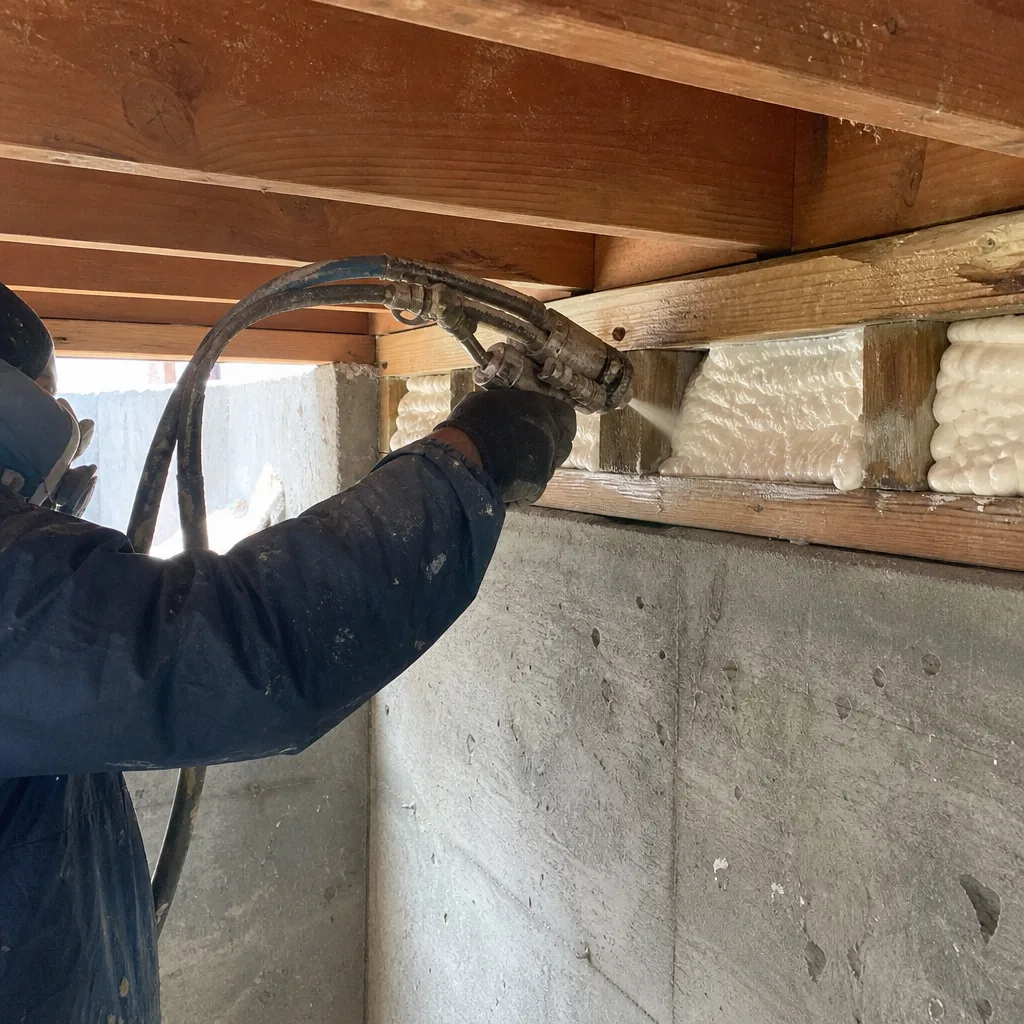
Yes, Reflectix works alongside spray foam and other insulation methods, but the order matters. Reflectix goes against the roof deck with an air gap. Spray foam or blown-in insulation goes on the attic floor or in the proper roof assembly position. In Covina’s older homes, combining Reflectix radiant barrier on the roof deck with blown-in fiberglass on the attic floor is a common and effective pairing. If you’re considering spray foam, we carry Icynene and Demilec systems and can discuss how they interact with a radiant barrier in your specific attic. The answer is rarely one product alone.
Service Areas Near Covina
We provide Reflectix service throughout the San Gabriel Valley and into Orange County. Our crews regularly work in Covina service area neighborhoods and the surrounding communities. That includes Reflectix service in La Verne to the east, and Reflectix service in Claremont just a few minutes up the 210. We also serve North Tustin, Tustin, Villa Park, Orange, Santa Ana, and Irvine for homeowners who want the same material-savvy approach on their attics.
Book Your Reflectix Service in Covina Today
If your Covina attic has been cooking through another San Gabriel Valley summer, get a straight answer about what’s actually wrong up there. Call North Tustin Insulation at (877) 265-5712 for a free estimate and a real recommendation, not a sales pitch.
Written by Allen Decker, Owner at North Tustin Insulation, serving Covina and the San Gabriel Valley.