
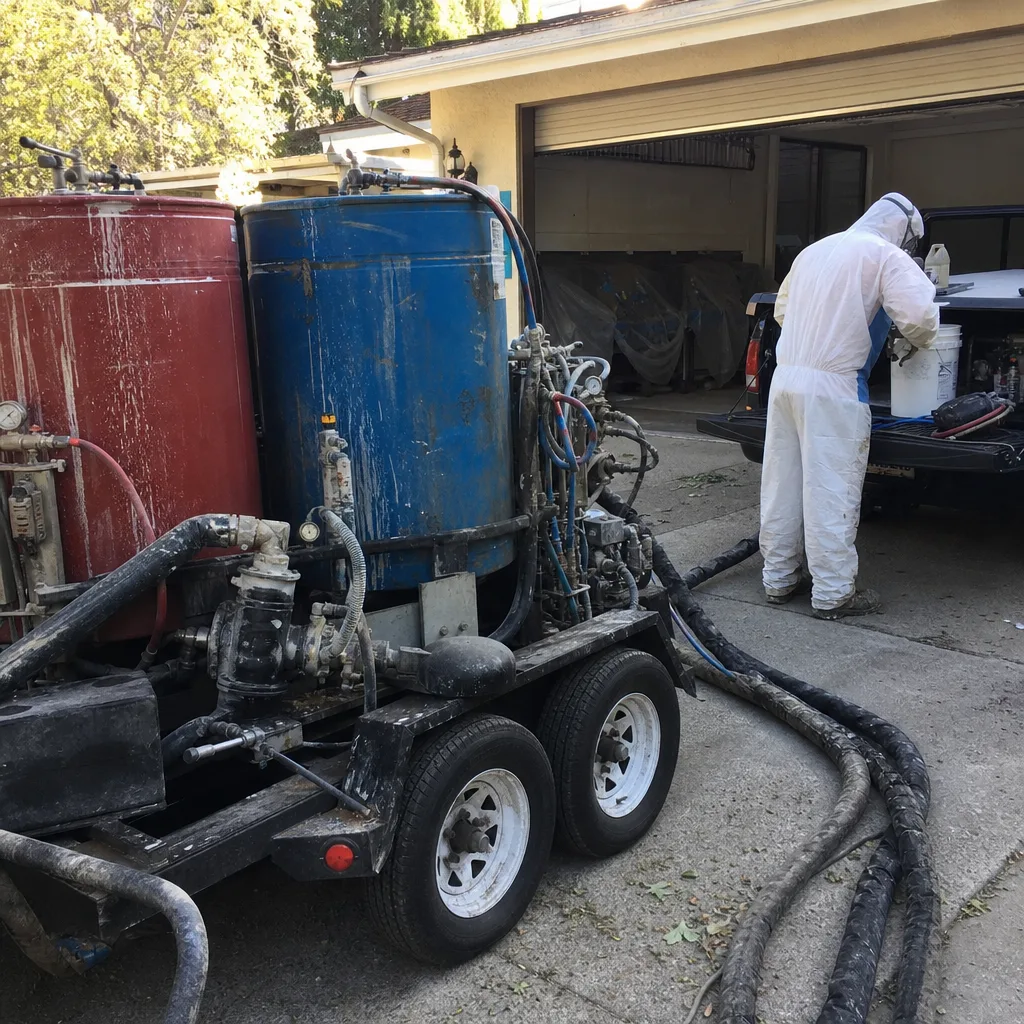
Fast, Reliable Spray Foam Insulation Across Corona
If your upstairs rooms bake through August while the AC runs nonstop, the problem usually isn’t your HVAC. In Corona it’s the attic. Blown fiberglass installed in 1990s tract homes has compacted to a fraction of its original depth, and Santa Ana winds have pushed dust and heat into the top plates and can lights. We fix that with spray foam. North Tustin Insulation serves all of Corona, from the 92882 ZIP near Foothill Parkway down to the older ranch neighborhoods near downtown. Call (877) 265-5712 for a free estimate.
Spray foam insulation in Corona typically costs $1.50 to $3.80 per board foot installed, with most whole-attic jobs landing between $4,500 and $9,800 depending on square footage and whether you need open-cell or closed-cell foam. A garage ceiling or rim joist job runs smaller, usually $1,200 to $3,400. We’ll give you exact numbers after we see the attic, and estimates are free.
Why North Tustin Insulation Is Corona’s Preferred Spray Foam Insulation Company
Corona homeowners call us because we carry both Icynene and Demilec spray foam systems, not one brand we happen to stock. That matters when you’re deciding between open-cell and closed-cell for an attic that regularly hits 130 degrees. We walk you through the difference without pushing you toward whatever’s on the truck. We match the material to your home, not the other way around.
We know the tract developments east of the 15 and the older streets west of Main without needing to look at a map. That means we show up knowing what we’ll likely find: settled blown fiberglass, unsealed can lights, under-insulated knee walls. Our crews work in Corona every week, so scheduling is straightforward and we’re already familiar with city permitting requirements for attic work in Riverside County. Reviews from Corona customers consistently mention the same things: clear pricing, straight answers, and crews that leave the garage cleaner than they found it.
Insulation is all we do. No roofing add-ons, no HVAC side work. Every estimate, every crew, every brand relationship is focused on one trade. That focus is why we can tell you exactly what your 1994-built attic needs and what it doesn’t.
Garage Spray Foam Insulation in Corona
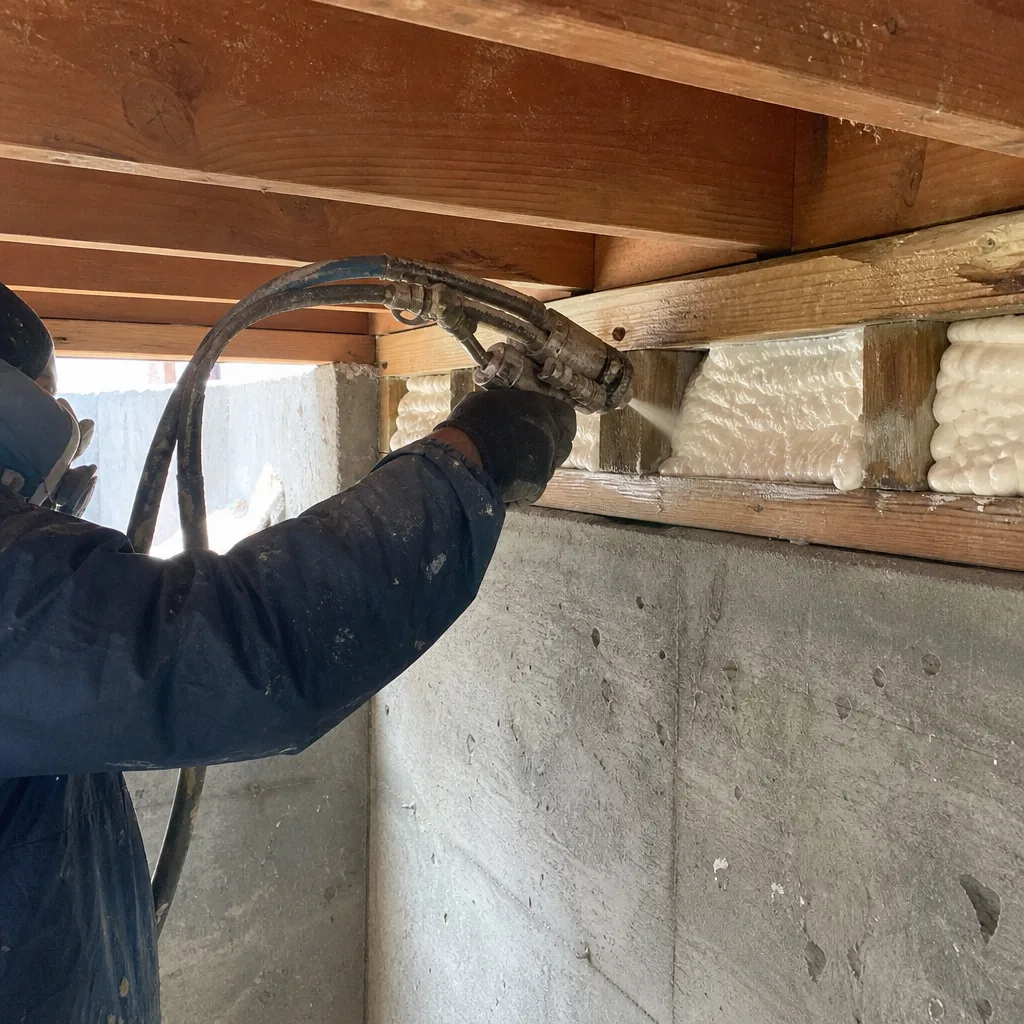
Garage Spray Foam Insulation in Corona is one of the most common jobs we do for homeowners with attached garages that sit under a bedroom or bonus room. The garage ceiling becomes a heat sink, radiating upward into the room above. Spray foam on the garage ceiling and rim joist stops that transfer at the source. It also cuts the dust that blows in through unsealed gaps during Santa Ana wind events.
Most Corona garage ceiling spray foam jobs run $1,200 to $3,400, depending on ceiling area and whether we’re also sealing the rim joist and side walls. The work itself takes a day or less for a standard two-car garage. You’ll notice the room above the garage holding temperature within a week.
Rim Joist and Band Board Sealing
The rim joist is the wooden band that runs around the top of your foundation where the floor framing meets it. In Corona’s older ranch homes, this band is often completely uninsulated. Spraying closed-cell foam along the rim joist stops the stack effect that pulls hot attic air down through wall cavities and into the living space.
Garage Ceiling vs. Garage Walls
If the garage is fully attached and the room above is unconditioned, we usually foam the ceiling and leave the walls for later. If the garage is a workshop or you spend time in it, closed-cell on the walls brings the temperature down noticeably. Our estimate will tell you which approach makes sense for your specific layout in Corona, and we won’t upsell you into a full garage encapsulation you don’t need.
Closed Cell Spray Foam Insulation in Corona
Closed Cell Spray Foam Insulation in Corona is the right call for most of the attics we see out here, especially in 1990s tract homes where the original blown fiberglass has compacted to nearly nothing. Closed-cell foam adds both R-value and an air seal in a single pass, which means it does the job of insulation and air sealing at the same time. It also acts as a vapor barrier, which helps when Santa Ana air is pulling moisture out of the house and dust into the attic.
Expect to pay $2.50 to $3.80 per board foot for closed-cell in Corona. A full attic deck and knee wall spray on a typical 1,800-square-foot two-story runs $5,500 to $9,800. That’s a bigger upfront investment than blown-in, but it’s the only option that permanently seals the top plate leaks that are baking your upstairs right now.
Attic Deck and Knee Wall Application
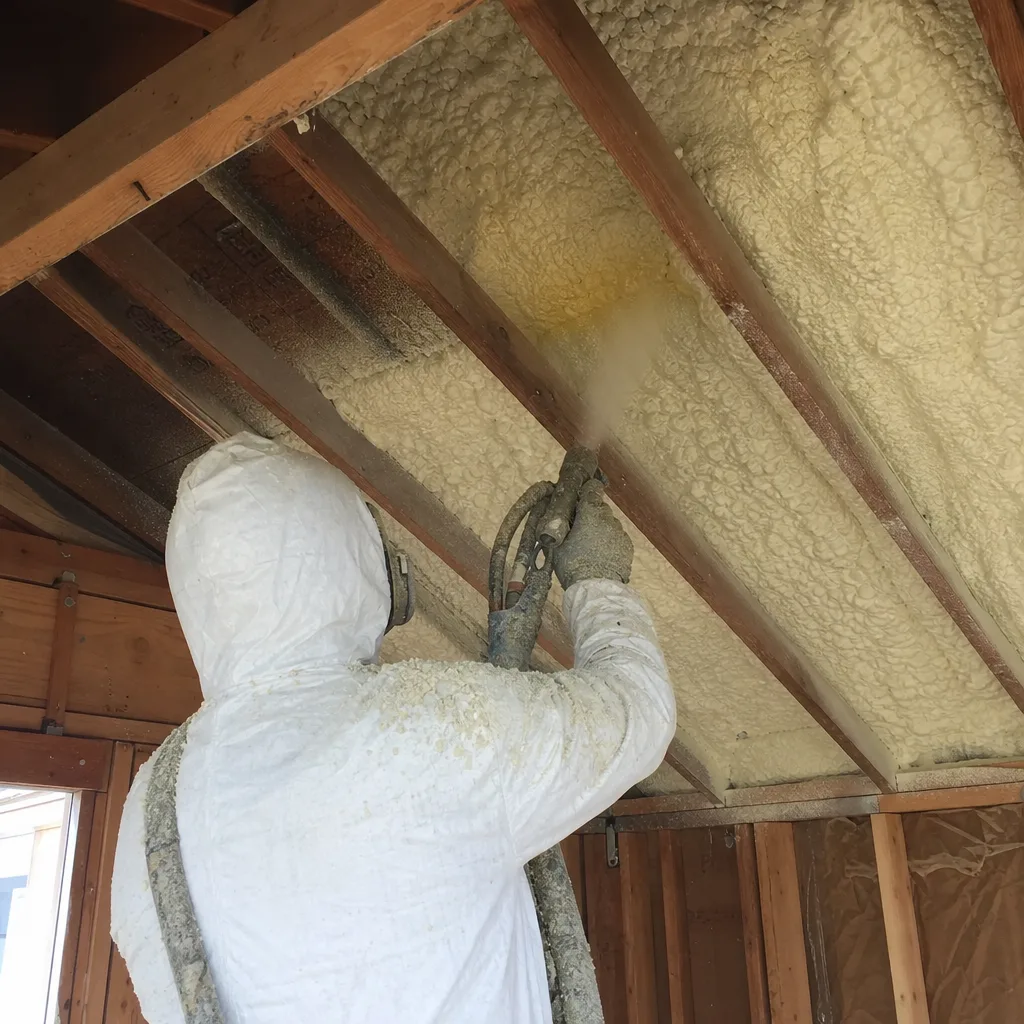
We spray closed-cell directly onto the underside of the roof deck and around knee walls that separate attic space from living space. This moves the thermal boundary to the roofline, so the attic itself becomes conditioned space. For Corona homes with ductwork running through the attic, that alone can cut cooling losses by a noticeable margin in August.
Open-Cell as the Budget Alternative
If the goal is air sealing and moderate R-value without the closed-cell price tag, open-cell foam runs $1.50 to $2.40 per board foot. It’s lighter and less expensive, but it doesn’t act as a vapor barrier and it absorbs moisture. For Corona’s dry climate that’s usually fine, but for rim joists and garage ceilings where condensation risk exists, we steer you toward closed-cell or a hybrid approach using both Icynene and Demilec products.
Trusted Brands We Service in Corona
We carry Icynene and Demilec spray foam systems, which means you’re getting one of the two most respected open- and closed-cell formulations in the industry, not a generic house brand. If you’re also reworking the loose-fill or batt insulation in other parts of the attic, we can bring GreenFiber cellulose or Owens Corning fiberglass from the same truck. Having eight brands in the lineup means the recommendation comes from your home’s actual conditions in Corona, not from a sales quota. We keep material locally stocked for Corona jobs, so we’re not waiting on a supplier in Riverside to start your project.
Common Spray Foam Insulation Problems We See in Corona Homes
- Settled 1990s blown fiberglass. The original builder-grade installation in Corona’s tract two-stories has compacted to half its depth after 25 – 30 summers. The attic R-value quietly drops while the HVAC keeps working harder, and the upstairs never cools off.
- Santa Ana dust baked into old insulation. Dry, hot wind pushes fine dust through gable vents and soffit gaps, where it settles into blown insulation and degrades its performance. Unsealed top plates and can lights then let that 130-degree attic air pour into the upstairs rooms.
- Post-war ranches with no real attic insulation. Older homes near downtown Corona in the pre-1960 citrus-and-poultry core often have thin batts or nothing at all above the ceiling. Spray foam on the attic floor or roof deck is usually the fix, but it requires air sealing first.
- Hot garage ceilings under bedrooms. In Corona’s two-story floorplans, the garage sits under a spare bedroom or bonus room with no insulation in the garage ceiling cavity. The room above the garage runs 10 – 15 degrees hotter than the rest of the upstairs.
Pricing for Spray Foam Insulation in Corona, CA
Here’s what you should expect to pay in Corona, based on the jobs we’ve done across 92882, 92883, 92877, and 92878:
- Garage ceiling spray foam: $1,200 – $3,400
- Rim joist sealing (full perimeter): $900 – $2,200
- Attic roof deck with closed-cell: $5,500 – $9,800 (typical two-story)
- Open-cell attic floor seal: $2,800 – $5,500
- Whole-attic hybrid (closed-cell roof deck + open-cell fill): $7,000 – $12,500
Square footage, access, and the condition of the existing insulation all move the number. If we have to remove old compacted fiberglass before spraying, that adds $1 to $2 per square foot. Every estimate is free and line-itemed, so you see exactly what you’re paying for. Call (877) 265-5712 and we’ll have someone out to Corona this week.
Our Spray Foam Insulation team handles everything from small rim joist jobs to full attic roof deck applications. And when you work with us in Corona, you’re getting a crew that knows exactly what your neighborhood’s homes are dealing with.
We Also Serve Cities Near Corona
Beyond Corona, we run crews into Home Gardens, El Cerrito Corona, Eastvale, and Norco regularly. If you’re just over the city line in any of those areas, the same pricing and availability applies. Call (877) 265-5712 and we’ll schedule you in the next open slot.
Serving Corona, CA — Our Local Coverage Area
We’re based in the Corona area and know this community well. Use the map below to see our service coverage — if you’re nearby, we can almost certainly help.
FAQs About Spray Foam Insulation in Corona
The attic is the problem, not the AC. In Corona’s 1990s tract homes, the original blown fiberglass has compacted to half its depth after 25 – 30 Santa Ana wind cycles, and the top plates and can lights were never air sealed. Hot attic air leaks into the upstairs rooms faster than the AC can remove it. Spray foam on the attic deck or attic floor fixes the heat transfer at the source, and most homeowners see the upstairs hold temperature through the next heat wave. Call (877) 265-5712 for a free attic assessment.
Yes. Post-war ranch homes near downtown Corona often have the garage attached directly to the kitchen or a bedroom wall with zero insulation in the garage ceiling cavity. We spray closed-cell on the garage ceiling and rim joist, which stops the heat from bleeding into the house. A standard ranch garage runs $1,200 to $2,800 here. Call us and we’ll tell you if your specific layout needs the ceiling, the walls, or both.
For most Corona attics, closed-cell is the right call. It adds both R-value and an air seal in one pass, and it acts as a vapor barrier in a climate where Santa Ana winds pull moisture out of the house. Open-cell is cheaper, but it doesn’t seal against air movement the way closed-cell does. If budget is the constraint, we can do a hybrid: closed-cell on the roof deck and knee walls, open-cell or blown-in fill elsewhere.
Sometimes. If the old fiberglass is compacted, dusty, or full of Santa Ana grit, it has to come out before we spray. That adds $1 to $2 per square foot to the job. In some attics, the old material is still fluffy enough that we can spray around or over it after air sealing. We’ll tell you which situation you have after we open the attic hatch, and the estimate reflects the real number, not a guess.
A full attic roof deck spray on a typical 2,000-square-foot Corona two-story takes one to two days. Garage ceilings and rim joist jobs are done in under a day. The foam cures within seconds of application, so you can stay in the house during the work. We just need attic access and a clear path to the garage. Call (877) 265-5712 and we’ll give you a timeline for your specific home.
One job we did recently on a 1994 tract two-story off Foothill Parkway in the 92882 ZIP says it all. A homeowner called after an August where the upstairs never dropped below the high 70s, even with the AC running all night. When our crew opened the attic hatch, the original builder-grade blown fiberglass was compacted to about half its depth with Santa Ana dust baked into it. We air-sealed the top plates and can lights, then sprayed closed-cell foam across the attic deck and knee walls to restore R-value and stop the radiant bake. The upstairs held temperature through the next heat wave, and the AC stopped cycling all night. That’s the fix for a lot of Corona homes, and it’s one we do every week. Call (877) 265-5712 for a free estimate, and we’ll tell you if your attic is losing the same battle.
Written by Allen Decker, Owner at North Tustin Insulation, serving Corona and the surrounding Inland Empire.