
Fast, Reliable Spray Foam Insulation Across East Pasadena
Spray foam insulation in East Pasadena typically costs $2.40 to $4.80 per board foot for open-cell and $3.60 to $6.95 per board foot for closed-cell, with most whole-attic or garage projects in 91107 landing between $3,400 and $9,800 depending on square footage and prep work. That’s the honest range we quote for homes along Colorado Boulevard, up through the foothill edges near Michillinda, and across the mid-century ranch tracts north of Del Mar. We’re a dedicated Spray Foam Insulation contractor, not a general remodeler, and we work across East Pasadena regularly enough to know which houses have knob-and-tube wiring before we even open the attic hatch. Call us at (877) 265-5712 for a free estimate, and we’ll give you a straight answer on whether foam is the right call for your home.
Why North Tustin Insulation Is East Pasadena’s Preferred Spray Foam Insulation Company
We carry eight brands across four insulation categories, and that matters in East Pasadena because the housing stock here doesn’t follow one pattern. A 1930s Spanish Revival off Michillinda with original lath-and-plaster needs a completely different approach than a 1962 ranch near Eaton Blanche Park with settled fiberglass batts. When you call us, the recommendation gets driven by your attic’s actual condition, not by whichever product our crew happens to prefer. We carry both Icynene and Demilec spray foam systems, so open-cell and closed-cell are both real options, and we’ll tell you honestly which one fits. Allen Decker runs our operation, and he’s made it a point to ensure every tech who works in East Pasadena understands the older-home wiring and venting constraints we run into here. That local knowledge means fewer surprises when the estimate turns into the actual job. East Pasadena homeowners tell us they appreciate the directness: we quote the actual cost, explain the prep work, and don’t pad the scope.
Being an insulation-exclusive contractor also means every conversation you have with us is with someone who thinks about air sealing, thermal bridging, and moisture movement all day. Not someone dividing attention between roofing and drywall. In East Pasadena’s hot, dry summer months, that focus translates directly into lower cooling bills. And in the mild but occasionally chilly winter mornings that settle into the foothill transition, it means a home that holds temperature instead of leaking it through the top plate.
Garage Spray Foam Insulation in East Pasadena
Garage Spray Foam Insulation in East Pasadena is one of the most common projects we quote, especially for homeowners on the post-war ranch tracts who’ve converted garages into workshops, gyms, or partial living space. The job typically involves spraying the garage ceiling (the joist cavities under an unfinished attic or bedroom above) and sometimes the shared wall between the garage and the house. Closed-cell foam runs $3.60 to $6.95 per board foot here; open-cell runs $2.40 to $4.80. A standard two-car garage ceiling in East Pasadena usually lands between $1,800 and $4,200. It’s the first step that makes any garage conversion comfortable enough to actually use in a 100°F San Gabriel Valley summer.
When the garage is under a bedroom
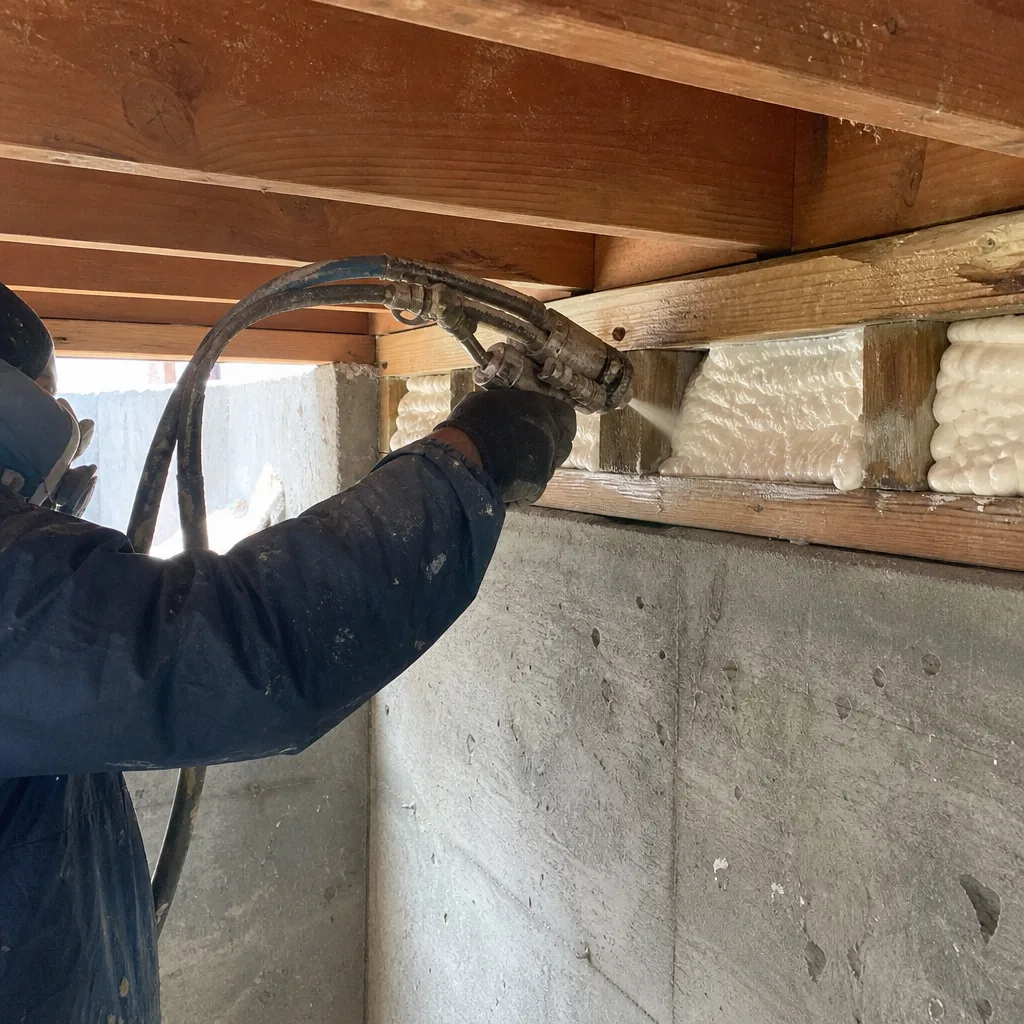
If your garage sits below a bedroom or living space, that floor cavity is often the biggest hidden air leak in the house. We spray closed-cell foam against the subfloor and rim joist from the garage side. In East Pasadena homes with original shiplap or plank subflooring, the foam also stops the drafts that rise through the floorboards on cold mornings. You’ll notice the room above stops feeling like it’s floating in outside air.
Foothill-edge garages bake
Garages on the Michillinda and Sierra Madre Villa edges of East Pasadena take direct afternoon sun with no shade from the foothills, so the interior can hit 120°F by 4 p.m. In that setting, closed-cell is almost always the right choice for the ceiling. It creates an air-impermeable cap that keeps that superheated air from pushing into the conditioned part of the house.
Call (877) 265-5712 if your garage door feels warm to the touch from the inside by midafternoon. That’s the cheapest diagnostic you’ll ever run.
Closed Cell Spray Foam Insulation in East Pasadena
Closed Cell Spray Foam Insulation in East Pasadena is the product we reach for most often in 91107’s older homes, and there’s a very specific local reason why. The knob-and-tube wiring that’s common in the 1920s to 1940s Spanish-Revival and bungalow homes near Colorado Boulevard and along the foothill edges cannot legally or safely be buried under loose fill or batts. Closed-cell foam sprayed against the sheathing and top plates is often the only code-viable way to air-seal the attic without disturbing that wiring. It runs $3.60 to $6.95 per board foot in East Pasadena, with a typical 1,000-square-foot attic roof deck landing between $6,500 and $9,800 depending on prep and access. It adds structural rigidity, blocks moisture transfer, and delivers about R-6.5 to R-7 per inch.
It seals the top plate without burying the wiring
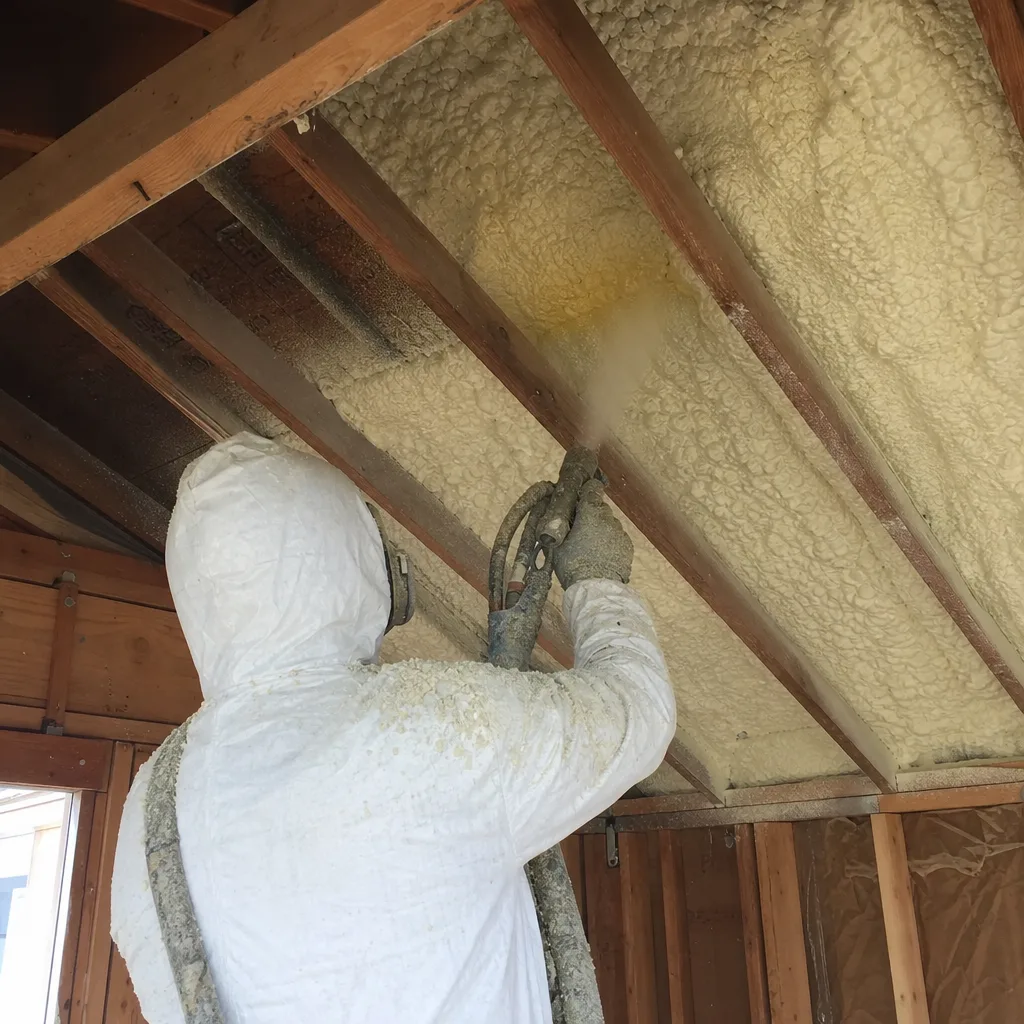
This is the exact scenario where closed-cell earns its cost in East Pasadena. The foam gets sprayed at the roof deck and along the gabled plates, leaving the knob-and-tube runs exposed and air-gapped. The result is an air-sealed attic shell that doesn’t require burying anything, which keeps the wiring safe and the inspector happy. No loose fill. No batts. No code headache.
Structural bonus for older framing
East Pasadena’s 1920s and 1930s homes were built with old-growth framing that’s worked and moved for nearly a century. Closed-cell foam bonds to the sheathing and adds shear strength in a way open-cell does not. In a Santa Ana wind event, that extra rigidity matters. It’s not a fix for a bad roof, but it is a real upgrade on older homes that you don’t get from fiberglass or cellulose.
Trusted Brands We Service in East Pasadena
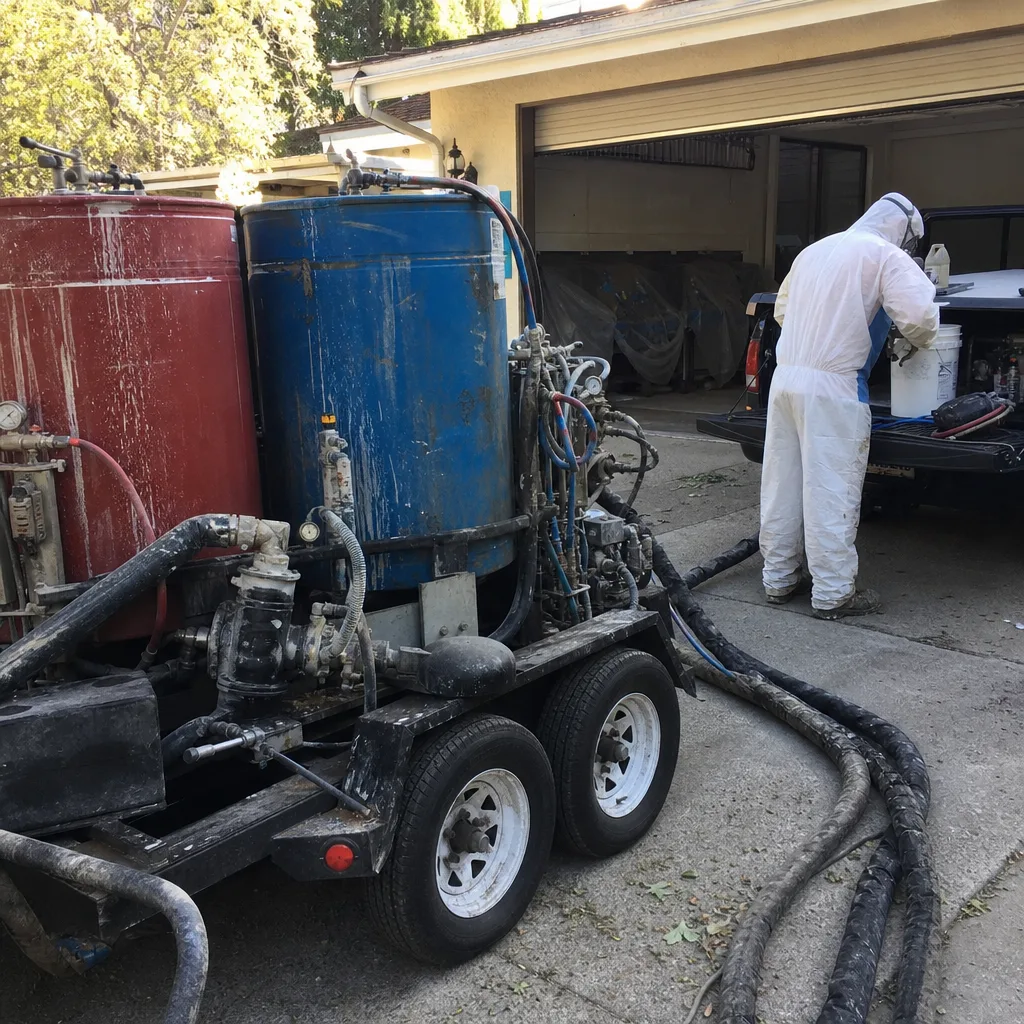
When we spray foam in East Pasadena, the product in the rig is either Icynene or Demilec, depending on the application and the homeowner’s priorities. Those are two of the most recognized names in spray foam, and carrying both means we’re not playing favorites when we give you a recommendation. If a home near East Pasadena’s Colorado Boulevard core has a tiny vented attic with no room to work, we’ll often pair a Demilec closed-cell pass with an Owens Corning vent baffle solution. For a homeowner on the north side of 91107 who wants a greener approach, GreenFiber cellulose is in our standard lineup as a complementary material for areas where foam isn’t the right tool. Fast turnaround matters here, because an East Pasadena attic already at 140°F isn’t going to cool itself. We keep material stock organized and our crews routed to East Pasadena regularly, so you’re not waiting four weeks for a product to ship.
Common Spray Foam Insulation Problems We See in East Pasadena Homes
- Closed-cell sprayed over knob-and-tube wiring: In the 1920s through 1940s bungalows near Colorado Blvd and the foothill streets, we regularly find original knob-and-tube runs stapled along the joists. Foam traps heat against aging conductors unless the runs get rerouted or deliberately left exposed with an air gap. This is a code and safety issue first, not an insulation choice.
- Foam applied to vented attic decks without fixing eave venting: Along the Michillinda and Sierra Madre Villa foothill edges, some previous spray foam jobs sealed the roof deck but left the eave vents blocked or undersized. During 100°F summers, the sheathing cooks, and we see overheated attics with moisture problems. Proper venting detail before foaming is critical in East Pasadena’s heat load.
- Spraying over slumped 1960s R-11 batts: Many mid-century ranch attics in East Pasadena still have original fiberglass batts settled to half depth and blown back from the eaves by decades of Santa Ana winds. Spraying foam directly over them traps moisture and blocks the top plate seal. The old batts have to come out first.
- Wind-scoured eave vents in ranch tract homes: Homes north of Del Mar and around the Eaton Blanche Park area sit in a wind corridor that pushes dry air through the attic. The batts get shoved away from the eaves, and the attic becomes a reverse chimney. Air-sealing the top plate before adding any foam is the fix, and it matters more than the R-value on the bag.
Pricing for Spray Foam Insulation in East Pasadena, CA
Here’s what we actually quote in East Pasadena. Open-cell spray foam runs $2.40 to $4.80 per board foot. Closed-cell runs $3.60 to $6.95 per board foot. A standard garage ceiling spray foam job in a two-car garage lands between $1,800 and $4,200 depending on ceiling area and whether we’re also doing the shared house wall. A rim joist spray foam treatment in a raised-foundation bungalow typically runs $1,200 to $2,600 for the accessible perimeter. A spray foam roof deck on a 1,000-square-foot attic runs $6,500 to $9,800, which includes the prep work on older homes. What moves the price in East Pasadena specifically: whether knob-and-tube wiring needs to be assessed and worked around, whether existing settled batts need removal, and how much eave venting has to be corrected before foam goes in. Call (877) 265-5712 with your square footage and we’ll give you a real number, not a placeholder. Estimates are free.
We Also Serve Cities Near East Pasadena
North Tustin Insulation serves East Pasadena and the surrounding foothill communities, including Sierra Madre, San Marino, Pasadena, and Arcadia. If your home sits just outside 91107 along the Michillinda corridor or down toward the Pasadena city line, we’re already working in your area and can usually schedule within the same week. The same East Pasadena pricing and material availability applies to every neighboring city we cover.
Serving East Pasadena, CA — Our Local Coverage Area
We’re based in the East Pasadena area and know this community well. Use the map below to see our service coverage — if you’re nearby, we can almost certainly help.
FAQs About Spray Foam Insulation in East Pasadena
Yes, but only with a specific method. Closed-cell foam gets sprayed against the roof deck and gabled plates, leaving the knob-and-tube runs exposed and air-gapped so they don’t overheat. We won’t spray directly over live, aging wiring, and we typically have an electrician sign off before we start. Call (877) 265-5712 and we’ll tell you honestly whether your wiring layout allows this approach.
Santa Ana wind events push dry air through your attic, and over decades that airflow scours fiberglass batts away from the eave vents. The result is an attic that reads R-19 on paper but performs at a fraction of that. The fix is air-sealing the top plate, correcting the venting, and only then adding foam or new material. That’s a pattern we see constantly in the foothill-edge ranch tracts of East Pasadena.
Closed-cell is usually the better call for East Pasadena garages because it creates an air-impermeable cap against the 120°F heat that builds in unshaded foothill-edge garages during summer. It runs $3.60 to $6.95 per board foot. Open-cell is less expensive at $2.40 to $4.80 per board foot and works fine for interior sound control, but it won’t block radiant heat transfer the way closed-cell does. Call (877) 265-5712 and we’ll walk through your garage’s specific orientation and exposure.
In the Michillinda and Sierra Madre Villa foothill edges of East Pasadena, where afternoon sun slams the roof deck from the west, a radiant barrier or a cool-roof consideration makes a real difference. Closed-cell foam handles conduction and air movement, but it doesn’t stop radiant heat gain from direct sun. For some homes, pairing the foam with a radiant barrier on the underside of the roof deck drops attic temps by another 20 to 30 degrees in August. It’s not a universal need, but in the hottest exposures of 91107, it’s worth the conversation.
Yes. On a 1940s bungalow off Sierra Madre Villa Ave, we opened an attic to find knob-and-tube runs and an original lath-and-plaster ceiling with no top-plate seal at all. Our tech sprayed closed-cell Icynene against the roof deck and gabled plates, leaving the knob-and-tube runs exposed and air-gapped per the electrician’s sign-off. The homeowners noticed the upstairs bedrooms holding temperature through the first Santa Ana event after the job. The lath-and-plaster ceiling itself stayed untouched. That’s the whole point: you don’t pack anything onto it.
Written by Allen Decker, Owner at North Tustin Insulation.