
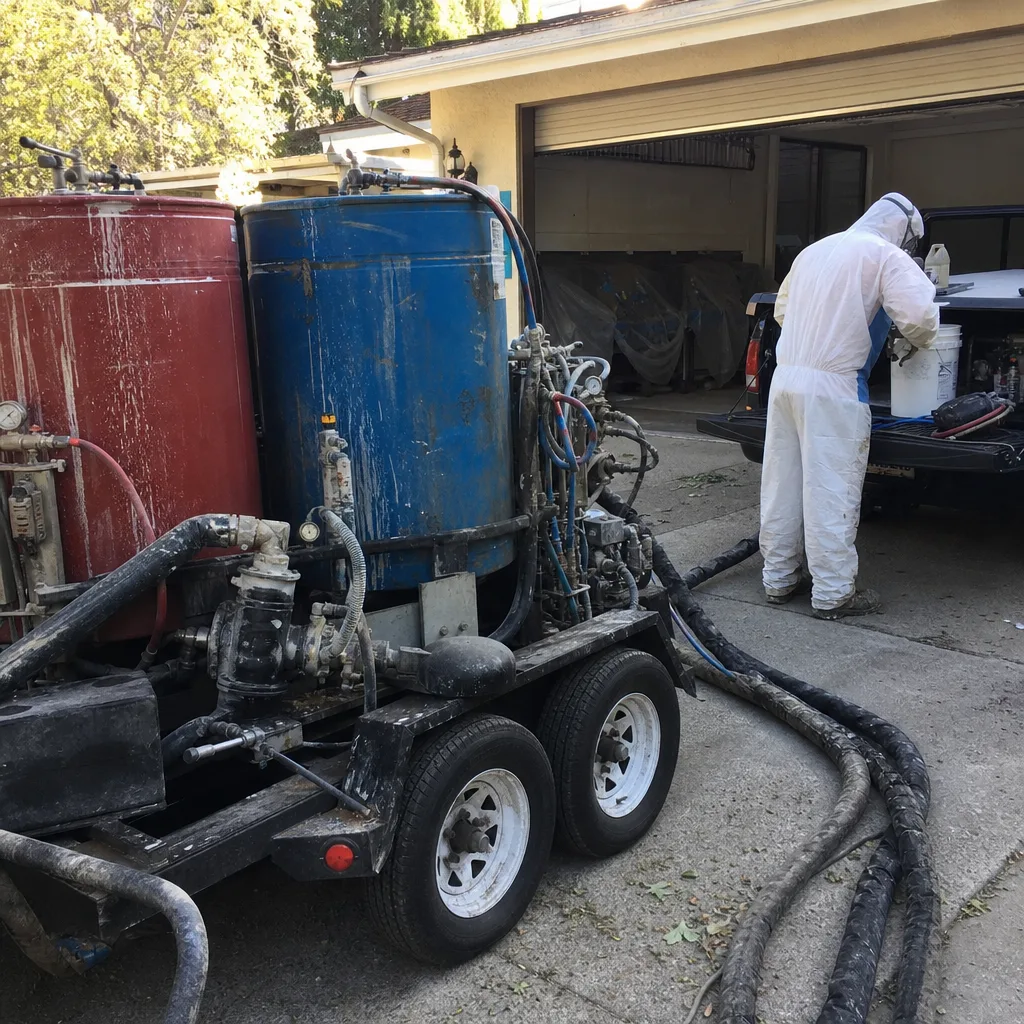
Fast, Reliable Spray Foam Insulation Across East San Gabriel
Spray foam insulation in East San Gabriel typically costs $2,800 – $6,200 for a retrofit attic and is usually completed in one to two days. Homes in the 91776 zip code were mostly built between the 1920s and 1960s, meaning most have little to no insulation and an attic that bleeds conditioned air through unsealed top plates, can lights, and the original gable-and-eave venting. We know those houses because we work on them every week. If your East San Gabriel home has rooms that bake in July or an attic you can’t stand to open in August, call North Tustin Insulation at (877) 265-5712 and we’ll give you a straight answer about what your house actually needs.
Why North Tustin Insulation Is East San Gabriel’s Preferred Spray Foam Insulation Company
Allen Decker started North Tustin Insulation with a simple focus: insulation, all day, every day. We’re not a general contractor squeezing your spray foam job between a roof tear-off and a bathroom remodel. Our crews carry Icynene and Demilec spray foam systems into East San Gabriel attics and underfloor cavities every week, and the team has a strong local reputation for walking homeowners through the decision between open-cell and closed-cell foam without a sales pitch.
Homeowners in East San Gabriel come to us because we tell them what we’d put in our own house. That might mean closed-cell foam on the roof deck for an unvented attic. It might mean we recommend staying with split spray foam and fiberglass because the budget doesn’t stretch. Either way, the recommendation starts with the house’s age, framing, and venting, not with whatever’s cheapest to install. Response time to most East San Gabriel neighborhoods is same-week, and we schedule free estimates that actually explain the options in plain English.
Spray Foam Insulation Contractors in East San Gabriel
Spray Foam Insulation Contractors in East San Gabriel have a specific job on most of these older homes: seal first, insulate second. Before a single drop of foam leaves the gun, a competent crew air-seals the bypasses that have been leaking hot air into the living space since the house was framed. That means top plates, can light housings, plumbing chases, and the gap where the original gable vent meets the framing. A typical spray foam insulation project in East San Gabriel runs $2,800 – $6,200 for a full attic treatment, with smaller rim joist or garage ceiling jobs starting near $1,400.
Closed-Cell Foam for Roof Decks and Rim Joists
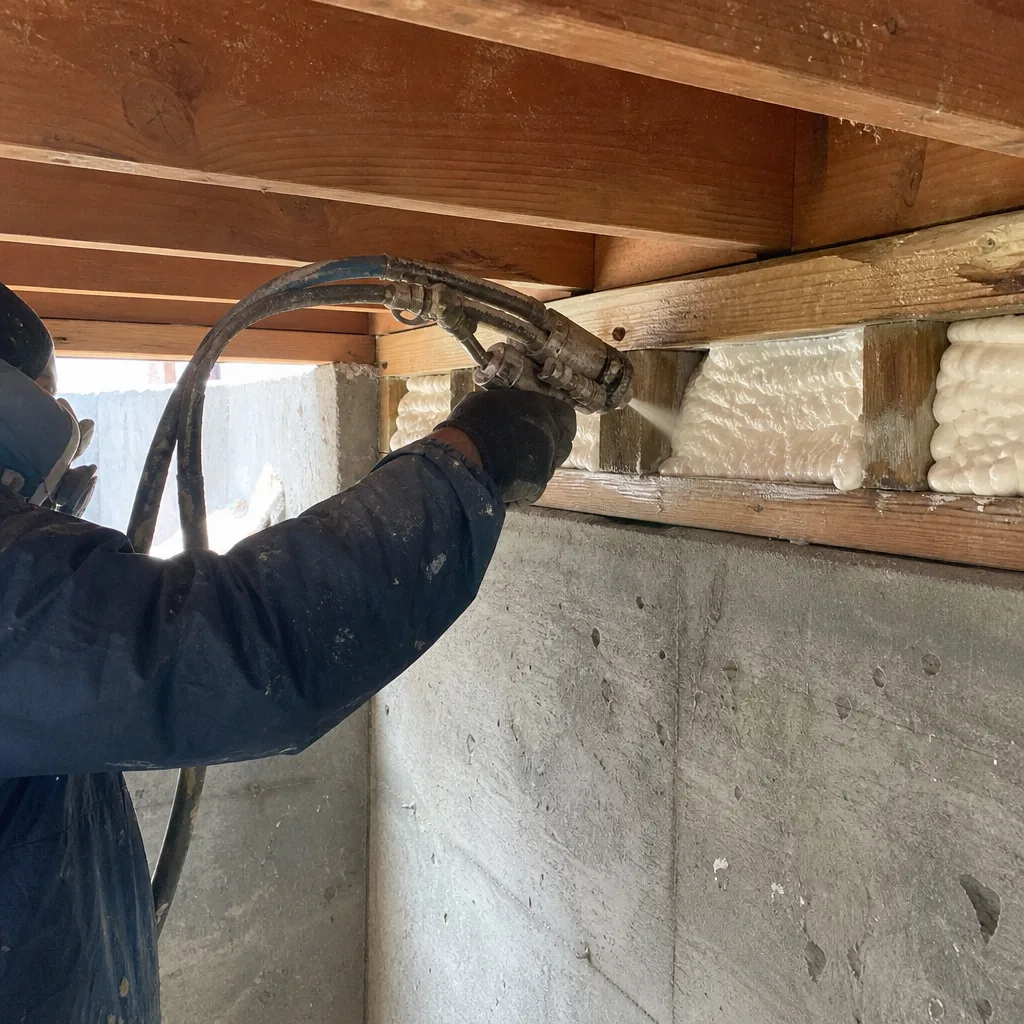
Closed-cell foam brings the R-value and the air barrier in one pass. In a 1950s East San Gabriel ranch with a low-pitch roof and no soffit venting, closed-cell on the underside of the roof deck stops the heat before it fills the attic. We’ve also used it on rim joists where raised wood floors leak air at the band joist and sill plate.
Open-Cell Foam for Walls and Interior Cavities
Open-cell spray foam works well in wall cavities and interior applications where the goal is air sealing plus sound control at a lower material cost per board foot. For lath-and-plaster walls in East San Gabriel bungalows, open-cell allows us to insulate wall cavities from the interior or via the attic without tearing out the original plaster.
Spray Foam Attic Insulation in East San Gabriel
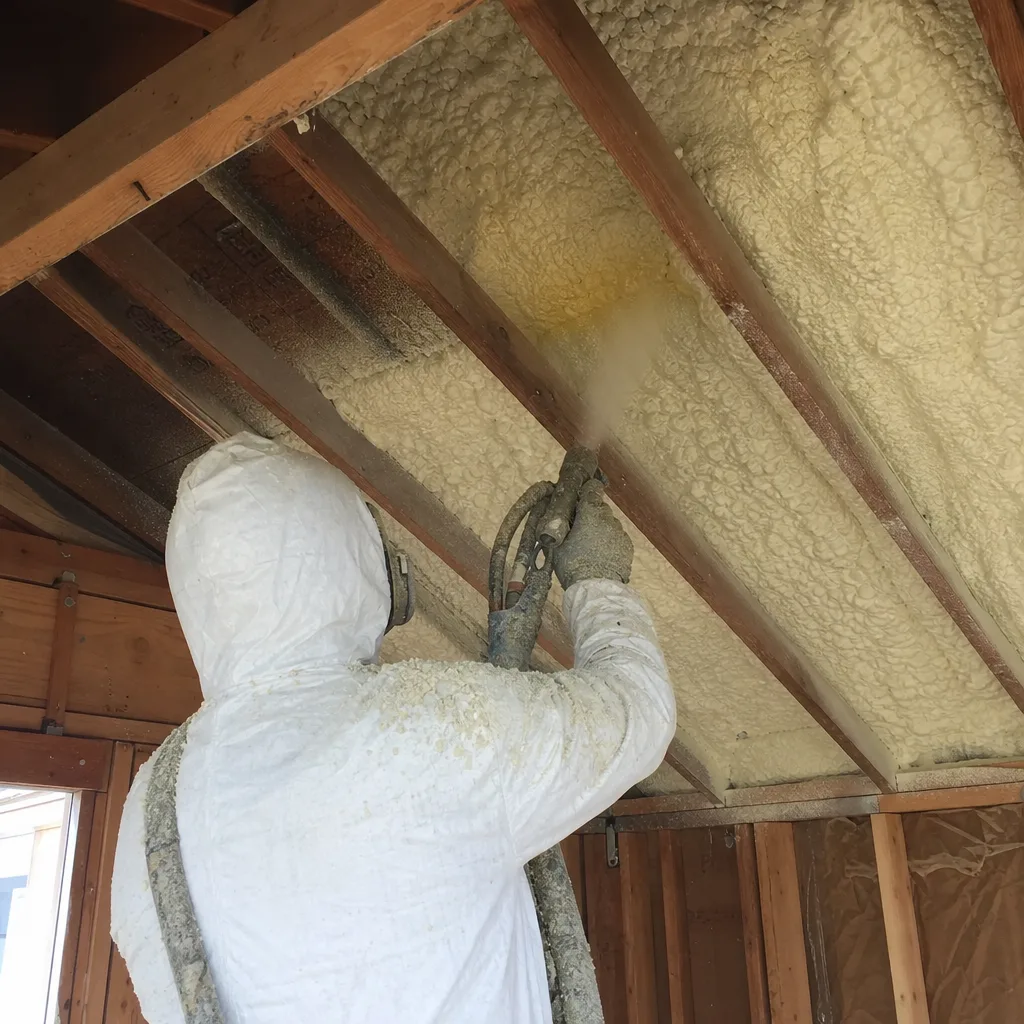
Spray Foam Attic Insulation in East San Gabriel is the single biggest lever most homeowners can pull on their energy bill. In the 91776 housing stock, attics are open, vented only through small gable or eave openings, and filled with decades of dust, rodent sign, and often the original knob-and-tube wiring. Spray foam attic insulation in East San Gabriel typically costs $3,200 – $6,200 for a full roof-deck application, and the result is a cooler house the same week. When foam is properly applied to the roofline, the attic becomes part of the conditioned space instead of acting like a solar oven above the ceiling.
Attic Air-Sealing Before Foam
On East San Gabriel houses built before 1960, the air-sealing work is often bigger than the foaming itself. We fix the bypasses first so the foam envelope holds. That’s what makes the difference between an attic that performs and one that just looks covered.
Foam Plus Venting Strategy
In East San Gabriel’s older homes, the venting question matters more than in any neighboring city. When the only roof ventilation is a pair of gable vents, coating the roof deck with closed-cell foam effectively turns the attic into an unvented, conditioned space. That’s a code-accepted approach, but it requires the right foam thickness and attention to combustion air for any gas appliance in the attic. We check for that before we spray.
Trusted Brands We Service in East San Gabriel
We stock and install Demilec and Icynene spray foam products for East San Gabriel work, and we carry Owens Corning and Johns Manville for companion fiberglass and duct-wrap applications. The reason we run multiple brands matters: a 1938 bungalow with heat ducts in the crawlspace and a 1962 ranch with attic ducting need different approaches. One brand does not fit every house. Allen Decker built this company to match the material to the home, and that means keeping eight major product lines on the shelf instead of buying whatever’s on sale at the supply yard.
Common Spray Foam Insulation Problems We See in East San Gabriel Homes
- Foam over live knob-and-tube wiring. Early 1900s homes in East San Gabriel still have active knob-and-tube circuits in attics and wall cavities. Encasing wiring in spray foam without isolating it from contact creates a real fire hazard, and we will not do it. The wiring must be isolated, replaced, or shielded before foam goes on.
- Moisture trapped in lath-and-plaster walls. Older East San Gabriel bungalows have plaster walls that breathe in a specific way. Closed-cell foam applied to wall cavities without addressing exterior moisture intrusion traps dampness against the wood lath and accelerates plaster failure. We inspect flashing, stucco, and drainage first.
- Unvented attics that overheat the foam. East San Gabriel’s long summers push unvented attic temperatures past what open-cell foam is designed to handle long-term. Without a proper roof deck application and the right foam density, the material degrades, and R-value drops. We see it on homes where someone sprayed open-cell on a roof deck with no ventilation plan.
- Foam around can lights and vent penetrations without clearance. Non-IC-rated recessed lights inside foam must have clearance or be replaced with IC-rated fixtures. In 1940s and 1950s East San Gabriel homes, the original can lights were never meant to be buried in insulation, and spraying over them risks a house fire.
Pricing for Spray Foam Insulation in East San Gabriel, CA
Here’s how East San Gabriel pricing breaks down: closed-cell attic applications run about $3,200 – $6,200 for a typical 1,200-square-foot ranch home, rim joist sealing usually lands between $1,400 and $2,800, garage ceiling foam runs $1,200 – $2,500, and an open-cell full attic starts near $2,800. A roof deck application under a low-profile hip roof costs more than a simple gable because access is tighter and coverage is higher. Air-sealing prep work adds $400 – $900 on older homes in 91776, depending on how many bypasses we find. The only way to pin a number down is to look at the attic, and our estimates are free. Call (877) 265-5712 and we’ll give you real numbers for your specific house.
We Also Serve Cities Near East San Gabriel
Our crews work throughout the San Gabriel Valley, so if you live just outside East San Gabriel, we can reach you the same week. We serve San Gabriel, Rosemead, Alhambra, and San Marino with the same Spray Foam Insulation team and product lineup. Call (877) 265-5712 and we’ll figure out the best day to get out there.
Serving East San Gabriel, CA — Our Local Coverage Area
We’re based in the East San Gabriel area and know this community well. Use the map below to see our service coverage — if you’re nearby, we can almost certainly help.
FAQs About Spray Foam Insulation in East San Gabriel
Yes, but with specific conditions. When an older East San Gabriel attic only has gable and eave vents, the correct approach is usually to seal those vents and apply closed-cell foam directly to the roof deck, creating an unvented conditioned attic. This meets California energy code when the foam thickness and density are right, and when any gas appliance in the attic is handled correctly. We’ll explain exactly why your house falls into one camp or the other when we inspect it. Call (877) 265-5712 to schedule a look at your venting situation.
Yes, but the installation method matters. We typically access those wall cavities from the attic or basement side rather than spraying through holes in plaster, and we verify drainage and flashing before any foam goes into those walls. Lath-and-plaster homes from the 1920s and 1930s in East San Gabriel need a moisture check before insulation, because enclosed foam in an already-damp wall makes plaster problems worse. Give us a call at (877) 265-5712 and we’ll check your exterior before recommending anything.
Spray foam stops the afternoon heat at the roof deck instead of letting it settle in the attic above your ceiling. Most East San Gabriel homes were built before air conditioning was standard, so the attic was never designed to shield you from a 95°F July day. Once the roof deck is foamed, the attic stops acting as a hot box, and upstairs rooms stop spiking in the afternoon. The change is immediate and measurable.
Yes. If your East San Gabriel home still has live knob-and-tube circuits in the attic or wall cavities, that wiring must be isolated or replaced before foam can touch it. Encasing knob-and-tube in spray foam is a code violation and a genuine fire hazard. We identify it during the estimate, and if it’s present, we’ll tell you what a licensed electrician needs to address before insulation proceeds.
In the San Gabriel Valley’s cooling-dominated climate, two inches of closed-cell spray foam on the roof deck is the standard for an unvented attic, and that’s what we applied on a 1940s Palm Drive ranch where the homeowner recorded a 15°F drop in upstairs bedroom temperatures during July. Closed-cell gives you both the air barrier and the R-value in one layer. Deeper applications are possible but hit diminishing returns in a climate that rarely sees real winter cold. Call (877) 265-5712 and we’ll measure your joist depth and give you an exact number for your roof.
Written by Allen Decker, Owner at North Tustin Insulation, serving East San Gabriel homeowners across the San Gabriel Valley.