
Fast, Reliable Spray Foam Insulation Across Fontana
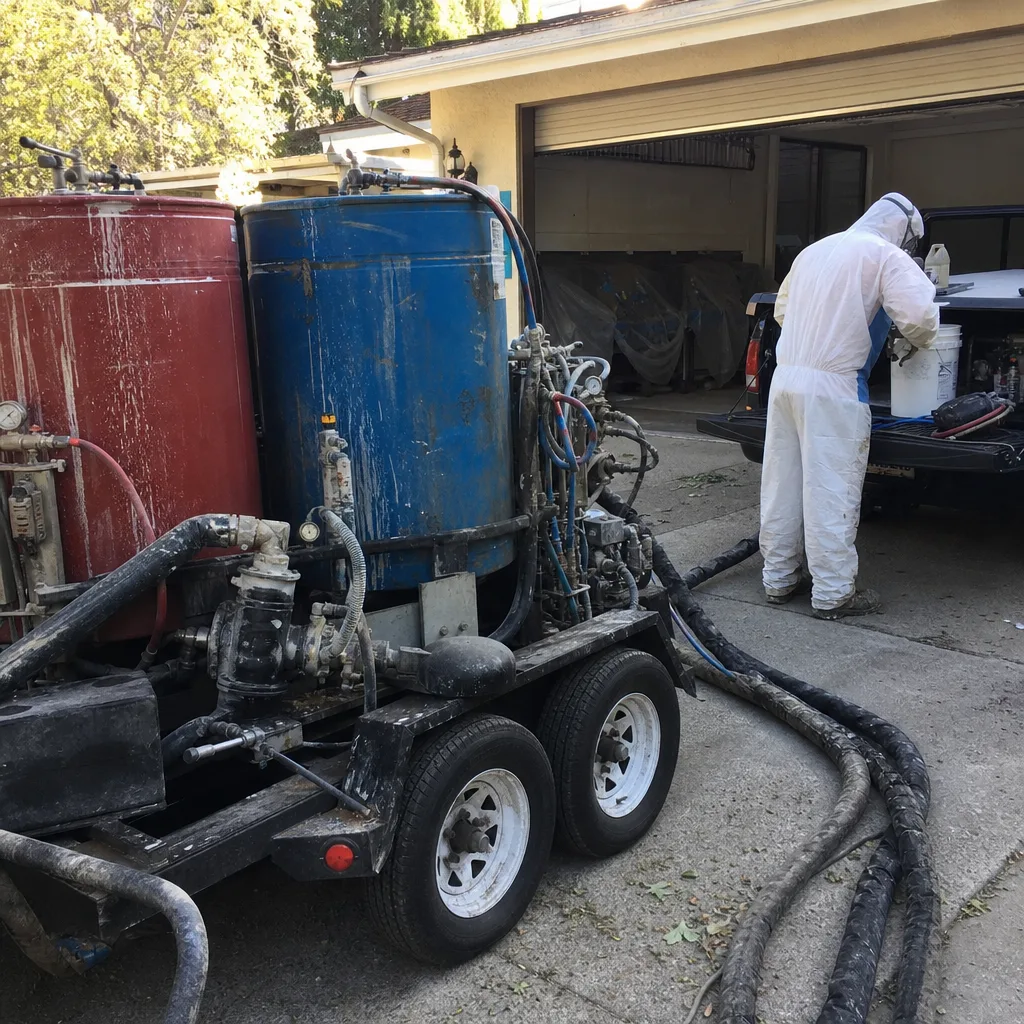
Spray foam insulation in Fontana addresses the one problem this city knows better than almost anywhere in the Inland Empire: brutal, unrelenting heat gain. A properly sealed and foamed attic can drop upper-floor temperatures by 10 to 15 degrees during a 105°F July afternoon, and that’s before we talk about the dust. At North Tustin Insulation, we work in Fontana’s 92335, 92331, 92334, and 92337 ZIP codes every week, sealing and insulating homes from the Cajon Pass corridor down to the old Kaiser Steel mill neighborhoods. Call (877) 265-5712 for a free estimate and we’ll tell you straight what your home actually needs.
Key Takeaways:
- Spray foam insulation in Fontana typically runs $2.50 to $7.00 per square foot depending on open-cell vs. closed-cell, application area, and existing insulation condition.
- Fontana’s 1950s-1970s tract homes usually need air sealing and rim joist foam before batt or blown-in upgrades make any real difference.
- We carry Icynene and Demilec spray foam systems, plus Owens Corning, Rockwool, GreenFiber, and other major brands for hybrid approaches.
- Wind-driven dust from the Cajon Pass is a genuine installation hazard here, and we account for it on every Fontana job.
Why North Tustin Insulation Is Fontana’s Preferred Spray Foam Insulation Company
Fontana homeowners call us because we understand what this specific housing stock throws at you. The post-WWII Kaiser Steel boom built thousands of ranch and stucco homes in the 92335 and 92331 core, and those attics have been baking under low-pitch roofs for 50 to 70 years. We’re not a general contractor who does insulation on the side. We’re insulation-only, and that focus means our crew walks into a Fontana attic and immediately knows what they’re looking at, whether it’s for spray foam or a Reflectix service in Fontana. Allen Decker, our owner, has built the company around one principle: match the material to the home, not the other way around.
That matters in Fontana specifically because the heat load here punishes mistakes fast. A thin open-cell foam layer against a 150°F roof deck will underperform and off-gas. A spray foam job applied over settled, dusty fiberglass will create uneven thickness and thermal bridging you’ll feel in the upstairs bedrooms. We see these failures in Fontana homes where the previous contractor treated spray foam like a commodity install. Our Fontana customers get a straight material recommendation based on their exact attic condition, roof pitch, and venting setup, not whatever brand happens to be on the truck.
Spray Foam Wall Insulation in Fontana
Spray foam wall insulation in Fontana is the highest-impact upgrade for the city’s older stucco and frame ranch homes, where fiberglass batts behind the drywall have been settling and collecting Cajon Pass dust for decades. The job involves injecting or applying open-cell foam into wall cavities to create a continuous air and thermal barrier. In Fontana’s 92335 and 92331 neighborhoods, we typically recommend this when walls feel hot to the touch in summer or when rooms facing the afternoon sun run 8 to 12 degrees warmer than the rest of the house. A full wall foam retrofit on a 1,200 to 1,600-square-foot Fontana ranch generally runs $8,000 to $14,000 depending on access and existing insulation removal.
Heat Gain Through Exterior Walls
West-facing and south-facing walls in Fontana absorb solar radiation all day and radiate it into living spaces well after sunset. Open-cell Icynene foam at 3.5 inches in a 2×4 wall cavity drops that transfer dramatically. We’ve measured surface temperature differences of 15 to 20 degrees on stucco walls after foam injection versus untouched cavities.
Dust Infiltration and Air Sealing
Cajon Pass winds push fine dust through exterior wall penetrations, outlets, and top plates in old Fontana tract homes. Closed-cell Demilec foam seals those gaps and acts as a secondary air barrier. This is one of the few applications where we recommend closed-cell over open-cell even in interior walls, simply for the air sealing and structural rigidity it adds to aged framing.
Rim Joist Spray Foam in Fontana
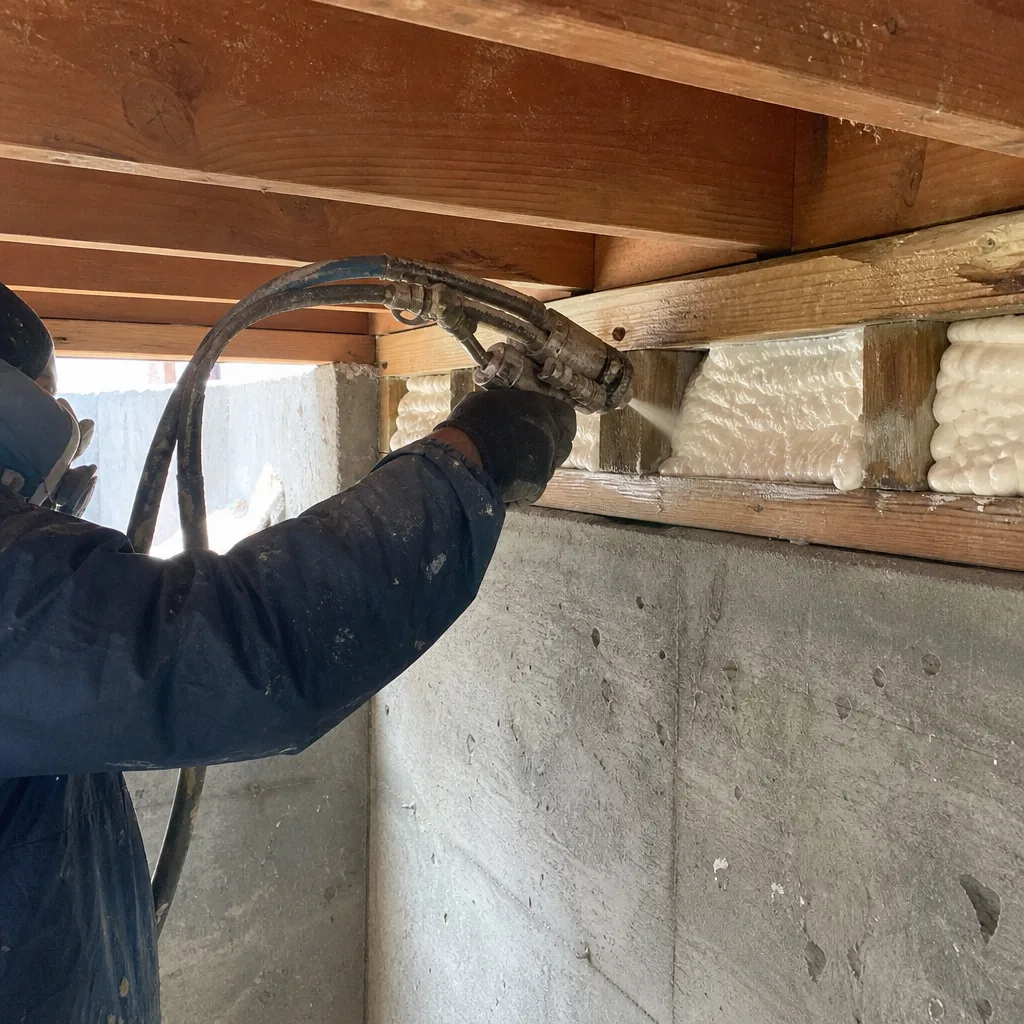
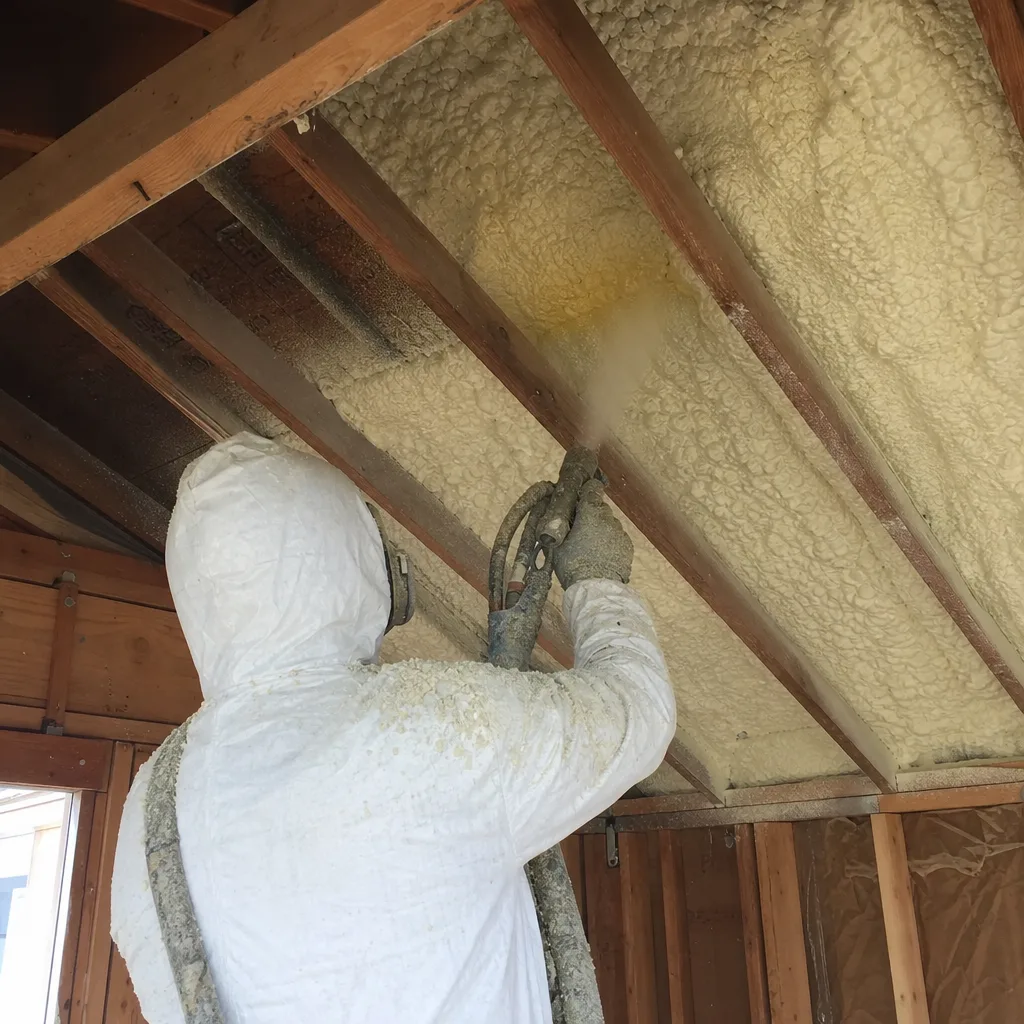
Rim joist spray foam in Fontana is the single most cost-effective air sealing measure for the city’s mid-century and 1980s-2000s subdivisions. The rim joist, the band of framing where your floor meets your foundation, is typically uninsulated or stuffed with a fiberglass batt that’s now dust-saturated and functionally useless. In a 92337 or 92336 subdivision home, rim joist foam with two inches of closed-cell Demilec runs $1,800 to $3,200 for a typical 1,800-square-foot house. It pays back faster than almost any other insulation job because it cuts the stack effect that pulls hot attic air down through wall cavities all summer.
Stopping the Wind-Driven Dust Path
Fontana’s wind pattern doesn’t just push dust into attics, it pushes it through rim joists and up into wall cavities. Closed-cell foam here creates a physical barrier that fiberglass simply cannot. Homes near the 15 Freeway corridor through 92337 see noticeably more wind-driven dust than neighborhoods further west, and rim joist sealing makes an outsized difference there.
Moisture Control on Slab Foundations
Most Fontana homes sit on slab foundations, and rim joists are the one wood-framing element in direct contact with exterior air and ground moisture. Sealing them with closed-cell foam prevents condensation on the band joist and reduces the musty smell that older Fontana homes get after a wet winter. This is a genuine problem in the 92335 core where original rim joists are pushing 60 to 70 years old.
Trusted Brands We Service in Fontana
We carry Icynene and Demilec spray foam systems because they’re two of the most proven formulations for Fontana’s specific conditions, extreme heat and pervasive dust. Icynene’s open-cell foam performs well for wall cavities and sound dampening, while Demilec’s closed-cell options handle rim joists, roof decks, and moisture-prone areas. But spray foam isn’t always the answer, and that’s the point. We also stock Owens Corning fiberglass, Rockwool mineral wool, and GreenFiber cellulose, because some Fontana attics need a hybrid approach. Eight brands, one contractor, the right fit for your home. Parts and material for Fontana jobs are ordered ahead so we’re not running back to a supply house mid-project.
Common Spray Foam Insulation Problems We See in Fontana Homes
- Collapsed fiberglass at the attic hatch. In Fontana’s 92335 and 92331 homes, decades of settling and Cajon Pass dust have flattened original batts to a two-inch pancake. The hatch is usually the giveaway, and the rest of the attic often looks similar once you dig in.
- Foam applied over settled fiberglass. Spraying foam directly on top of old, dusty batts creates uneven foam thickness and leaves thermal bridging at the hatch and rim joists. It’s a shortcut that looks fine in photos and performs terribly in a Fontana summer.
- Low-pitch roof deck overheating. Fontana’s tract homes have low-pitch roofs that bake the attic to 150°F and beyond. Open-cell foam applied too thin against the roof deck can off-gas and degrade prematurely. Closed-cell foam or a properly vented assembly is the answer, not a thin open-cell layer.
- Dust settling on fresh foam before cure. Cajon Pass wind pushes dust through attic vents and onto uncured spray foam, weakening adhesion. In older 1960s-80s homes with original venting, we seal or redirect vents before we spray, something a less experienced crew might skip entirely.
Pricing for Spray Foam Insulation in Fontana, CA
Open-cell spray foam in a Fontana attic runs $2.50 to $3.50 per square foot for a typical 2-inch lift. Closed-cell runs $4.50 to $7.00 per square foot depending on thickness and access. Wall cavity injection on a 1,200 to 1,600-square-foot ranch typically lands between $8,000 and $14,000. Rim joist sealing runs $1,800 to $3,200 for most Fontana homes. What drives cost here more than anything is existing insulation condition. If we’re removing settled fiberglass and dealing with dust before spraying, that’s labor. Call (877) 265-5712 and we’ll give you a free estimate with exact numbers for your house. No ballpark vagueness, just a straight quote based on what’s in your attic right now.
We Also Serve Cities Near Fontana
Our Spray Foam Insulation in Fontana service area covers the whole city, and we regularly work in Bloomington, Rialto, Glen Avon, and Pedley for homeowners dealing with the same heat and dust challenges. If you’re in one of those communities, the same crew, the same brands, and the same straight-talking assessment apply. Call and we’ll schedule a site visit.
Serving Fontana, CA — Our Local Coverage Area
We’re based in the Fontana area and know this community well. Use the map below to see our service coverage — if you’re nearby, we can almost certainly help.
FAQs About Spray Foam Insulation in Fontana
No, spray foam should not be applied directly over settled or dust-saturated fiberglass. It creates uneven foam thickness, traps dust beneath the foam, and leaves thermal bridging at the hatch and rim joists. The right approach in a 92335 home is removing the failed fiberglass first, air sealing the attic floor or rim joists with closed-cell foam, then applying open-cell foam or a hybrid system. Call (877) 265-5712 and we’ll tell you exactly what your attic needs after we see it.
Yes, but only when applied correctly. A vented attic in Fontana can absolutely benefit from spray foam at the attic floor, which seals the ceiling plane and blocks radiant heat from entering the living space below. What does not work is a thin open-cell foam layer against the roof deck in a vented assembly where temperatures exceed 150°F. That application off-gases and degrades. We recommend closed-cell foam for roof deck work in Fontana, or a properly engineered unvented assembly with the right foam type and thickness.
Dust from the Cajon Pass can settle on fresh spray foam before it cures, weakening adhesion and creating a poor bond with the substrate. In Fontana’s windier corridors, primarily homes near the 15 Freeway and the pass itself, we close or redirect attic vents before spraying, clean surfaces thoroughly, and work in sections to minimize open application time. This is a genuine installation hazard here, not a theoretical concern.
Upstairs rooms that won’t hold temperature through a hot afternoon, plus a visible streak of dust or a collapsed batt at the attic hatch. In Fontana’s older homes, the hatch is almost always the first place original fiberglass fails. If you open your hatch and see a thin, dusty mat that’s lost its loft, the rest of the attic is usually in similar shape. That’s the moment to call for an assessment rather than adding more material on top.
We use Icynene for open-cell applications and Demilec for closed-cell work, and we also carry Owens Corning fiberglass for hybrid approaches where spray foam alone isn’t the right call. The brand decision depends on the specific job, wall cavities versus rim joists versus roof deck versus attic floor. That’s the whole point of carrying eight brands. You get the material that fits your home, not the one we happen to stock. Call (877) 265-5712 for a free estimate and a straight answer.
Written by Allen Decker, Owner at North Tustin Insulation, serving Fontana and the surrounding Inland Empire communities.