
Fast, Reliable Spray Foam Insulation Across Glendale
Spray foam insulation in Glendale typically costs $3.50 to $7.00 per board foot for open-cell and $5.50 to $9.50 for closed-cell, with most whole-attic jobs landing between $4,800 and $9,500 depending on square footage and access. We get calls from Glendale homeowners every week whose attics hit 150°F by noon and whose AC can’t keep up. That’s the house telling you something. We’re North Tustin Insulation, an insulation-only contractor led by Allen Decker, and we’ve been up in enough Glendale attics to know exactly what’s happening in yours. Call (877) 265-5712 and we’ll give you a straight answer on what your home needs.
Why North Tustin Insulation Is Glendale’s Preferred Spray Foam Insulation Company
We’re not a general contractor who happens to install insulation between roofing jobs. We carry eight brands across four material categories, and when we show up to a 1950s tract home off Glenoaks or a hillside custom in the Verdugo foothills, we’re looking at one thing: where your house is losing conditioned air. Glendale homeowners tell us the same story repeatedly. High summer bills, hot upstairs rooms, an attic door that radiates heat into the hallway. The fixes are rarely complicated. They’re almost always hidden.
Our crews know the difference between a flat-attic stucco box in 91206 and a post-and-beam hillside build in 91208. That matters, because the air-sealing strategy changes completely. We air-seal the bypasses first, then apply the foam. Skipping step one is how you end up with foam over a leaky attic and no real change in comfort. Allen Decker built this company around that principle: seal first, insulate second. Every Spray Foam Insulation estimate in Glendale starts with a walkthrough of the attic bypasses, not a square-footage calculation.
Open Cell Spray Foam in Glendale
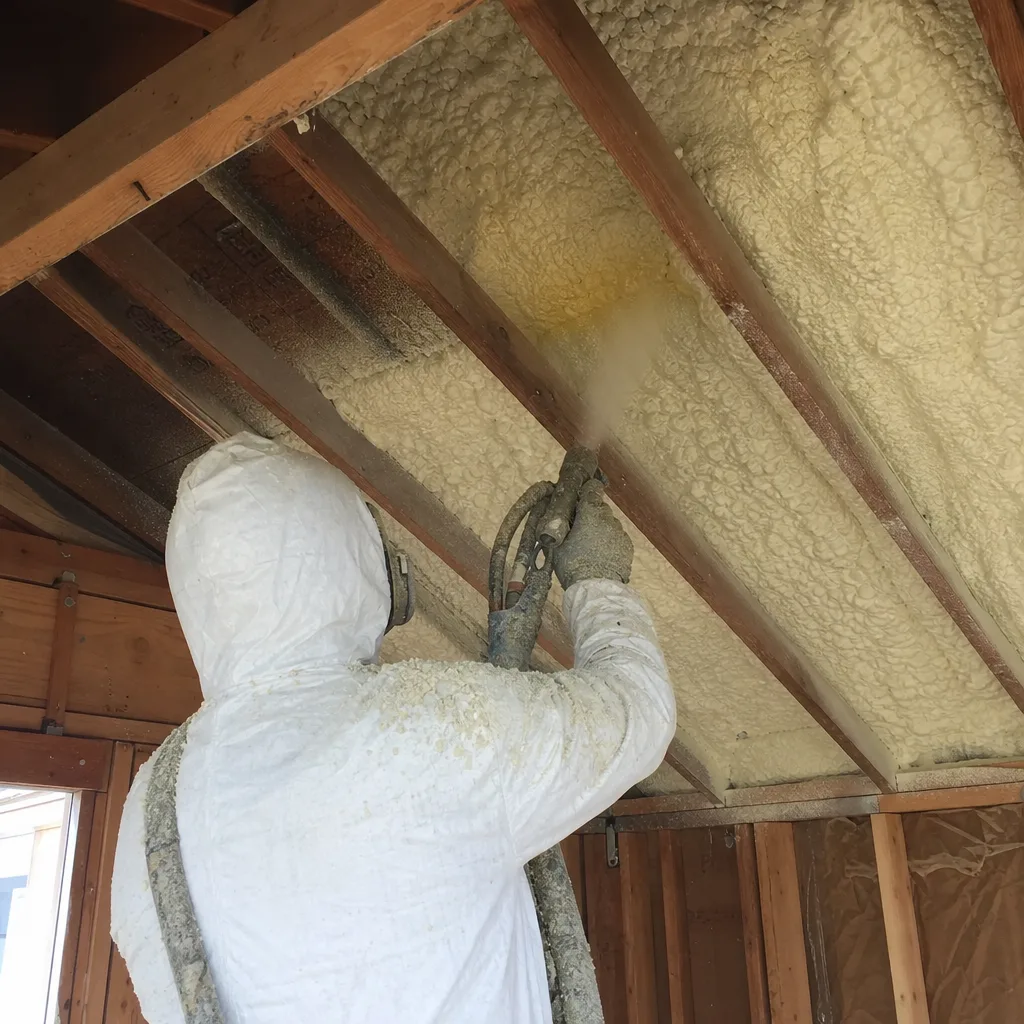
Open Cell Spray Foam is the workhorse for Glendale’s attic retrofit projects, and in this city it earns its keep from June through October. Hot, dry summer air bakes dark shingle roofs, and the attic underneath becomes a convection oven that pushes trapped heat down through ceiling drywall all afternoon. Open-cell foam applied to the underside of the roof deck stops that heat transfer at the source. In a standard 1,200-square-foot Glendale attic, open-cell runs $4,200 to $6,800 installed, depending on roof complexity and existing insulation condition.
Why Most Glendale Attics Get Open Cell
Glendale’s dominant housing stock is 1920s through 1960s single-family with vented attics that were designed for a different climate reality. Open-cell foam gives you an air seal and an R-value around R-3.6 per inch, which means a 6-inch application hits roughly R-22 at the roofline. That’s the number that gets attic temps down from 150°F to within a few degrees of the living space below.
When Open Cell Is The Wrong Call
Enclosed rafter bays with minimal depth, flood-prone crawlspaces, or structures where moisture intrusion is a real concern lean toward closed-cell. We carry both Icynene and Demilec systems, so the recommendation comes from your roof geometry and drainage reality, not from what’s already loaded on the truck.
Spray Foam Insulation Contractors in Glendale
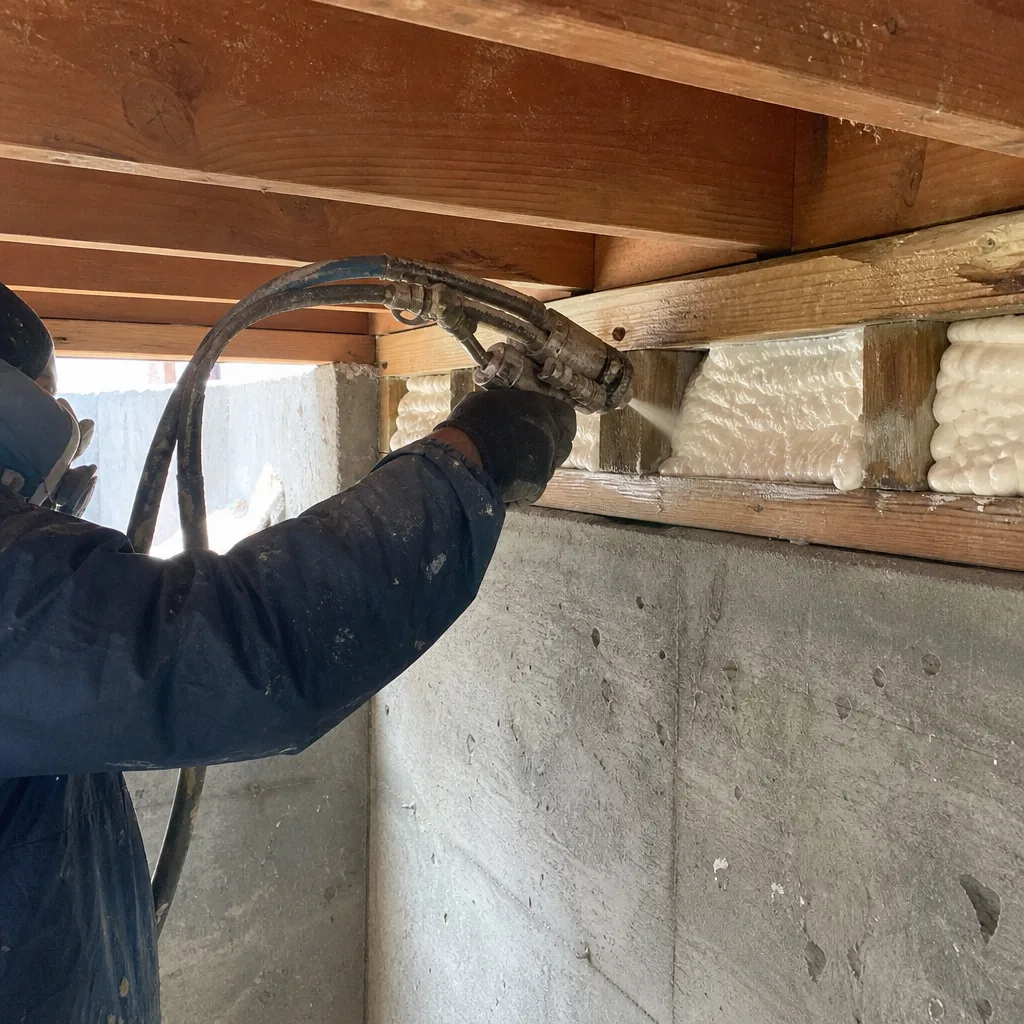
Spray Foam Insulation Contractors who know Glendale understand that this city’s homes don’t fail the way newer suburban builds do. A house in the 91207 or 91208 foothills frequently has irregular framing, additions stitched on over decades, and wall cavities that were never insulated at all. Spray foam is often the only product that conforms to those odd shapes and seals the gaps that batts physically cannot reach. For a typical hillside wall retrofit in Glendale, expect $6,500 to $11,000 for a full wall-and-attic application. For a garage ceiling or rim joist job, $1,200 to $2,300.
What Sets An Insulation-Only Crew Apart
When insulation is someone’s side service, you get whatever material they can install fastest. We’re an insulation-only contractor. Every technician on a Glendale job is trained on open-cell and closed-cell chemistry, fire-safety setbacks around recessed fixtures, and the air-sealing discipline that makes foam effective. That’s the difference between a pretty install and one that actually moves the needle on your utility bill.
Hillside Access And Logistics
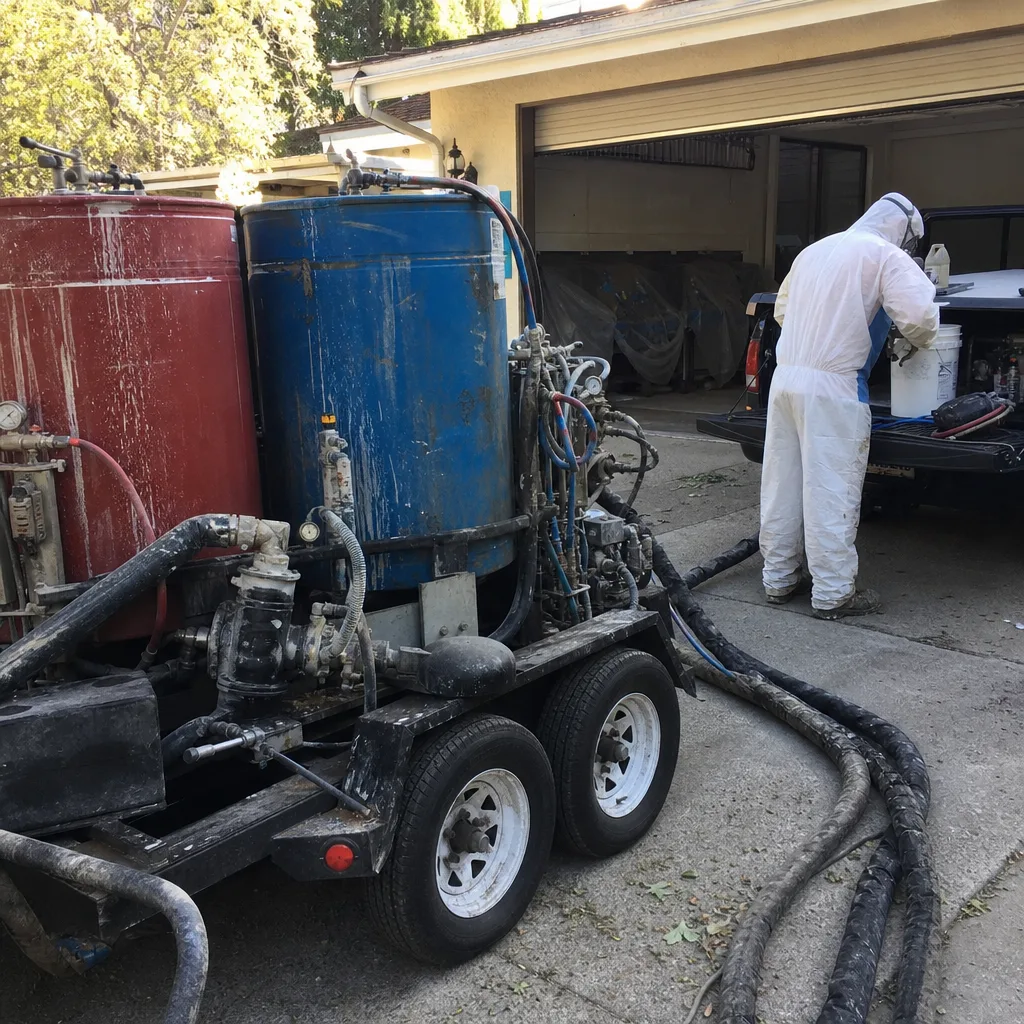
We’ve worked on homes off Verdugo Road and up in the 91208 foothills where the rig has to stay street-side and hose runs stretch 150 feet. That changes pressure settings, cure monitoring, and cleanup. A team that hasn’t done hillside spray foam learns those lessons on your roof. We already have.
Trusted Brands We Service in Glendale
We stock and install Icynene open-cell and Demilec closed-cell systems for Glendale projects, along with CertainTeed for the tight spaces where a hybrid approach makes more sense. Carrying multiple spray foam lines means we’re not married to one chemical formula or one price point. Your 91208 hillside home with exposed rafter tails gets a different product recommendation than a 1950s ceiling-and-attic job in the flats. We keep material staged for Glendale work, so scheduling doesn’t hinge on a distributor’s delivery window. When you call (877) 265-5712, we can usually get eyes on your attic within days, not weeks.
Common Spray Foam Insulation Problems We See in Glendale Homes
- Foam sprayed over settled fiberglass. Decades-old batts in 1950s tract homes have compressed to the point where they trap moisture and block foam adhesion. We remove the failed substrate first, then spray.
- Untaped HVAC chases in hillside builds. Homes in 91207 and 91208 frequently have ceiling penetrations that were never sealed, which creates a convective loop that defeats new insulation. If we don’t seal the chase, your foam is decorative.
- Santa Ana heat stress on thin closed-cell applications. Attic temps above 150°F during wind events push closed-cell foam hard. Applied too thin or over the wrong substrate, it degrades. We spec thickness based on Glendale’s summer roof-load reality.
- Recessed lights buried in old batts. Non-rated fixtures packed in fiberglass are a fire hazard. Foam requires proper setbacks and sealed enclosures. We handle this on every retrofit we do in Glendale.
Pricing for Spray Foam Insulation in Glendale, CA
Here’s what a Glendale homeowner should expect. Open-cell attic roofline spray: $4,200 to $6,800 for a 1,200-square-foot attic. Closed-cell attic roofline: $7,500 to $12,000. Wall cavity injection in an existing home: $6,500 to $11,000. Garage ceiling or rim joist work: $1,200 to $2,300. Roof deck spray on a 1950s post-and-beam: $5,500 to $9,000 depending on rafter depth and pitch. What moves the number: existing insulation condition, attic access, whether bypass sealing is extensive, and whether the home is in the flats or up a steep Glendale hillside. We give line-item estimates before any work starts. Call (877) 265-5712 for a free estimate on your specific home.
We Also Serve Cities Near Glendale
Our crews work across the San Fernando Valley and into the foothills. If you’re in Burbank, La Cañada Flintridge, Echo Park, or Silver Lake, we bring the same insulation-only focus and the same eight-brand lineup to your attic. Every project gets the same walkthrough, the same seal-first discipline, and the same straight answer. Read more about what we do across the region on our Spray Foam Insulation in Glendale page.
Serving Glendale, CA — Our Local Coverage Area
We’re based in the Glendale area and know this community well. Use the map below to see our service coverage — if you’re nearby, we can almost certainly help.
FAQs About Spray Foam Insulation in Glendale
Closed-cell foam does not ignite easily and can slow ember penetration when installed correctly over the attic plane, but it is not a standalone fire barrier. In a high fire-severity zone like Glendale’s foothills, the real job is sealing attic bypasses so embers can’t enter and find dry fiberglass. We recommend closed-cell Demilec for the roof deck in 91207 and 91208, installed with proper setbacks around fixtures. For an exact fire-safety assessment on your property, call (877) 265-5712.
No, and if a contractor says yes, walk away. Packed-down fiberglass traps heat and moisture against the drywall, and foam applied over it won’t bond properly. In Glendale’s 1950s tract homes, we remove the failed batts, seal every penetration, and then spray the roof deck or attic floor. That’s the only sequence that delivers real results.
Spray foam outperforms fiberglass and settled cellulose in Glendale’s summers because it air-seals while it insulates. A vented attic with R-30 fiberglass on the floor still hits 140°F when the roof deck radiates heat down. A roofline foam application keeps the attic within 5 to 10 degrees of the living space, which is why our Glendale customers see the biggest July and August bill reductions. We recently sprayed a 1958 ranch off Chevy Chase Drive in 91206 whose attic hit 155°F during August afternoons. After air-sealing and 6 inches of Icynene open-cell on the roof deck, their July electric bill dropped by $140 year over year.
Most attic and wall cavity spray foam retrofits in Glendale do not require a city permit, but any work that changes the building envelope, like converting a vented attic to an unvented assembly, may need plan review depending on the scope. We handle the determination for you before scheduling. Call (877) 265-5712 and we’ll tell you what applies to your specific project.
Open-cell Icynene is generally the best fit for irregular hillside framing in Glendale’s foothill ZIPs. Its expansion fills odd cavities and seals around the untaped HVAC chases and plumbing penetrations common in those homes. Closed-cell Demilec makes sense where you need higher R-value per inch or a vapor barrier. We determine the right product after opening the wall, not before. Estimates are free, so call (877) 265-5712 to schedule a walkthrough.
Written by Allen Decker, Owner at North Tustin Insulation, serving Glendale and the surrounding foothill communities.