
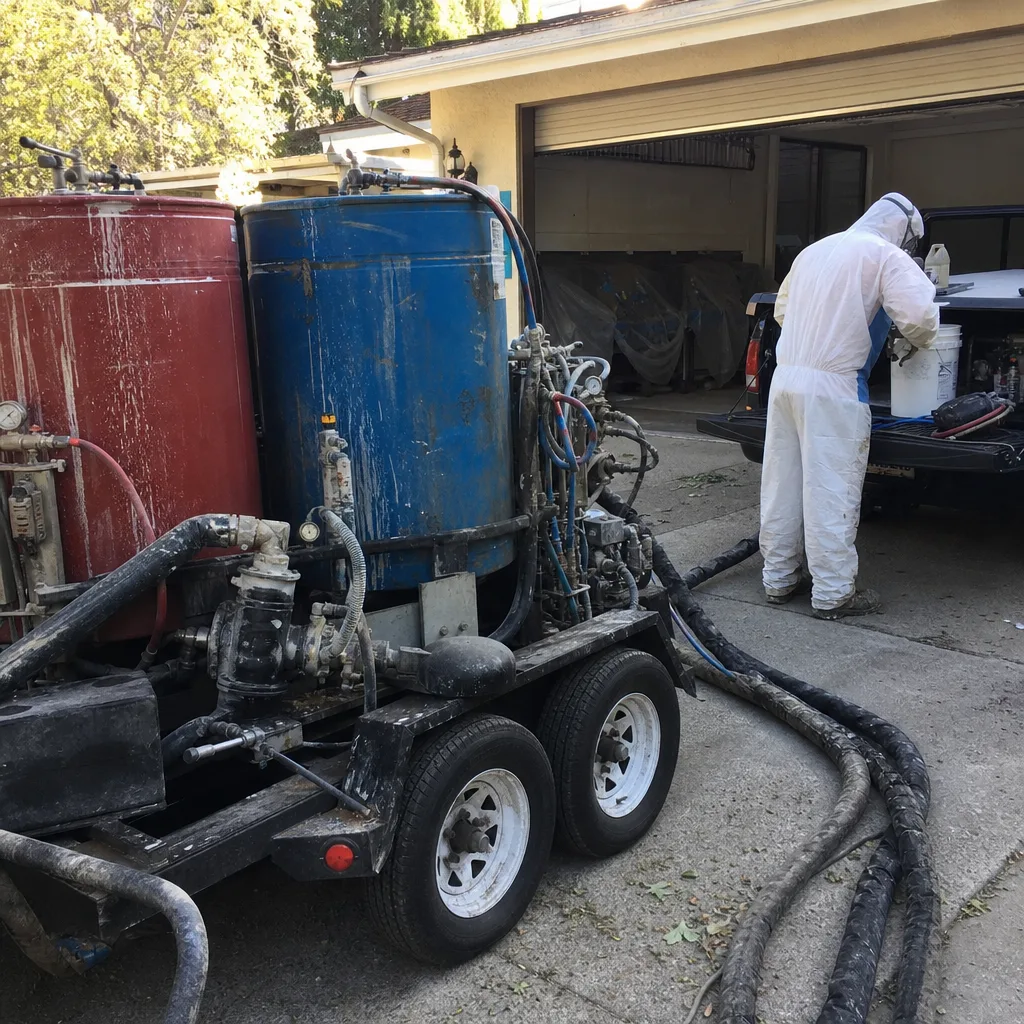
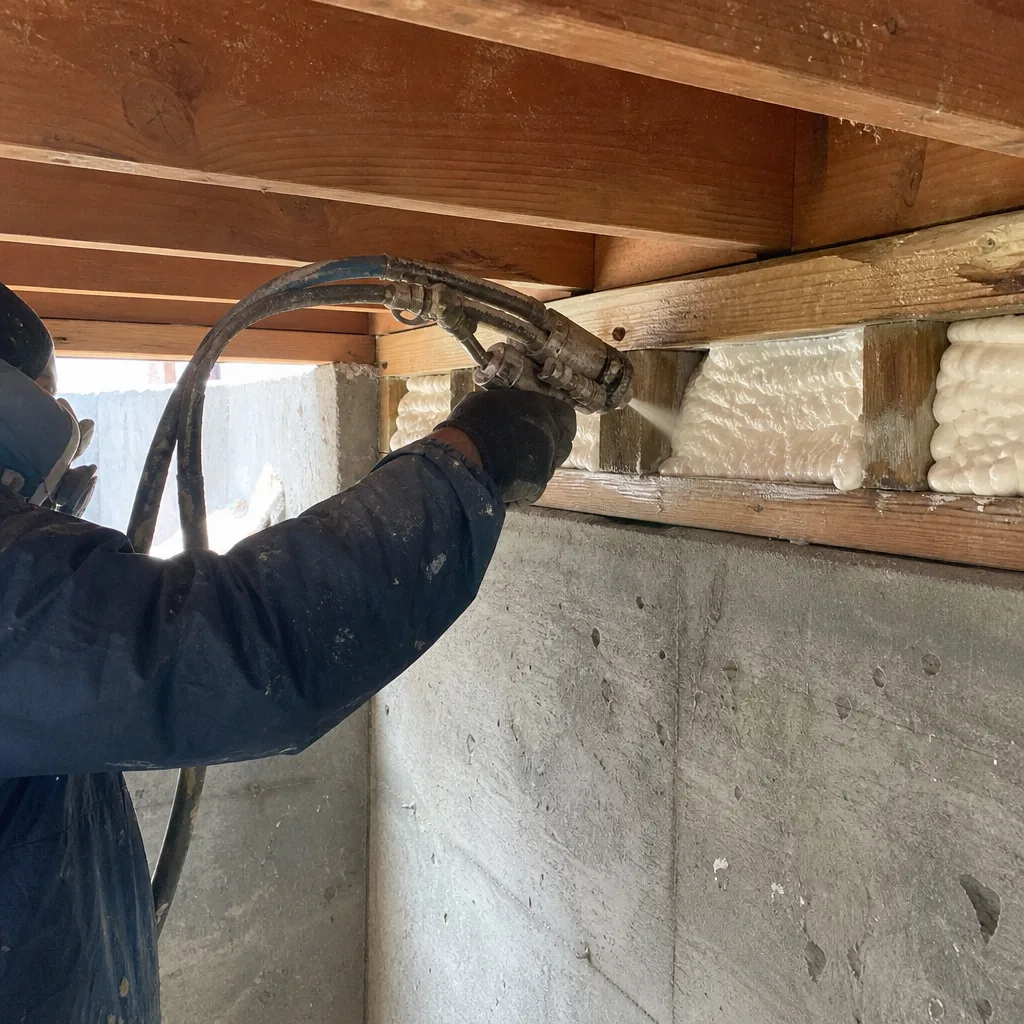
Fast, Reliable Spray Foam Insulation Across Grand Terrace
Spray foam insulation in Grand Terrace typically costs $1.50 – $4.50 per board foot installed, with a standard 1,500-square-foot attic running $4,500 – $9,500 for full coverage. Closed-cell runs higher than open-cell, and rim joist or garage ceiling jobs fall at the lower end. Our crews know the 92313 zip code and the specific wind and heat patterns that make Grand Terrace attics behave differently than flatland Inland Empire cities. Call (877) 265-5712 for a straight answer and a free estimate.
Grand Terrace is a tight-knit city, and word travels when a contractor actually shows up on time, opens the attic, and explains what’s really going on up there. We make the drive from North Tustin regularly, and we’re familiar with the hillside streets off Barton Road, the older tract pockets near the 215 corridor, and the canyon-adjacent subdivisions where wind exposure changes how insulation performs. When you call, you get Allen Decker’s team, not a call center.
Why North Tustin Insulation Is Grand Terrace’s Preferred Spray Foam Insulation Company
Homeowners on Grand Terrace’s hillside lots and canyon-edge streets call us because we treat spray foam as a decision, not an upsell. We carry both Icynene and Demilec spray foam systems, which means a 1960s low-pitch attic with wind-packed fiberglass gets a completely different recommendation than a 1990s subdivision with open, accessible ceiling bays. We match the material to the home, not the other way around.
Our insulation-only focus matters here. Grand Terrace’s housing stock spans mid-century tract builds and 1980s – 90s subdivisions, and a generalist contractor who does roofs and HVAC on the side won’t know that a canyon-adjacent attic needs a wind check before a single pass of foam. We do. Every estimate starts with an attic inspection that accounts for Santa Ana wind patterns and how they’ve already affected whatever insulation is up there.
Local customers also tell us they appreciate the honesty on brand selection. Need a premium closed-cell barrier along a wind-scoured roofline edge? Demilec. Want open-cell Icynene in the main attic cavity with GreenFiber cellulose top-up elsewhere? We can sequence that without bringing in a second contractor. Eight brands, one crew, and a recommendation driven by the home’s actual conditions.
Garage Spray Foam Insulation in Grand Terrace
Garage Spray Foam Insulation in Grand Terrace homes is one of the most undersold upgrades we see, especially on hillside lots where the garage sits below grade or the garage ceiling backs into a south-facing roofline that bakes through summer afternoons. A detached or poorly sealed garage can hit 110°F+ by 3 p.m. in July, and that heat migrates into adjacent living space or makes the garage unusable as a workshop, gym, or storage for temperature-sensitive items. We spray the garage ceiling and, where needed, the shared wall between garage and house.
Expect $1,200 – $2,800 for a typical two-car garage ceiling in Grand Terrace, with variations depending on whether the studs are open or finished, whether we’re sealing a rim joist line, and which foam system fits the cavity depth. Foam on a garage ceiling also cuts the radiated heat that makes the room above it uncomfortable, a common complaint in 1950s – 70s tract homes where an uninsulated garage ceiling tops a family room or bedroom.
Wind-Exposed Garage Ceilings
On canyon-edge lots off Barton Road, garage ceilings often have soffit gaps and roofline openings that face prevailing afternoon winds. Open-cell foam alone won’t stop wind-driven air movement. We seal those exterior edges with closed-cell foam first, then build R-value in the center bays. This is the difference between a garage that stays cool and one that still bakes by 4 p.m.
Closed Cell Spray Foam Insulation in Grand Terrace
Closed Cell Spray Foam Insulation in Grand Terrace is the right call for rim joists, wind-exposed roofline edges, and tight low-pitch attic bays where you need both air sealing and structural rigidity in a thin profile. Closed-cell foam runs roughly $2.50 – $4.50 per board foot installed here, and it packs about R-6.5 to R-7 per inch, which matters when a mid-century attic gives you only four to six inches of clearance at the outer edges. It also acts as a moisture barrier, useful in Grand Terrace’s older tract homes where decades of temperature swings have opened cracks in top plates and exterior sheathing.
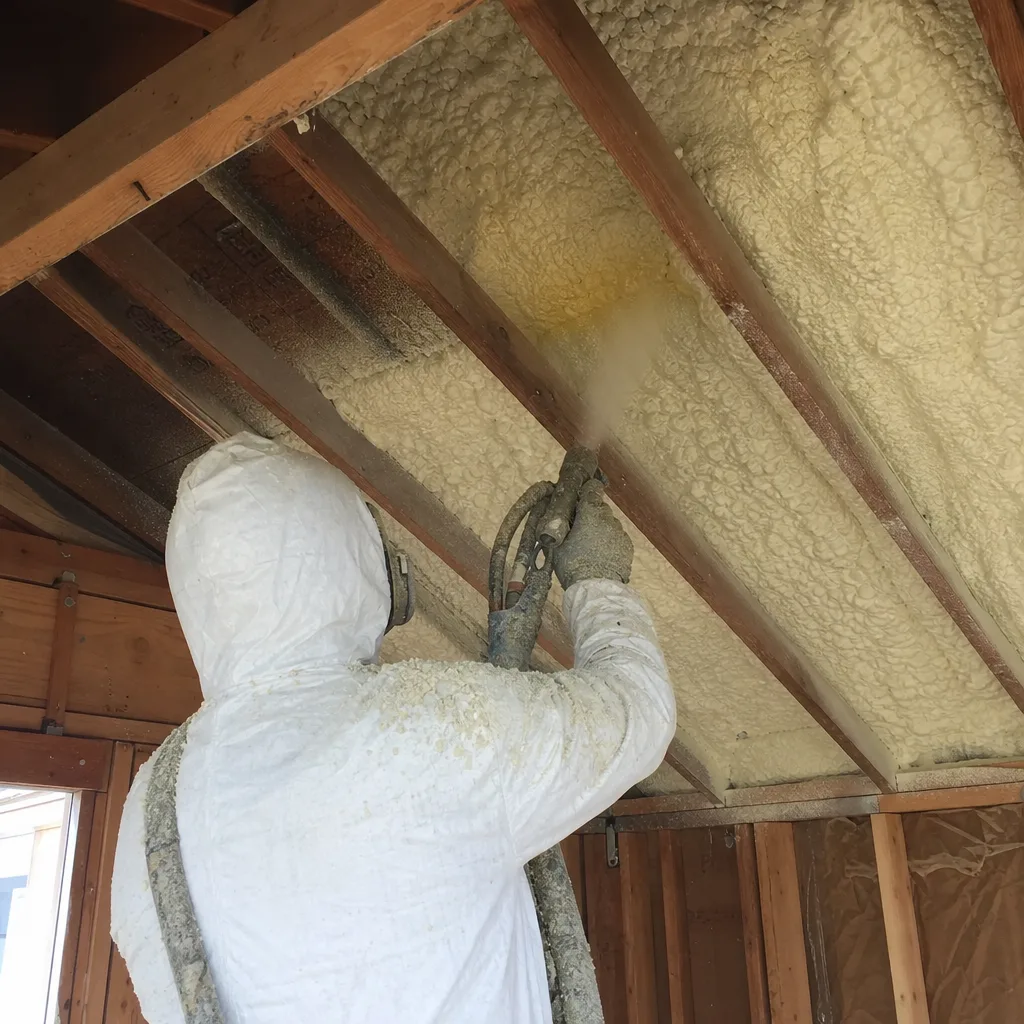
We see two big uses for closed-cell in Grand Terrace: sealing the windward roofline edge where Santa Ana gusts pry open gaps year after year, and rim joist sealing under crawl spaces or over garage foundations where fiberglass batts just leak. Homeowners who’ve fought hot upstairs rooms for years usually have open, unsealed roofline seams, and closed-cell fixes that permanently.
Rim Joist Sealing on Hillside Lots
Hillside homes in Grand Terrace often have rim joist bays that catch wind pressure on one side of the foundation. We spray those bays with closed-cell foam to stop outside air from climbing into the floor system. The result is a house that doesn’t draft through the floors on windy afternoons, which matters in winter even in the Inland Empire.
Trusted Brands We Service in Grand Terrace
We’re not a one-brand shop pushing whatever’s on the truck. We install Icynene open-cell and Demilec closed-cell spray foam, plus GreenFiber recycled cellulose and Owens Corning fiberglass when a hybrid approach makes sense for a Grand Terrace attic. That flexibility means a 1960s tract home with tight outer bays can get closed-cell Demilec along the windward edge and Icynene through the open center, without a second contractor. We keep the material inventory to serve 92313 homeowners without long lead times.
Common Spray Foam Insulation Problems We See in Grand Terrace Homes
- Wind-packed loose-fill – Santa Ana gusts through canyon-edge lots push blown-in fiberglass against the far gable and leave the near-side ceiling bays bare. The attic looks fine from the hatch, but the rooms below are scorching. We re-seal gaps and re-spray those scoured areas.
- Low-pitch roofline gaps – Mid-century Grand Terrace builds have shallow attics where the outer 18 – 24 inches are nearly inaccessible. Air leaks there hide behind baffles and old loose-fill. Foam has to be sprayed into those tight bays with angled wands, and we’re equipped for it.
- Hot-room complaints upstairs – Afternoons over 100°F turn unsealed attics into convection ovens. Original 1950s – 70s insulation leaves top plates and can-light gaps open, and the heat drives straight down through the ceiling. Closed-cell foam along those seams stops the transfer at the source.
- Garage heat bleed – A south-facing garage ceiling with no insulation turns a Grand Terrace garage into a heat box by mid-afternoon. We see this on hillside lots where the garage roof catches full sun while the house benefits from a slight canyon offset.
Pricing for Spray Foam Insulation in Grand Terrace, CA
Open-cell spray foam in Grand Terrace runs $1.50 – $2.50 per board foot, and closed-cell runs $2.50 – $4.50. A full attic spray on a 1,500-square-foot home lands between $4,500 and $9,500 depending on the foam type and the condition of the existing insulation. Rim joist sealing typically falls between $800 and $1,800 for most Grand Terrace foundations. Garage ceilings run $1,200 – $2,800. What moves the number: whether we’re removing wind-packed loose-fill first, how much of the roofline needs edge sealing, and whether the attic is open or partially finished. Call (877) 265-5712 and Allen Decker’s team will give you a free, line-item estimate that reflects your actual attic, not a generic square-foot formula.
We Also Serve Cities Near Grand Terrace
Spray Foam Insulation work from North Tustin Insulation also covers Highgrove, Colton, Loma Linda, and Rubidoux. If you’re in Grand Terrace or any of these neighboring communities and you’re tired of an attic that won’t stay cool, call (877) 265-5712 for a real assessment before the next heat wave hits.
Serving Grand Terrace, CA — Our Local Coverage Area
We’re based in the Grand Terrace area and know this community well. Use the map below to see our service coverage — if you’re nearby, we can almost certainly help.
FAQs About Spray Foam Insulation in Grand Terrace
Santa Ana winds and canyon-edge gusts push loose-fill insulation like blown-in fiberglass toward the downwind gable, leaving the windward half of the attic nearly bare while the far side looks overfilled. In Grand Terrace’s hillside and canyon-adjacent lots, this is a wind-compression pattern we see constantly. A simple top-up won’t fix it if the wind keeps scouring the same area, which is why we check the roofline edge and seal the gaps before re-spraying. Call (877) 265-5712 and we’ll tell you what’s actually happening in your attic.
Most low-pitch attics in Grand Terrace’s mid-century tracts need closed-cell foam along the outer roofline edges where clearance is too tight for thick insulation and air leaks are most concentrated. The open center bays can usually take open-cell foam, which costs less and still delivers strong R-value per inch. We evaluate each attic’s pitch, venting, and wind exposure before recommending a material, because the wrong foam in a tight bay is wasted money.
Yes. A sealed, foam-insulated garage ceiling stops the radiated heat that turns Grand Terrace garages into 110°F boxes by mid-afternoon. On south-facing or hillside-exposed garages, we often see temperature drops of 20 – 30°F inside the garage after foam goes in. That heat no longer pushes into rooms above or adjacent to the garage, and the garage actually becomes usable in summer.
Wind exposure changes the priorities. On a canyon-edge lot, we spray closed-cell foam along the windward roofline edge and the top-plate seams first, because that’s where wind-driven air moves fastest and where loose-fill gets scoured away. The open center of the attic gets open-cell foam or dense-packed cellulose depending on clearance and budget. Flatland cities don’t have this sequencing problem, but Grand Terrace’s hillside lots make it essential.
No, and we won’t try. Foam needs to contact the ceiling drywall or sheathing to form an air seal, and spraying over old, compressed, or wind-packed fiberglass leaves that seal incomplete. In older Grand Terrace homes we remove or redistribute the original insulation first, inspect the roofline for gaps, and then spray. It’s a longer job, but it’s the only way the foam actually performs.
If your Grand Terrace attic is fighting you, let’s look at it together. Call (877) 265-5712 for a free estimate and a straight recommendation from Allen Decker and the North Tustin Insulation team.
Written by Allen Decker, Owner at North Tustin Insulation, serving Grand Terrace and the surrounding Inland Empire.