Fast, Reliable Spray Foam Insulation Across Koreatown
Spray foam insulation in Koreatown has to work around old buildings, tight schedules, and scorching summer afternoons. Most homes in the 90005 ZIP sit on flat, low-slope roofs where attic heat builds fast, and the housing stock from the 1920s through the 1960s rarely had adequate thermal barriers installed in the first place. We know these buildings because we work on them week after week. If you’re a homeowner or landlord asking whether spray foam makes sense for an apartment building, duplex, or courtyard fourplex here, the answer is usually yes, especially closed-cell foam for air-sealing and roof-deck applications. Call us at (877) 265-5712 for a straight assessment.
Why North Tustin Insulation Is Koreatown’s Preferred Spray Foam Insulation Company
Koreatown is a rental-heavy market. Landlords and property managers don’t have time for a contractor who treats insulation as a side project. We’re an insulation-only contractor, which means every estimate, every technician, and every conversation is focused on one trade. No roofing add-ons, no HVAC upsells.
Our service footprint reaches into Koreatown regularly from North Tustin, and that rhythm matters. We understand the inspection pressures around rental housing turnover, the access limitations of shared attics above courtyard units, and the reality that jobs between tenants have short windows. When a property manager near Wilshire and Western needs closed-cell foam in a garage ceiling before a move-in date, that deadline drives the schedule, not our convenience.
We carry both Demilec and Icynene spray foam systems, which means the recommendation comes from what a specific building needs, not from whichever single brand we happen to stock. For the dense, multi-unit housing that defines Koreatown, that brand flexibility plus our familiarity with continuous-roof buildings saves landlords real time and inspection headaches. Allen Decker leads our team, and he’ll tell you directly whether open-cell or closed-cell is the better fit for your building.
Garage Spray Foam Insulation in Koreatown
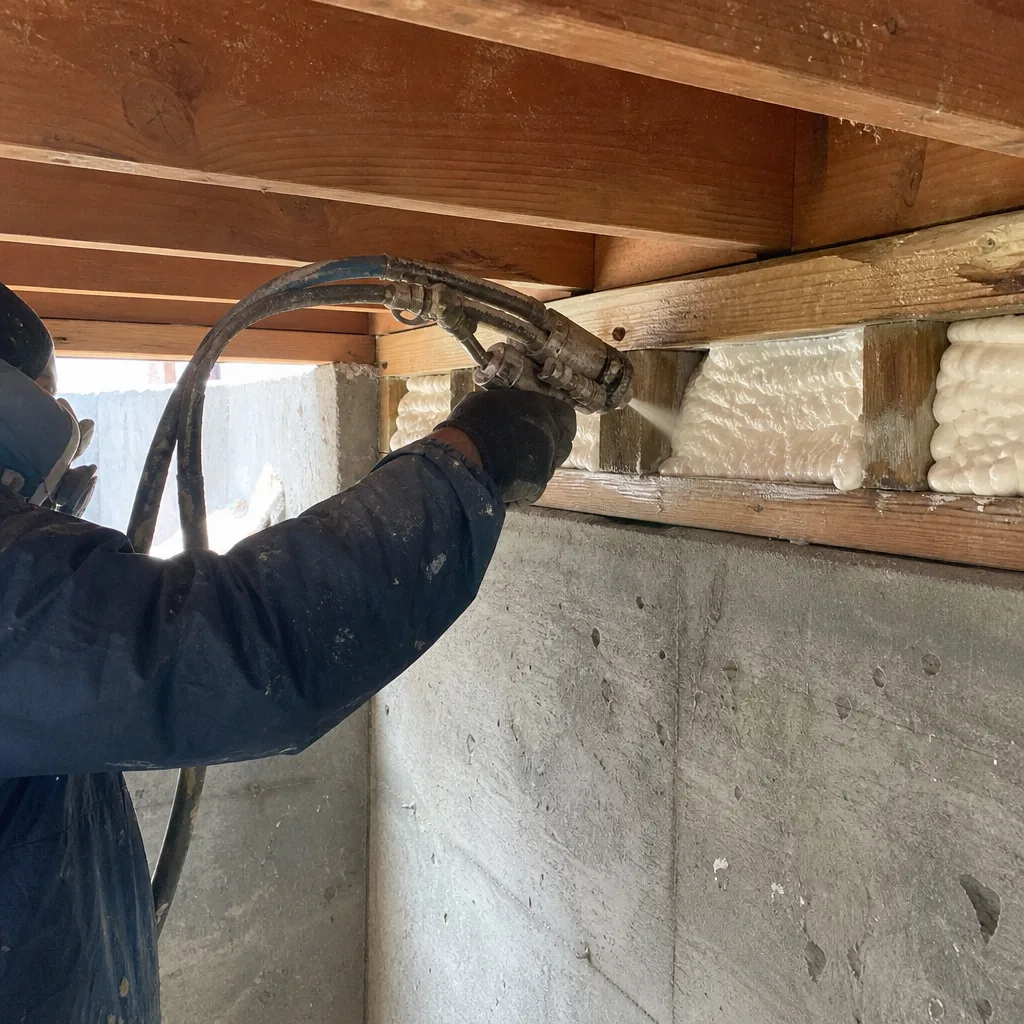
Garage spray foam insulation in Koreatown usually targets attached garages beneath living space, where heat migrating through an uninsulated ceiling makes the bedrooms above unusable during summer afternoons. In the older multi-family buildings off Western and Vermont, garage ceilings often sit directly under a unit’s floor, so the payoff is immediate: a cooler living space and lower cooling loads.
A typical garage ceiling spray foam job in Koreatown runs $1,200 to $1,900, depending on square footage and access. That’s closed-cell foam, which gives you the air-seal plus the thermal break. Open-cell runs a bit less, but closed-cell is the better call in garages where vehicle exhaust and humidity are factors.
When a Landlord Needs It Now
Tenant turnover is the trigger. A garage that’s been uninsulated for seventy years suddenly matters when an inspection flags heat loss, or when a new tenant complains about a bedroom that won’t cool. Closed-cell foam applied to the garage ceiling plane solves both the thermal problem and the air-sealing problem in one pass.
Access in Tight Koreatown Garages
Garages in this area are narrow. You’re working around water heaters, storage clutter, and low clearances. Our crews plan for that. The foam gets applied on a weekday morning, everything is cured by evening, and the tenant parks back inside that night.
Closed Cell Spray Foam Insulation in Koreatown
Closed cell spray foam insulation in Koreatown does double duty: it insulates and air-seals in one application, which is exactly what these older buildings need. The stucco-over-wood-frame construction from the 1920s through the 1960s leaks air around windows, through wall cavities, and up into shared attics. Closed-cell foam stops that by expanding into every gap and setting up as a rigid thermal barrier.
Closed-cell spray foam in Koreatown generally runs $3.50 to $6.00 per board foot, with a typical attic or wall job landing between $2,800 and $5,400. It costs more than open-cell, but in a rental property where you don’t want to redo the work in five years, the performance difference justifies the spend.
Ceiling Plane Separation in Continuous-Roof Apartments
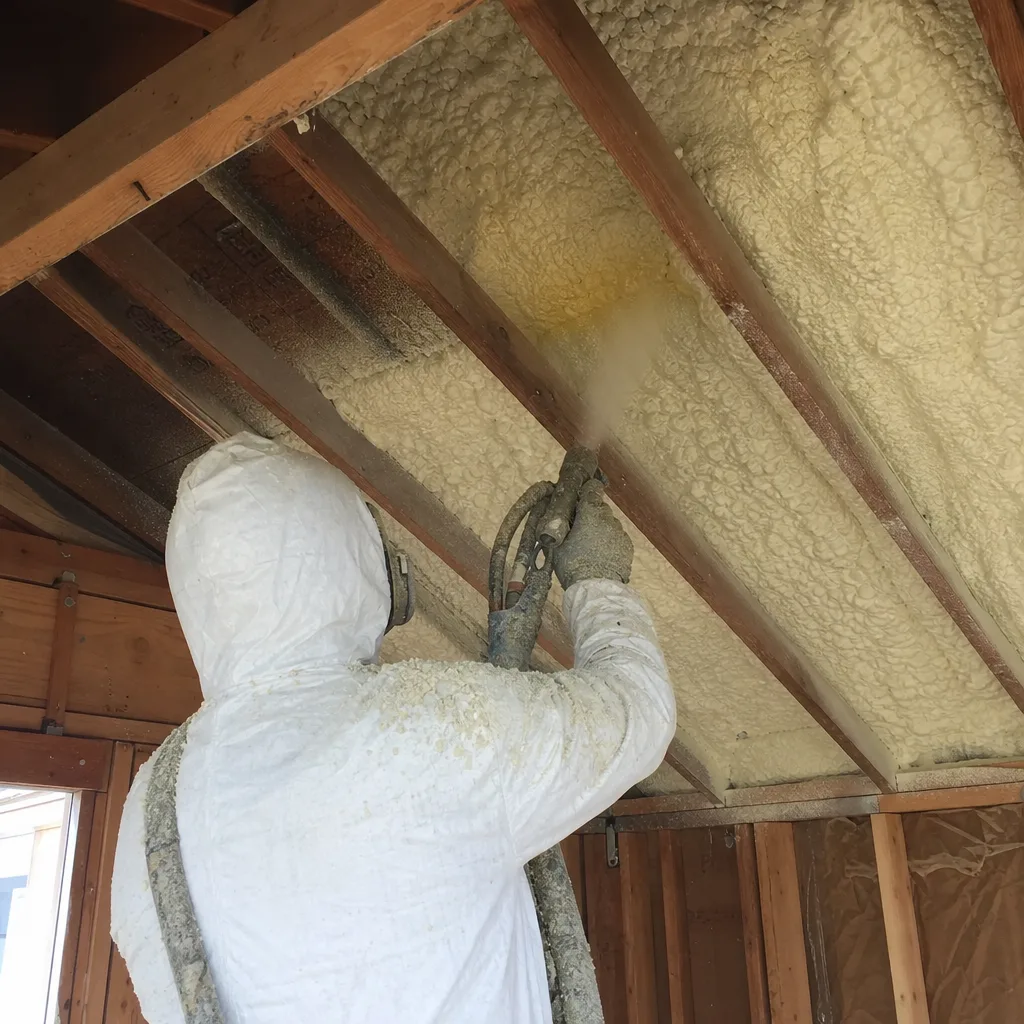
This is where Koreatown work gets specific. On a 1940s courtyard fourplex off Western, we found a legacy attic with degraded fiberglass batts and unsealed penetrations above each unit. Because the continuous roof spans four tenant meters, we used closed-cell spray foam to air-seal and insulate each ceiling plane separately, documenting the boundaries for the landlord’s rental-housing inspection and eliminating cross-unit heat gain that had tenants running window ACs into the evening. Most insulation contractors skip that documentation. We don’t.
Roof Deck Applications
The flat, low-slope roofs common across Koreatown absorb direct afternoon sun. Closed-cell foam applied to the underside of a roof deck blocks that heat before it enters the building. It also seals the deck against moisture, which is why we often recommend it for the top-floor units in apartment buildings rather than tearing into drywall to reach wall cavities.
Trusted Brands We Service in Koreatown
We install Demilec and Icynene closed-cell systems on most Koreatown projects because they deliver the air-sealing performance these older buildings demand. For jobs where open-cell makes more sense, we also carry Owens Corning spray foam. We’re not tied to one manufacturer, so the recommendation is driven by the building’s needs. If a property near Vermont Avenue needs a rapid-cure closed-cell product because tenants are moving in Friday, we specify accordingly. If a landlord wants a more budget-conscious open-cell approach for a garage ceiling, we can do that too. Carrying multiple brands means we don’t have to force-fit a product that isn’t right for the structure. Parts and materials are sourced to keep turnaround fast, which matters when you’re up against an inspection date or a lease signing.
Common Spray Foam Insulation Problems We See in Koreatown Homes
- Cross-meter heat transfer in continuous-roof apartments. When foam is sprayed without isolating each unit’s ceiling plane, heat moves horizontally between adjacent units through the shared attic. We see this on courtyard buildings off Western and Vermont all the time, where one application was supposed to cover four units but nobody separated or documented the boundaries. Rental-housing inspectors increasingly flag this.
- Spray foam applied over knob-and-tube wiring. Many 1920s and 1930s buildings in Koreatown still have active knob-and-tube circuits in attics. Encasing live knob-and-tube in foam creates a fire risk and a code violation. Before any spray foam job in an older building, we check the wiring. If it’s present and active, the wiring gets addressed first.
- Adhesion failure on hot low-slope roof decks. The summer sun beats down hard on flat roofs in Koreatown. If a roof deck surface isn’t prepped properly, closed-cell foam can blister and lose its bond. We see this on previous contractor work quite often. Surface temperature and deck condition get checked before application starts.
- Tenant disruption that shouldn’t have happened. In occupied rentals, a crew that doesn’t plan for ventilation, masking, and safe access creates complaints and lease problems. Most spray foam jobs in Koreatown units should be done during a vacancy window or with the affected area sealed off properly. We schedule around tenant needs, not the other way around.
Pricing for Spray Foam Insulation in Koreatown, CA
Here’s what you can expect to pay for spray foam insulation in Koreatown. Garage ceiling closed-cell jobs run $1,200 to $1,900 for a standard single-car garage. Attic and roof-deck applications land between $2,800 and $5,400 depending on square footage, deck condition, and whether we’re doing one unit or a full multi-unit continuous roof. Per-board-foot pricing for closed-cell runs $3.50 to $6.00. Open-cell, where appropriate, runs $2.20 to $3.80 per board foot. What moves the number: access difficulty, wiring issues that need addressing first, the number of ceiling planes requiring separate documentation, and how much prep the deck surface needs. Call (877) 265-5712 and we’ll give you a number that holds. Estimates are free.
We Also Serve Cities Near Koreatown
Our Spray Foam Insulation work extends beyond Koreatown into the surrounding basin. We regularly serve Los Angeles, Echo Park, Silver Lake, and Hollywood, so if your property sits just outside the 90005 boundary, the same crews and the same multi-brand approach apply. The building stock changes slightly, but the commitment to correct ceiling-plane separation and inspection-ready work does not.
Serving Koreatown, CA — Our Local Coverage Area
We’re based in the Koreatown area and know this community well. Use the map below to see our service coverage — if you’re nearby, we can almost certainly help.
FAQs About Spray Foam Insulation in Koreatown
Yes, but it requires a step that many contractors skip: each unit’s ceiling plane must be isolated, sprayed, and documented as a separate thermal boundary before the job passes rental-housing inspection. On continuous-roof courtyard buildings off Western and Vermont, the attic spans multiple meters with no interior separation. Without per-unit documentation, cross-meter heat transfer continues and inspections fail. We document each plane during application, which is exactly what inspectors around Koreatown look for. Call (877) 265-5712 if your building needs this done correctly.
Spray foam cannot be applied over live knob-and-tube wiring in Koreatown. It creates a fire hazard and will be flagged as a code violation. Many buildings from the 1920s and 1930s in the 90005 ZIP still have active knob-and-tube circuits running through attic spaces. We check wiring status before touching the foam gun. If knob-and-tube is present and active, the circuit needs to be addressed by a licensed electrician before insulation work proceeds. We flag this early so the schedule isn’t blown.
Yes, closed-cell spray foam is the right choice for garage ceilings in Koreatown, especially in attached garages beneath living space. It air-seals and insulates in one pass, which stops heat from rising through the garage ceiling into the bedroom above. In the older apartment buildings near Western Avenue, this is one of the highest-payoff insulation upgrades per square foot. Expect to pay $1,200 to $1,900 for a standard garage ceiling. Open-cell works too but lacks the moisture resistance that garages with vehicle exhaust and humidity need.
Koreatown’s climate means the insulation problem is mostly heat gain, not heat loss. The summer sun on flat, low-slope roofs pushes attic temperatures well past 130 degrees, and closed-cell foam blocks that heat before it transfers through the ceiling into living space. Dry air also means moisture migration is less of a concern than it would be in a humid climate, but air-sealing still matters because daytime heat and cool nights create air movement through unsealed gaps. Closed-cell foam on roof decks performs exceptionally well in these conditions when adhesion is done right.
In most cases, yes, for the day of application. The affected area needs to be cleared and ventilated while the foam cures, and the two-part reaction releases chemicals during installation that occupants shouldn’t be breathing. Most landlords time the work between tenants, which is standard practice in Koreatown’s rental market. If an occupied unit is unavoidable, we seal off the work area and schedule so tenants are out for the day. Plan for a one-day disruption on typical garage or single-unit attic jobs.
Written by Allen Decker, Owner at North Tustin Insulation, serving Koreatown and the surrounding Los Angeles basin with specialized spray foam, attic, and blown-in insulation work.