
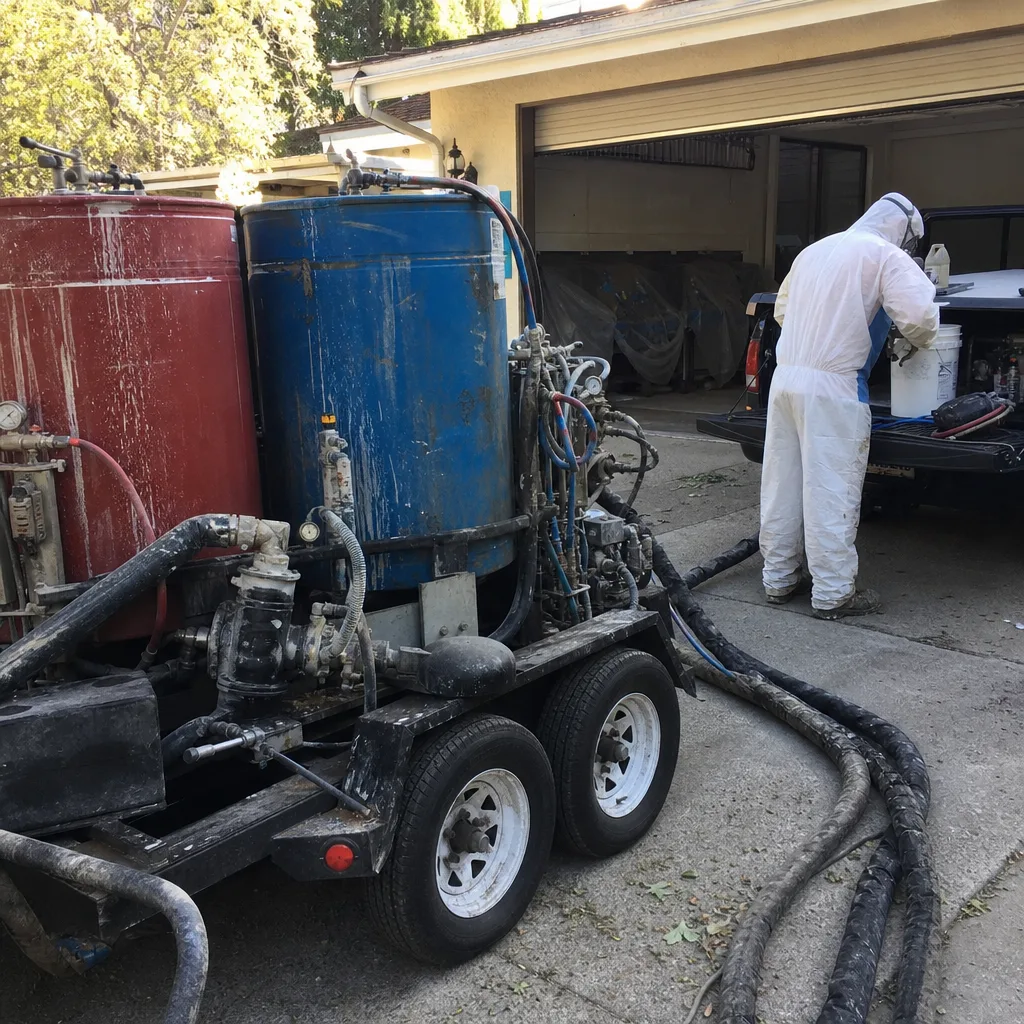
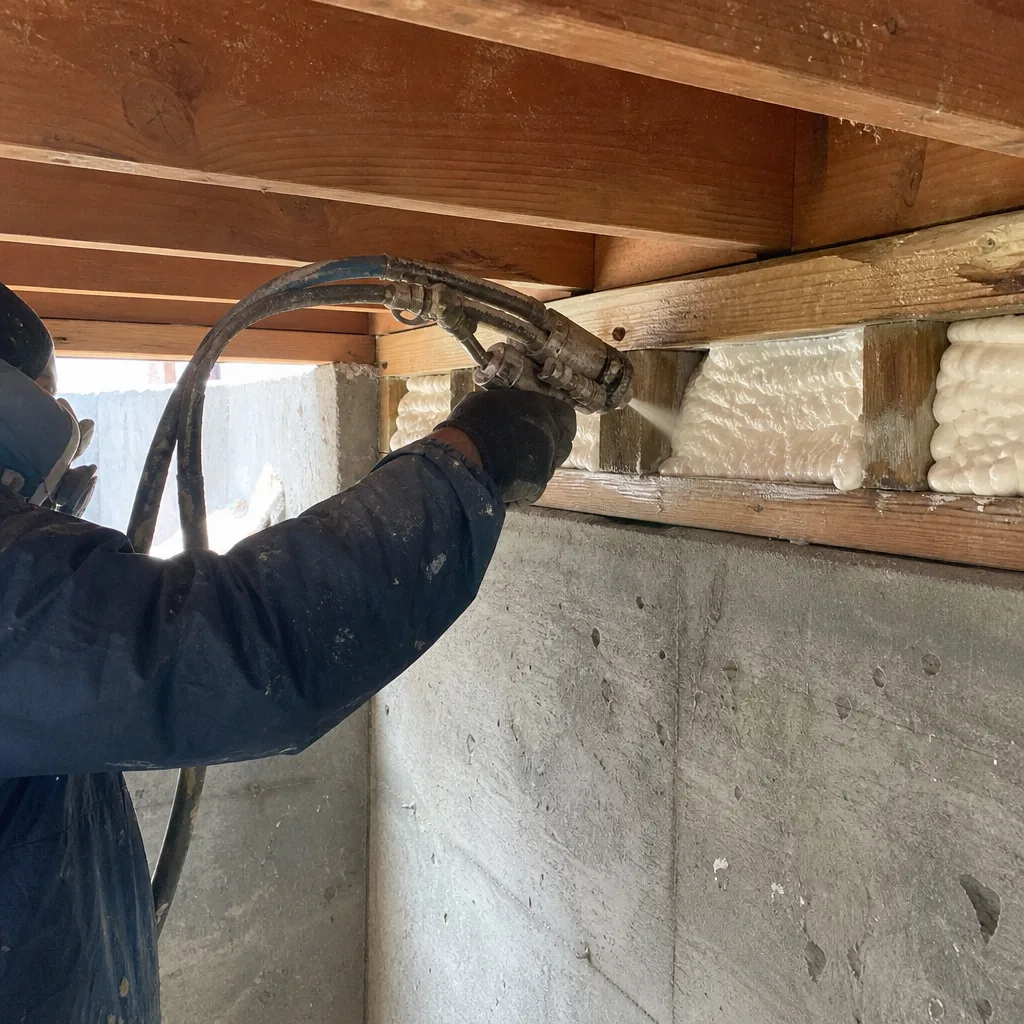
Fast, Reliable Spray Foam Insulation Across Lakewood
Spray foam insulation in Lakewood usually costs between $1,800 and $5,400 for a typical 1950s ranch attic, and most jobs we schedule are completed in a single day. If your Lakewood home heats up in the afternoon and won’t cool down at night, the problem is almost always the attic: these original tract houses were built with zero insulation. Call North Tustin Insulation at (877) 265-5712 and we’ll give you a straight answer about what your house actually needs.
Why North Tustin Insulation Is Lakewood’s Preferred Spray Foam Insulation Company
Lakewood homeowners call us because we know these houses. The 1950s tracts around Lakewood Center, Mayfair, and Carson Park share the same DNA: 2×4 construction, low-pitch gable roofs, shallow attic clearances, and no existing vapor strategy. That’s not a generic problem, and it doesn’t get a generic fix.
Allen Decker founded North Tustin Insulation around a simple idea: match the material to the house, not the other way around. We carry eight nationally recognized insulation brands, including Icynene and Demilec for spray foam, because a Lakewood ranch with a converted garage needs a different foam system than a Signal Hill hillside home with a vented attic. We’re an insulation-only contractor. Every estimate, every technician, and every conversation is focused on one trade.
Our crews work in Lakewood neighborhoods weekly, from the tree-lined streets south of Del Amo Boulevard to the homes backing up to Mayfair Park. When a Lakewood homeowner calls, we can typically reach the property same-day or next-day for an estimate, because we’re already working in the 90712 and 90713 ZIP codes most weeks.
Spray Foam Attic Insulation in Lakewood
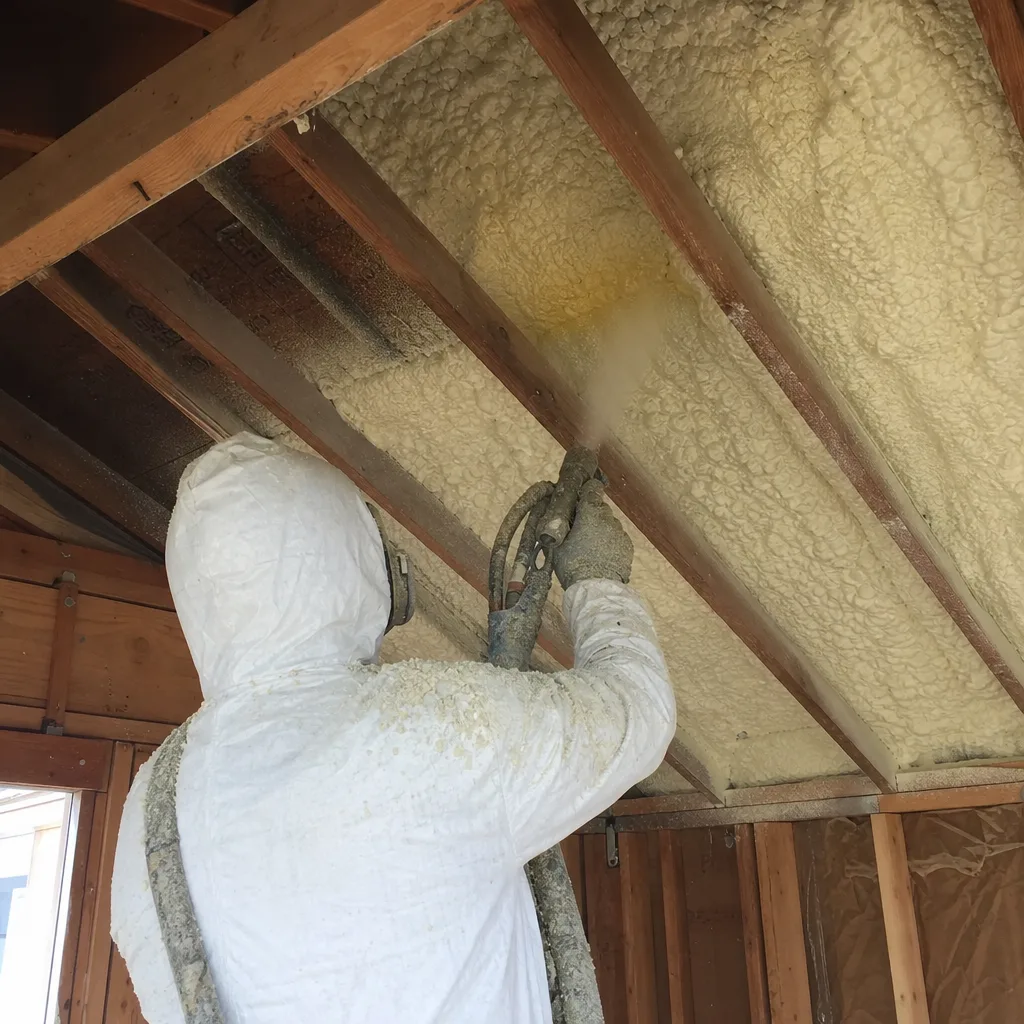
Spray Foam Attic Insulation in Lakewood typically means spraying closed-cell foam directly onto the underside of the roof deck, which is the approach we recommend for most 1950s tract homes in the 90711, 90712, 90713, and 90714 ZIP codes. These attics have diagonal roof framing, shallow clearance, and no ridge vent, so the goal is to create an air seal and a vapor barrier in one pass. In Lakewood’s climate, with 90°F summer afternoons and cool marine-layer nights, that air seal matters more than anything else. Closed-cell foam on a Lakewood attic roof deck usually runs $2,400 to $5,400 depending on square footage and access. Most jobs finish in one day.
Roof Deck Sealing for Radiant Heat
Lakewood sits far enough inland to catch real summer heat, and the sun pounds those low-pitch asphalt shingle roofs all afternoon. Without insulation, that heat radiates straight down into the living space. Spraying closed-cell foam along the roofline stops radiant heat at the source, keeping the attic cooler and the house more stable. We often see 15 to 25 degree attic temperature drops on Lakewood ranches after a roof deck spray.
Shallow Attic Access Solutions
Original Lakewood attics have tight clearances and diagonal framing that makes batts impractical and blown-in insulation hard to place evenly. Spray foam reaches into the irregular cavities these roofs create, including the awkward corners where a room addition meets the original framing. When a garage conversion leaves a disjointed attic envelope, foam is usually the only material that seals it properly.
Spray Foam Wall Insulation in Lakewood
Spray Foam Wall Insulation in Lakewood most often happens during remodels, garage conversions, and room additions, when walls are already open and the original 2×4 cavities are exposed. Spraying closed-cell foam into those original Lakewood wall cavities usually costs $1,800 to $4,200 for a single-story ranch, depending on the number of exterior walls and whether we’re addressing a garage conversion or the original house. In original 1950s construction, the walls are typically empty; adding foam here changes both comfort and utility bills.
Garage Conversion Envelope Sealing
Lakewood has a lot of converted garages. The problem: garage attics and walls were never framed or sealed for living space. Spray foam lets us seal the irregular envelope these conversions create, addressing air leaks at the top plate, rim joist, and the seam where the garage roof meets the house roof. This work stops drafts that fiberglass or cellulose can’t touch in those odd-shaped cavities.
Wall Cavity Retrofit During Renovation
When a Lakewood homeowner opens a wall for a remodel, that’s the window to add insulation that was never there in the first place. Closed-cell foam in a 2×4 cavity gives you roughly R-20 to R-21 with an air seal, versus the R-13 you’d get from a batt. For a 70-year-old stucco-over-wood-frame house, that’s a meaningful difference in how the room feels year-round.
Trusted Brands We Service in Lakewood
We install Icynene and Demilec spray foam systems, two of the most respected names in open-cell and closed-cell foam. For Lakewood customers who want a sustainable alternative, we also offer GreenFiber recycled cellulose and CertainTeed fiberglass products. Carrying eight brands across four material categories means we’re not pushing whatever happens to be in the truck. We stock the foam kits, sealants, and accessory materials our Lakewood jobs require, which means faster turnaround and no waiting on a distributor shipment from across the county.
Common Spray Foam Insulation Problems We See in Lakewood Homes
- Salt-air corrosion on garage hardware. Lakewood’s marine layer delivers moisture and salt to exposed metal in garage attics, so hinges, springs, and fasteners corrode years faster than they do inland. Spray foam applied over already-corroded hardware hides the problem and locks in the damage. We inspect all exposed metal before spraying.
- Condensation staining on original roof sheathing. The shallow, unvented roof cavities in Lakewood’s original tracts trap heat and moisture against the sheathing. We regularly find heat-stained and water-stained plywood in attics that have never had insulation. Closed-cell foam creates the vapor barrier these houses were never built with.
- Foam over knob-and-tube-era wiring. Some of Lakewood’s oldest sections still have original knob-and-tube wiring in the attic. Encasing overheated wires in foam is a fire risk, not a fix. We identify this condition before spraying and recommend remediation first.
- Overly thick foam in tight roof cavities. Spraying closed-cell foam too thickly in a shallow Lakewood attic cavity can trap condensation against the sheathing. Getting the thickness right matters. Our crews are trained on Icynene and Demilec application specs for unvented coastal-inland climate zones like Lakewood’s.
Pricing for Spray Foam Insulation in Lakewood, CA
In Lakewood, closed-cell spray foam on an attic roof deck runs $2,400 to $5,400 for a typical 1,200 to 1,800 square foot ranch. Wall cavity spray foam during a remodel or garage conversion typically costs $1,800 to $4,200. Rim joist sealing, a targeted job we recommend for Lakewood pier-and-beam homes, usually comes in between $600 and $1,400. The variables are square footage, access difficulty, and whether existing insulation or damaged sheathing needs removal first. We give every Lakewood homeowner a written estimate before work starts. Call (877) 265-5712 for a free, no-pressure quote.
We Also Serve Cities Near Lakewood
Our crews work throughout the Lakewood area, including Signal Hill, Bellflower, Long Beach, and Paramount. If you’re in any of these nearby cities, we bring the same insulation-only expertise and the same Spray Foam Insulation approach. No job is too small, from a single rim joist sealing to a full attic spray.
Serving Lakewood, CA — Our Local Coverage Area
We’re based in the Lakewood area and know this community well. Use the map below to see our service coverage — if you’re nearby, we can almost certainly help.
FAQs About Spray Foam Insulation in Lakewood
Closed-cell spray foam creates both an air seal and a vapor barrier in one step, which matters because Lakewood’s original tract homes were built with neither. Blown-in insulation slows heat transfer but doesn’t stop air movement or moisture, so condensation can still form on the roof sheathing. Spray foam is the right choice for shallow, unvented attics with no existing vapor strategy. Call (877) 265-5712 to talk through your specific attic.
Salt air accelerates corrosion on garage door springs, hinges, tracks, and fasteners, and spray foam applied over corroded hardware locks in the damage. Before we spray any Lakewood garage attic, we inspect exposed metal and recommend replacement with galvanized or stainless components where needed. This corrosion issue is specific to homes closer to the coast, so it’s a standard part of our Lakewood pre-spray checklist.
No, we don’t spray foam over live knob-and-tube wiring. Encasing those old wires in foam prevents heat dissipation and creates a fire hazard. We identify the wiring type during the estimate, and if knob-and-tube is present, we’ll recommend electrical remediation before any foam goes in. Call us at (877) 265-5712 if you’re not sure what’s in your attic.
We recommend closed-cell foam for most Lakewood attics because it handles both radiant heat rejection and moisture control. The marine-layer mornings mean cool, damp air that can condense inside an unvented attic, and closed-cell foam’s vapor barrier addresses that directly. Open-cell foam has its uses in specific wall cavity applications, but for Lakewood roof decks, closed-cell is usually the smarter material. We carry Icynene and Demilec systems to match the right foam to the job.
Yes, condensation staining on original roof sheathing is one of the most common things we find in Lakewood attics. The shallow roof cavities trap warm, moist air against the plywood, and without a vapor barrier, that moisture condenses and stains the wood. Closed-cell spray foam creates the vapor barrier these houses were never built with, stopping the condensation cycle at the source. Call (877) 265-5712 for an attic inspection and a straight answer.
Why Lakewood’s 1950s Tract Homes Need a Different Approach
Lakewood is one of America’s first planned postwar subdivisions. The homes built around Lakewood Center and the Mayfair and Carson Park areas went up fast, in coordinated tracts, with 2×4 construction, low-pitch roofs, and no attic insulation. Southern California’s mild climate meant builders didn’t think insulation was necessary. Seven decades later, that decision shows up in every July electric bill.
On a 1954 ranch near Mayfair Park, our crew found the garage-door springs and hinges heavily corroded from years of marine-layer salt air, while the attic had zero insulation and heat-stained sheathing. We sprayed closed-cell foam along the roof deck and gable walls to seal the envelope, then replaced the garage hardware with galvanized springs and stainless hinges to stop the corrosion cycle. The homeowner reported the garage felt drier and the house stayed cooler in the 90°F afternoons. That job is the template for what we do across Lakewood: solve the house as a system, not just spray foam and leave.
What makes Lakewood work different from, say, Bellflower or Long Beach is the scale of the problem. Blocks of identical floor plans means when we solve one house, we understand the whole street. The shallow attic clearance, the diagonal roof framing, the lack of ridge venting, the original sheathing showing heat and moisture damage: these are patterns we see over and over in the 90711 through 90714 ZIP codes. That repetition means faster diagnostics, accurate estimates, and fewer surprises on install day.
Get Your Lakewood Spray Foam Insulation Estimate
If you’re tired of a hot house, high summer bills, or an attic that feels like an oven, we’ll give you a clear recommendation based on what your Lakewood home actually needs. Whether it’s a full roof deck spray, rim joist sealing, or wall cavity work during a remodel, we’ll tell you the honest cost and the right material. Call North Tustin Insulation at (877) 265-5712 for a free estimate. Allen Decker leads every project, and the recommendation is always driven by your house, not by what’s convenient to sell.
Written by Allen Decker, Owner at North Tustin Insulation, serving Lakewood and the surrounding communities.