Fast, Reliable Spray Foam Insulation Across Lynwood
Spray foam insulation in Lynwood typically costs $2.50 to $6.50 per board foot installed, and most attic retrofit jobs in this city run between $3,800 and $9,400 total. We’re in and out of Lynwood regularly, and we know what your mid-century tract home is dealing with: low-pitch attics that cook in the summer, original walls with little to nothing in them, and framing that was never designed for modern insulation. The payoff is real here. Sealing an attic with open-cell spray foam usually cuts indoor temperature swings noticeably, especially in July and August when attic temps climb past 140°F. Call (877) 265-5712 and we’ll come measure, look at your attic access, and give you a straight number.
Why North Tustin Insulation Is Lynwood’s Preferred Spray Foam Insulation Company
We’re an insulation-only contractor. That matters in Lynwood because most of what we fix here is the result of a previous job done by someone who treated insulation as an afterthought. Every estimate, every crew member, and every material decision we make is focused on one trade. Allen Decker runs the team, and he’s built the company around carrying eight insulation brands across four material categories: fiberglass, mineral wool, cellulose, and spray foam. That portfolio includes Icynene and Demilec for spray foam work. Lynwood homeowners don’t get pushed toward whatever brand happens to be in the truck. They get a recommendation based on what their attic actually needs.
We carry Owens Corning, Demilec, and Johns Manville products specifically because we see how differently they perform in Southern California’s semi-arid climate. For spray foam work in Lynwood, we spec open-cell foam more often than closed-cell because the real enemy here is radiant heat, not freezing temperatures. Open-cell foam is better suited to managing that heat load and it’s more forgiving on older roof sheathing that’s been baking for 60 years.
Open Cell Spray Foam in Lynwood
Open Cell Spray Foam is the most common spray foam we install in Lynwood, and there’s a practical reason for that. Your low-pitch attic doesn’t need the vapor-barrier properties of closed-cell foam, because Lynwood has no real freezing season. What it needs is an air seal and a thermal break that stops radiant heat from the roof deck from pouring into the attic cavity. Open-cell foam does that at roughly 60% of the cost of closed-cell.
Radiant Heat Control In Low-Pitch Attics
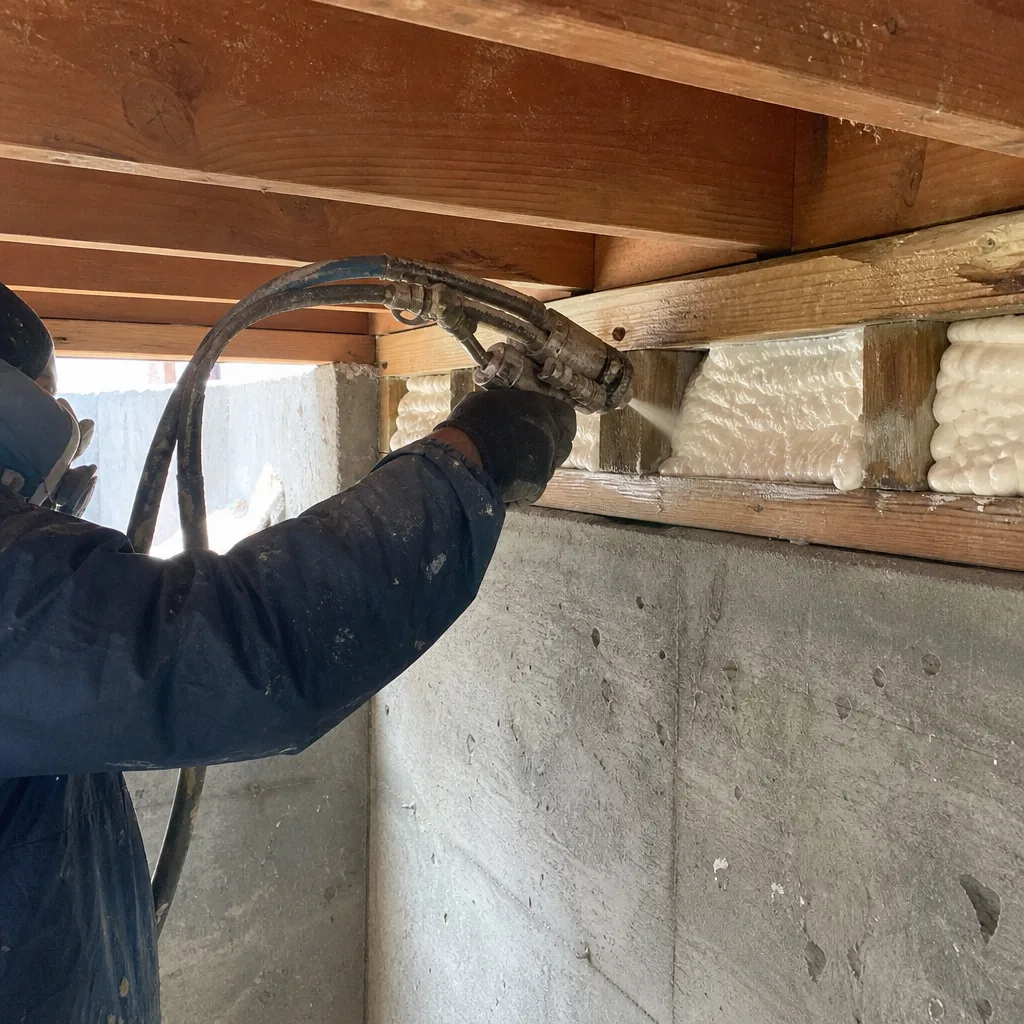
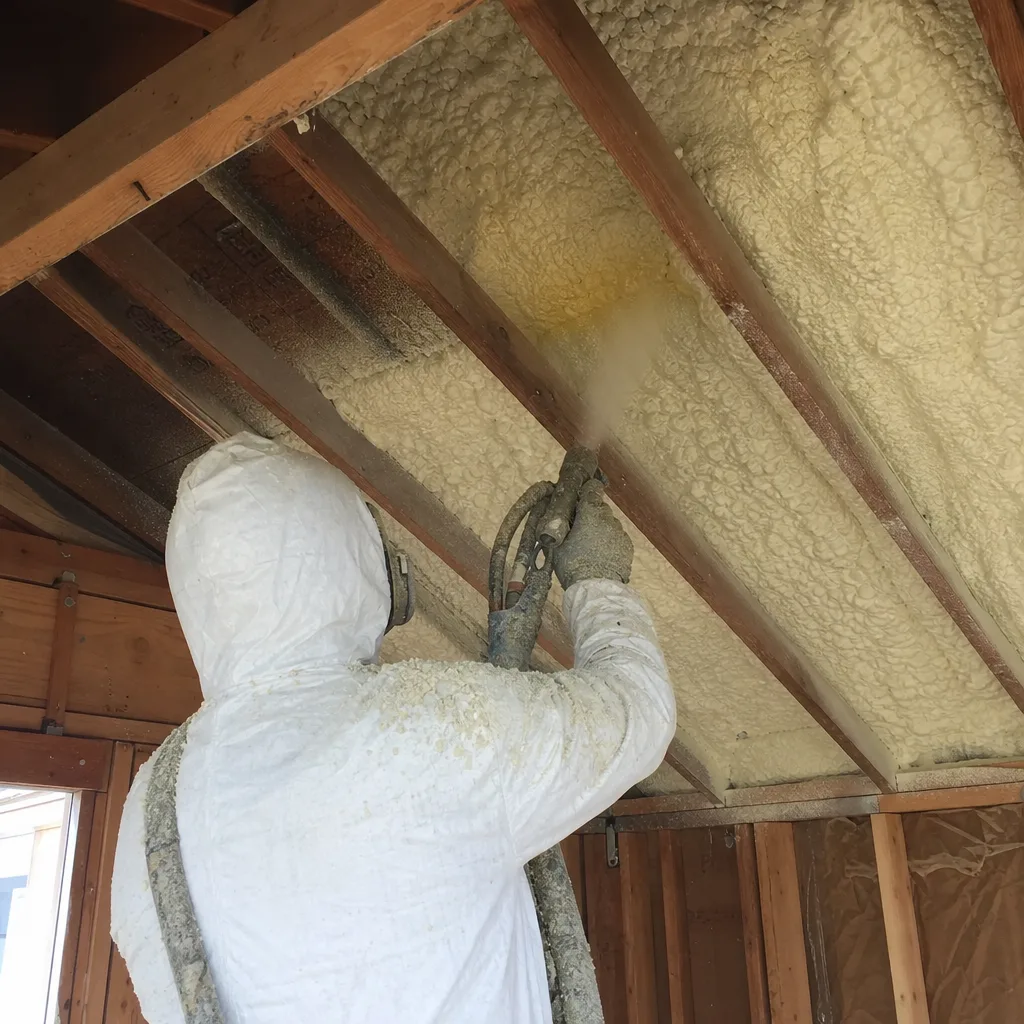
Lynwood’s summer sun hits composition-shingle roofs hard. By mid-afternoon, an uninsulated attic can sit at 140°F to 155°F and leak that heat into the living space for hours after sunset. Open-cell foam applied to the underside of the roof deck stops that transfer at the source. It also seals the gaps where hot air pushes through around vent pipes, electrical penetrations, and the ceiling below.
Knob-And-Tube Wiring Considerations
Many Lynwood homes still have original knob-and-tube wiring in the attic. Spraying foam directly onto active knob-and-tube creates a fire hazard because the foam traps heat that should dissipate into open air. We assess this before we quote. If the wiring is active, we work around it and leave the necessary air gap, or we recommend the electrical work get done first.
Spray Foam Insulation Contractors in Lynwood
Spray Foam Insulation Contractors in Lynwood don’t all take the same approach, and the difference shows up when it’s already too late. A rushed job in a shallow attic with poor access will leave uneven coverage, missed spots behind wiring, and foam that fails to adhere. We work slowly through the tight spots because we know what a proper bond looks like and what a sagging pass looks like.
Attic Access In Tract Homes
Lynwood’s 1940s and 1950s tract homes have attic hatches that are often barely 22 inches wide, tucked into a hallway closet or a bedroom ceiling. Our crew works on their backs and knees to get foam coverage across the entire roof deck. That’s not a shortcut opportunity. It’s why we send experienced applicators who’ve done this specific kind of low-clearance work many times.
Bath Exhaust Vents
A lot of original Lynwood bath exhaust fans vent straight into the attic instead of through the roof. Spray foam over those vents traps moisture against the roof sheathing, and within a couple of years you’re looking at rot and mold. We seal around vent terminations, cap or reroute the vent if it’s dumping directly into the attic space, and then apply foam. It’s an extra step most contractors skip. We don’t.
We carry both Icynene and Demilec spray foam systems, and our applicators are trained on both. Closed-cell foam runs higher per board foot but adds structural rigidity and a vapor barrier; open-cell is the better value for most Lynwood retrofit work. Either way, you get a material matched to your house, not a one-brand pitch.
Trusted Brands We Service in Lynwood
We’re set up to install and service spray foam from Demilec, Icynene, and the full Johns Manville line, plus fiberglass and mineral wool options from Owens Corning. That’s the point of carrying eight brands: when we look at your attic, we pick what works, not what we happen to stock that week. For Lynwood customers, we keep inventory of the open-cell foam most commonly spec’d for low-pitch attic retrofits, so we don’t have to pause a job waiting on a delivery from a warehouse across the county. If you’re comparing quotes, ask the other guy which specific foam they’re installing. Then ask us.
Common Spray Foam Insulation Problems We See in Lynwood Homes
- Foam over active knob-and-tube wiring. A previous contractor sprays directly over original wiring, trapping heat against the conductors. This is a genuine fire risk in Lynwood’s older housing stock, and it’s the first thing we check when we’re called in to evaluate a bad install.
- Foam trapping bath exhaust moisture. Older Lynwood homes vent bathroom fans straight into the attic. Once foam is sprayed over the vent termination, humidity collects against the roof deck and framing rots. We find this constantly in 1950s tract homes.
- Uneven passes in shallow attics. In attics where you can’t stand up, contractors rush and leave thin spots or bare patches along the eaves. The foam fails at the edges, which is exactly where heat transfer is worst. Proper coverage takes time and patience.
- Separation from the roof deck. Foam applied too thick in one pass, or applied to a dusty roof deck in a hot attic, will delaminate within weeks. On a 60-year-old low-pitch roof, that means the entire investment is wasted.
Pricing for Spray Foam Insulation in Lynwood, CA
Open-cell spray foam in Lynwood runs $2.50 to $4.25 per board foot installed, depending on the depth of coverage and access conditions. Closed-cell runs $4.00 to $6.50 per board foot. For a typical 1,000-square-foot attic retrofit in a Lynwood tract home, the final bill usually lands between $3,800 and $9,400. Small targeted jobs, like sealing a rim joist or a garage ceiling, run $1,200 to $2,500. What moves the number is access difficulty, whether knob-and-tube wiring requires careful working, and whether bath vents need rerouting. We give free estimates, and the number we quote is the number you pay. Call (877) 265-5712 to schedule a walkthrough.
We Also Serve Cities Near Lynwood
Our crew regularly works in South Gate, East Rancho Dominguez, Willowbrook, and Paramount, and we’re familiar with the same mid-century housing patterns you have in Lynwood. The Spray Foam Insulation work we do across this part of South LA means we can schedule Lynwood jobs quickly, often within a few days of the estimate. If you’re in a neighboring city and comparing contractors, ask us how our sprayed approach holds up in these older tract attics.
Serving Lynwood, CA — Our Local Coverage Area
We’re based in the Lynwood area and know this community well. Use the map below to see our service coverage — if you’re nearby, we can almost certainly help.
FAQs About Spray Foam Insulation in Lynwood
Spray foam should not be applied directly over active knob-and-tube wiring because the foam traps heat and creates a fire hazard. We evaluate every Lynwood attic for this before quoting, and when we find active knob-and-tube we either work around it with proper clearance or recommend the electrical service be done first. Call (877) 265-5712 for an inspection if you suspect your attic still has original wiring.
We check every exhaust vent termination before foam is applied. If a bathroom fan is dumping moist air into the attic, we reroute or cap it and seal the penetration properly first. Spraying foam over an active moisture-dumping vent guarantees trapped condensation, rot, and mold, so this step is non-negotiable.
Open-cell spray foam is usually the better fit for Lynwood’s low-pitch vented attics because the real problem here is radiant heat in summer, not winter cold. Open-cell foam seals air leaks and slows heat transfer without the vapor-barrier properties that can trap moisture in an old roof assembly. Closed-cell is appropriate when you need structural strength or a true vapor barrier.
Yes. Spray foam applied to the underside of the roof deck stops the radiant heat that builds up on a composition-shingle roof from radiating into the attic air and then through the ceiling. In Lynwood’s warm semi-arid climate, an uninsulated attic can hold 140°F heat well into the evening, and open-cell foam is the most effective way we’ve found to break that cycle.
A standard full-attic open-cell spray foam retrofit in a Lynwood single-story tract home takes one to two working days. Low attic clearance, narrow access hatches, and careful work around existing wiring and vents can add time, but we’d rather go slower and get full, even coverage than rush the job.
If your attic is cooking your house every summer, let us measure it and tell you honestly what spray foam will and won’t do. Call North Tustin Insulation at (877) 265-5712 for a free estimate in Lynwood. We’ll give you a straight answer and a straight number.
Written by Allen Decker, Owner at North Tustin Insulation, serving Lynwood and the surrounding South LA communities.