Fast, Reliable Spray Foam Insulation Across Mead Valley
If you live in Mead Valley, you already know what July does to your attic. Most homes in the 92570 ZIP were built between the 1970s and 1990s, which means under-insulated attics, compressed fiberglass, and cooling bills that climb every summer. Spray foam insulation in Mead Valley, CA is most often installed as a flash coat over existing batts, sealing the ceiling plane against 140-degree attic air rather than filling every cavity. That’s the approach we take at North Tustin Insulation, and it’s the reason homeowners here call us instead of a generalist contractor. For an honest assessment and a free estimate, call (877) 265-5712.
Why North Tustin Insulation Is Mead Valley’s Preferred Spray Foam Insulation Company
We’re an insulation-only contractor, which means every estimate we give in Mead Valley is about one trade. No roofing upsell, no HVAC detour. Allen Decker runs the business with a straightforward rule: match the material to the house, not the other way around. For Mead Valley’s older ranch homes and manufactured homes, that usually means open-cell spray foam over legacy fiberglass with the top plates sealed, not a full-cavity fill that costs more without earning its keep. Our crews know the difference because they work in 92570 regularly.
When you call us about Spray Foam Insulation, you’ll talk to someone who can actually explain why Demilec open-cell behaves differently than Icynene in a 100-degree attic, and why that matters for your house. We don’t do vague. We do specifics, then we schedule the work. Homeowners across Mead Valley have told us the same thing: the estimate came with real numbers, real brand names, and a plan that addressed their actual problem.
Open Cell Spray Foam in Mead Valley
Open Cell Spray Foam in Mead Valley is the workhorse retrofit for 1970s and 1980s ranch homes where the original fiberglass has sagged, compressed, or turned black from years of attic air moving through it. The foam’s job here isn’t maximum R-value per inch. It’s air sealing. When we spray a flash coat over the existing batts and seal the top plates, can lights, and wiring penetrations, we stop the superheated attic air from pushing into the living space. That’s what actually lowers your cooling load in a Mead Valley summer.
Flash Coat Over Legacy Fiberglass
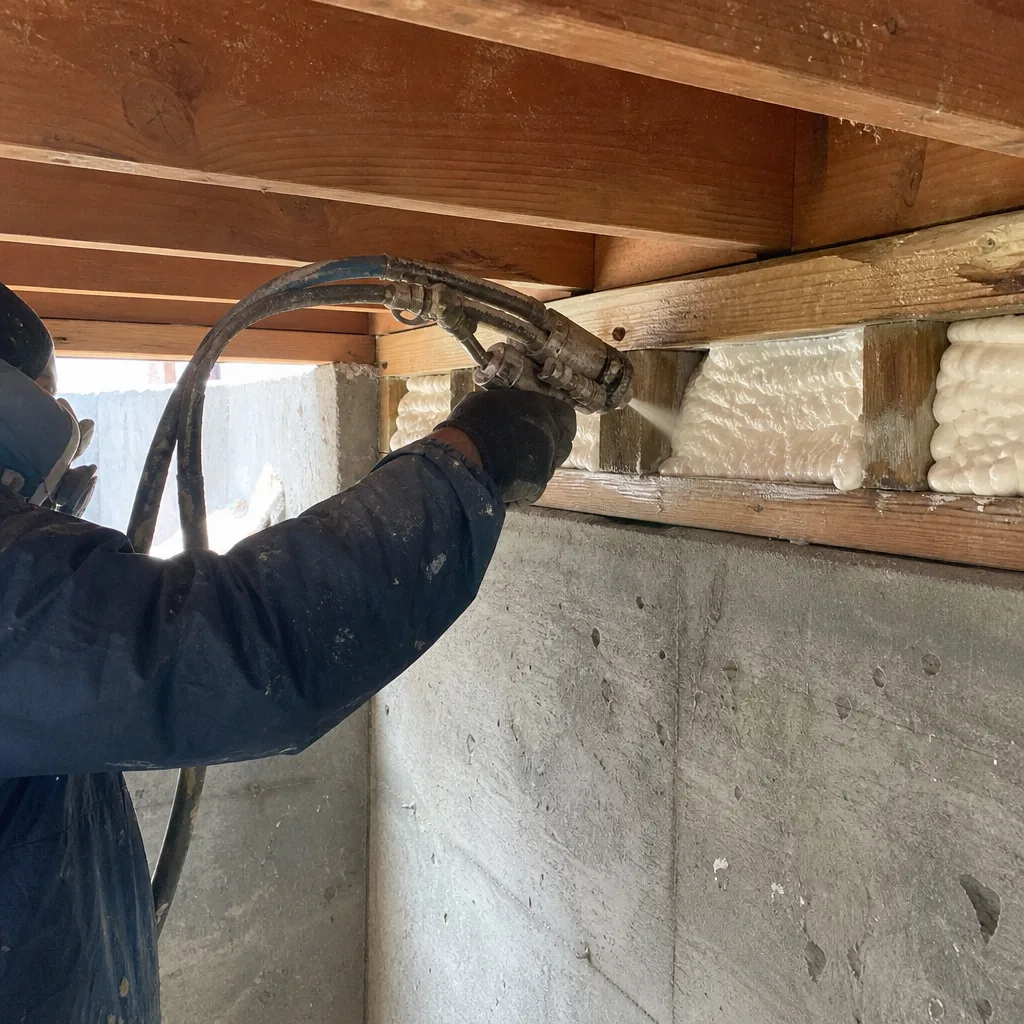
A flash coat is typically one to two inches of open-cell foam sprayed directly over existing batts in the attic floor. The batts keep doing the thermal work. The foam kills the air movement. This is faster and less expensive than tearing out old insulation, and it works especially well in the single-story ranch houses that dominate 92570.
Sealing the Ceiling Plane
Before any foam leaves the gun, we seal top plates, can light housings, and any chase or penetration that lets attic air into the conditioned space. If you skip this step in a Mead Valley attic, you’re paying for foam that can’t do its job. We won’t skip it.
Spray Foam Insulation Contractors in Mead Valley
Spray Foam Insulation Contractors in Mead Valley aren’t all the same, and the difference shows up quickly in the details. Our team here focuses on retrofit work in older homes, which means we know what a 1983 manufactured home roof cavity looks like when it’s been baking under 100-degree heat for thirty years. We carry both Icynene and Demilec open-cell systems because we want the right foam for the specific attic, not a single brand we push on everyone.
Attic Heat and Foam Application
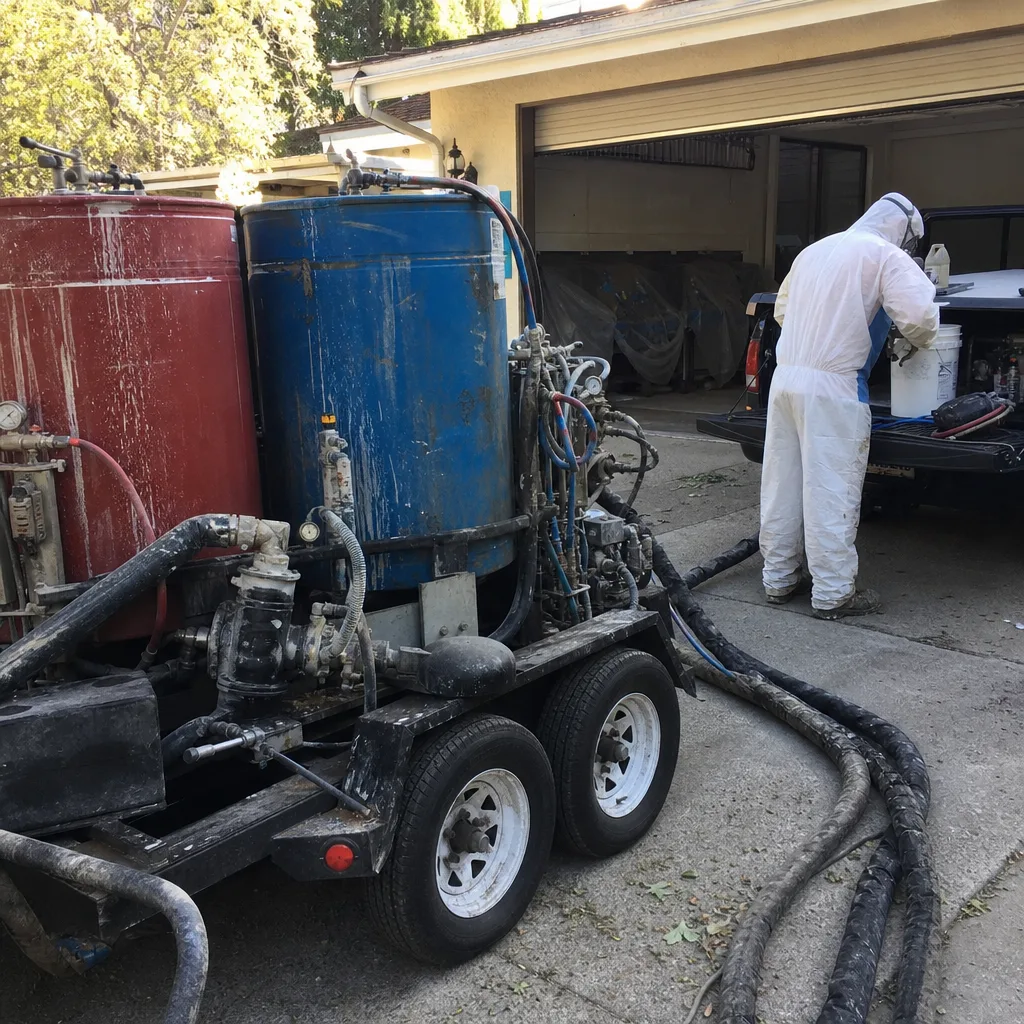
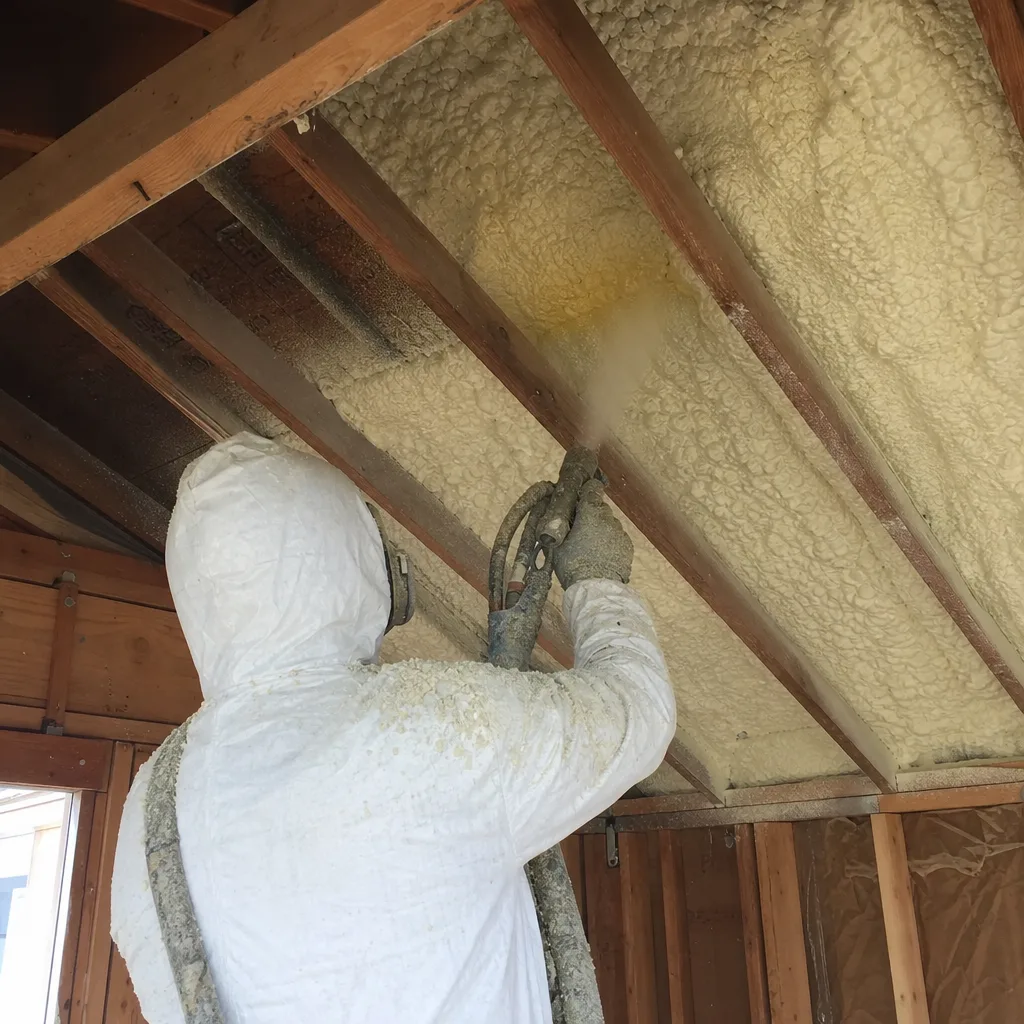
Mead Valley summers regularly push attic temperatures to 140 or 150 degrees. Foam applied in that environment needs to be installed correctly the first time. Under-applied or rushed foam can shrink, pull away from rafters, and fail. We schedule Mead Valley work early in the day when possible and never rush a roof deck. The foam’s adhesion depends on it.
Manufactured and Mobile Home Roof Cavities
Manufactured homes in 92570 often have thin roof insulation and a belly that’s barely insulated at all. Foam in the roof cavity helps, but only if the vapor path and belly are addressed at the same time. Otherwise you trap moisture and create a new problem. We look at the whole envelope before we recommend anything.
Trusted Brands We Service in Mead Valley
We’re authorized to install Owens Corning and CertainTeed fiberglass products, and we carry Demilec and Icynene spray foam systems for open-cell retrofit work. For homeowners in Mead Valley who want a non-foam option, we also install GreenFiber cellulose and Johns Manville fiberglass. That’s eight nationally recognized brands across four insulation categories. One contractor. No brand-first sales pitch. When you call about spray foam insulation in Mead Valley, we’ll recommend the material that actually fits your roof deck, your budget, and your summer cooling load.
Common Spray Foam Insulation Problems We See in Mead Valley Homes
- Foam sprayed over compressed fiberglass without sealing top plates first. The batts are already half their original thickness in many Mead Valley attics. Foam over the top without sealing the framing just hides the problem. The 140-degree attic air still migrates through, and the foam never earns its full thermal benefit.
- Manufactured home roof cavities with the belly left unaddressed. Crews foam the roof but forget the underside of the floor. Moisture gets trapped, and six months later the homeowner has condensation problems. We see this in 92570 manufactured homes regularly.
- Foam applied during extreme summer heat. Open-cell foam needs the right substrate temperature to cure properly. In a 150-degree Mead Valley attic, rushed application can cause shrinkage, off-gassing, and adhesion failures along the rafters. We plan around the heat, not through it.
- Can lights and wiring penetrations left unsealed. In older ranch homes, these are highways for attic air. Foam around the lights without sealing the fixture properly creates fire-risk confusion and air leaks that persist. We seal first, foam second.
Pricing for Spray Foam Insulation in Mead Valley, CA
A flash coat of open-cell spray foam over existing attic insulation in Mead Valley typically runs $2,800 to $4,600 for a 1,200 to 1,800 square foot ranch home. Full cavity fill on a roof deck costs more, usually $6,000 to $9,500 depending on access and roof pitch. Rim joist sealing in a manufactured home runs $900 to $1,800. Garage ceiling spray foam starts around $1,500. Every estimate is free and itemized, and we’ll tell you if the project doesn’t need what you thought it needed. Call (877) 265-5712 for exact numbers on your home.
We Also Serve Cities Near Mead Valley
North Tustin Insulation serves Mead Valley and the surrounding communities, including Perris, Good Hope, Canyon Lake, and Meadowbrook. If you’re just outside 92570 and need Spray Foam Insulation work, we can typically schedule you within the same week. We know this stretch of Riverside County well, from the older ranch subdivisions to the rural parcels off the main roads.
Serving Mead Valley, CA — Our Local Coverage Area
We’re based in the Mead Valley area and offer Reflectix service in Mead Valley, and know this community well. Use the map below to see our service coverage — if you’re nearby, we can almost certainly help.
FAQs About Spray Foam Insulation in Mead Valley
Yes, and that’s exactly what we recommend for most 1970s and 1980s ranch homes in Mead Valley. The old batts, even compressed, still hold real R-value. A flash coat of open-cell foam over them seals the air leaks that are actually driving your summer cooling bills. You get the thermal mass of the existing insulation plus the air-sealing benefit of the foam without the cost of a full tear-out. Call (877) 265-5712 and we’ll assess your attic floor.
Spray foam on the roof cavity helps, but it won’t fix the belly on its own. The floor system of a manufactured home needs its own treatment, usually a sealed belly board with insulation installed from below. If you foam the roof and ignore the belly, you’ll trap moisture in the floor cavity. We evaluate both ends of the envelope before recommending a scope for any manufactured home in Mead Valley.
Shrinkage and adhesion failure in Mead Valley almost always trace back to application temperature. Open-cell foam needs a stable substrate. When it’s sprayed in a 140-degree attic with rafters that are even hotter, the chemical reaction can be uneven and the foam pulls away as it cures. We schedule attic work around the heat and use foam systems designed for high-temperature applications. A failed pass is easy to spot, and we don’t let it leave our truck.
It depends on what’s already in your attic. In most Mead Valley ranch homes, the better sequence is blown-in insulation top-off first, then a spray foam flash coat if air sealing is still needed. If the existing blown-in material is clean and uncompressed, foam may not be necessary at all. We’ll inspect and tell you straight, because the goal is a tighter ceiling plane, not selling foam for its own sake.
You absolutely do, and this is the step most generalist crews skip. Top plates and can light housings are the primary air leakage points in a 1970s Mead Valley attic. If you spray foam without sealing them first, you’ve spent money on foam that’s now locked in place while superheated air still moves through the framing. We seal first, then foam, then verify with a blower-door check before leaving. Call (877) 265-5712 for a free estimate and we’ll walk your attic with you.
Written by Allen Decker, Owner at North Tustin Insulation, serving Mead Valley and surrounding Riverside County communities.