
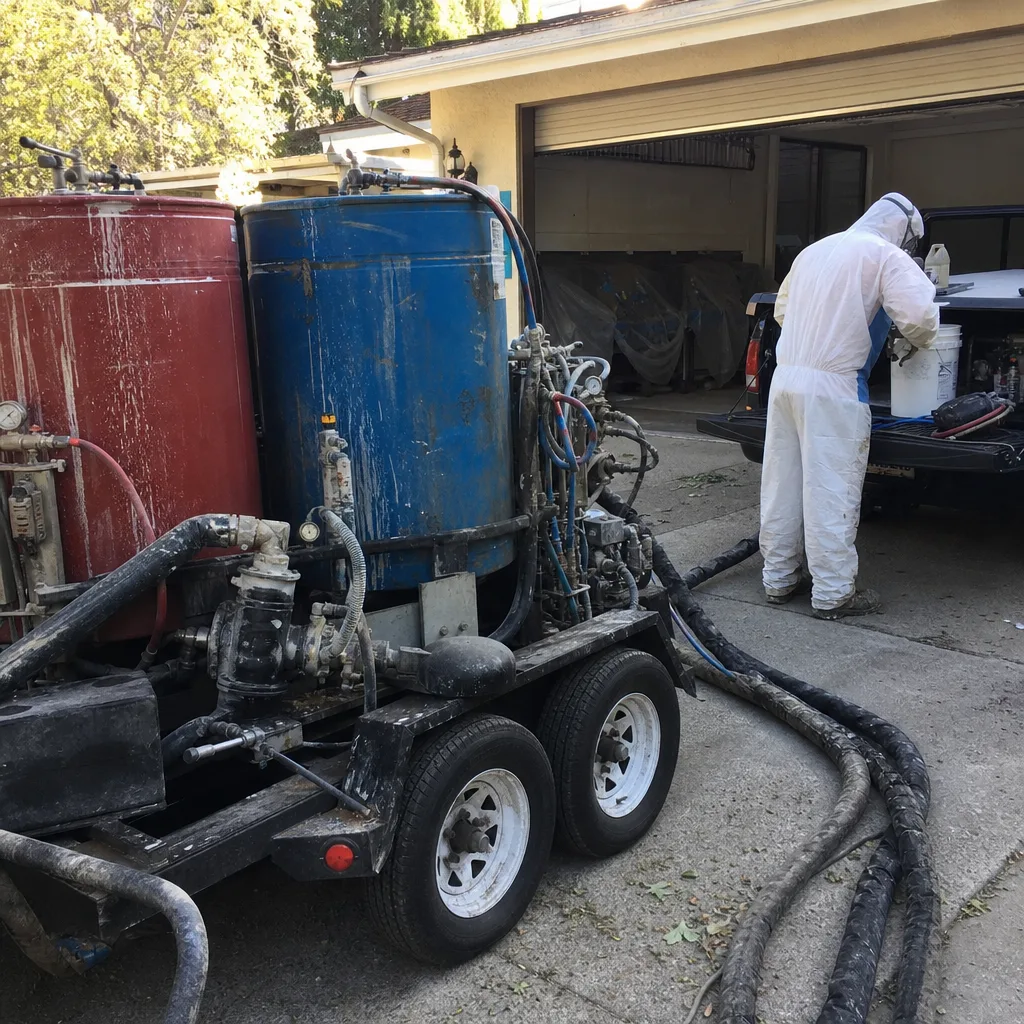
Fast, Reliable Spray Foam Insulation Across Monrovia
Spray foam insulation in Monrovia typically runs $2.80 to $6.90 per board foot installed, and most attic or rim joist projects are completed in a single day. We work throughout 91016 and 91017, from the flats below Foothill Boulevard up to the hillside streets near Monrovia Canyon Park. If you’re dealing with an overheated upstairs, rooms that never hold temperature, or an attic that bakes in the San Gabriel foothill sun, call our Spray Foam Insulation team at (877) 265-5712 for a free estimate. Allen Decker started North Tustin Insulation with one goal: recommend the material that actually fixes the problem, not the one easiest to install.
Why North Tustin Insulation Is Monrovia’s Preferred Spray Foam Insulation Company
We’re an insulation-only contractor, which means every estimate we write and every crew we send to Monrovia is focused on one trade. No roofing add-ons. No general remodeling detours. Just insulation, day in and day out. That focus shows in the material choices we bring to the table: we carry open-cell and closed-cell systems from Icynene and Demilec, two of the most recognized spray foam names in the industry. When a Monrovia homeowner calls with a drafty Craftsman attic or a garage that heats up like a kiln, we can recommend exactly which foam chemistry fits the job, because we install both.
Local knowledge counts for more here than in flatter parts of the San Gabriel Valley. Monrovia’s older housing stock brings real complications: low-clearance attics, settled cellulose, and knob-and-tube wiring in pre-1950 bungalows. We see those conditions weekly. Our crews know where the soffit vents get blocked on a 1920s bungalow off North Canyon Boulevard and how to handle a post-WWII tract home with minimal rafter depth. That’s the difference between a foam job that performs and one that causes condensation or moisture problems six months later. We’d rather do it right the first time than be called back to fix a shortcut.
We’re not the cheapest bid in Monrovia, and we’re fine with that. We carry eight insulation brands across fiberglass, mineral wool, cellulose, and spray foam because no single material solves every home’s problem. The recommendation should come from what the house needs, not what we have leftover in the truck. That’s the whole point of working with a multi-method specialist.
Closed Cell Spray Foam Insulation in Monrovia
Closed Cell Spray Foam Insulation is the right call for many Monrovia homes because it delivers the highest R-value per inch of any insulation we install, roughly R-6.5 to R-7 per inch, while also acting as an air and moisture barrier. In the hillside neighborhoods north of Foothill Boulevard, where attic space is tight and rafter bays are shallow, closed cell lets you hit code-level R-values without losing headroom. A typical closed cell attic or rim joist job in Monrovia runs $3.50 to $6.90 per board foot installed, depending on depth and access.
Rim Joist Sealing in Foothill Homes
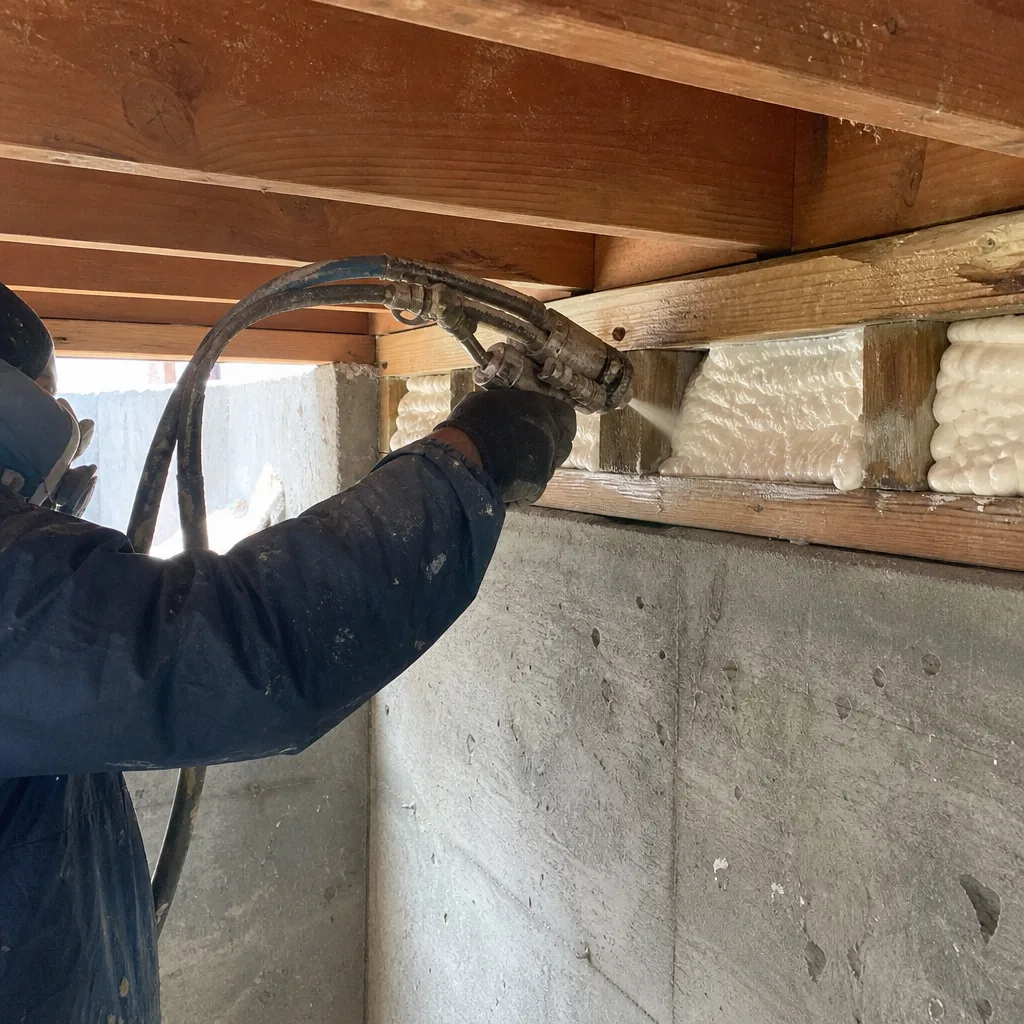
The rim joist is the band around the top of your foundation, and in Monrovia’s older homes it’s usually uninsulated. Closed cell foam seals that band completely, stopping air infiltration, dust, and the occasional rodent entry point. We inject it into every accessible bay along the crawl space or basement perimeter. This is one of the highest-ROI insulation upgrades you can do in a 91016 home.
Garage Ceiling and Adjoining Walls
Monrovia’s foothill sun turns attached garages into heat sinks that radiate into living space. Closed cell foam on the garage ceiling and the shared wall with the house makes a measurable difference. But here’s the local detail that matters: if you have older garage-door hardware with surface rust, we check the air seal around adjacent framing before spraying. Improperly sealed foam near a corroding door jamb can trap moisture and accelerate the rust. We address the air path first, then apply the foam.
Open Cell Spray Foam in Monrovia
Open Cell Spray Foam is the workhorse for attics and interior walls throughout Monrovia, especially in the 91017 hillside neighborhoods where standard fiberglass batts fight heat all summer. It expands to roughly 100 times its liquid volume, filling odd-shaped cavities and sealing air channels that settled cellulose leaves behind. Open cell runs $2.80 to $4.90 per board foot in Monrovia, which often makes it the more economical choice for large attic applications where depth isn’t constrained.
Filling Settled Cellulose Gaps
Here’s the specific Monrovia issue we address with open cell. North of Foothill Boulevard, many attics were insulated decades ago with blown cellulose that has since settled, leaving bare spots and pathways for air to bypass the insulation. On a 1920s Craftsman bungalow off North Canyon Boulevard, our crew found settled cellulose blocking the soffit vents; we installed closed-cell spray foam in the rafter bays and added baffles to restore airflow. The homeowner reported a 15°F drop in attic temperature during a 98°F July afternoon. That’s the kind of outcome spray foam in Monrovia should deliver.
Hillside Attics with Limited Clearance
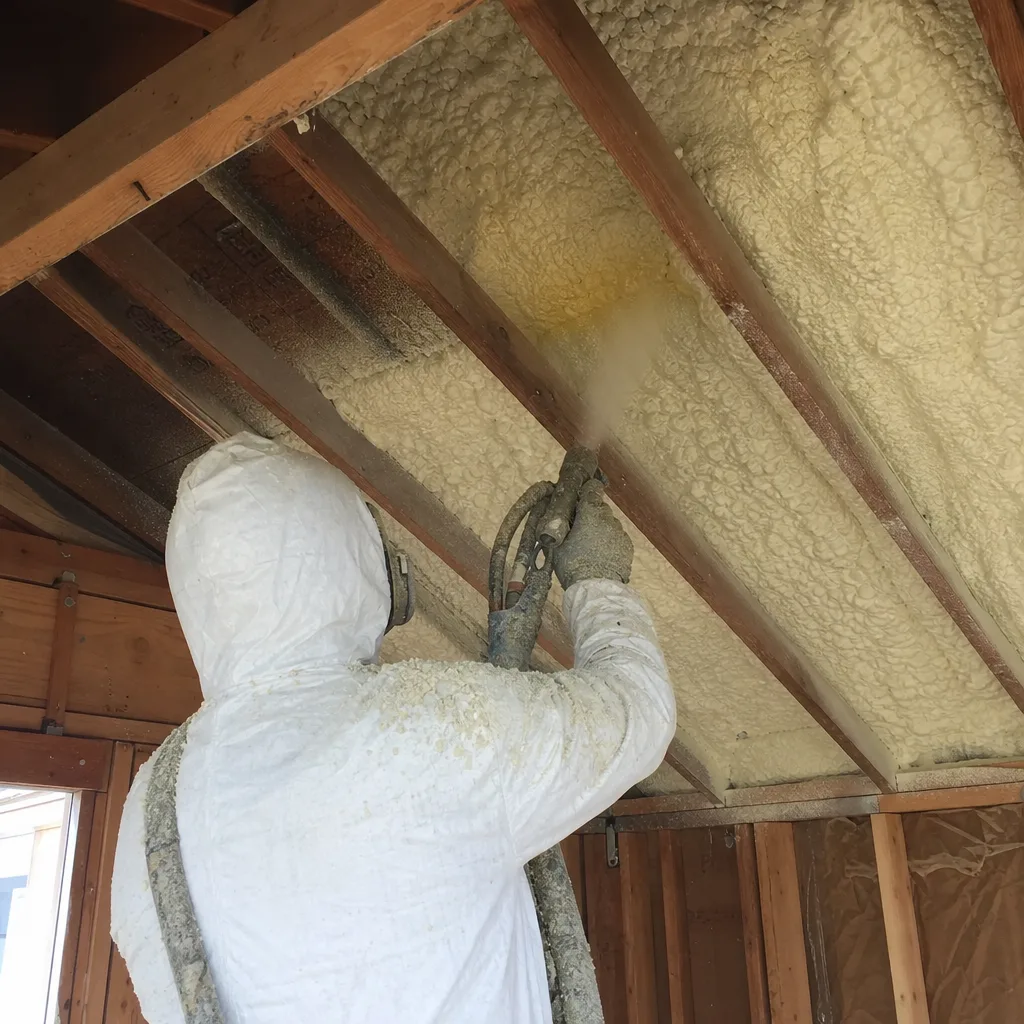
Homes in the hillside neighborhoods often have attics with only 18 to 30 inches of clearance at the peak. Open cell foam applied directly to the roof deck turns that cramped attic into semi-conditioned space, keeping it within a few degrees of the living area below. No need to pile loose fill three feet deep. The foam does the work in a fraction of the depth.
Trusted Brands We Service in Monrovia
We install Icynene and Demilec spray foam systems across Monrovia, and we pair them with complementary materials like Owens Corning fiberglass when the project calls for a hybrid approach. Carrying both major open-cell and closed-cell product lines means we’re not pushing one chemistry on every house. We know how Icynene’s open cell handles the wide temperature swings typical of the San Gabriel foothills, and we know where Demilec’s closed cell is the smarter spend. For Monrovia homeowners who prefer sustainable options, we also install GreenFiber recycled cellulose when spray foam isn’t the right fit. Material honesty beats a one-brand pitch every time.
Common Spray Foam Insulation Problems We See in Monrovia Homes
- Settled cellulose with blocked soffit vents. Pre-1980s hillside homes often have old cellulose that’s compacted and vents that were never baffled. We clear the channels and install baffles before any foam goes in, or the attic stays hot no matter what you spray.
- Moisture trapping around embedded fasteners. Monrovia’s proximity to ocean-influenced air, even this far inland, pushes humid air into unsealed wall cavities. If spray foam is applied without addressing air paths first, moisture can condense around nails and screws and rust them from the inside. We check and seal first.
- Knob-and-tube wiring conflicts in pre-1950 homes. Spray foam must never encapsulate active knob-and-tube wiring. It creates a fire hazard and can void your insurance. In Monrovia’s Craftsman bungalows, we coordinate with a licensed electrician to decommission or reroute old wiring before we spray.
- Uneven foam thickness from low-clearance attics. When installers rush a tight attic, they leave thin spots. Thin spots mean cold spots, and cold spots mean condensation. We inspect every rafter bay after application and document thickness. No guessing.
Pricing for Spray Foam Insulation in Monrovia, CA
Here are the numbers Monrovia homeowners ask about most. Open cell spray foam for a standard attic runs $2.80 to $4.90 per board foot. Closed cell runs $3.50 to $6.90 per board foot. A rim joist sealing job in a typical Monrovia crawl space lands between $1,700 and $3,200 total. Garage ceiling applications usually fall between $1,400 and $2,800. What changes the price? Depth of application, attic access, whether we need to remove old insulation first, and whether knob-and-tube wiring needs to be addressed. The estimate we write is the price you pay: no surprise line items mid-project. Call (877) 265-5712 and we’ll walk the job with you before we quote anything.
We Also Serve Cities Near Monrovia
Our crews work throughout the San Gabriel Valley. Beyond Spray Foam Insulation in Monrovia, we regularly complete projects in Mayflower Village, Duarte, Bradbury, and Arcadia. Same crews, same brands, same answer-first approach. If you’re right over the city line, you’re still in our service area.
Serving Monrovia, CA — Our Local Coverage Area
We’re based in the Monrovia area and know this community well. Use the map below to see our service coverage — if you’re nearby, we can almost certainly help.
FAQs About Spray Foam Insulation in Monrovia
Monrovia sits far enough inland that the salt air isn’t as aggressive as it is in Long Beach or Huntington Beach, but humid marine air still pushes up against the foothills at night, and that moisture works on any exposed metal. The real issue in garages isn’t the foam itself; it’s what happens when foam seals a wall that already has rusty hinges, springs, or track fasteners. If those metal components are already corroding, sealing the wall traps humidity and can speed up the rust. We check the air path and the existing hardware before we spray. That’s the difference between a 15-year fix and a follow-up call in year three. Call us for a garage assessment at (877) 265-5712.
Spray foam performs better than settled cellulose in those hillside attics because it seals the air channels that cellulose leaves behind, and it does it in a fraction of the depth. Older Monrovia homes north of Foothill often have attics with limited clearance and vents that got buried when the original cellulose settled. Foam applied to the roof deck turns that tight space into an air-sealed, insulated plane without requiring three feet of loose fill. It also stops the convective looping that happens when hot foothill air finds a path through settled insulation. If you’re in 91016 or 91017 and your upstairs won’t cool, call us for a free look.
No. Spray foam must never be applied directly over active knob-and-tube wiring. The foam encapsulates the wiring, prevents heat dissipation, and creates a code violation and a fire hazard. In Monrovia’s pre-1950 Craftsman bungalows, this is a common condition. The correct sequence is to have a licensed electrician decommission or reroute the old wiring first, then we apply the foam. We won’t cut that corner, and any contractor who says it’s fine should be asked to leave your house. We can coordinate the electrical work as part of your project scope.
Monrovia’s foothill climate swings 30°F or more between a hot afternoon and a cool night on a regular basis, especially during Santa Ana wind events. Spray foam, particularly closed cell, handles those swings well because it doesn’t sag, settle, or lose R-value as temperatures shift. It also blocks the radiant heat that pours through the roof deck during 95°F-plus summer days near the base of the San Gabriels. Properly applied foam keeps attic temperatures within a few degrees of the living space, which means your HVAC system isn’t fighting a 140°F attic every afternoon.
We install Icynene and Demilec spray foam systems. Both are industry leaders in open-cell and closed-cell chemistry, and we carry them because no single foam performs best in every situation. Icynene’s open cell is a strong all-around choice for attic roofs and interior walls. Demilec’s closed cell brings the density and moisture resistance needed for rim joists, garage ceilings, and any application where space is tight. We’ll tell you which one fits your house and why. Call (877) 265-5712 for an estimate, and we’ll walk you through the options in plain English.
If your Monrovia home has an attic that cooks in summer, a garage that never cools, or rooms that can’t hold temperature, Allen Decker and the North Tustin Insulation team can help. We carry both Icynene and Demilec spray foam, we service all of 91016 and 91017, and estimates are free. Call (877) 265-5712 to schedule a walkthrough.
Written by Allen Decker, Owner at North Tustin Insulation, serving Monrovia and the San Gabriel Valley.