
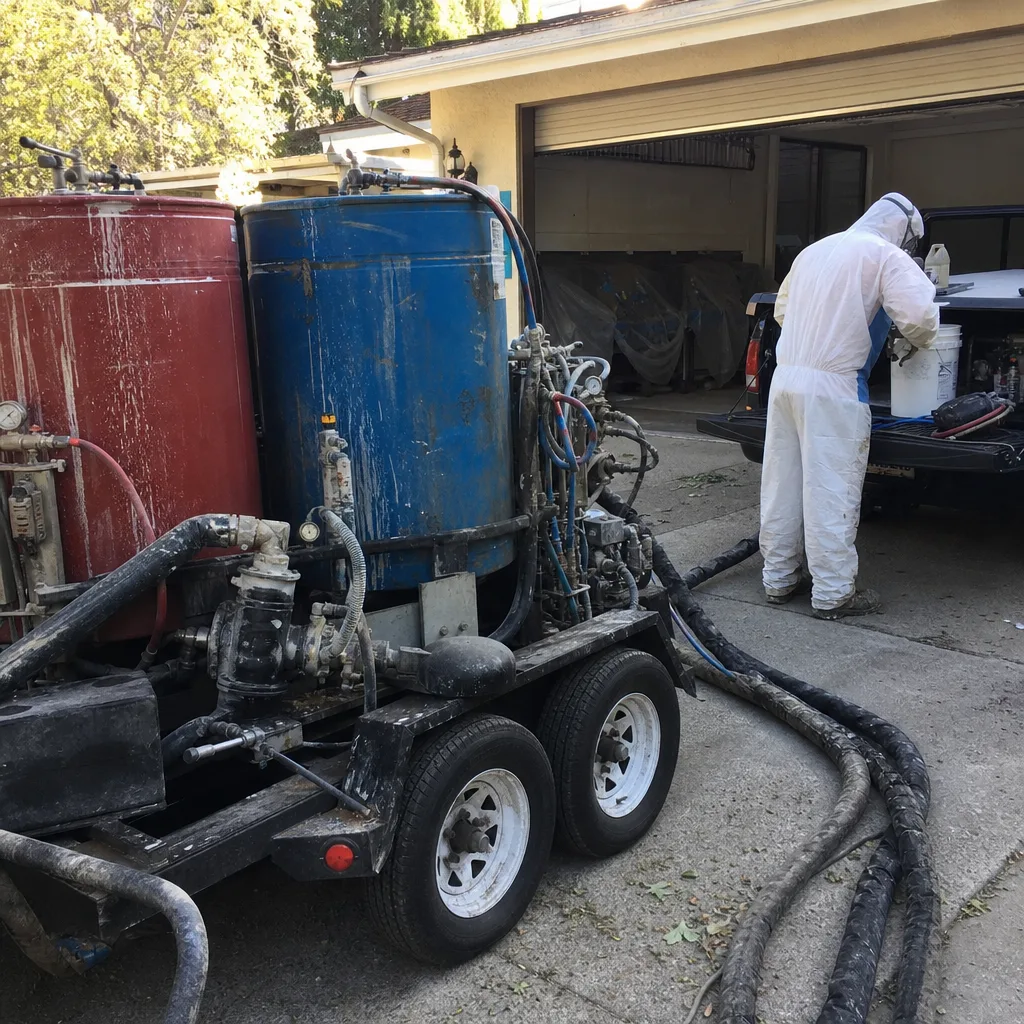
Fast, Reliable Spray Foam Insulation Across Quail Valley
Spray foam insulation in Quail Valley costs $2,800 to $7,500 for a typical attic or crawl space project, with closed-cell foam running higher than open-cell because it handles the 130°F+ attic heat here far better. We get crews out to Quail Valley homes quickly, usually within a couple of days, because we know how brutal the inland summer gets and how fast an under-insulated attic turns a house into an oven. If you’re fighting hot upstairs rooms, a garage that bakes all afternoon, or energy bills that spike every July, call us at (877) 265-5712. We’ll give you a straight answer about what your home actually needs, not a pitch for whatever foam happens to be on the truck.
Why North Tustin Insulation Is Quail Valley’s Preferred Spray Foam Insulation Company
Quail Valley homeowners call us because we carry both Icynene and Demilec spray foam systems, which means we’re not locked into selling you one type of foam. That matters here. An open-cell foam that works fine in a coastal attic can degrade and off-gas when temperatures in Quail Valley hit 130°F or more. We know that, and we spec closed-cell foam or radiant barrier protection when the job calls for it. Our Spray Foam Insulation team has worked in enough 92587 homes to know what these attics do in August.
We also know the local housing stock. Homes in Quail Valley skew semi-custom, built between the 1980s and 2000s, with a mix of site-built and manufactured homes on larger lots. That means no two attics are the same. One house off Canyon Lake Drive has a conventional truss roof. The next one down the road has a vaulted ceiling with almost no attic access. That’s why we assess every Quail Valley job house-by-house rather than applying a tract-home playbook. Allen Decker built North Tustin Insulation around that exact philosophy: match the material to the home, not the other way around.
Crawl Space Spray Foam Insulation in Quail Valley
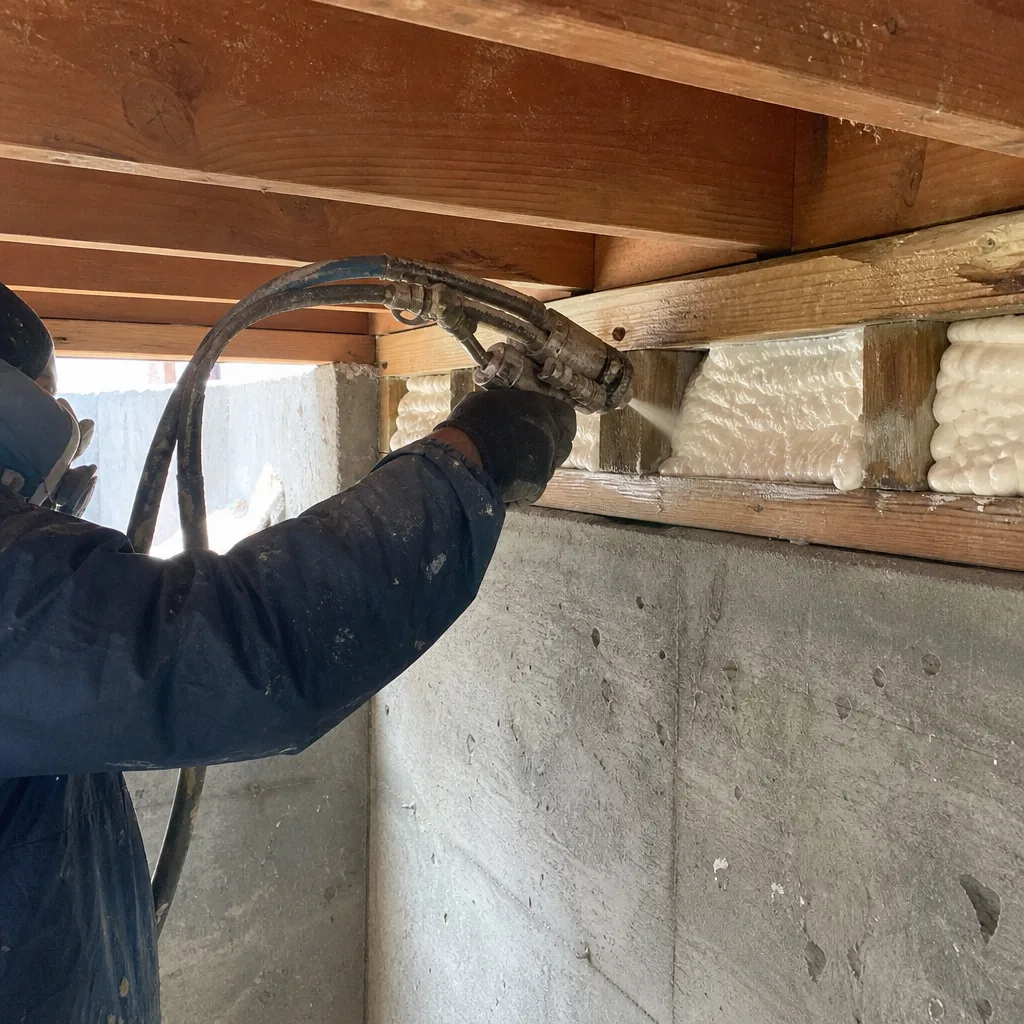
Crawl Space Spray Foam Insulation in Quail Valley is one of the most effective upgrades we do for homes with vented crawl spaces, which describes a lot of the semi-custom and manufactured homes in the 92587 zip code. The job involves sealing rim joists and foundation walls with closed-cell foam, which blocks the hot outside air that pushes into the crawl space during summer and the cold air that creeps up through floors in winter. In Quail Valley’s dry heat, it also keeps wind-driven dust from Santa Ana events out of the space below your floors.
Rim Joist and Band Board Sealing
The rim joist is the single biggest air leak in most Quail Valley crawl spaces. We spray two to three inches of closed-cell Demilec foam along the band board, which stops hot air from entering and gives you a solid air seal at the floor line. This one fix often drops crawl space temperatures by 15 to 20 degrees in July.
Moisture and Dust Control
Quail Valley’s Santa Ana winds push fine dust and debris through vented crawl spaces all fall. Closed-cell spray foam acts as a vapor and dust barrier while also adding R-value, so your crawl space stays cleaner and your floors stop feeling drafty. A typical Quail Valley crawl space job runs $1,800 to $3,400 depending on square footage and access.
Garage Spray Foam Insulation in Quail Valley
Garage Spray Foam Insulation in Quail Valley matters more than in most places because attached garages here become heat sinks that radiate into adjacent living space all afternoon. Many newer Quail Valley homes came with builder-grade garage doors that have almost no insulation value, and the shared wall between the garage and living areas often has fiberglass batts that have slumped or compressed after 20 years of heat cycling. We spray closed-cell foam on garage ceiling cavities and the shared wall, which cuts heat transfer from the garage into the house by a noticeable margin.
Garage Ceiling and Shared Wall
A garage ceiling without insulation pours heat into any bonus room or bedroom above it. We apply two inches of closed-cell Icynene foam to the ceiling cavity, sealing gaps around electrical boxes and duct chases while we’re at it. The result is a garage that stays 10 to 15 degrees cooler and a room above it that finally holds its temperature.
Door Perimeter Air Sealing
Even a well-insulated garage loses the battle if the door doesn’t seal. We check weatherstripping and perimeter gaps while we’re on site, because wind-driven heat and dust from Santa Ana events exploit every crack. A typical garage spray foam job in Quail Valley runs $1,200 to $2,800, with the higher end covering ceiling, shared wall, and rim joist work.
Trusted Brands We Service in Quail Valley
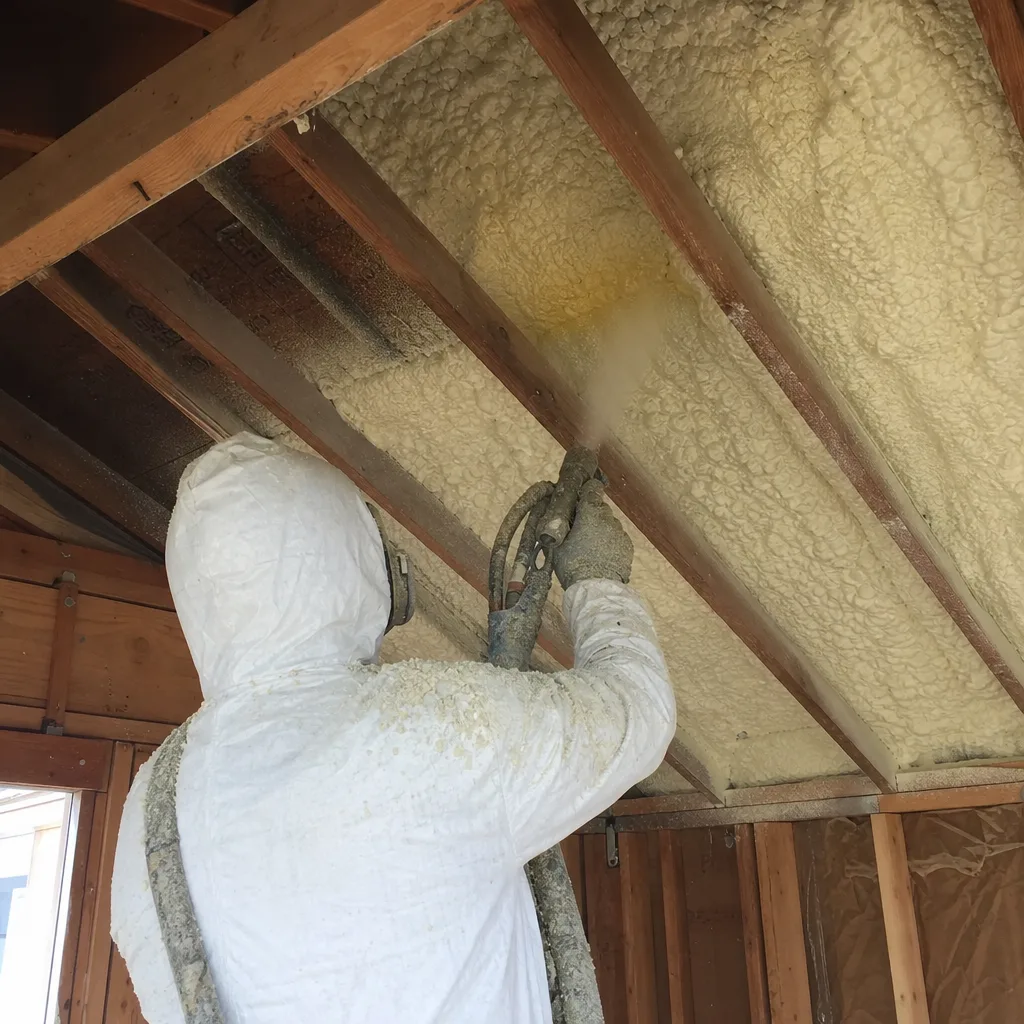
We carry Demilec, Icynene, Owens Corning, and GreenFiber among our eight-brand lineup, and we stock the materials our Quail Valley jobs use most. That means no ordering delays and no showing up with whatever the supply house had on sale. If your project calls for closed-cell Demilec foam on a roof deck, that’s what we bring. If an open-cell fill around rim joists makes more sense, we’ve got that too. The point is options: eight brands across fiberglass, mineral wool, cellulose, and spray foam, so the recommendation fits your home. For Quail Valley attics that hit 130°F, that usually means closed-cell foam with a radiant barrier component, and we carry the right product to do it.
Common Spray Foam Insulation Problems We See in Quail Valley Homes
- Open-cell foam degradation in 130°F+ attics. Quail Valley’s lack of a marine layer means attics routinely exceed 130°F in summer, and standard open-cell spray foam can break down or off-gas under that kind of sustained heat. We spec closed-cell or apply a radiant barrier coating when the attic is unvented and unconditioned.
- Soffit vents clogged with Santa Ana dust. Wind-driven dust from fall wind events cakes soffit vents, trapping moisture inside the attic and causing spray foam to delaminate from roof decks. We check vent flow as part of every Quail Valley spray foam job.
- Builder-grade garage door air leaks. Many newer Quail Valley homes came with low-insulation garage doors and thin weatherstripping, which lets afternoon heat pour into the garage and bleed into adjacent rooms. Spray foaming the garage ceiling without addressing door seals leaves the job half done.
- Compressed or slumped fiberglass batts. Years of extreme attic heat compress fiberglass batts and cut their R-value in half. We regularly find batts in Quail Valley attics that have fallen away from roof decks entirely, leaving the living space below unprotected.
Pricing for Spray Foam Insulation in Quail Valley, CA
We Also Serve Cities Near Quail Valley
Our crews work across the inland valley and the communities just off the 215 and Domenigoni Parkway every week. You’ll find us in Quail Valley and nearby Sun City, Canyon Lake, Meadowbrook, and Romoland on a regular basis. If you’re in any of those areas and your attic is baking, we can be out fast, and we know the local building quirks in each one.
Serving Quail Valley, CA — Our Local Coverage Area
We’re based in the Quail Valley area and know this community well. Use the map below to see our service coverage — if you’re nearby, we can almost certainly help.
FAQs About Spray Foam Insulation in Quail Valley
Will spray foam insulation in my Quail Valley garage help with the extreme heat that builds up in my attached garage?
Yes, closed-cell spray foam on the garage ceiling and shared wall typically drops garage temperatures by 10 to 15 degrees in Quail Valley’s summer heat. The shared wall between the garage and your living space is often the weakest insulation point in the house, so sealing it with foam gives you immediate relief in adjacent rooms. Call (877) 265-5712 for a garage-specific quote.
How does Quail Valley’s Santa Ana wind season affect spray foam insulation performance?
Santa Ana winds push dust and hot, dry air into attics through soffit and gable vents, which clogs venting and can trap moisture against spray foam roof decks. That’s why we inspect vent flow and air-seal top plates before applying foam in Quail Valley homes. A foam job without clean venting won’t perform the way it should.
Is closed-cell spray foam better than open-cell for Quail Valley attics that reach 130°F+?
Yes, closed-cell foam is the better choice for Quail Valley attics because it resists the thermal degradation and off-gassing that open-cell foam can experience above 130°F. Closed-cell also adds structural strength and acts as a vapor barrier, which matters in a valley with this much dry heat and wind-driven dust. We carry Demilec and Icynene closed-cell systems specifically for these conditions.
Can spray foam insulation help with the builder-grade garage door and opener issues common in newer Quail Valley homes?
Spray foam won’t fix a cheap garage door opener, but it does address the heat and air infiltration problems that builder-grade doors create in Quail Valley’s climate. We spray the ceiling and shared wall, then check door weatherstripping and perimeter seals so the whole garage envelope works together. If your garage is making the room above it unbearable, foam is the highest-impact fix you can make.
What’s the typical warranty period for spray foam insulation in Quail Valley, and what does a tune-up involve?
Most spray foam manufacturers back their product for 20 to 25 years, and we stand behind our installation work for the same period. A tune-up involves checking foam adhesion, looking for delamination at roof deck seams, verifying vent flow, and touching up any areas that have been disturbed by plumbing or electrical work. Call (877) 265-5712 to schedule an inspection.
Get a Straight Answer About Spray Foam in Quail Valley
If your Quail Valley attic hits 130°F in July, your builder-grade insulation isn’t doing the job. Closed-cell spray foam and a radiant barrier are the two most effective upgrades you can make, and we’ll tell you honestly which one fits your home. Call (877) 265-5712 for a free estimate, and we’ll walk your attic, check your vents, and give you a number that makes sense.
Written by Allen Decker, Owner at North Tustin Insulation, serving Quail Valley and the surrounding Inland Empire communities.