
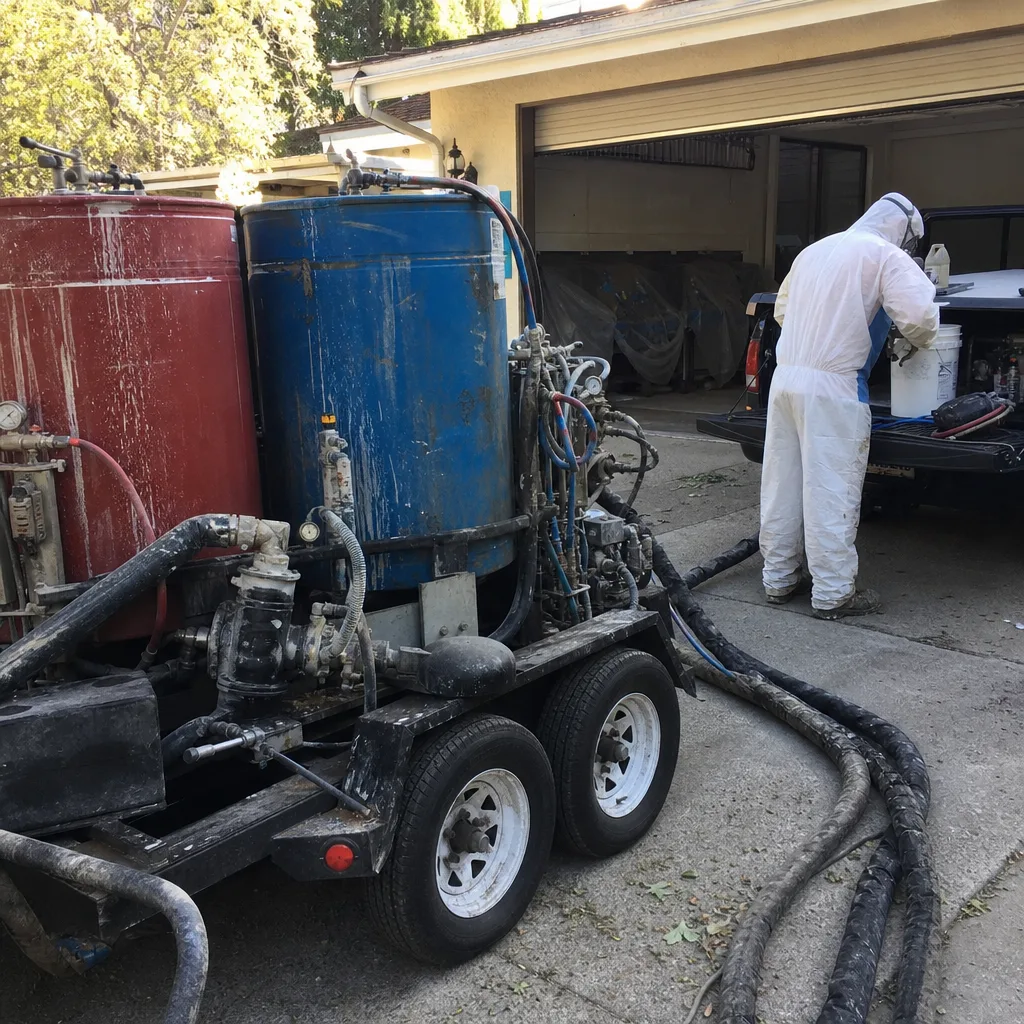
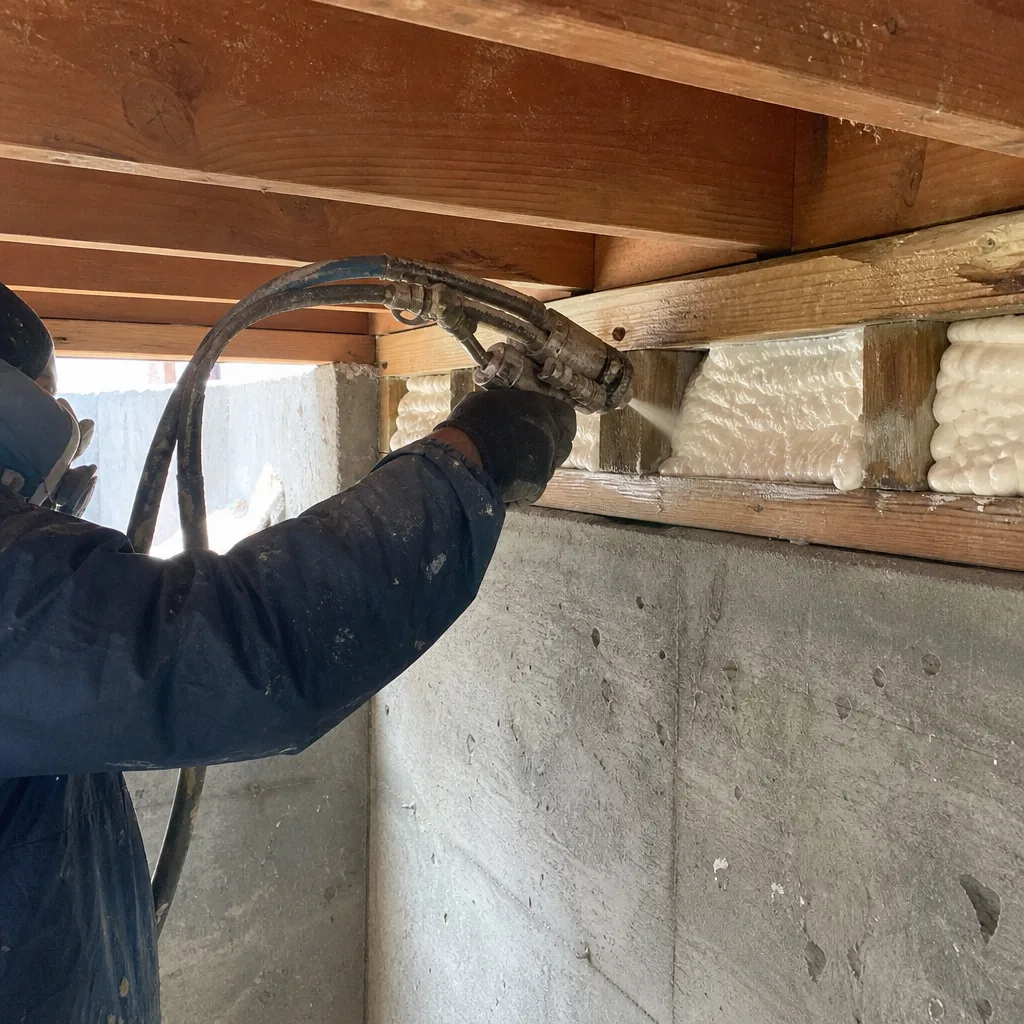
Fast, Reliable Spray Foam Insulation Across San Joaquin Hills
Spray foam insulation in San Joaquin Hills costs between $1,800 and $7,500 for a typical attic or rim joist project, and most jobs take a single day to complete. Closed-cell foam runs $2.50 to $4.25 per board foot installed; open-cell falls between $1.10 and $2.20. Homes here sit on ridgelines and canyon edges above Newport Coast, which means the insulation conversation is different than in most Orange County neighborhoods: you’re not just fighting heat, you’re fighting marine-layer moisture that condenses inside attic cavities. Our crews know the 92657 zip code well. Call (877) 265-5712 for a free estimate, and we’ll give you an honest read on what your home actually needs.
Key takeaways:
- Closed-cell foam is usually the right call in San Joaquin Hills due to marine-layer condensation, not open-cell.
- Most spray foam retrofits here run $2,200 to $5,800 depending on square footage and prep work.
- Air-sealing at can lights and top plates matters more than foam thickness in local vaulted ceilings.
- We carry Icynene and Demilec open- and closed-cell systems, so the recommendation fits the house, not the truck inventory.
Why North Tustin Insulation Is San Joaquin Hills’s Preferred Spray Foam Insulation Company
Homeowners in San Joaquin Hills call us for Reflectix service in San Joaquin Hills because we talk about insulation in specifics, not vague promises. We match the material to your home, not the other way around. That means when a 1990s Santa Barbara-style house off Ridge Park Road has open-frame vaulted ceilings and recessed cans, we don’t just sell foam. We air-seal first, address the ventilation path, then apply the right foam system. Allen Decker runs every project with that same directness: he’d rather tell you that your existing batts are failing from condensation than sell you foam you don’t need.
Our reputation across San Joaquin Hills comes from solving what other contractors miss. We see fewer failed installs here than most crews because we understand the local failure mode: marine air pulled into canyon-rim attics soaks batt insulation and rusts roof decking. Closed-cell foam and baffled ventilation stop that cycle. When you call, you’ll get a straight answer about whether your attic needs full spray foam, targeted rim joist work, or a hybrid approach using our Spray Foam Insulation team’s expertise.
We respond to San Joaquin Hills quickly. Most estimates are scheduled within a few days; many installs happen the same week. The 92657 area isn’t a far trip from our North Tustin base, and we keep material stock for Icynene and Demilec systems on hand. That means fewer delays when you decide to move forward.
Spray Foam Insulation Contractors in San Joaquin Hills
Spray Foam Insulation Contractors in San Joaquin Hills have a different job than those working inland. Here, the work isn’t just about adding R-value; it’s about air-sealing a home so marine-layer moisture stops moving through the attic assembly. When a San Joaquin Hills homeowner finds condensation-soaked batts or rusted decking, a spray foam contractor has to first understand where the moisture came from, then choose between open-cell and closed-cell foam based on that specific ventilation path. In this market, a full attic encapsulation with closed-cell foam typically runs $3,500 to $7,500. Rim joist work is smaller: $900 to $2,200 is the common range.
Closed-Cell Foam for Canyon-Rim Attics
Closed-cell spray foam is the go-to on San Joaquin Hills streets that back up to Buck Gully or sit along the canyon edges. It acts as a vapor retarder while adding structural rigidity to the roof deck. That matters when marine air keeps finding its way into the attic at night.
Open-Cell Foam Where Ventilation Is Already Handled
Open-cell foam costs less and works well in attics where baffled ventilation is already in place and the homeowner’s main priority is sound dampening plus better thermal performance. We’ll walk through the difference on-site and give you a straight recommendation.
Spray Foam Attic Insulation in San Joaquin Hills
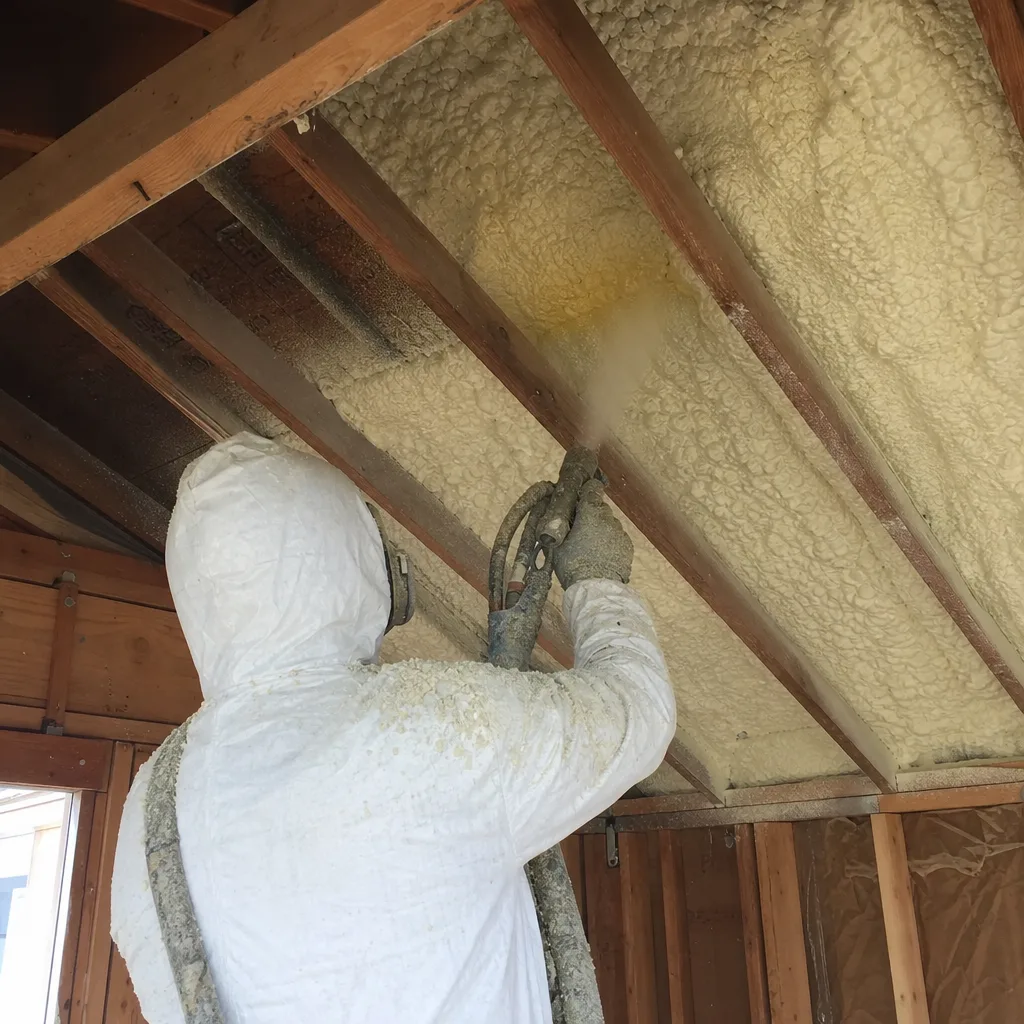
Spray Foam Attic Insulation in San Joaquin Hills usually targets homes with open-frame vaulted ceilings, recessed can lights, and clay tile roofs that bake under the fog line. The job involves air-sealing every ceiling penetration, blocking the ventilation path that pulls marine moisture into the attic, and applying either open- or closed-cell foam to the underside of the roof deck. A typical San Joaquin Hills attic retrofit runs $2,800 to $6,500, depending on square footage and how much failed insulation needs to be removed first.
Vaulted Ceilings and Recessed Cans
Homes here often have cathedral ceilings with recessed lights that punch holes through the ceiling plane. Hot afternoon air bypasses insulation through those gaps. Foam alone won’t fix it. We air-seal each penetration before spraying, then use foam to create a continuous thermal barrier.
Tile Roofs Over Sealed Assemblies
Clay tile roofs trap heat and moisture. When we seal the attic with closed-cell foam, that moisture has to go somewhere. Proper baffled ventilation at the eaves manages it. Skip that step and you’re trading one problem for another.
Trusted Brands We Service in San Joaquin Hills
We install and service San Joaquin Hills homes using two of the industry’s leading spray foam systems: Icynene and Demilec. Both have open-cell and closed-cell formulations, and we stock component parts for both lines locally. That means if a San Joaquin Hills homeowner’s existing Icynene install was done poorly or has settled, we can address it without waiting on specialty shipments. For homeowners considering alternatives, we also carry GreenFiber cellulose and Owens Corning fiberglass, but foam is usually the right tool for this specific microclimate. Eight brands. One contractor. The right fit for your home.
Common Spray Foam Insulation Problems We See in San Joaquin Hills Homes
- Condensation-soaked batt insulation. Canyon-rim attics pull marine-layer moisture through vents every night, and old fiberglass batts absorb it. By the time we arrive, the batts are matted and the roof decking often shows rust.
- Hot afternoon air bypassing vaulted ceilings. West-facing glass loads heat into homes along Newport Coast Drive, and open-frame ceilings let that heat move through can-light gaps. Foam without air-sealing won’t stop the comfort problem.
- Santa Ana wind exposure at canyon edges. Dry wind finds every unsealed foam edge and penetration. Homes on exposed ridgelines lose heat at night even after a foam install if the top plates and corners weren’t detailed.
- Clay tile roofs trapping moisture over sealed foam. Closed-cell foam seals the attic, but tile roofs don’t breathe. Without baffled ventilation, stray moisture condenses inside the cavity and rusts fasteners.
Pricing for Spray Foam Insulation in San Joaquin Hills, CA
Closed-cell spray foam in San Joaquin Hills runs $2.50 to $4.25 per board foot installed. For a typical 1,800 to 2,800 square foot attic, that’s $3,400 to $7,500 all-in, including removal of failed batt insulation where needed. Open-cell foam is the cheaper option at $1.10 to $2.20 per board foot, or $1,800 to $4,400 for most attics. Rim joist spray foam is a smaller job: $900 to $2,200. Garage ceilings fall between $700 and $1,600. What moves the number is prep work: removing condensation-damaged batts, air-sealing recessed cans, and adding baffled ventilation all add labor. Call (877) 265-5712 for a free estimate. We’ll measure, inspect the attic conditions, and give you a written number, not a vague range.
We Also Serve Cities Near San Joaquin Hills
We work throughout the coastal Orange County corridor. If you’re in Spray Foam Insulation in San Joaquin Hills or nearby, we cover Aliso Viejo, Newport Beach, Laguna Beach, and Irvine as well. Same crew, same brand portfolio, same straight answers about what your attic actually needs.
Serving San Joaquin Hills, CA — Our Local Coverage Area
We’re based in the San Joaquin Hills area and know this community well. Use the map below to see our service coverage — if you’re nearby, we can almost certainly help.
FAQs About Spray Foam Insulation in San Joaquin Hills
It fails when the moisture source is ignored. Canyon-rim attics here vent directly into cool marine air, which condenses inside the cavity. If open-cell foam is applied without addressing that ventilation path, or if closed-cell foam is installed without baffled venting, moisture accumulates and the assembly degrades. The fix starts with understanding where water is entering, not just adding R-value. Call (877) 265-5712 and we’ll inspect the attic before any foam goes in.
Partially. Spray foam stops heat gain through the ceiling plane and attic, but west-facing glass loads heat directly into living spaces. Foam helps; window treatments and shading help more. What foam does particularly well here is stop the hot attic air from radiating back down through vaulted ceilings after sunset. For a full assessment of where your heat gain is coming from, call us for an estimate.
We air-seal every can light penetration first. Foam sprayed around a leaky can light just moves the problem. Each fixture gets sealed at the ceiling plane before we spray the deck. That step adds a few hundred dollars to a typical San Joaquin Hills attic job, but skipping it means the foam underperforms from day one. It’s the difference between a system that works and one that looks good on paper.
Yes, strongly. Closed-cell foam is a vapor retarder and the right call in most canyon-rim and ridgeline attics here where marine air condenses. Open-cell foam breathes, which means moisture can pass through it into the roof deck. In a marine layer climate, that’s asking for rust. We install both Icynene and Demilec, but on San Joaquin Hills canyon-edge homes, closed-cell is the material we recommend most often.
Retrofit when existing batt insulation is wet, matted, or moldy, when roof decking shows rust, or when vaulted ceilings create temperature swings between floors. A repair of failed batts only works if the moisture source is fixed. On these canyon-rim homes, the moisture source is usually the ventilation path itself. In that case, the old batts come out and closed-cell foam goes in. We’ll show you exactly what we’re seeing in your attic before you spend a dollar. Estimates are free at (877) 265-5712.
Written by Allen Decker, Owner at North Tustin Insulation, serving San Joaquin Hills and surrounding Orange County communities.