
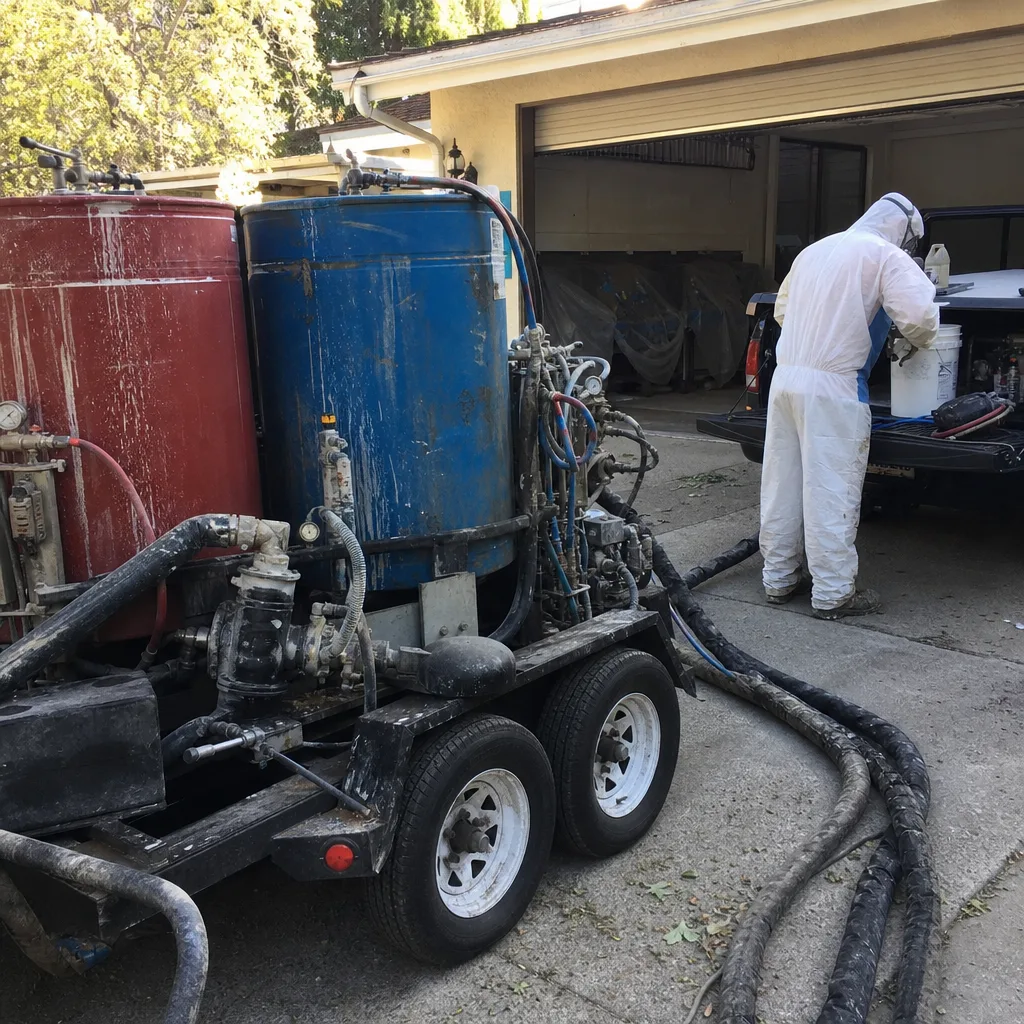
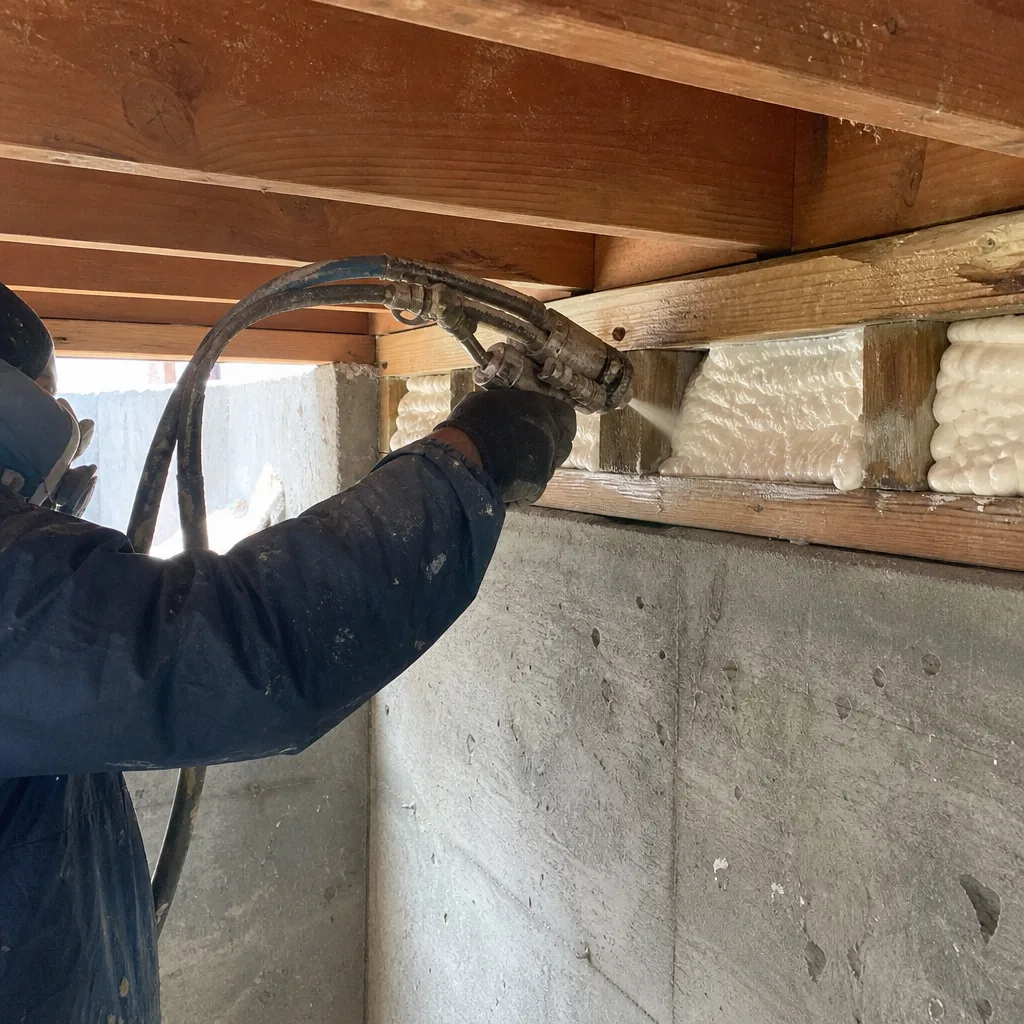
Fast, Reliable Spray Foam Insulation Across Shadow Hills
Spray foam insulation in Shadow Hills runs about $2.80 to $6.50 per board foot for open-cell and $4.00 to $8.00 per board foot for closed-cell, with most whole-attic jobs on ranch-style homes landing between $4,800 and $11,000. We know the area’s lot layouts, the heat load on those hillside attics, and what it takes to get a crew up a long driveway without tearing up the turnout. Call (877) 265-5712 for a straight answer and a free estimate.
Shadow Hills is a different kind of job site. It is not a tract-home grid. The parcels are big, irregular, and often still zoned for horses. That changes how we plan, what we bring, and how long the day runs. We are North Tustin Insulation, and we have been thinking about this specific city’s insulation problems for a long time.
Why North Tustin Insulation Is Shadow Hills’s Preferred Spray Foam Insulation Company
We carry eight insulation brands and three installation methods under one contractor. That matters in Shadow Hills because the housing stock is split: a 1953 single-wall ranch on Wheatland Ave needs a different system than a newer custom build off La Tuna Canyon Road with Santa Fe detailing and a detached studio. When a contractor only installs one foam system, the recommendation gets bent toward what is on the truck. We match the material to your home, not the other way around.
Allen Decker, our owner, runs an insulation-only operation. No roofing side jobs. No HVAC upsells. Every estimate, every crew member, every conversation is about one thing: whether the insulation assembly actually performs. That focus is why Shadow Hills clients call us for second opinions after getting vague bids from generalists.
For a 1940s ranch off Sunland Boulevard with original wall cavities and a detached barn, we are not guessing. We have seen that exact property type dozens of times. We carry Demilec and Icynene spray foam, which means we can properly spec open-cell for interior walls and closed-cell for rim joists, roof decks, and any outbuilding that has to handle the valley’s summer heat. You will not hear a one-brand pitch from us.
Garage Spray Foam Insulation in Shadow Hills
Garage Spray Foam Insulation in Shadow Hills is one of our most requested jobs, and the reason is simple: those detached garages and converted barns on the old ranch properties were built as utility sheds, not conditioned space. They were never insulated. The sun beats on the roof all afternoon, and by 3 p.m. the garage is 20 degrees hotter than the house. Foaming the ceiling deck and the wall cavities changes that quickly.
On a typical two-car detached garage in the 91040 ZIP, the ceiling joists get about 4 to 5 inches of open-cell foam or 3 inches of closed-cell. Cost runs $2,900 to $5,500 depending on square footage and whether the walls are getting done too. If the garage is attached to the house, we often recommend closed-cell at the shared wall to control air movement and keep garage fumes from pulling into the living space.
Detached Garage and Workshop Applications
Detached garages here often share space with tack storage or a workshop. Foam on the underside of the roof deck cuts heat gain dramatically and keeps the space usable year round. We do the prep right: seal around the door openings, foam any gaps at the top plate, and make sure the substrate is clean so the foam does not sag. That last part matters more on hillside properties where dust builds up in the framing.
Garage Ceiling vs. Full Envelope
Some Shadow Hills homeowners ask whether they need the walls done if the ceiling is already foamed. For most older garages, the answer is to do both if you spend real time in there. A ceiling-only job stops most of the heat gain from the roof, but the uninsulated walls still radiate heat from the afternoon sun. We will tell you straight if a ceiling-only job is enough. Sometimes it is.
Closed Cell Spray Foam Insulation in Shadow Hills
Closed Cell Spray Foam Insulation in Shadow Hills is the workhorse for the hardest jobs: shallow wall cavities, hillside knee walls, rim joists, and any assembly that needs to resist moisture or add structural rigidity. Closed-cell runs about $4.00 to $8.00 per board foot installed here, and for the ranch houses with single-wall construction, it is often the only foam that makes sense in the walls.
Here is what closed-cell does on a 1950s ranch in Shadow Hills. The wall cavities are frequently 2×4 or even shallower, and there may be no sheathing under the exterior siding. Open-cell foam needs depth to hit its R-value. Closed-cell hits R-6.5 to R-7 per inch, so a 3.5-inch cavity still gets you past R-20. It also acts as an air barrier and a vapor retarder, which matters when the winter valley cold hits those walls. For rim joists at the foundation line, closed-cell is the only thing we will specify. Open-cell does not belong there.
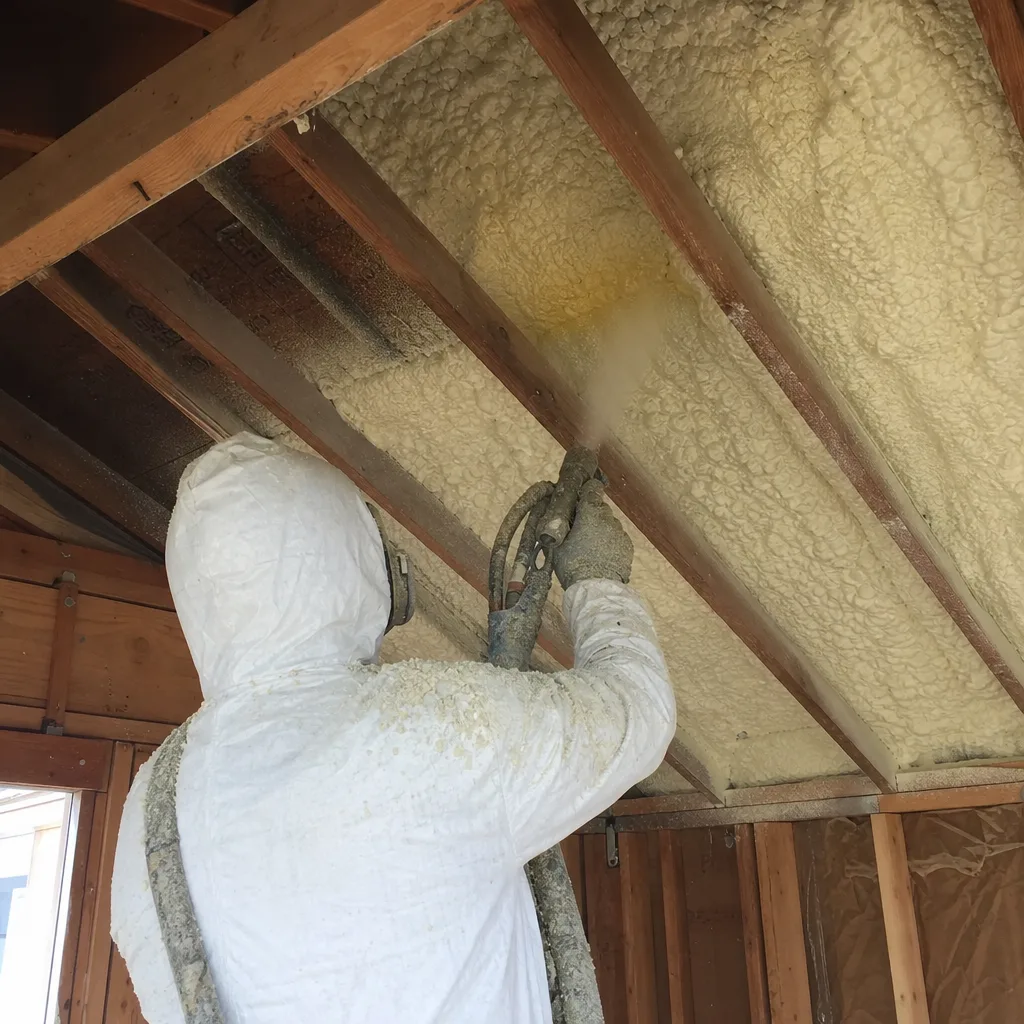
Rim Joist and Crawl Space Sealing
On Shadow Hills hillside lots, crawl spaces are common under the older ranch houses. If the rim joist is open, outside air moves straight into the floor system. We foam every rim joist bay with about 3 inches of closed-cell, and the difference in winter floor temperature is immediate. Cost for a typical 1,400-square-foot ranch runs $1,800 to $3,200 for rim joists alone.
Roof Deck Application for Extreme Attic Heat
Some Shadow Hills attics hit 140°F by noon in July. A closed-cell roof deck application turns the attic into conditioned space and drops that number dramatically. This is a bigger investment, typically $8,500 to $16,000 on a ranch house, but the HVAC system stops fighting a superheated attic and the whole house cools more evenly. We recommend it most often for homes where the air handler and ductwork live in the attic.
Trusted Brands We Service in Shadow Hills
We carry and service Icynene and Demilec spray foam systems, which covers the full range of open-cell and closed-cell applications. Alongside those, our lineup includes CertainTeed for fiberglass batt work and GreenFiber cellulose for blown-in retrofits where spray foam is overkill. What this means for a Shadow Hills customer: you are getting a material recommendation based on your house, not on whatever foam rig rolls up. We stock the full accessory kits for these systems, so a follow-up or a repair call on an existing foam job does not stall waiting on parts. For a hillside property with a narrow access road, fast parts availability matters. We also carry the foam for one specific local problem: dust intrusion at the hillside edges. A well-sealed rim joist and top plate make a real difference when the Santa Ana winds push fine dust down the canyon.
Common Spray Foam Insulation Problems We See in Shadow Hills Homes
- Shallow wall cavities in 1940s-60s ranch houses. Original single-wall construction often leaves 3.5 inches or less of cavity depth. Uniform thickness is hard to achieve, and off-ratio or thin spots leave gaps that still leak the valley heat. We spec closed-cell at a lower lift thickness and do a thermal scan afterward to verify coverage.
- Detached barns with exposed framing and no sheathing. Spray foam needs proper substrate prep and ignition barriers to pass inspection. We see many DIY or handyman foam jobs on tack rooms that sag or fail because the framing was never cleaned and the barrier was skipped. That becomes an expensive redo.
- Dust and debris under the foam at hillside attic hatches. The older Shadow Hills attics accumulate decades of fine dirt blown in from the hillside edges. If foam goes over that without sealing the access opening first, you still have an air path that defeats the assembly. We vacuum down and seal the hatch perimeter before spraying.
- Irregular knee walls and attic access on hillside lots. Standard tract-home planning does not work here. Knee wall angles are inconsistent, access hatches are small, and some attics require working around HVAC runs that were installed when the house was originally built. We plan each Shadow Hills job around the property layout, not a standard footprint.
Pricing for Spray Foam Insulation in Shadow Hills, CA
Expect to pay $2.80 to $6.50 per board foot for open-cell and $4.00 to $8.00 per board foot for closed-cell spray foam in Shadow Hills. A full attic deck on a 1,200-square-foot ranch typically lands at $5,200 to $9,800. Garage ceiling jobs run $2,900 to $5,500. Rim joist sealing for a standard crawl space is $1,800 to $3,200. Barn and tack room foaming depends heavily on square footage and access; smaller tack rooms often come in under $2,200 when done on the same trip as the house. The big cost drivers are cavity depth, roof deck square footage, and whether the attic needs cleaning before foam goes down. Call (877) 265-5712 for an exact quote. Estimates are free.
We Also Serve Cities Near Shadow Hills
We work across the northeastern San Fernando Valley and the Verdugo foothills. In addition to Spray Foam Insulation in Shadow Hills, our crews are on the road to Sunland, Tujunga, La Crescenta-Montrose, and Burbank every week. If your property is in any of these nearby cities, the same multi-brand approach applies. Our Spray Foam Insulation team covers the whole corridor.
Serving Shadow Hills, CA — Our Local Coverage Area
We’re based in the Shadow Hills area and know this community well. Use the map below to see our service coverage — if you’re nearby, we can almost certainly help.
FAQs About Spray Foam Insulation in Shadow Hills
Yes, and we do it regularly. Because Shadow Hills is one of the last equestrian-zoned pockets inside LA city limits, spray foam crews here routinely foam detached barns and tack rooms on the same trip as the house. We schedule around turnout, and if horses are stalled nearby, we use low-odor closed-cell formulas to avoid spooking livestock. Call (877) 265-5712 and tell us what outbuildings you have; we will fold them into the estimate.
Yes, and closed-cell is usually the right spec. Shallow 2×4 or single-wall cavities in Shadow Hills ranches do not have the depth for uniform open-cell coverage. Closed-cell foam at 3 to 3.5 inches delivers R-20-plus in that space and seals the cavity as an air barrier. We have done this on dozens of older ranch houses in the 91040 ZIP, and the result is a warmer, quieter wall assembly.
Attic heat gain in Shadow Hills is severe; it is not unusual for an unsealed attic on a ranch house to hit 140°F by noon in July. Closed-cell foam on the roof deck turns that attic into a conditioned space and cuts the heat load dramatically. For homes where the air handler and ducts live in the attic, this is the single biggest energy win available. We can do a thermal scan and show you the before-and-after numbers.
Often, yes. Hillside lots in Shadow Hills commonly have irregular knee walls, small attic hatch openings, and long or steep driveways that limit equipment placement. We plan each job around the property layout rather than a standard tract-home footprint. If the rig cannot reach the structure, we run hose from the nearest flat area and stage accordingly. It is not a problem, but it does require planning.
Yes, and it is one of the most underrated benefits of foam in this city. The dry seasonal winds push fine dust down from the hillside edges, and it works into the house through rim joists, top plate gaps, and unsealed attic hatches. Foaming the rim joist perimeter and sealing the top plate stops that pathway. We have had Shadow Hills clients tell us the house stays noticeably cleaner after a full rim joist and attic air-seal job.
Written by Allen Decker, Owner at North Tustin Insulation, serving Shadow Hills and the northeastern San Fernando Valley.