
Fast, Reliable Spray Foam Insulation Across South San Gabriel
Spray foam insulation in South San Gabriel runs $1,800 to $4,200 for an average attic application, with closed-cell foam costing more than open-cell because it delivers higher R-value per inch and acts as an air and moisture barrier. Most jobs on the 1950s and 60s stucco tract homes here take one day, though tight side yards and close rooflines often mean our crew works from the driveway and runs hose lines through narrow gates. That’s not a problem we sidestep. We’ve done it enough times in South San Gabriel to know exactly how to stage the equipment and still finish clean. If you’re tired of July attic heat bleeding into your living room, call (877) 265-5712 for a straight answer on what your home actually needs.
South San Gabriel sits just east of the San Gabriel Mission, in a pocket of the San Gabriel Valley where single-story post-war homes shoulder up against each other on narrow lots. Attics here routinely hit 130 to 150°F in summer. Spray foam is one of the few materials that handles that kind of heat without settling or losing its seal. We’re North Tustin Insulation, and we carry Icynene and Demilec spray foam systems because those two product lines give us real options for open-cell and closed-cell work. Not every company in the area runs both.
Why North Tustin Insulation Is South San Gabriel’s Preferred Spray Foam Insulation Company
South San Gabriel homeowners call us because we work almost exclusively in this part of the San Gabriel Valley, and we know the housing stock. The homes between San Gabriel Boulevard and the Alhambra border are mostly 1950s and 60s builds. Original attic insulation has settled to half its original depth or been chewed through by rodents. Wall furnaces, not central HVAC, are common. When we walk into one of these homes, we already know what we’re looking at. That matters when you’re deciding whether to remove old insulation, where to spray, and how much foam you actually need.
We treat every South San Gabriel estimate as a one-trip opportunity. Homeowners here are upgrading aging homes, not building new. They don’t want a contractor who shows up, looks around, and comes back a week later with a vague number. We measure, assess the attic access and side yard clearance, and explain the recommendation on the spot. Allen Decker leads our team, and he’s built the company around carrying multiple insulation methods instead of pushing one brand. That’s why we stock not just Icynene and Demilec spray foam, but also Owens Corning fiberglass, Rockwool mineral wool, and GreenFiber cellulose. The home dictates the material. We just install it well.
Our response time to South San Gabriel runs same-week for most estimates and one to two days for installation once you approve the job. Narrow side yards and 28-inch gates don’t slow us down the way they do general contractors who only occasionally run spray foam equipment. We plan hose routes before we even ring the bell.
Closed Cell Spray Foam Insulation in South San Gabriel
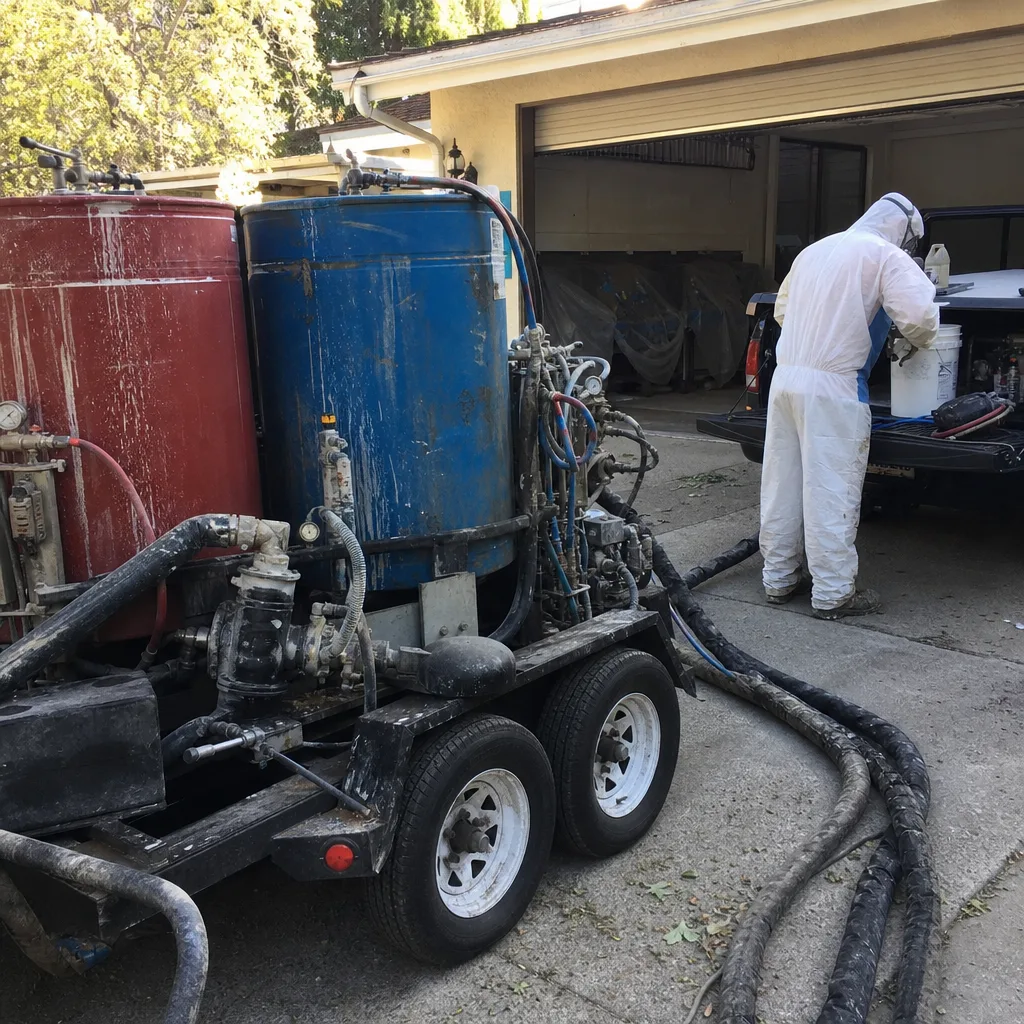
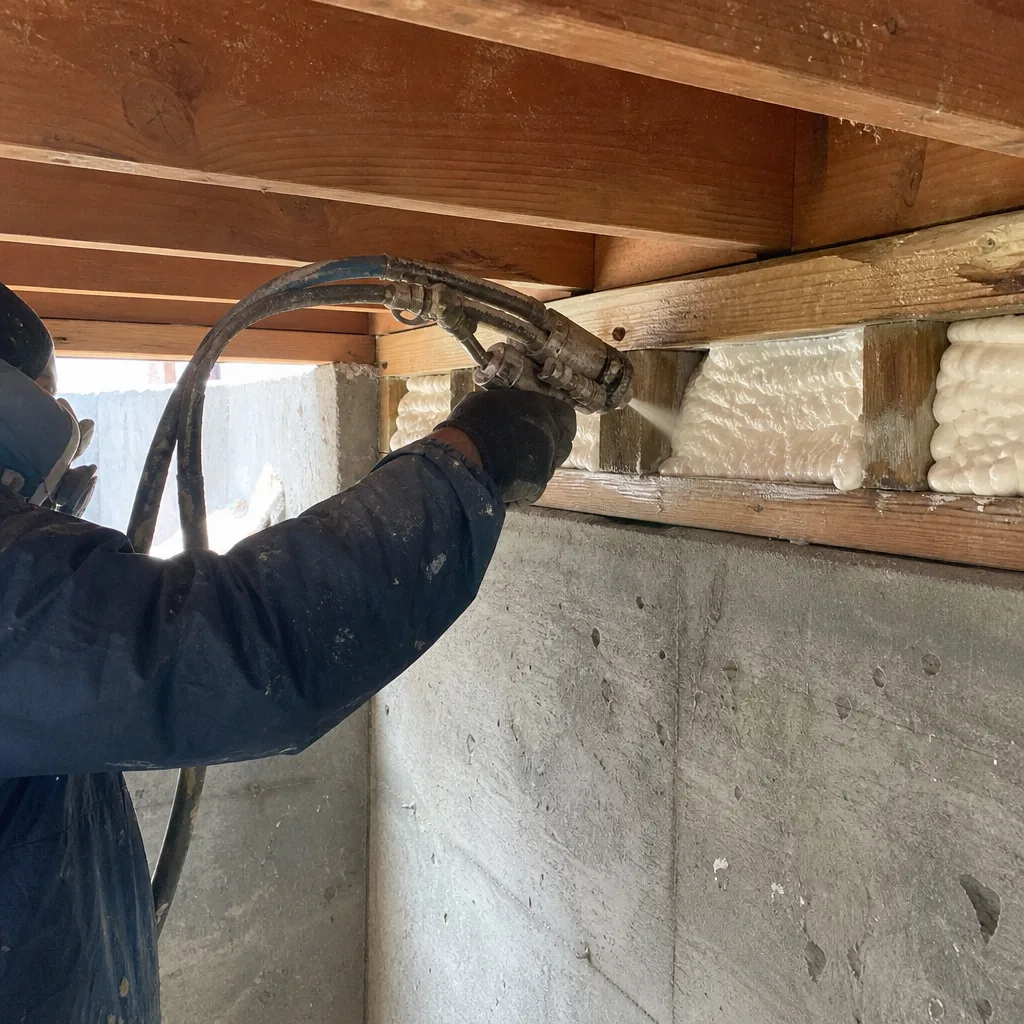
Closed Cell Spray Foam Insulation is the material we recommend most often for South San Gabriel homes with hot attics, rodent-damaged insulation, or aging stucco walls that leak air. It’s denser than open-cell, around 2.0 pounds per cubic foot, and it cures into a rigid barrier that adds structural strength to roof decks and walls. In a 1958 tract home near the Alhambra border, our crew sprayed closed-cell Icynene foam along the band joist and attic knee walls to seal out the 140°F attic heat and replace rodent-damaged original insulation. The narrow side yard forced us to stage the proportioner on the driveway and run 150 feet of heated hose through a 28-inch gate. The homeowner, upgrading rather than rebuilding, wanted it done in one trip, and we finished the same day with a tight, draft-free envelope.
For a South San Gabriel home, closed-cell spray foam in an attic typically runs $2.40 to $3.20 per board foot installed. A standard 1,200-square-foot attic application lands between $3,000 and $4,200 depending on roof pitch, access, and whether we’re removing old insulation first.
Where Closed Cell Foam Belongs
Closed-cell goes in places where moisture and air movement are the enemy. Band joists, rim joists, attic knee walls, and roof decks all benefit. It’s also the right call when a homeowner wants to keep rodent-damaged fiberglass from being disturbed again.
Why Heat Matters in South San Gabriel
Closed-cell foam handles 130 to 150°F attic heat without off-gassing or breaking down. That’s a bigger deal here than in coastal communities because South San Gabriel attics bake from June through September. We’re careful about foam thickness on hot deck surfaces, because crews that rush the job and spray too thick in one pass create exothermic overheating. That’s how you get off-gassing smells that linger for weeks.
Open Cell Spray Foam in South San Gabriel
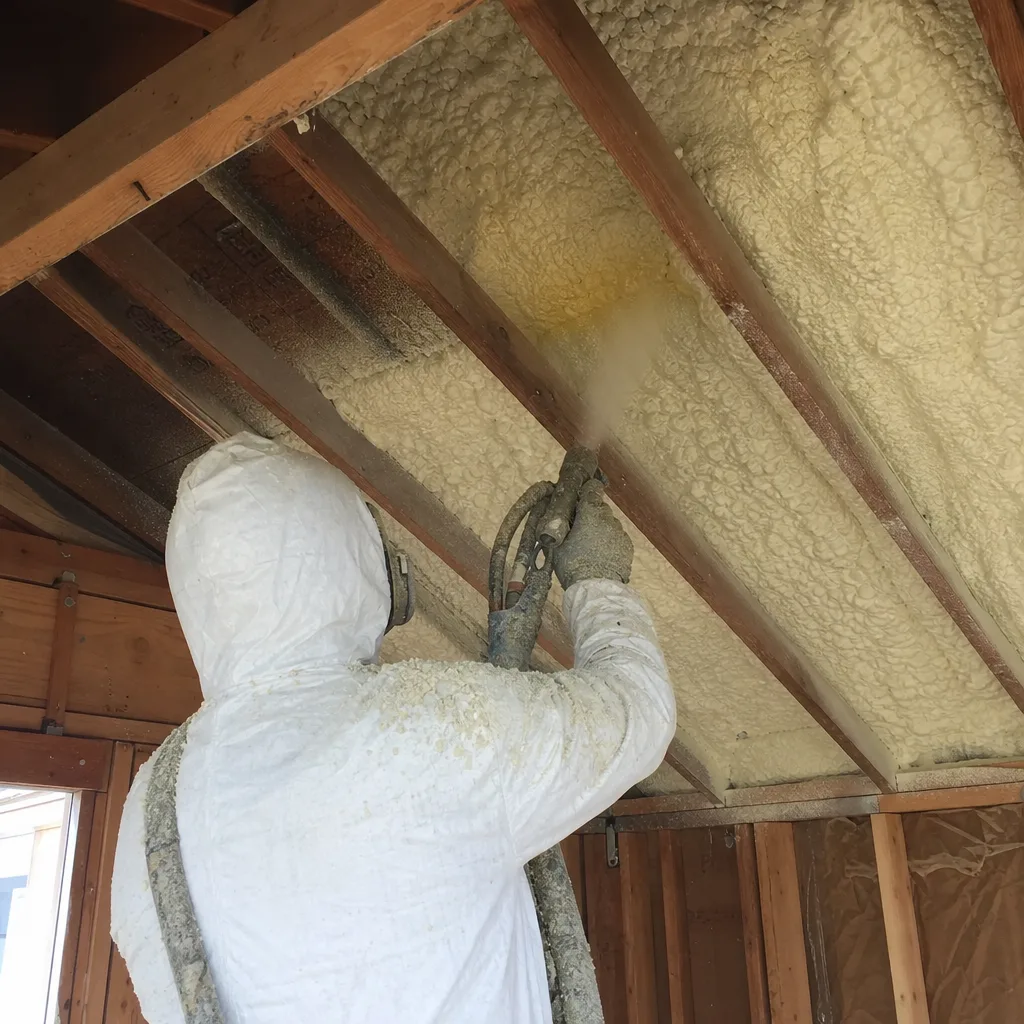
Open Cell Spray Foam is the lighter, more breathable option we install in South San Gabriel when the priority is air sealing and sound dampening rather than moisture control. It expands to about 100 times its liquid volume, fills odd cavities around wiring and plumbing, and costs less per board foot than closed-cell. For a tract home with a wall furnace and leaky attic, open-cell spray foam is often the best value. Expect to pay $1,200 to $2,100 for a typical 1,200-square-foot attic application in South San Gabriel.
One thing we tell every South San Gabriel homeowner: open-cell is not a vapor barrier. If your attic has known roof leaks or persistent condensation, closed-cell is the safer choice. But for most of these dry San Gabriel Valley stucco homes, open-cell seals the attic floor and knee walls beautifully, and you’ll notice the difference the first hot afternoon after installation.
Sound Control Between Tight Lots
South San Gabriel homes sit close enough to each other that you hear your neighbor’s car door and your other neighbor’s TV. Open-cell foam absorbs sound better than closed-cell, so it’s a good option for shared walls, garage ceilings, and any room facing a narrow driveway or busy street like San Gabriel Boulevard.
Hose Runs and Tight Access
Open-cell foam requires the same heated hose runs as closed-cell, and South San Gabriel’s narrow side yards make hose management the real skill. Our crews run up to 200 feet of hose when needed, but we watch pressure drops carefully. On runs over 150 feet through tight gates, off-ratio foam becomes a real risk. That’s why we stage the proportioner where hose distance stays within spec, even if it means walking the line through a 28-inch gate.
Trusted Brands We Service in South San Gabriel
We carry eight nationally recognized insulation brands across fiberglass, mineral wool, cellulose, and spray foam categories. For spray foam, we install Icynene and Demilec systems because those two manufacturers lead the industry in open-cell and closed-cell chemistry. We also stock Owens Corning and CertainTeed for fiberglass batts, Rockwool for mineral wool, and GreenFiber for recycled cellulose. This matters for South San Gabriel homeowners because the right material for a 60-year-old stucco home with a wall furnace is different from the right material for a newer addition with central HVAC. We can pull from eight brands instead of pushing one. That’s the whole point.
Common Spray Foam Insulation Problems We See in South San Gabriel Homes
- Foam applied too thick in one pass on a hot attic deck. South San Gabriel attics hit 130 to 150°F in summer, and crews that try to race the afternoon heat sometimes lay foam on too heavy. The exothermic reaction overheats, and the foam off-gasses for weeks. We control pass thickness and work early mornings when attic surfaces are cooler.
- Poor adhesion on 60-year-old stucco and rodent-chewed insulation. Dust, degraded fiberglass, and rat droppings are common in these attics. If a crew sprays right over that mess, foam pulls away from the substrate and leaves voids. We prep surfaces thoroughly and remove compromised insulation before spraying.
- Pressure drops on long hose runs through narrow side yards. Tight lots force hose runs of 150 feet or more, and cheap contractors don’t watch the proportioner settings. Off-ratio foam never cures properly. We plan hose routes before every job and stage equipment to stay within spec.
- Ignoring wall furnaces and passive heating in the insulation plan. Many South San Gabriel homes still run original wall furnaces, not central HVAC. A spray foam recommendation has to account for how heat moves through a home without ducted air. We map heat paths before we quote, not after.
Pricing for Spray Foam Insulation in South San Gabriel, CA
Closed-cell spray foam in South San Gabriel runs $2.40 to $3.20 per board foot installed. Open-cell runs $0.90 to $1.60 per board foot. For a typical 1,200-square-foot post-war home, that translates to $1,200 to $2,100 for open-cell attic work and $3,000 to $4,200 for closed-cell. Garage ceiling spray foam runs $900 to $1,800. Rim joist work on a crawl space runs $1,500 to $2,800. The variables that move the price: attic access, whether old insulation needs removal, square footage, and how far the hose has to run from the truck. Call (877) 265-5712 for a free estimate. We give you the number on the first visit.
We Also Serve Cities Near South San Gabriel
Our crews run north and south of South San Gabriel regularly, and we install the same Icynene and Demilec systems in Monterey Park, Montebello, East Los Angeles, and Rosemead. If you’re on the border of South San Gabriel and Alhambra, the drive time is negligible. For more detail on what we do across the region, see our Spray Foam Insulation service page.
Serving South San Gabriel, CA — Our Local Coverage Area
We’re based in the South San Gabriel area and know this community well. Use the map below to see our service coverage — if you’re nearby, we can almost certainly help.
FAQs About Spray Foam Insulation in South San Gabriel
Yes, it’s done routinely. The equipment stages on the driveway or street, and crews run heated hose lines through gates as narrow as 28 inches. What matters is that the contractor plans the hose route in advance and monitors pressure on runs over 150 feet. We do both. Call (877) 265-5712 for an estimate.
Closed-cell and open-cell spray foam both hold up fine at 130 to 150°F once cured. The danger is during application. Spraying too thick in a single pass on a hot deck causes exothermic overheating, which leads to off-gassing and poor cure. We apply in controlled passes and schedule hot-weather work for early mornings. Call (877) 265-5712 if you’re planning a summer install.
Yes, in most cases. Rodent-chewed fiberglass holds droppings, urine, and dust that prevent foam from adhering to the substrate. Spraying over it creates voids where air still moves. We remove compromised material, treat the area, and then spray. The labor adds to the total cost but it’s the difference between a sealed envelope and a foam job that peels. Call (877) 265-5712 for a detailed quote.
Closed-cell foam is denser, adds structural strength, and acts as a moisture and air barrier. Open-cell foam is lighter, expands more, and seals air leaks at a lower cost per board foot. For a wall furnace home with no ducted HVAC, open-cell on the attic floor is usually sufficient and more affordable. If the attic holds moisture or the roof deck is exposed, closed-cell is safer. Call (877) 265-5712 and we’ll assess your specific attic.
Most 1,200-square-foot attic jobs in South San Gabriel finish in one day. Closed-cell work sometimes runs into a second morning if we’re removing old insulation first or if hose runs are unusually long. Tight side yards add staging time but not usually a full extra day. We’ll give you a realistic window when we quote. Call (877) 265-5712 for a free estimate.
Written by Allen Decker, Owner at North Tustin Insulation, serving South San Gabriel and the surrounding San Gabriel Valley.