
Fast, Reliable Spray Foam Insulation Across South Whittier
Spray foam insulation in South Whittier homes usually costs between $1.80 and $4.20 per board foot installed, with most retrofit jobs on 1940s-1960s stucco tract houses landing between $3,200 and $8,500 depending on whether we’re treating a garage conversion cavity or a full attic. That’s the straight answer. We get calls from South Whittier homeowners every week who’ve been fighting hot bedrooms, stubborn AC bills, and walls that radiate heat well after sundown. Call (877) 265-5712 and we’ll give you a real number for your house. Our crews know the block layouts off Leffingwell Road, the mid-century stucco additions, and the vented attic problems those old open cavities create. This isn’t a generic foam job. It’s South Whittier-specific work.
Why North Tustin Insulation Is South Whittier’s Preferred Spray Foam Insulation Company
South Whittier’s housing stock presents a very specific challenge: post-WWII tract homes built with no insulation whatsoever, then modified over decades with garage conversions, room additions, and piecemeal remodels that left hidden gaps and half-filled cavities. That’s exactly the kind of work our Spray Foam Insulation team cuts its teeth on. Allen Decker built this company around a simple principle: we match the material to your home, not the other way around. Carrying both Icynene and Demilec spray foam means we’re not pushing one brand because it’s all we have. We’re choosing open-cell or closed-cell based on what your specific South Whittier wall cavity actually needs.
Homeowners across South Whittier appreciate that we show up knowing the difference between a 1950s original wall and a 1980s addition without asking which is which. That local fluency saves time, and it’s why readers of this page keep calling us from the 90605 ZIP code. Estimates are free, and you’ll speak with someone who understands this specific housing stock.
Closed Cell Spray Foam Insulation in South Whittier
Closed Cell Spray Foam Insulation is the heavier, denser option we often recommend for South Whittier garage conversions and addition walls where moisture control and structural rigidity matter as much as R-value. It runs roughly $2.80 to $4.20 per board foot installed here, and a typical rim joist or garage ceiling application in South Whittier falls between $1,800 and $4,600. This foam cures rigid, acts as a vapor barrier at about 1.5 inches, and blocks air movement far better than any batt or blown product.
When the Addition Meets the Original House
South Whittier remodels from the 1960s and 1970s created seams where stucco meets wood framing, and those seams still leak air today. Closed-cell foam applied to the rim joist and the transition line seals those joints and stops the thermal bridge that makes a back bedroom feel ten degrees hotter than the hallway.
Garage Ceilings and Rim Joists
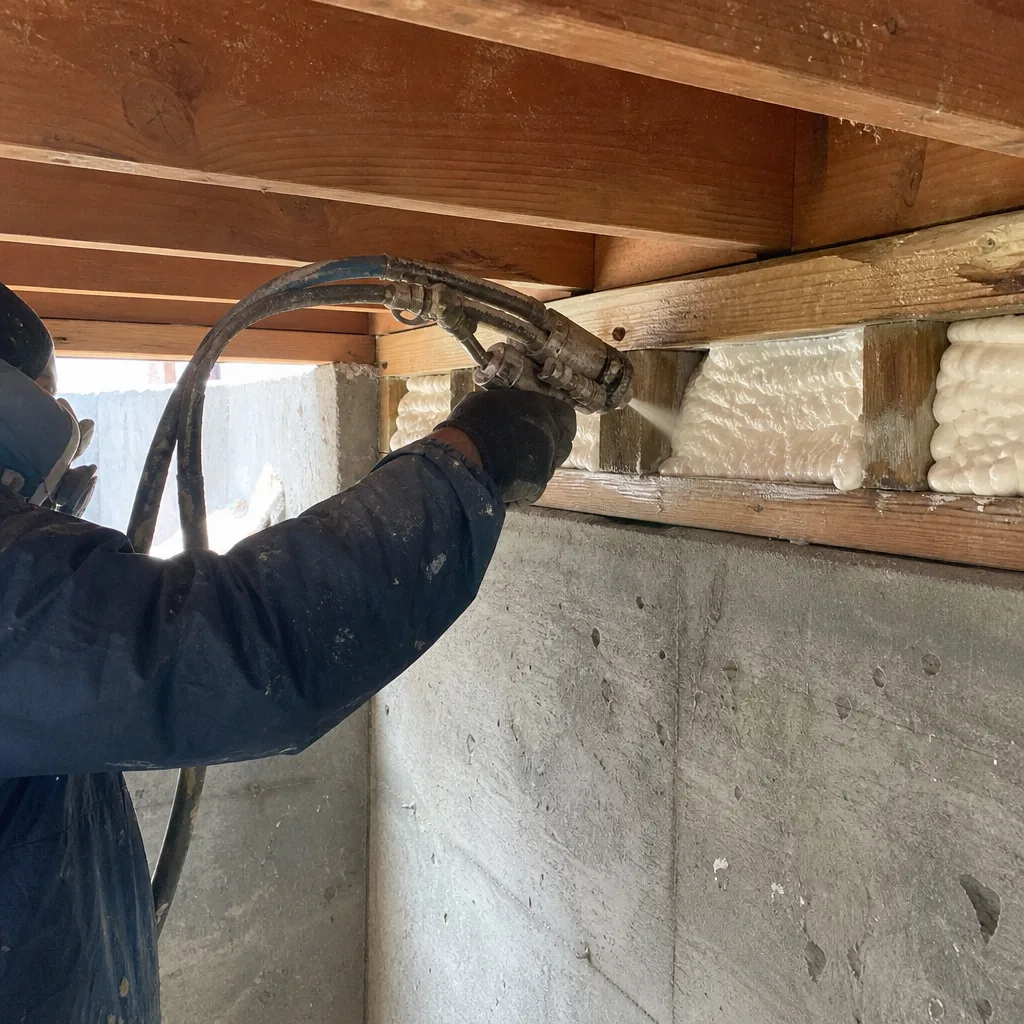
Floors over garages in South Whittier are almost never insulated, and rim joist cavities around the foundation perimeter are wide open. Closed-cell foam in these areas delivers a tight air seal and a high R-value per inch, which matters when you’re working in the shallow cavities these older homes have.
Open Cell Spray Foam in South Whittier
Open Cell Spray Foam is the lighter, more forgiving option we use throughout South Whittier for attic undersides, interior wall cavities, and areas where we need sound dampening plus air sealing instead of a vapor barrier. Expect to pay $1.80 to $3.10 per board foot installed, with a typical attic retrofit in the 90605 ZIP code landing between $2,900 and $6,800. It expands aggressively to fill irregular cavities, which is critical in older South Whittier homes where framing is never perfectly square.
Attic Underside Sealing
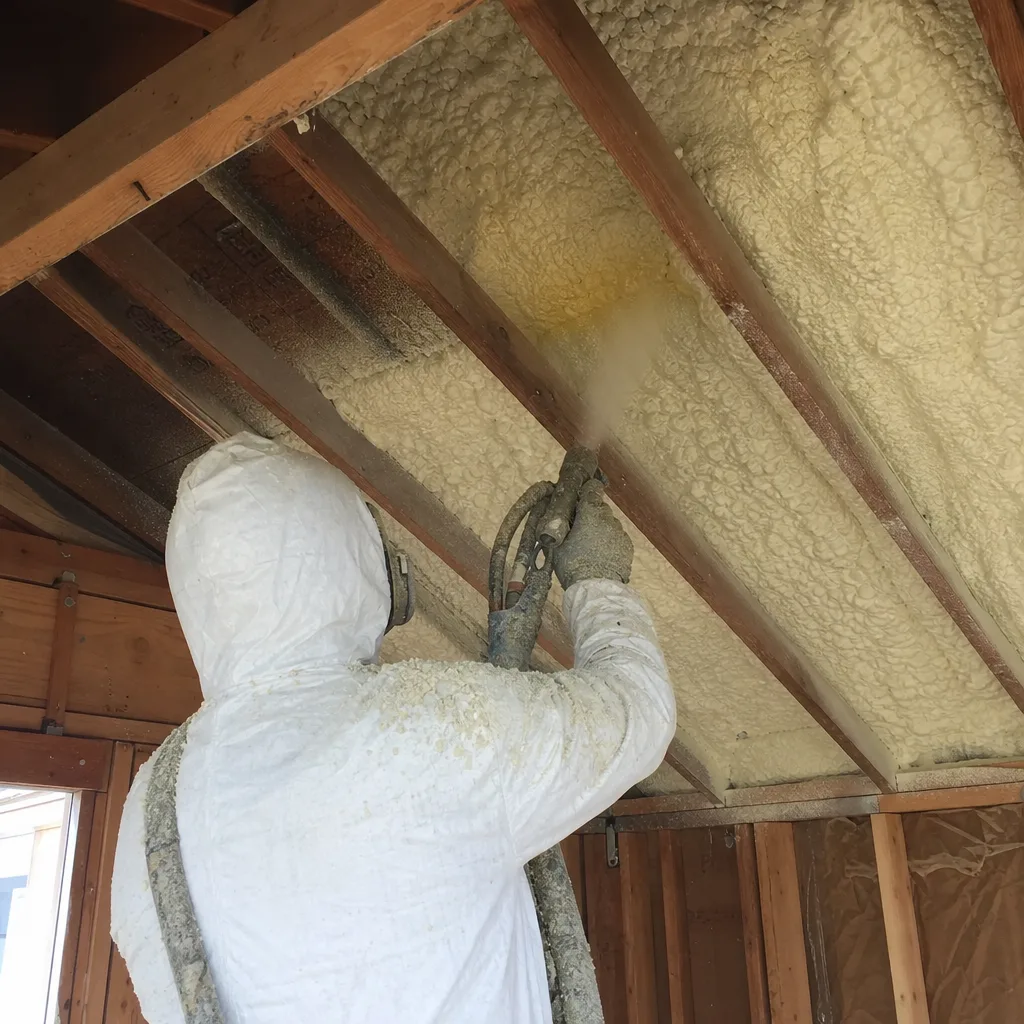
South Whittier’s vented attics bake in summer, and open-cell foam on the roofline keeps that heat from radiating down through the ceiling. This is the single most effective answer for upstairs rooms that never cool off, even with the AC running all afternoon.
Interior Wall Cavities in Older Remodels
When a South Whittier home has a converted garage or a room addition that was never insulated, open-cell foam injected into the stud bays is the least invasive fix. We cut small access points, spray the cavity, patch the drywall, and the hot-spot bedroom finally behaves like the rest of the house.
Trusted Brands We Service in South Whittier
We carry Icynene and Demilec for spray foam, and our full lineup includes CertainTeed and GreenFiber for customers who want a hybrid approach across different parts of the home. What this means for South Whittier homeowners is simple: when a garage-conversion wall needs open-cell foam but the attic needs a GreenFiber cellulose top-up, we handle both without subbing anything out. We keep foam stock ready for South Whittier callouts, and we don’t push a single-brand answer on a multi-problem house. Eight brands. One contractor. The right fit for your home.
Common Spray Foam Insulation Problems We See in South Whittier Homes
- Original vented attics with soffit vents still open. Foam applied to the roofline without addressing soffit airflow traps heat and can force moisture into the wood framing. We check venting before we spray anything.
- Garage conversion walls with no insulation behind the drywall. These are extremely common in South Whittier, and a partial retrofit that treats only one face leaves a hidden thermal bridge that still makes the room uncomfortable.
- South-facing stucco walls that bake in triple-digit heat. Single-pane windows on the sun side amplify the problem. Foam alone helps, but we often recommend pairing it with air sealing at the window framing to stop the convective loop.
- Roof deck foam that overlooks the addition seam. When a South Whittier home has an older room addition, the seam between original roof and addition roof is a chronic leak point. Foam on the deck without sealing that seam leaves a gap that defeats the purpose.
Pricing for Spray Foam Insulation in South Whittier, CA
For South Whittier homes, open-cell spray foam typically runs $1.80 to $3.10 per board foot, and closed-cell runs $2.80 to $4.20 per board foot. A straightforward attic underside job in a 1950s tract home lands between $3,000 and $6,500. A garage conversion or addition wall retrofit runs $2,200 to $5,800 depending on how much drywall access we need to cut. The biggest cost variables are cavity depth, accessibility, and whether we’re removing old insulation first. We’ll give you a line-item quote before any work starts, and the estimate is free. Call (877) 265-5712 and Allen Decker or a member of our crew will walk your South Whittier home with you.
We Also Serve Cities Near South Whittier
Beyond South Whittier, our crews regularly work in Whittier, East La Mirada, La Mirada, and Santa Fe Springs. The housing stock in these areas shares the same mid-century tract-home bones, so the insulation problems we fix in South Whittier show up in the same form across the neighboring ZIP codes. If you’re on the border, call and ask.
Serving South Whittier, CA — Our Local Coverage Area
We’re based in the South Whittier area and know this community well. Use the map below to see our service coverage — if you’re nearby, we can almost certainly help.
FAQs About Spray Foam Insulation in South Whittier
Yes. We access the stud bays from the interior, either through small drywall cuts or by working from the attic and drilling down into the wall cavities. The stucco stays intact. Open-cell foam is the standard choice for these retrofit walls because it expands to fill irregular old framing and doesn’t push outward with enough force to crack brittle 70-year-old plaster.
Closed-cell foam can work in a vented attic, but it must be applied correctly. If you’re keeping the soffit vents open, we typically don’t spray the roofline with closed-cell. Instead, we seal the attic floor and treat the rim joist cavities, which keeps the vented design intact while stopping air movement between the house and the attic. Spraying the roof deck closed-cell without reworking ventilation can trap heat and moisture in the framing. We’ll check your specific attic before recommending anything.
It’s usually a hidden thermal bridge or an uninsulated wall cavity, not an AC failure. In South Whittier’s older tract homes, south-facing and west-facing walls absorb sun all afternoon, and if the wall cavity behind the drywall was never insulated, that heat radiates into the room faster than the AC can remove it. We find this constantly in garage conversions and addition bedrooms. Open-cell foam in the cavity plus air sealing at the seams usually fixes it the same day.
Yes, and that seam is one of the biggest hidden air leaks in these older homes. The gap between the original stucco wall and the converted garage framing lets hot air pour into the living space. Closed-cell foam is our standard choice for this because it air-seals and adds structural rigidity at the transition. The fix is fast once the wall is open.
Open-cell foam inside the cavity is the typical recommendation, paired with air sealing around the window framing. Closed-cell is overkill for a wall cavity unless you have moisture concerns from a bathroom or kitchen on the interior side. The real fix for a sun-baked wall is treating the cavity and the window rough opening together. Call (877) 265-5712 and we’ll give you a straight answer for your specific wall.
If your South Whittier home has a hot bedroom, a garage conversion that never feels comfortable, or an attic that turns your upstairs into an oven by late afternoon, call North Tustin Insulation at (877) 265-5712. We’ll help you figure out exactly what’s going on and give you a free estimate for the fix.
Written by Allen Decker, Owner at North Tustin Insulation, serving South Whittier since our first tract-home retrofit in the area.