
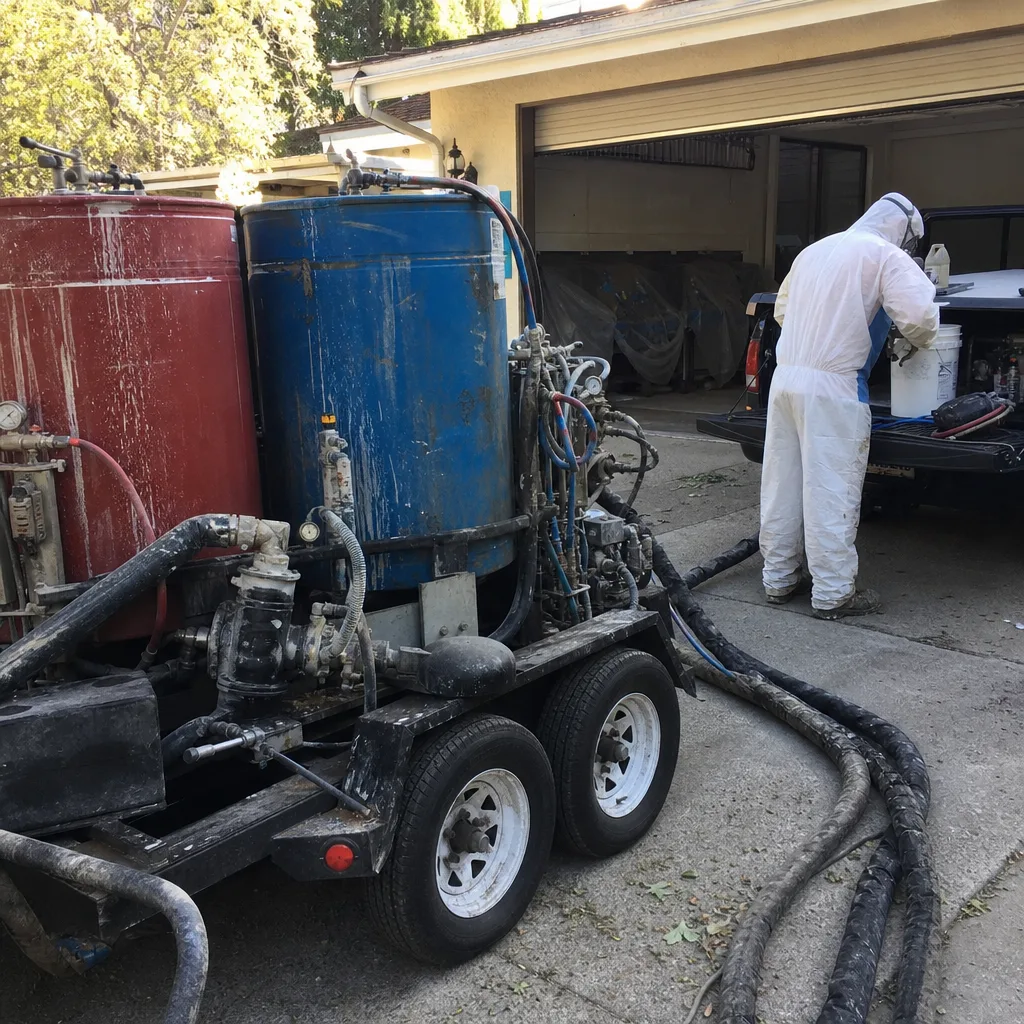
Fast, Reliable Spray Foam Insulation Across West Puente Valley
Spray foam insulation in West Puente Valley runs $2.50 to $5.50 per board foot installed, with most 91746 retrofit jobs landing between $2,800 and $7,500 depending on the assembly. We know these homes because we work in them: 1950s and 60s tract houses off Valley Boulevard, stucco over wood frame, shallow attics, flat or low-slope roofs, and original insulation that’s doing almost nothing against a San Gabriel Valley summer. Whether you need a crawl space sealed, a garage ceiling foamed, or a roof deck addressed before another 140°F attic season, our crew gets to West Puente Valley fast. Call (877) 265-5712 and we’ll walk the attic with you, not just quote over the phone.
Why North Tustin Insulation Is West Puente Valley’s Preferred Spray Foam Insulation Company
Homeowners in West Puente Valley call us because we work on the houses that actually exist here, not the ones in a brochure. The 91746 ZIP is full of post-war tract homes where the attic insulation hasn’t been touched since the Johnson administration. That means R-7 fiberglass batts, ducts buried under old cellulose, and framing that was never designed for modern air-sealing. We’ve been through those attics enough times to know what we’ll find before we open the hatch.
Our Spray Foam Insulation team carries both Icynene and Demilec systems, which matters when you’re deciding between open-cell and closed-cell on a flat-roof tract home where the attic hits 140°F by noon. We don’t push one product. We match the material to your home, not the other way around.
Local knowledge shows up in the details: we know the shallow joist bays in these 1960s frames, we know how Valley Boulevard traffic patterns affect scheduling, and we know which West Puente Valley blocks still have knob-and-tube wiring that has to be addressed before foam goes in. That’s why homeowners across West Puente Valley call us first.
Crawl Space Spray Foam Insulation in West Puente Valley
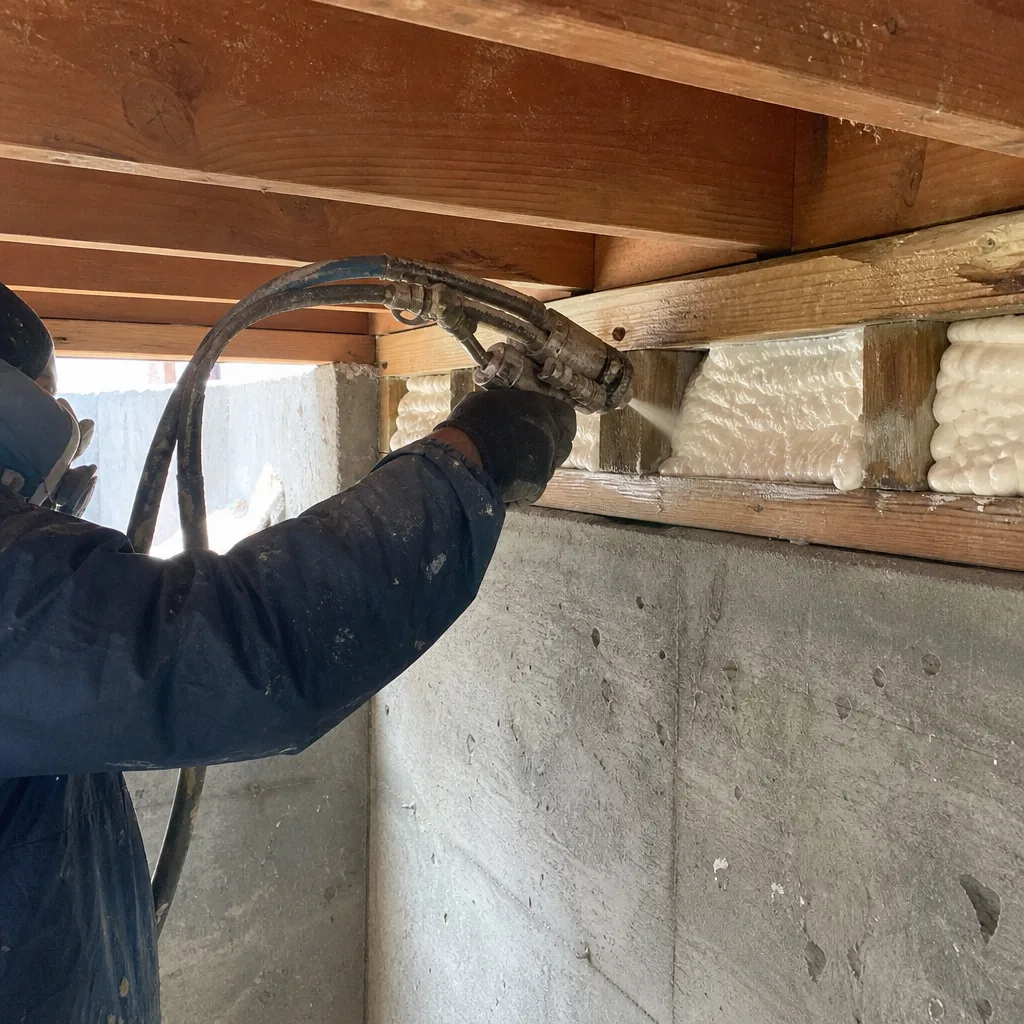
Crawl Space Spray Foam Insulation in West Puente Valley usually means sealing the rim joists and foundation walls on a raised-floor tract home where the crawl space is more “crouch space” than actual room. These 1950s-60s homes here were built on pier-and-beam or short block foundations, and the vents that were meant to keep things dry now let in San Gabriel Valley dust, rodent traffic, and a steady stream of hot summer air. Closed-cell foam on the rim joist and band board stops that air movement at the source. Most crawl space jobs in the 91746 area run $1,200 to $3,000. You’ll know it’s time when the floors above the crawl space stay cold all winter or the kitchen smells like damp earth every time it rains.
Why the Rim Joist Matters First
The rim joist is the single largest air leak in most West Puente Valley crawl spaces. Spraying it with closed-cell foam does two things at once: it cuts the draft path from outside and it creates a thermal break that fiberglass batts stuffed between joists never achieve. We’ve opened crawl spaces here where the old batts had literally fallen onto the ground, doing nothing.
What to Check Before Foaming
If there’s standing water, active termite damage, or rotted sill plates, that gets fixed before any foam goes in. Spraying over rot just traps it. We check first, then shoot.
Garage Spray Foam Insulation in West Puente Valley
Garage Spray Foam Insulation in West Puente Valley is one of the highest-impact upgrades for these attached-garage tract homes, because the garage shares a wall and often a ceiling with living space. On a 1962 stucco house off Valley Boulevard, the garage ceiling is usually just drywall or open joists with nothing between you and a roof deck baking at 140°F. That heat radiates into the house all night. Spray foam on the garage ceiling and the shared wall runs $1,800 to $4,200 for a typical two-car garage in 91746. It also quiets the garage down, which neighbors appreciate when someone’s running a table saw at 7 a.m.
Attached Garage Ceilings
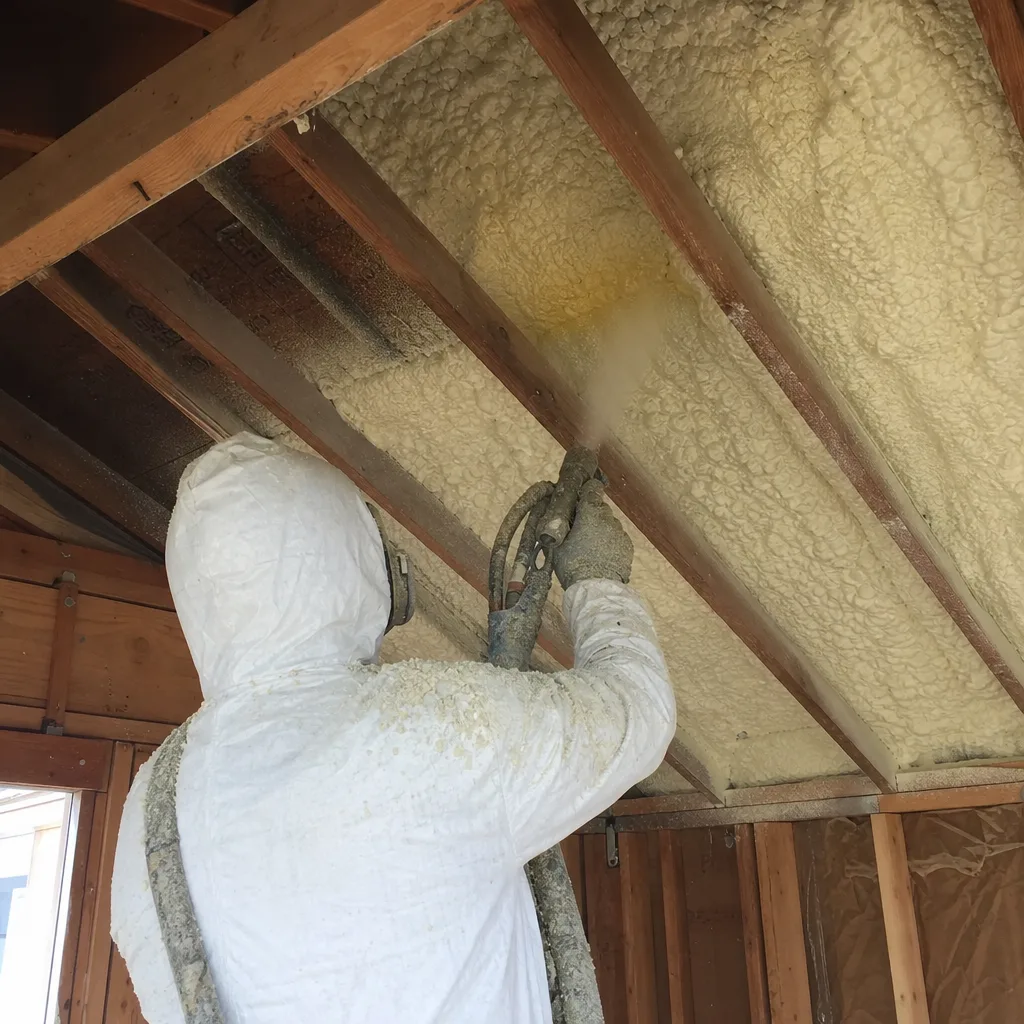
We foam the ceiling joist bays first, then the wall between garage and house. The result is a garage that doesn’t cook the bedrooms above it. If your garage has a bedroom over it and that room is always 10 degrees hotter than the rest of the house, this is the fix.
Shared Walls and Air Sealing
Closed-cell foam on the shared garage wall also stops car exhaust vapors and garage smells from seeping into the house. It’s a comfort fix and an air quality fix in one application.
Trusted Brands We Service in West Puente Valley
We’re not tied to a single foam supplier, which means your West Puente Valley home gets the right product for the job, not the product we happen to have on the truck. For spray foam specifically, we install Icynene and Demilec, two of the most recognized open- and closed-cell systems in residential insulation. If we’re doing a hybrid job, say foam on the rim joists and blown-in elsewhere, we can turn to Owens Corning or GreenFiber for the loose-fill portion. That’s eight brands total across fiberglass, mineral wool, cellulose, and spray foam. It means a real material choice, and a recommendation we can defend in front of your utility bill.
Common Spray Foam Insulation Problems We See in West Puente Valley Homes
- Foam sprayed over buried ducts. In 91746 attics, HVAC ducts are often buried under decades-old cellulose or compressed batts. Foaming over that traps the mess and leaves hot spots. We clear the duct runs and air-seal the top plates before any spray goes down.
- Knob-and-tube wiring in the spray zone. A surprising number of West Puente Valley attics still have original cloth-wrapped wiring. Code and common sense say it gets remediated before foam touches it. We flag it immediately and pause the job until it’s handled.
- Open-cell foam on flat-roof decks. In the San Gabriel Valley basin, a flat roof deck at 140°F+ is the wrong place for open-cell foam. It underperforms. Closed-cell gives you more R-value per inch in the shallow joist bays these homes have.
- Shallow attic clearance causing missed coverage. The cramped attics in these 1950s-60s frames make it hard to reach every bay. We use low-rise spray guns and check coverage with thermal imaging afterward, because a missed 18-inch band is a hot strip you’ll feel for years.
Pricing for Spray Foam Insulation in West Puente Valley, CA
Here’s what you should expect to pay for spray foam work in West Puente Valley, based on the homes we actually quote in the 91746 ZIP.
- Open-cell spray foam, attic floor or walls: $2.50 to $3.50 per board foot installed
- Closed-cell spray foam, roof deck or rim joist: $3.50 to $5.50 per board foot installed
- Crawl space rim joist package (typical raised-floor tract home): $1,200 to $3,000
- Attached two-car garage ceiling and shared wall: $1,800 to $4,200
- Full attic retrofit on a 1,200 sq ft 1950s-60s home, including duct clearing and air-sealing: $4,500 to $7,500
Closed-cell runs higher per board foot but fits more R-value into the shallow joist bays these post-war homes have. The biggest cost variable is what we find under the existing insulation: buried ducts, old wiring, rodent contamination. Those are real conditions we solve, not extras we invent. For an exact number on your home, call (877) 265-5712. The estimate is free, and we’ll show you what’s in your attic before we ever talk price.
We Also Serve Cities Near West Puente Valley
Our crews run throughout the eastern San Gabriel Valley. Beyond West Puente Valley, we do spray foam work in Avocado Heights, La Puente, Valinda, and El Monte regularly. Same materials, same install standards, same straight answer about what your attic actually needs. If you’re a few blocks over the line, call anyway; we’re almost certainly in your neighborhood each week.
Serving West Puente Valley, CA — Our Local Coverage Area
We’re based in the West Puente Valley area and know this community well. Use the map below to see our service coverage — if you’re nearby, we can almost certainly help.
FAQs About Spray Foam Insulation in West Puente Valley
Older West Puente Valley homes were built with R-7 to R-11 attic insulation and shallow, cramped attics, so spray foam here is a retrofit layered onto existing conditions, not a clean new-construction spec. That means we have to work around buried ducts, low-slope framing, and sometimes knob-and-tube wiring. Newer homes have deeper joist bays and a clean deck; these homes don’t. Call (877) 265-5712 and we’ll tell you which assembly fits your actual attic.
No, and we won’t. Foaming over buried ducts traps old compressed batts and rodent-contaminated cellulose under the new foam, which leaves hot spots and cuts airflow. We clear the duct runs, air-seal the top plates, and only then spray. It’s the difference between a job that looks done and one that actually works in August.
Yes, it pauses the foam until the wiring is remediated. Cloth-wrapped knob-and-tube wiring can’t be encapsulated in foam; it’s a code stop and a fire-safety issue. We flag it the day we inspect, and we’ll coordinate with your electrician so the foam goes in right after the old circuits come out.
Closed-cell, almost always. Flat and low-slope roofs in this part of the San Gabriel Valley basin sit over attics that hit 140°F or more. Closed-cell delivers more R-value per inch, which matters when the joist bays are shallow. It also adds structural strength and acts as a vapor retarder. Open-cell has its place in walls and some cathedral ceilings, but on a West Puente Valley flat roof, closed-cell is the right call.
Yes, both, every week. Garage ceiling and shared-wall foaming is one of our most common jobs in West Puente Valley because attached garages act like heat ovens that radiate into the house all night. Crawl space rim joist sealing is the other big one. Both run in the ranges listed above, and both make a measurable difference on the first hot day after install.
Written by Allen Decker, Owner at North Tustin Insulation, serving West Puente Valley and the eastern San Gabriel Valley.