Fast, Reliable Attic Insulation Across Burbank
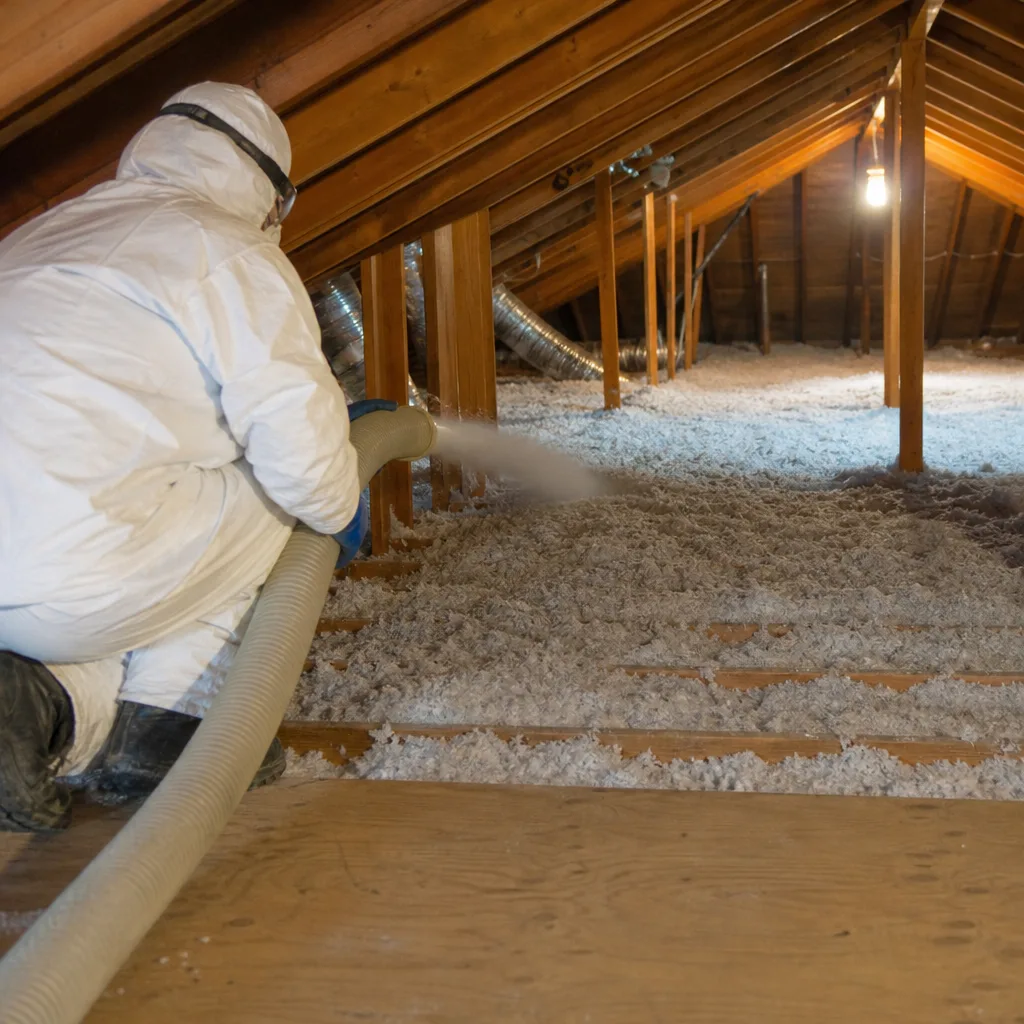
If your Burbank home still has its original attic insulation, you’re likely paying for comfort you’re not getting. Attic insulation in Burbank typically runs $1,800 – $4,200 for a full removal and re-insulation of a 1,200 – 1,600 sq ft post-war bungalow, with top-up jobs starting around $900. We’re North Tustin Insulation, led by Allen Decker, and we work in Burbank every week. Call (877) 265-5712 for a free attic assessment and a straight answer on what your house actually needs.
We know Burbank’s housing stock better than most insulation crews because we’re here constantly: Magnolia Park bungalows off Clark and Cordova, Ranch Equestrian properties with exposed rafter tails, 1960s low-rises near the media district, new infill townhomes north of the 134. Every one of them has a different attic story. The trick isn’t blowing in more fluff. It’s knowing what’s already up there, what’s failing, and what the canopy of mature street trees is doing to your attic’s heat load.
Why North Tustin Insulation Is Burbank’s Preferred Attic Insulation Company
Burbank homeowners call us for a specific reason: we specify insulation house-by-house, not ZIP-code-by-ZIP-code. The blanket advice you’ll find online says “add R-38 to your attic and call it done.” That advice fails in much of Burbank. A 1951 Magnolia Park bungalow under a dense magnolia and camphor canopy has a shaded microclimate that a sun-baked Rancho Equestrian ranch two miles away doesn’t share. Shade doesn’t just lower the cooling load; it changes whether a radiant barrier pays for itself and whether the original ventilation scheme still works.
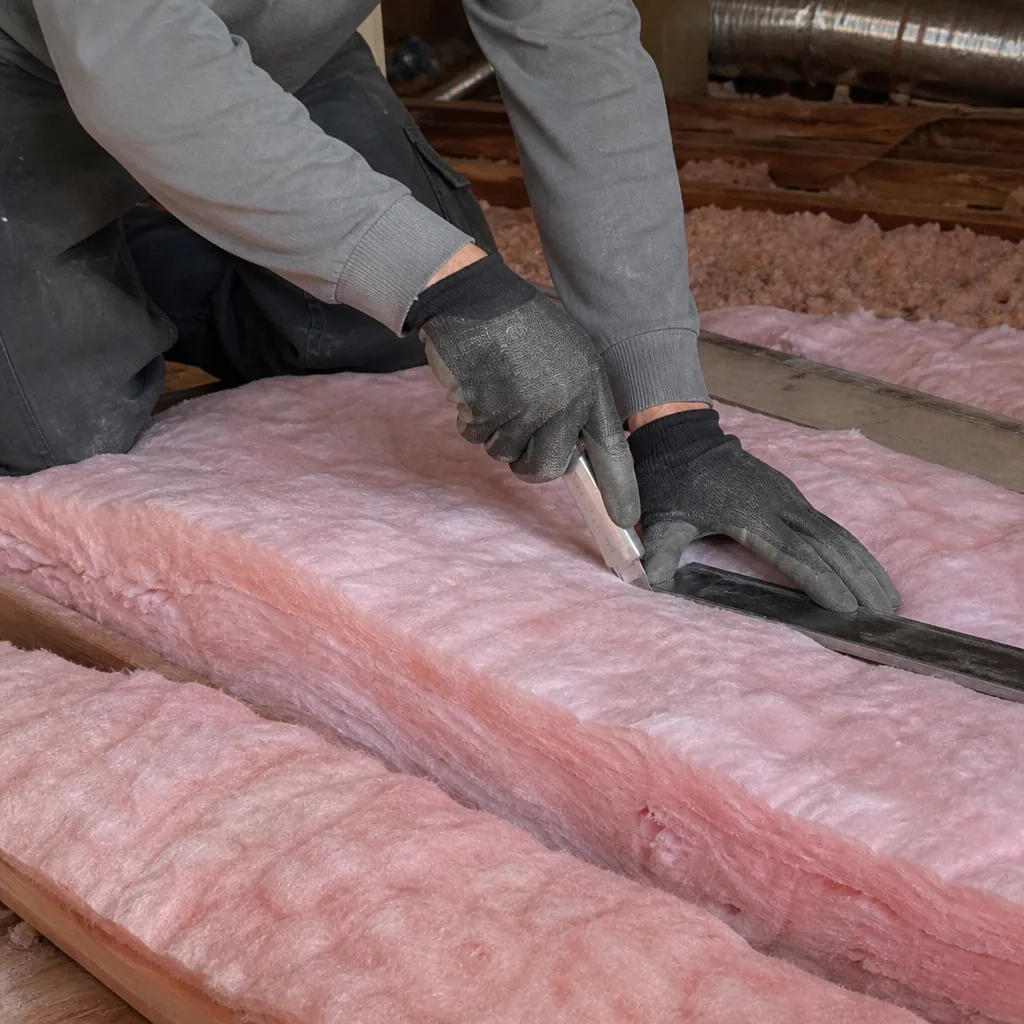
Allen Decker built this company around one question: what does this attic actually need? That’s why we carry eight nationally recognized insulation brands: Owens Corning and CertainTeed fiberglass, Rockwool mineral wool, GreenFiber recycled cellulose, Johns Manville and Knauf fiberglass lines, plus Icynene and Demilec spray foam. We match the material to your home, not the other way around. If your Burbank attic needs blown-in cellulose over legacy batts, that’s what we’ll recommend. If it needs closed-cell Demilec spray foam because the roof deck doubles as a conditioned boundary, we’ll tell you that too, and why.
We’re an insulation-only contractor. Every estimate we write in Burbank is focused on one trade: attic performance, air sealing, and thermal comfort. That focus shows up in the details. We spot the unboxed 1950s recessed can lights tucked behind the old batt. We flag the knob-and-tube wiring before a blower truck ever pulls up. We check the eave vents for batts pushed against the roof deck. These are the things generic remodeling contractors miss, and they’re exactly the things that determine whether your new insulation actually works.
Attic Cleaning Services in Burbank
Attic Cleaning Services in Burbank come down to more than sweeping out cobwebs. In a post-war Burbank attic, decades of dust settle into the original paper-faced batts, compressing them and cutting their effective R-value dramatically. Old rodent droppings, construction debris from decades of remodels, and broken-down pipe wrap all end up in the insulation layer. We remove all of it: the contaminated batts, the debris, the dust that’s caked onto the ceiling joists. Then we sanitize the deck and prep the space for whatever insulation system your house needs. A full attic cleaning and decontamination for a typical Burbank bungalow runs $600 – $1,200 depending on attic height and contamination level.
When a 1940s – 50s attic needs full removal
If your attic still holds its original batts and they’ve been in place since Eisenhower was president, a top-up is often the wrong move. The old material is compressed, dust-loaded, and frequently contaminated by rodent activity. Blowing new cellulose over it seals in the problem. We recommend full removal, cleaning, and re-insulation when original batts are present and compressed more than 50% of their original thickness.
Clearing the way for new insulation
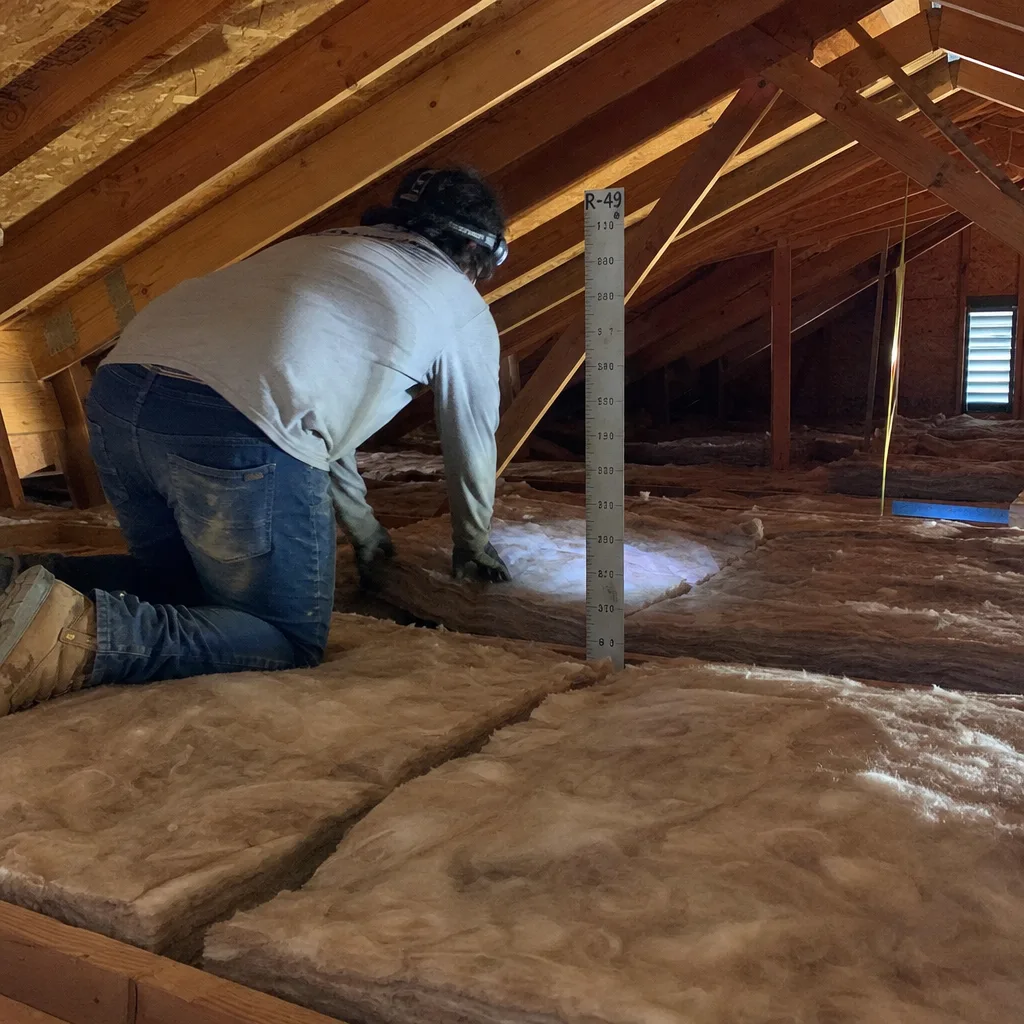
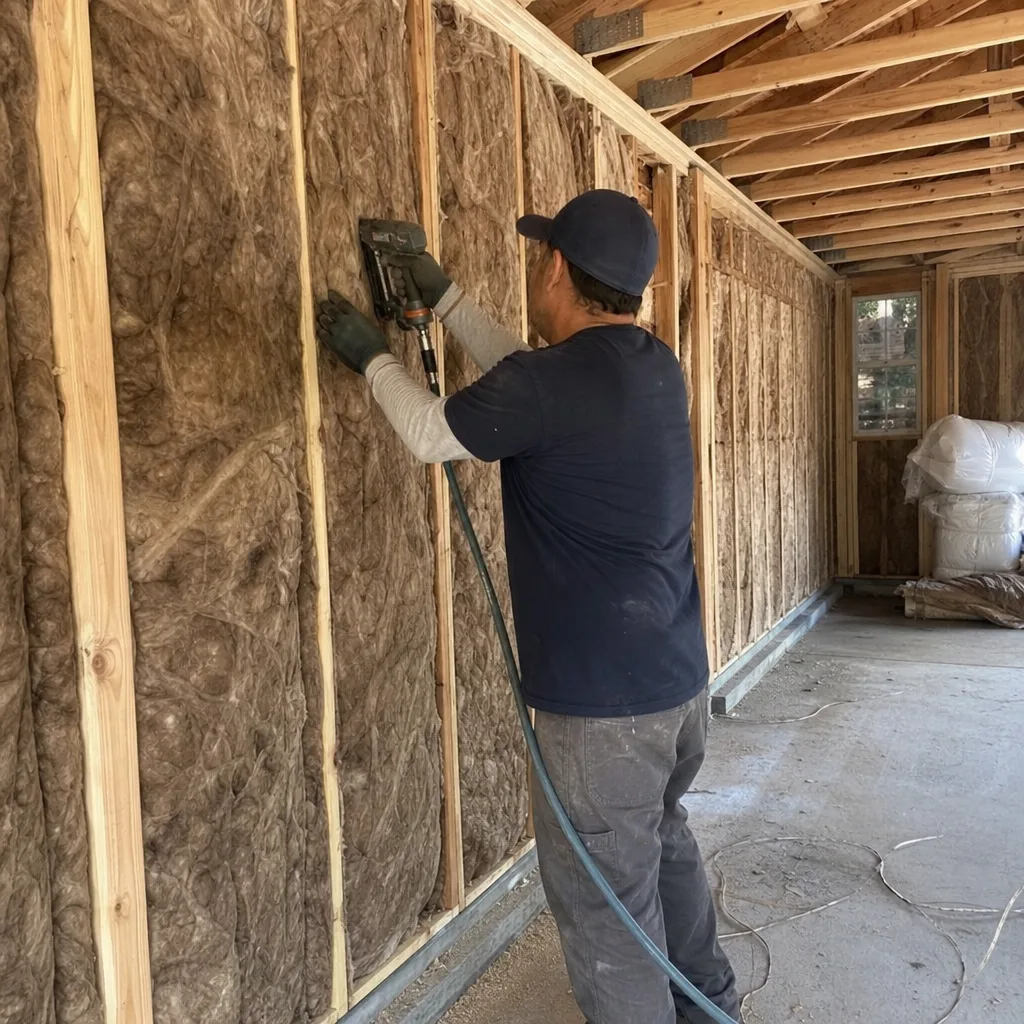
Before any new insulation goes in, the attic floor needs to be a clean substrate. We clear out old storage debris, remove failed batt material that’s blocking soffit vents, and confirm whether your existing can lights are IC-rated before spraying anything around them. A clean attic is a measurable starting point. It’s also the only way to see what’s actually happening at the eave line.
What happens when you call
- 1
A real person answersNo phone trees — you reach a local pro.
- 2
You get an upfront price rangeHonest numbers before anyone is dispatched.
- 3
A background-checked tech heads outLicensed & insured, dispatched right away.
- 4
You approve before work beginsNothing starts until you say go.
Attic Mold Removal in Burbank
Attic Mold Removal in Burbank is a regular part of our pre-insulation work, and for good reason. Burbank’s inland Valley air means hot, dry summers, but the winter months bring cool nights and atmospheric moisture that condenses on the underside of roof sheathing when an attic isn’t ventilating properly. Add decades of compressed insulation choking the eave vents, and the attic becomes a slow-cooker for mold. We see dark staining on the north-facing sheathing of 1960s and 70s low-rise apartment attics throughout the 91505 and 91506 ZIP codes, particularly where bathroom exhaust fans vent into the attic instead of through the roof deck. Remediation and prep usually runs $800 – $1,800 before insulation goes in, depending on affected square footage.
Why mold appears in the first place
Mold in a Burbank attic isn’t random. It follows moisture, and moisture follows ventilation failure. When original batts get shoved against the eave line, soffit vents stop breathing. Warm, humid air from the living space rises through gaps around recessed cans and the pull-down stair, and it condenses on cooler sheathing. The fix isn’t just killing the mold; it’s correcting the airflow failure that caused it, then insulating to a level that keeps the attic dry year-round.
What removal actually involves
We treat mold-affected sheathing with a professional-grade antimicrobial, then sand or wire-brush the framing to break down the surface growth. Contaminated insulation comes out in full bags, not left in place. After remediation, we confirm the ventilation path is open and recommend the right insulation for the inside face of the attic floor. Burbank’s older homes bounce back fast once the attic dries out and the thermal boundary is restored.
Trusted Brands We Service in Burbank
We carry and install Owens Corning and Johns Manville fiberglass systems, GreenFiber recycled cellulose for blown-in applications, and Demilec spray foam for homeowners who want air sealing built into the insulation layer. That matters in Burbank because different attics demand different materials. A shaded Magnolia Park bungalow with a clean, open attic does well with blown-in GreenFiber. A low-slope 1960s attic with ductwork running through the space often calls for Demilec closed-cell foam against the roofline. If a Burbank homeowner already has Rockwool batts in part of the attic and wants to match the remaining bays, we can do that too. Eight brands, one contractor, and the recommendation is driven by your house, not by what’s loaded on the truck that day.
Common Attic Insulation Problems We See in Burbank Homes
- Original paper-faced batts that have collapsed to a fraction of their rated R-value. In Magnolia Park and nearby 1940s – 50s tracts, the original batts are often compressed to R-8 or less. Homeowners think they have R-19 or R-22 up there because that’s what the label said in 1951. The label lied twice: once about age, once about the dust loading that’s cutting performance.
- Unboxed recessed can lights and knob-and-tube wiring running through the joist bays. A generic top-off blower job will bury these, creating a fire hazard and a code violation. We build clearance around every can and every length of knob-and-tube before anything goes in. If you have a 1940s – 50s Burbank home, you have a real chance of having both.
- Batt insulation pushed against the roof deck at the eave line, choking soffit vents. Burbank’s summer stretches of 95 – 105°F make attic ventilation non-negotiable. When the eave vents are blocked, attic temps climb past 140°F and the insulation becomes a heat trap instead of a heat shield.
- The shaded-attic misread. Mature street trees over homes in Magnolia Park and parts of the Rancho Equestrian area mean attics don’t always see full sun. R-value alone is the wrong spec here. The right approach may be a slightly lower R-value with a radiant barrier omitted, or a different ventilation strategy. This only gets caught with an on-site inspection.
Pricing for Attic Insulation in Burbank, CA
Here’s what we typically quote in Burbank. Attic insulation top-up (blown-in cellulose over existing but adequate batts): $900 – $1,600 for a standard 1,200 sq ft attic. Full removal, cleaning, and re-insulation with blown-in fiberglass or cellulose: $2,200 – $4,200 depending on attic size, access, and whether we’re dealing with old wiring or mold. Spray foam insulation on the attic floor or roofline: $3,800 – $7,500 depending on the square footage and open-cell vs. closed-cell foam. Attic cleaning alone: $600 – $1,200. Mold removal prep: $800 – $1,800. Attic baffle installation and soffit vent correction: $350 – $700. Every estimate is free, and you’ll get a written scope with the exact material and R-value target before any work starts. Call (877) 265-5712 to schedule.
We Also Serve Cities Near Burbank
Our Attic Insulation crews work throughout the San Fernando Valley and the adjacent hillside communities. Beyond Attic Insulation in Burbank, we regularly handle projects in Universal City, North Hollywood, Glendale, and Studio City. If you’re just over the Burbank line but your attic has the same post-war bones and legacy batts, we’ll be there just as fast.
Serving Burbank, CA — Our Local Coverage Area
We’re based in the Burbank area and know this community well. Use the map below to see our service coverage — if you’re nearby, we can almost certainly help.
FAQs About Attic Insulation in Burbank
In most cases, no, and we’ll explain why after a quick attic inspection. The original paper-faced batts in a 1951 Magnolia Park bungalow are typically compressed, dust-loaded, and often contaminated. Blowing new material over them locks in the problem and adds weight to a compromised layer. We recommend full removal, a proper cleaning, and then a fresh blown-in or batt system. It costs more upfront, but it actually performs. Call (877) 265-5712 and we’ll tell you exactly what’s up there before you spend a dollar.
Yes, and this is something most insulation contractors in Burbank never account for. If your roof is shaded for most of the afternoon by mature magnolias or camphor trees, the attic floor absorbs far less radiant heat than a fully exposed roof. That means a radiant barrier may add little value, and the R-value target may be lower than the standard R-38 blanket spec. But the same canopy that keeps the attic cooler also presses moisture up against the roof sheathing in winter. The correct answer comes from a site visit, not a ZIP-code chart. Call (877) 265-5712 for a free assessment.
We flag it and build code-required clearance around it before any new insulation goes in. Knob-and-tube wiring was never designed to be buried in thermal insulation. Contact with modern insulation can restrict heat dissipation and create a fire risk. Our crews identify every run in the attic floor, confirm it’s not actively loaded, and work with your electrician where energized circuits are present. Then we insulate around the clears, not over them. If your Burbank home still has knob-and-tube in the attic, the insulation plan has to be built around it.
If you own or manage a 1960s-era low-rise apartment building in Burbank, the attic has likely been collecting moisture for decades. We routinely find mold on the underside of sheathing where bathroom fans vent into the attic and eave vents are blocked by old batt. In that case, yes: mold removal precedes insulation. Blowing insulation over active mold is a waste of money and a risk to the building. We remediate the sheathing, fix the airflow path, and then insulate. Estimates are free, and we work with property managers across the 91505 and 91506 ZIP codes.
Because insulation slows heat transfer, but it doesn’t stop it, and if the attic doesn’t vent properly, the heat that does get in has nowhere to go. At 100°F ambient, a poorly vented Burbank attic can still hit 130°F or higher even with fresh insulation. The real culprits are usually blocked soffit vents, a missing radiant barrier, or insulation crammed against the roof deck at the eave line. We diagnose these airflow failures directly. Call (877) 265-5712 if your attic is still cooking after a previous insulation job.
Written by Allen Decker, Owner at North Tustin Insulation, serving Burbank with house-by-house attic specifications and eight-brand material choice.