Fast, Reliable Attic Insulation Across Indio
Attic insulation in Indio isn’t a winter project. It’s a summer survival upgrade. When attic truss bays hit 160°F by noon, your ceiling stops being a barrier and starts acting like a radiator, pushing heat straight into your living space. That’s the fight we handle every week for homeowners across 92201, 92202, and 92203. We’re an insulation-only contractor, which means every estimate, every crew, and every material we spec is focused on one thing: cutting the heat gain that makes Coachella Valley homes miserable from May through September. If your AC runs nonstop and your ceilings feel warm to the touch by late afternoon, call us at (877) 265-5712 for a free attic assessment.
Why North Tustin Insulation Is Indio’s Preferred Attic Insulation Company
We work in Indio year-round, and we know exactly what we’re walking into before we climb the ladder. The housing stock here splits into two very different jobs: the mid-century and 1970s homes concentrated in 92201, where original insulation has compressed to almost nothing, and the 1990s-2000s stucco tract homes and gated desert communities where vaulted ceilings and exposed duct runs create their own set of problems. Homeowners in Indio call us because we don’t lead with a one-brand pitch. Allen Decker built North Tustin Insulation around carrying eight nationally recognized insulation brands, spanning fiberglass, mineral wool, cellulose, and spray foam. That means the recommendation you get from us is driven by what your attic actually needs, not by whatever product happens to be loaded on the truck that morning.
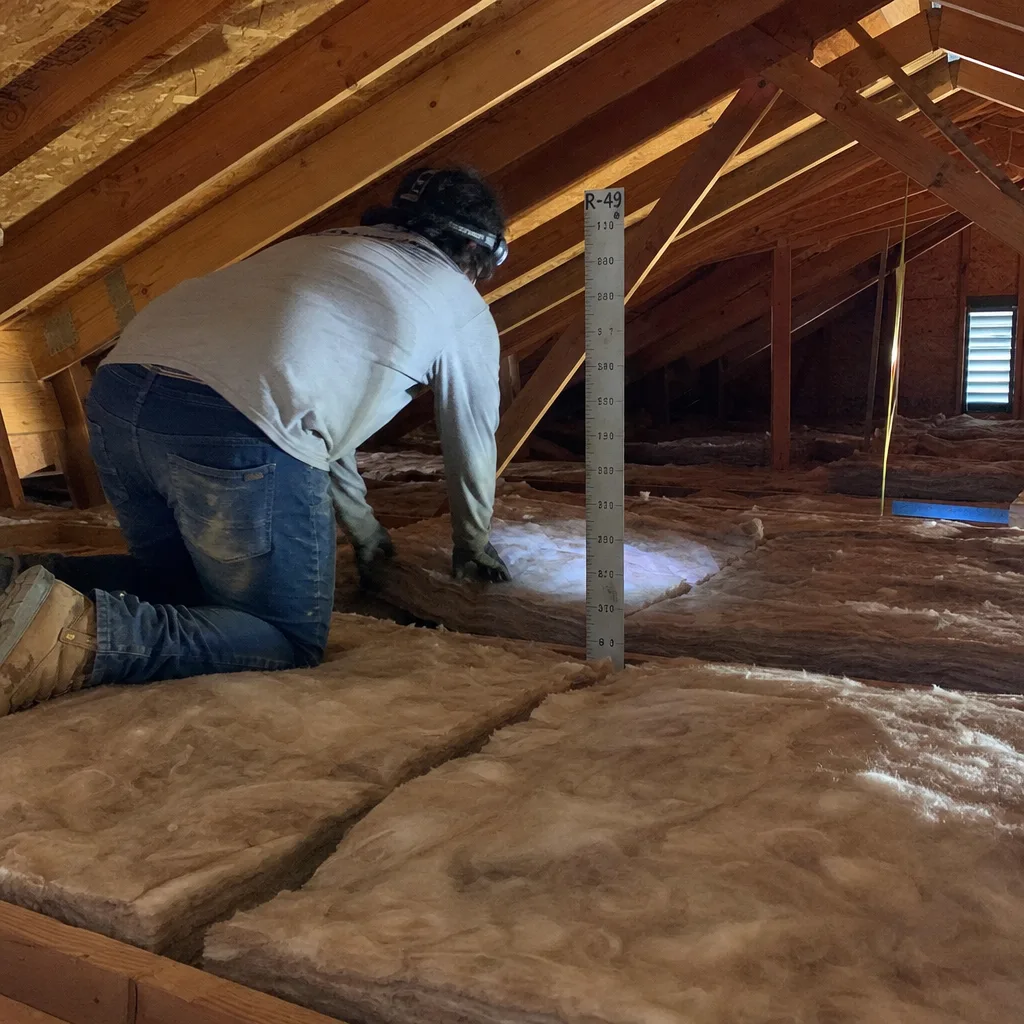
We’ve pulled more than a few jobs in the 92201 mid-century grid where the homeowner’s 1970s-era attic still had the original compressed batt layer and just two small gable vents. By noon the truss bays were over 160°F, and the vaulted living room ceiling was radiating heat straight down. Those are the attics we know best. We air-sealed the top plates, blew high-R insulation over the old batts, and added ridge venting plus a foil-faced radiant barrier on the west-facing roof slope. Ceiling surface temps dropped noticeably, and the afternoon duct heat gain in the exposed runs eased off. That’s not a hypothetical. That’s an Indio attic we’ve fixed.
Every estimate for Attic Insulation work in Indio includes a full look at what’s actually happening above the ceiling, not just a square-footage quote. We check the existing R-value, venting, air sealing, and any exposed duct runs before we recommend a number.
Attic Ventilation in Indio
Attic Ventilation in Indio means giving the superheated air trapped under your roof somewhere to go. A properly vented attic still gets hot, but it doesn’t hold 160°F+ air against your ceiling for hours after sunset. Most 92201 homes from the 1950s through the 1970s were built with minimal or no soffit vents, and whatever gable vents exist are often undersized, blocked by years of dust, or simply inadequate for the Coachella Valley’s heat load. The fix usually involves balancing intake at the soffits with exhaust at the ridge or high gables, so air moves through instead of sitting still.
When to Add Venting vs. When to Rebalance
Some Indio attics have vents, they just don’t move any air. If your soffit vents are painted shut or your gable vents are undersized, the answer might be rebalancing rather than full replacement. A typical attic ventilation upgrade in Indio runs $900 to $2,400, depending on whether we’re adding ridge venting, unblocking or enlarging soffit vents, or installing powered or solar attic fans. Older homes with no soffit overhangs sometimes need a different exhaust strategy entirely.
Venting Prep Before New Insulation
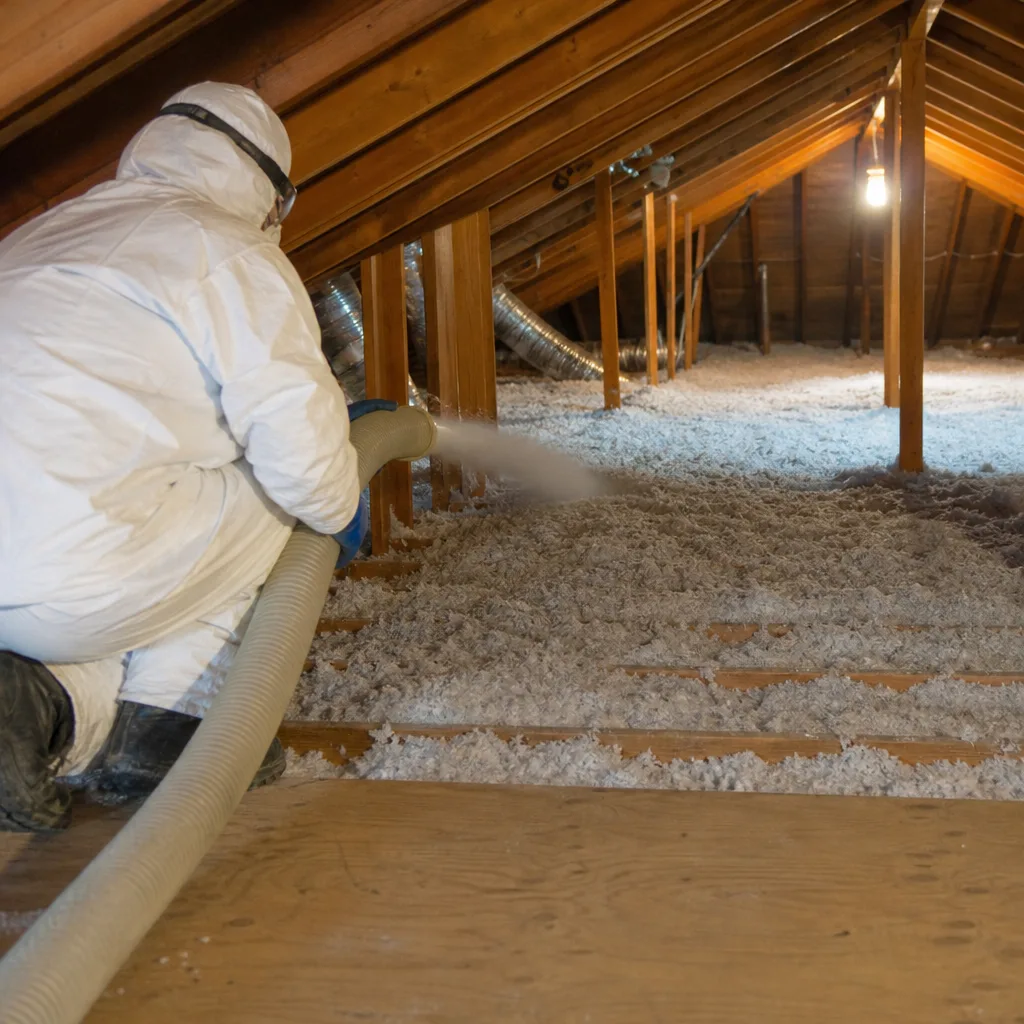
Baffles are part of the job when you’re topping up blown-in insulation. Without them, new insulation drifts into the eaves and chokes off the air intakes you just paid to create. We prep every Indio attic with baffles at the soffit line before blowing in new material. That step is easy to skip, and it’s exactly the kind of corner-cut that leaves a home feeling hotter than it should even after an insulation upgrade.
Radiant Barrier in Indio
Radiant Barrier in Indio is one of the few upgrades that pays for itself fastest in this specific climate. A foil-faced radiant barrier stapled to the underside of roof rafters reflects radiant heat back toward the roof deck instead of letting it reradiate onto the attic floor and your ceiling. In a desert attic reaching 160°F, a properly installed radiant barrier can make a measurable difference in how much heat pushes into the space below. The key word is properly. We see radiant barriers in Indio homes stapled directly against the roof deck with no air gap, or foil installed over dusty rafters where the reflective surface has lost its reflectance. Installed that way, it does almost nothing. A radiant barrier install in Indio typically runs $1,200 to $2,800, depending on attic footprint and roof complexity.
West-Facing Slopes First
We prioritize the west-facing roof slope in Indio homes because that’s where the worst afternoon sun hits. You don’t necessarily need radiant barrier across the entire attic. A focused install on the west slope, where the sun beats hardest from 3pm to 7pm, often delivers the most noticeable comfort improvement for the least material cost. That’s the kind of call we make on the attic floor, not from a brochure.
When Reflective Coatings Stop Reflecting
Spray-on reflective coatings have a place, but they lose effectiveness fast when applied over a dusty roof deck. The reflective property comes from the clean surface, not from the coating itself. If a previous contractor sprayed a coating over plywood covered in 30 years of desert dust, that surface isn’t reflecting much of anything. We’ll tell you honestly whether a radiant barrier retrofit makes sense in your attic or whether the money is better spent on higher R-value insulation and air sealing.
Trusted Brands We Service in Indio
We’re authorized to install Attic Insulation in Indio using products from Owens Corning, CertainTeed, Rockwool, GreenFiber, Icynene, Demilec, Johns Manville, and Knauf. For an older Indio home with blown-in top-up, blown cellulose from GreenFiber makes a strong fit. For a newer gated community house with vaulted ceilings and exposed duct runs, our team often specs open-cell spray foam from Demilec or Icynene. In some 92201 homes we recommend Rockwool mineral wool for its non-combustible properties and its ability to hold its R-value in high heat. Whatever the right material is, we carry it. We don’t make one brand fit every job.
Common Attic Insulation Problems We See in Indio Homes
- Compressed 1970s batt insulation in 92201 homes. Fiberglass batts settle and compress over decades. We regularly measure original layers in mid-century Indio homes at R-7 or less, which blocks almost none of the midday radiant load through the ceiling.
- Undersized or blocked venting. Soffit vents painted over, gable vents too small for the attic volume, or no ridge vent at all. When heat can’t leave, the attic turns into an oven and cooks every exposed duct run up there.
- Failed or poorly applied radiant barriers. Foil stapled flat against the roof deck with no air gap loses most of its reflective value. We see this in homes all across Indio where someone tried the cheap route a decade ago and the barrier peeled or dulled.
- Hot vaulted ceilings in newer gated subdivisions. Homes in 92203 neighborhoods built in the 2000s often have vaulted or open-beam ceilings with minimal attic space above. When those spaces aren’t vented correctly, the ceiling surface stays hot even after the AC’s been running for hours.
Pricing for Attic Insulation in Indio, CA
A blown-in insulation top-up in an average Indio home runs $1,600 to $3,400. A full removal and replacement of old, compressed insulation ranges from $2,800 to $5,500, and that’s the job we recommend when an attic still has the original 1970s layer. Spray foam jobs vary more by square footage and roof complexity, generally $3,500 to $8,000 for a typical Coachella Valley attic. Attic ventilation work runs $900 to $2,400 as mentioned above. Radiant barrier installs sit between $1,200 and $2,800. What moves the number is attic access, existing conditions, the R-value target, and whether air sealing is included. We always include air sealing recommendations in the estimate, because it’s the highest-ROI upgrade most Indio homes are missing. Call (877) 265-5712 for a free, no-obligation quote with real numbers.
We Also Serve Cities Near Indio
In addition to Indio, our crews work in Bermuda Dunes, La Quinta, Indian Wells, and Palm Desert. The same team handles every estimate and install, and we stock the same full brand line whether you’re in a 92201 mid-century home or a newer community in Indian Wells.
Serving Indio, CA — Our Local Coverage Area
We’re based in the Indio area and know this community well. Use the map below to see our service coverage — if you’re nearby, we can almost certainly help.
FAQs About Attic Insulation in Indio
Yes, in most cases you can blow new insulation directly over the old layer, and that’s often the fastest, most cost-effective upgrade. The original batts have compressed to a fraction of their original R-value, but they don’t need to come out unless there’s moisture damage, rodent contamination, or you want a full reset before air sealing. A top-up over legacy batts in Indio runs roughly $1,600 to $3,400 including air sealing at the top plates. Call (877) 265-5712 and we’ll tell you what’s actually in your attic before we recommend anything.
The hot ceiling surface usually means the space above it isn’t venting, so heat has nowhere to exit and the insulation is back-radiating into the room below. Many gated desert communities in 92203 were built with vaulted or open-beam ceilings and minimal soffit venting, so the attic cavity behind the ceiling superheats and stays hot into the evening. The fix is almost always ventilation work plus an evaluation of whether a radiant barrier on the west slope makes sense. We diagnose the exact issue before recommending any work.
An Indio attic can hit 160°F or more by early afternoon in July and August, and poorly vented attics can push past 180°F. That’s hot enough to soften caulk, warp open-beam framing, and seriously degrade duct performance. Our crews start Indio attic work at dawn to get the heavy work done before the truss bays become unsafe. The heat also drives every material choice: high-R blown insulation, reflective barriers on west slopes, ventilation that moves real air volume, and sealing that holds up to repeated 160°F cycles.
In most 92201 homes with original 1970s-era batts and minimal venting, a retrofit makes more sense than patch repairs. The old insulation isn’t failing, it’s already failed. New blown-in insulation over the old batts plus one or two targeted ventilation upgrades delivers a real comfort change in a single visit. A patch approach, adding a batt in one corner or sealing a single duct run, rarely moves the needle because the attic’s whole thermal envelope is undersized. We’ll walk you through the numbers on both approaches.
Yes, and in most Coachella Valley homes the ducts deserve as much attention as the attic floor. Exposed duct runs sitting in a 160°F attic deliver air that’s noticeably warmer than what leaves the air handler, especially on long runs across a west-facing truss bay. We check duct insulation, connections, and routing on every Indio attic assessment. If we can insulate and air-seal the attic so the ducts sit in a cooler environment, that alone often improves AC performance more than adding a new layer to the attic floor.
Written by Allen Decker, Owner at North Tustin Insulation, serving Indio and the Coachella Valley.