Fast, Reliable Attic Insulation Across Lake Arrowhead
Attic insulation in Lake Arrowhead is a different job than it is down the hill. At roughly 5,000 feet, your attic has to handle deep snowpack, weeks of sub-freezing nights, and the freeze-thaw cycles that tear apart under-insulated roofs. We work in ZIP code 92352 regularly, and we know what these mountain cabins and second homes need. If your heating bills climb every winter or you’re seeing icicles the size of fence posts, call North Tustin Insulation at (877) 265-5712. We’ll give you a straight answer about what’s going on in your attic and what it’ll take to fix it.
Why North Tustin Insulation Is Lake Arrowhead’s Preferred Attic Insulation Company
We’re an insulation-only contractor, which means every estimate we write and every crew member we send to Lake Arrowhead focuses on one trade: getting your attic right. No roofing upsells, no HVAC detours. Allen Decker runs our team, and he built the company around product knowledge most generalists don’t have. We carry eight insulation brands across fiberglass, mineral wool, cellulose, and spray foam, so when we recommend something for a 1970s A-frame near Lake Arrowhead Village, it’s because that material fits that roof assembly, not because it’s what we happen to have on the truck.
Our Attic Insulation crews understand what ice dams do to a Lakeside home. We respond to callouts all over the mountain side of 92352, from the Village to the neighborhoods off Highway 173. Homeowners here don’t need a generic contractor. They need someone who’s seen settled fiberglass with no baffles at the eaves and knows how to fix it.
Radiant Barrier in Lake Arrowhead
Radiant Barrier in Lake Arrowhead works differently than it does in the flatlands. Most people think of radiant barrier as a hot-climate product, but at altitude, it has a real job: slowing radiant heat loss in winter and reducing attic overheating on sunny winter days when snow on the roof creates an oven effect. A radiant barrier under the roof deck in Lake Arrowhead typically runs $1.50 to $3.00 per square foot installed, depending on whether you’re pairing it with new insulation or doing a standalone retrofit.
When Radiant Barrier Makes Sense Here
If your home has vaulted open-beam ceilings with little traditional attic cavity, radiant barrier can be one of the few retrofit options that doesn’t require ripping out drywall. We’ll often pair it with Icynene spray foam on the underside of the sheathing for both a conductive and radiant break. In cabins that get hammered with afternoon sun on south-facing roof planes, a radiant barrier plus proper eave venting drops summer attic temps noticeably.
What It Doesn’t Fix
Radiant barrier won’t stop ice dams. If warm air from your living space is melting snow at the roof surface, no foil layer alone will save you. That’s a baffle and air-sealing problem. In Lake Arrowhead, radiant barrier is a complement to a properly vented, properly insulated attic, never a substitute.
Attic Cleaning Services in Lake Arrowhead
Attic Cleaning Services in Lake Arrowhead come up more often than you’d think, because mountain homes accumulate things flatland attics don’t. Rodent activity, pine needle debris, old failed insulation that’s turned into dust, and sometimes mold from years of condensation in unvented roof assemblies. We handle full attic cleanouts before reinsulation jobs, typically running $1,200 to $3,500 in the 92352 area depending on attic size and what we’re removing.
Cleaning Before Insulating
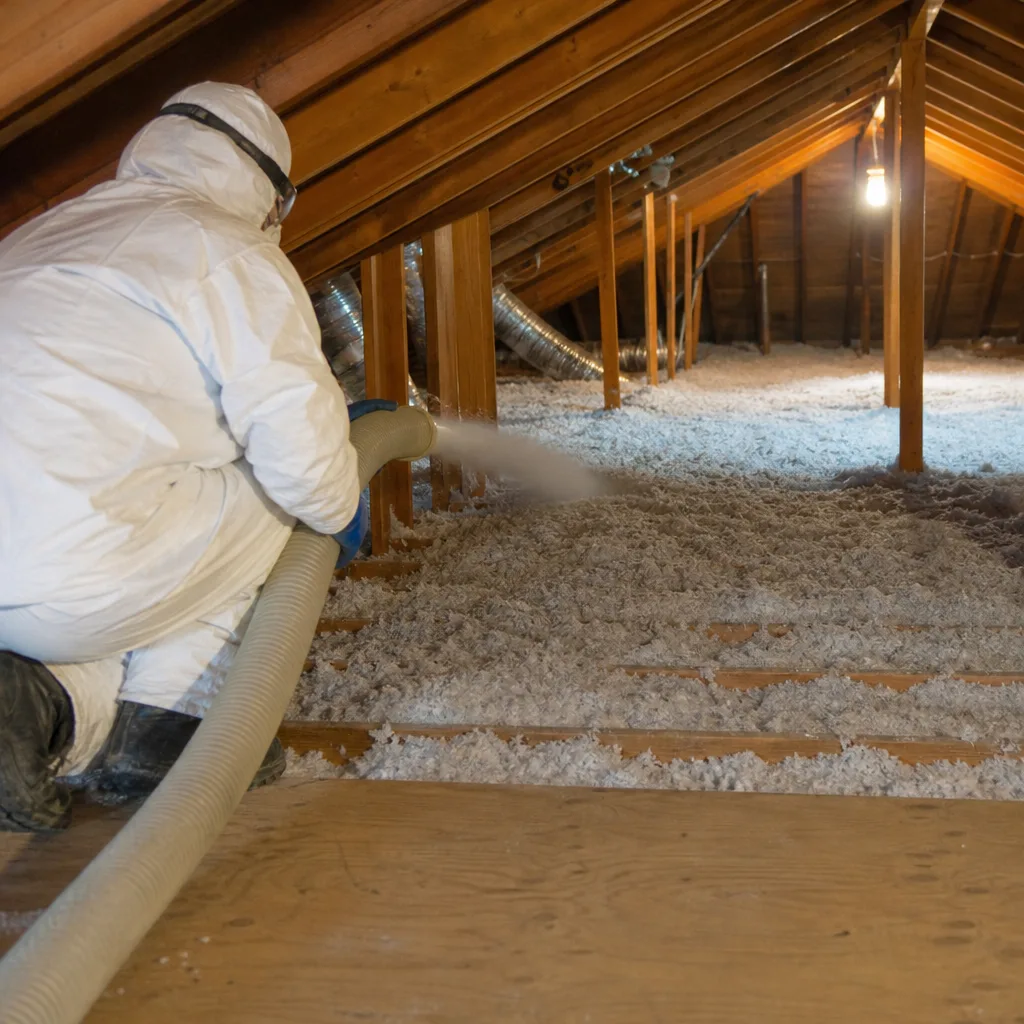
You can’t blow GreenFiber cellulose over rodent droppings and expect a healthy result. We vacuum everything out, sanitize where needed, and inspect for moisture damage before new material goes in. In second homes that sit closed all winter, this step matters even more. You’d be surprised what we find in attics that haven’t been opened in a decade.
What We Pull Out
Old fiberglass that’s compressed to half its rated R-value, rock wool full of dust, and occasionally insulation that was installed decades before anyone thought about air sealing. If you’ve got a 1980s cabin near Running Springs or Highway 18 and you’re not sure what’s up there, cleaning and inspection is the smart first move before any estimate.
What happens when you call
- 1
A real person answersNo phone trees — you reach a local pro.
- 2
You get an upfront price rangeHonest numbers before anyone is dispatched.
- 3
A background-checked tech heads outLicensed & insured, dispatched right away.
- 4
You approve before work beginsNothing starts until you say go.
Trusted Brands We Service in Lake Arrowhead
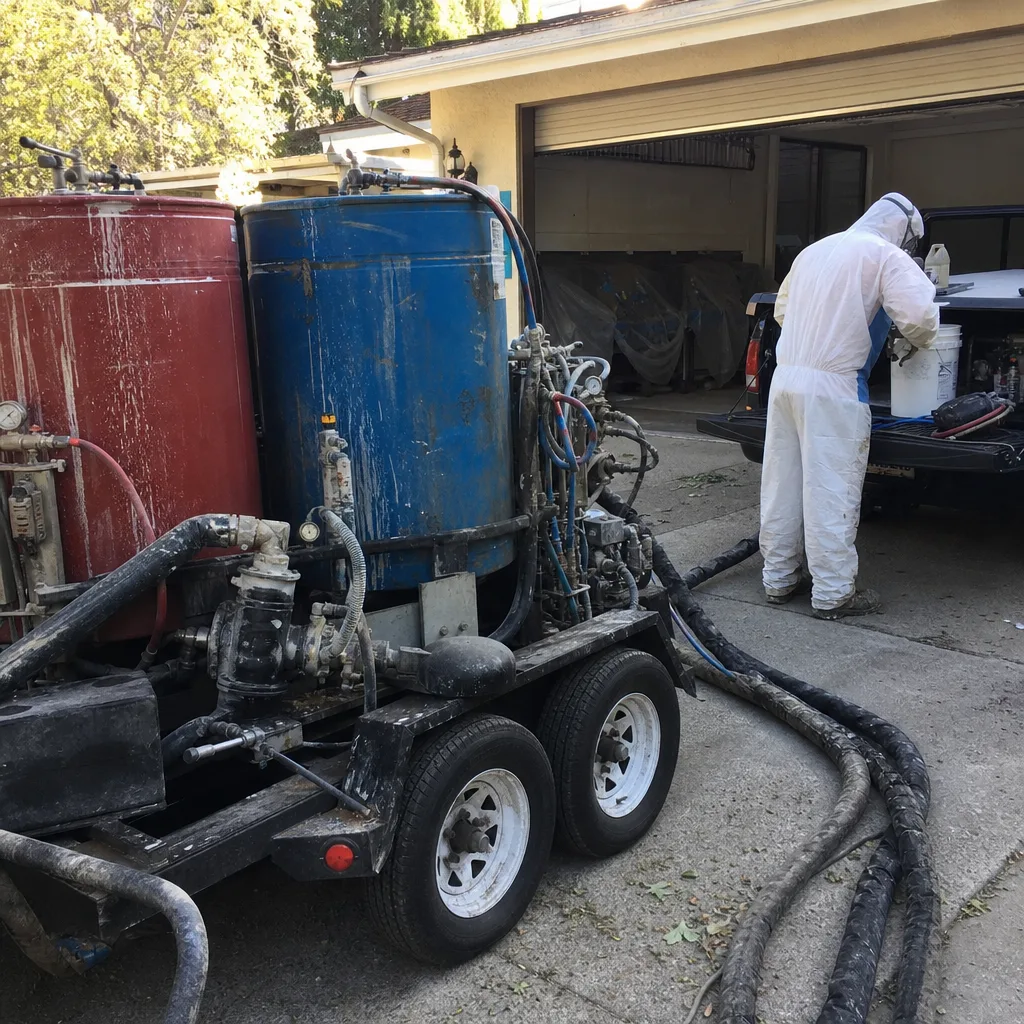
We install and maintain every brand we recommend. We’re authorized for Owens Corning and CertainTeed fiberglass systems, and we carry Icynene and Demilec for spray foam work, which matters up here where closed-cell foam against the sheathing is often the right answer for vaulted assemblies. For homeowners prioritizing sustainability, GreenFiber recycled cellulose and Rockwool mineral wool are standard parts of our lineup. Parts turnaround for Lake Arrowhead jobs is fast because we stage material before we head up the hill. And when we quote a brand, that’s the brand we install.
Common Attic Insulation Problems We See in Lake Arrowhead Homes
- Settled fiberglass with no eave baffles. Warm air from the living space migrates up, melts snow at the roof surface, and the melt refreezes at the cold eaves. That’s your ice dam, and it backs water under shingles every winter.
- Vaulted open-beam ceilings with unvented assemblies. Many 1960s through 1990s cabins were built without a clear air channel from soffit to ridge. That traps moisture against the sheathing, leading to condensation, rusted fasteners, and eventually rot.
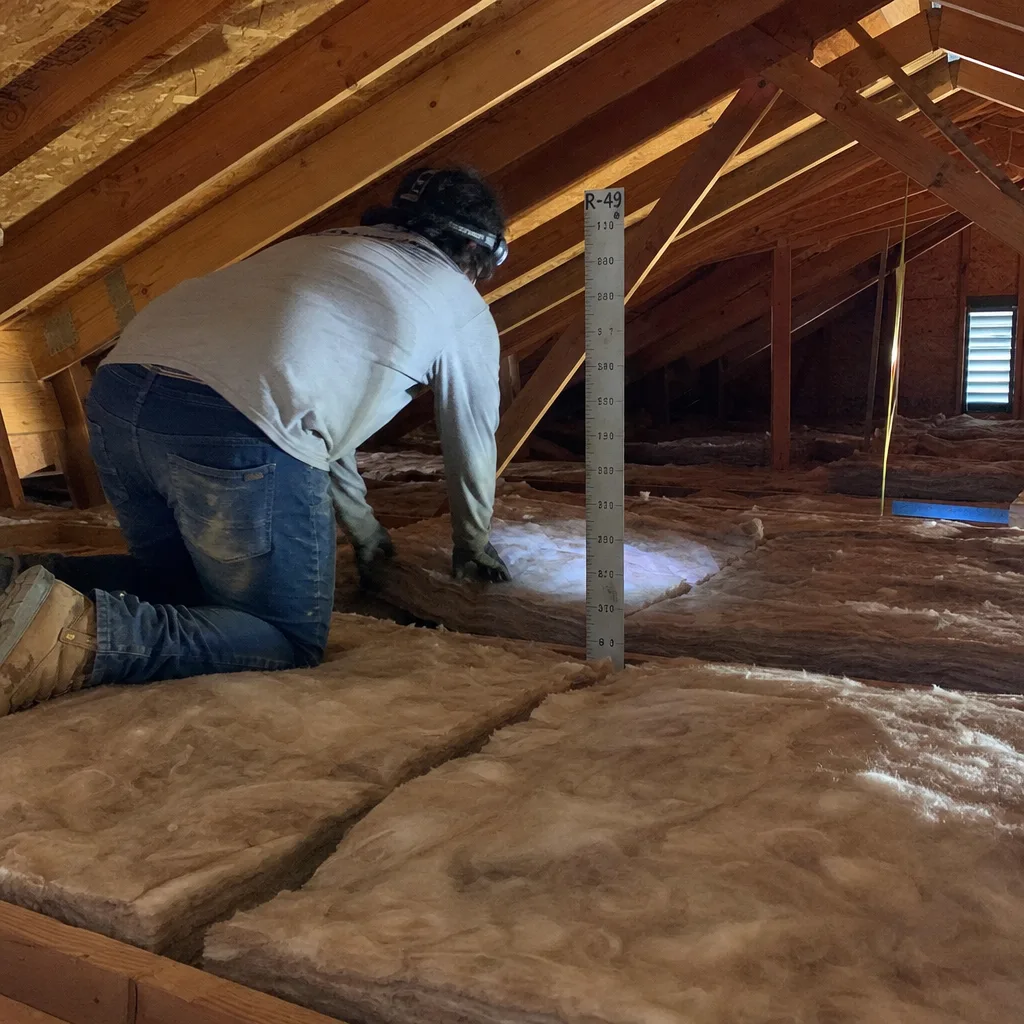
- Compressed or degraded original insulation. Standards in Lake Arrowhead’s climate call for R-49 or better in the attic. Most older homes up here have R-19 or R-30 at best, and a lot of it has been flattened by decades of snow load and storage.
- Frozen pipes caused by heat loss. When an attic can’t hold heat where it belongs, plumbing runs in walls and soffits get colder than they should. We’ve seen recurrent freeze events in homes where the attic was the actual culprit.
Pricing for Attic Insulation in Lake Arrowhead, CA
Blown-in cellulose attic insulation in Lake Arrowhead typically runs $1.75 to $3.25 per square foot installed, depending on depth and whether we’re topping up or starting clean. Spray foam on the roofline runs $3.50 to $7.00 per square foot, and that number reflects the closed-cell Icynene or Demilec systems most Arrowhead homes need. Full attic insulation replacement on an average 1,500-square-foot cabin, including cleanup, air sealing, and new baffles, usually lands between $4,000 and $9,000. What moves the price: access difficulty, vaulted ceilings, and how much old material we’re hauling out. We quote free, and we quote straight. Call (877) 265-5712 for a number on your specific house.
We serve the entire Lake Arrowhead area, from the Village to the north shore and everywhere in 92352.
We Also Serve Cities Near Lake Arrowhead
North Tustin Insulation covers mountain communities across the San Bernardino range. We regularly work in Crestline, Running Springs, Highland, and Muscoy, bringing the same brand range and insulation-specific crews to each job. If you’re just down the 18 or off the 330, you’re in our service area.
Serving Lake Arrowhead, CA — Our Local Coverage Area
We’re based in the Lake Arrowhead area and know this community well. Use the map below to see our service coverage — if you’re nearby, we can almost certainly help.
FAQs About Attic Insulation in Lake Arrowhead
Because ice dams are the real threat, not missing R-value. Without baffles at the eaves, warm air melts roof snow, and the melt refreezes at the cold soffit edges. Baffles create a cold roof surface and let melt water drain, so your insulation does its job without pushing water under the shingles. In Lake Arrowhead’s deep-snow winters, baffles and venting are the first thing we check. Call (877) 265-5712 if you’ve seen heavy icicles on your eaves.
At 5,000 feet with weeks below freezing, R-49 in the attic floor is the practical minimum, and many homes need R-60 if they have vaulted assemblies or large roof planes. Existing older insulation up here often tests closer to R-19 after settling. So a top-up or full replacement is common, not optional. We’ll measure what’s there and give you an exact recommendation.
We use closed-cell spray foam applied directly to the underside of the roof sheathing, typically Icynene or Demilec, which creates an insulated, air-sealed roof assembly without needing a deep attic cavity. For homes with some cavity space, we’ll retrofit Owens Corning Rafter-Mate baffles and pair them with dense-packed cellulose. The approach depends on how your roof was framed, and we’ll tell you which direction fits after a roof inspection.
No. Radiant barrier addresses radiant heat, not the warm-air escape that drives ice dam formation. It helps with summer heat and some winter radiant loss, but if you’re dealing with icicles and ice buildup, you need air sealing, eave baffles, and insulation depth first. Don’t spend money on foil expecting it to fix a venting problem. We’ll tell you straight what order to do things in.
Spring is when the damage shows itself. Snow melts, and homeowners see the water stains on ceilings, the lifted shingles, the rotted fascia. It’s also the safest time to open up an attic and do a full inspection without fighting cold weather. If you spot staining this spring, book an estimate early, before the next snow load tests your roof again. Call (877) 265-5712 for a free assessment.
Written by Allen Decker, Owner at North Tustin Insulation, serving Lake Arrowhead with insulation-specific expertise.