Fast, Reliable Attic Insulation Across Crestline
Most Crestline homes lose heat through the attic faster than anywhere else. An under-insulated attic in a mid-century mountain cabin can account for 25 to 40 percent of the heat escaping your house during a snow-and-freeze cycle. North Tustin Insulation has worked on sloped-roof cabins, pier-and-beam chalets, and second homes throughout Crestline, and the pattern is almost always the same: too little material, none at the eave edges, and a gable vent that’s become a squirrel highway. We carry eight insulation brands so the fix matches the structure, not the truck. Call (877) 265-5712 for a free estimate, and we’ll walk your attic from ridge to eave before recommending a dollar of material.
Why North Tustin Insulation Is Crestline’s Preferred Attic Insulation Company
We’re an insulation-only contractor, which matters in a town built on older housing. A generalist might see a Crestline attic and reach for whatever batt is in the truck. We see a mid-century mountain home with steep slopes, open eaves, and wildlife pressure from the San Bernardino National Forest, and we spec the material around those conditions. Allen Decker, our owner, set the company up to carry eight nationally recognized brands so a recommendation is driven by the house, not by inventory. In Crestline specifically, that usually means an air-sealing pass before any insulation goes in, because a sealed attic with R-38 beats a leaky attic with R-60 every winter.
Crestline homeowners call us because they want a straight answer on what their cabin actually needs. We’ve been the insulation specialist on Lake Gregory-area chalets, on cabins off Highway 189, and on second homes up around the 92325 corridor, and the work always starts with the same question: where is the heat actually going? Attic Insulation is our core trade, and in Crestline that means dealing with snow load, freeze-thaw cycles, and the very real problem of squirrels tunneling through loose-fill to nest in the warm spots.
Attic Ventilation in Crestline
Attic Ventilation in Crestline is a different animal from what you’d spec in San Bernardino or Highland. At 4,000-plus feet, a poorly ventilated attic does two things: it traps warm air that melts snow on the roof deck, and that meltwater refreezes at the cold eaves, forming ice dams that back water up under shingles. We see this on mid-century cabins where the original gable vents are undersized or blocked, and the fix is restoring balanced airflow before adding insulation, not after. Ventilation keeps the roof deck cold so snow stays put and melts evenly.
A ventilation correction on a typical Crestline cabin, including new baffles, sealing at the top plates, and upgrading or adding gable or ridge venting, runs $850 to $2,300 depending on roof size and how much correction the original build needs.
Baffle Install and Eave Airflow
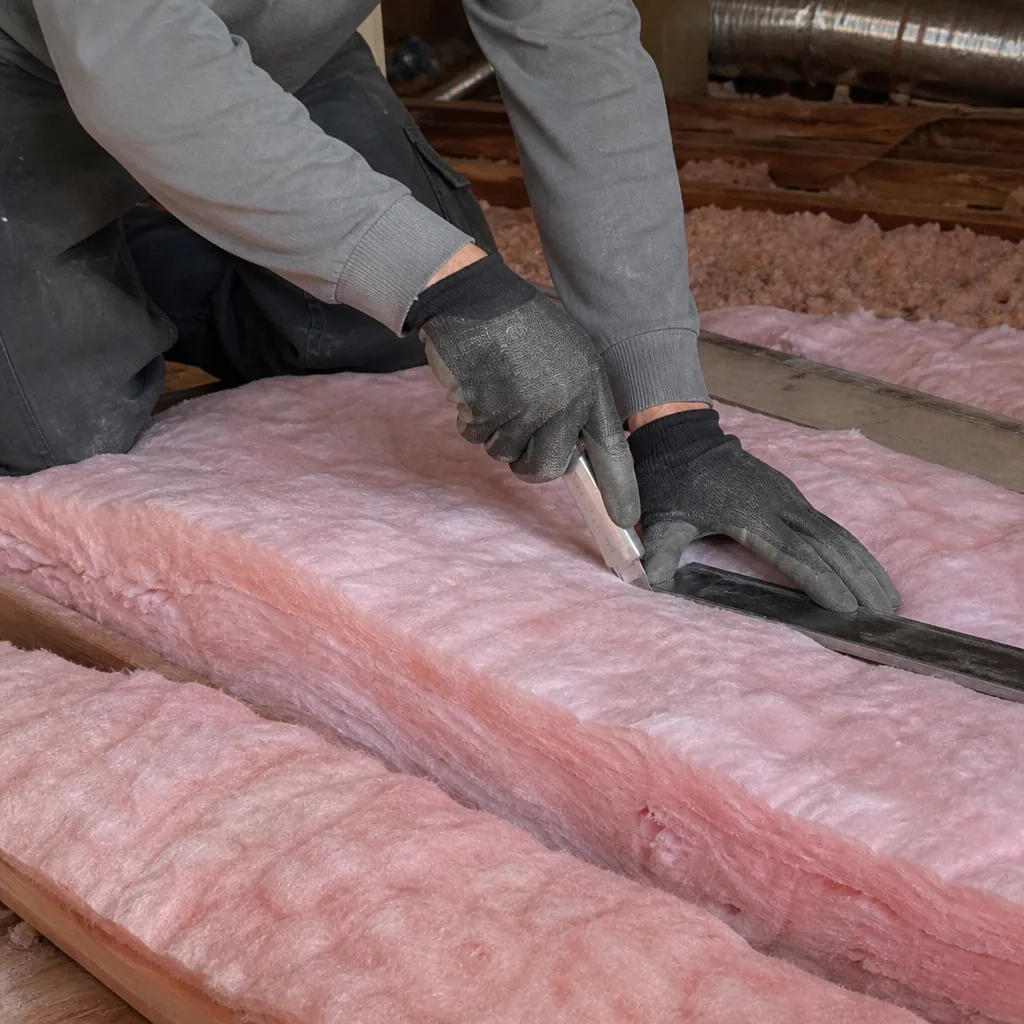
Most Crestline cabins have open eaves, which sounds good until you realize insulation was never held back from the soffit vents. We install baffles at every rafter bay so air moves from soffit to ridge without being blocked by new batts or blown-in material. On a steep chalet roof, this detail is what prevents that warm pocket at the eave edge from forming in the first place.
Vent Upgrades on Sloped Roofs
Steep sloped roofs need more than a couple of gable vents. We evaluate whether your cabin is getting enough cross-ventilation or whether a ridge vent makes sense given the snow exposure. In Crestline, ridge vents get buried periodically, so we talk through what survives snow load and what creates a leak risk.
Radiant Barrier in Crestline
Radiant Barrier in Crestline is a useful add-on, but we’re honest about what it does and what it doesn’t do. A radiant barrier reflects radiant heat, which matters most in summer when the sun pounds the roof deck. At Crestline’s elevation, summer is cooler than the valleys below, so a radiant barrier is less about cooling and more about keeping the attic temperature stable year-round while reducing the heat load that melts snow unevenly at the ridge. We typically install it on the roof deck underside, below the rafters, during an insulation upgrade.
For a standard Crestline cabin attic with roughly 800 to 1,200 square feet of roof deck area, radiant barrier installation runs $1,100 to $2,800, depending on whether we’re working in an open attic or around sloped rafter bays that need careful fitting.
Roof Deck Application
On open attics, we staple barrier material to the underside of the roof deck, leaving a small air gap that’s required for it to work correctly. On a Crestline cabin with vaulted ceilings, this becomes more careful work, and we’ll tell you honestly if the structure isn’t suited to a barrier without opening up the assembly.
Pairing With Ventilation
A radiant barrier and proper ventilation work together only if airflow is already moving. We’ve seen cabins where a barrier was installed over a blocked soffit, which just trapped heat. In Crestline, we always fix the airflow first, then evaluate whether a barrier earns its cost given your specific roof orientation and snow exposure.
Trusted Brands We Service in Crestline
We’re authorized to install CertainTeed and Owens Corning fiberglass, and we keep GreenFiber cellulose and Rockwool mineral wool in the lineup for Crestline customers who want pest-resistant, fire-resistant, or recycled material. For cabins that need air sealing before insulation, we pair Icynene or Demilec spray foam with batt or blown-in material. Our Crestline crews stock the common batt widths, vent baffles, and air-sealing cans locally so we aren’t waiting on a shipment from down the hill. Eight brands. One contractor. The material gets matched to your cabin, not the other way around.
Common Attic Insulation Problems We See in Crestline Homes
- Bare eave edges on steep slopes. Mid-century Crestline cabins were frequently under-insulated from the start, and what little blown-in material existed has settled toward the center over time. That leaves the sloped rafter bays near the eaves with zero coverage, and heat pours out right at the roof’s edge all winter.
- Squirrel intrusion through gable and eave vents. The San Bernardino National Forest is right there, and squirrels find open vents faster than most homeowners realize. They gnaw through batts, tunnel through blown-in, and shred material for nests, wrecking R-value while creating cold spots.
- Ice damming from warm, under-sealed attics. When warm interior air leaks through unsealed top plates and can lights into the attic, it heats the roof deck, melts snow, and refreezes at the eaves. In Crestline’s snow cycles, this is the single biggest cause of interior water staining along exterior walls and ceilings.
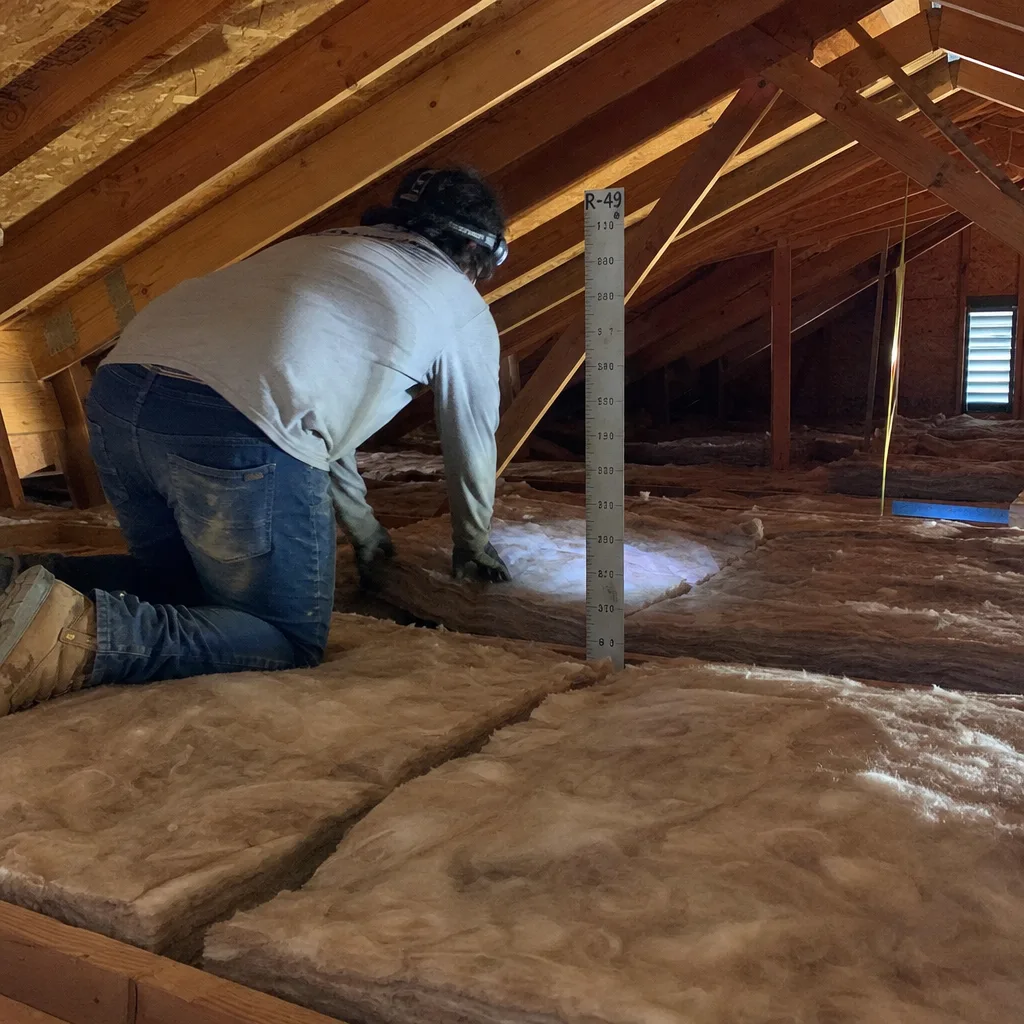
- Settled and compressed loose-fill in older cabins. We regularly encounter Crestline attics where original loose-fill has compressed to half or less of its stated depth. Add in the fact that many cabins have never been topped up since being built, and the effective R-value is often R-11 to R-19 when the mountain climate demands R-38 minimum.
Pricing for Attic Insulation in Crestline, CA
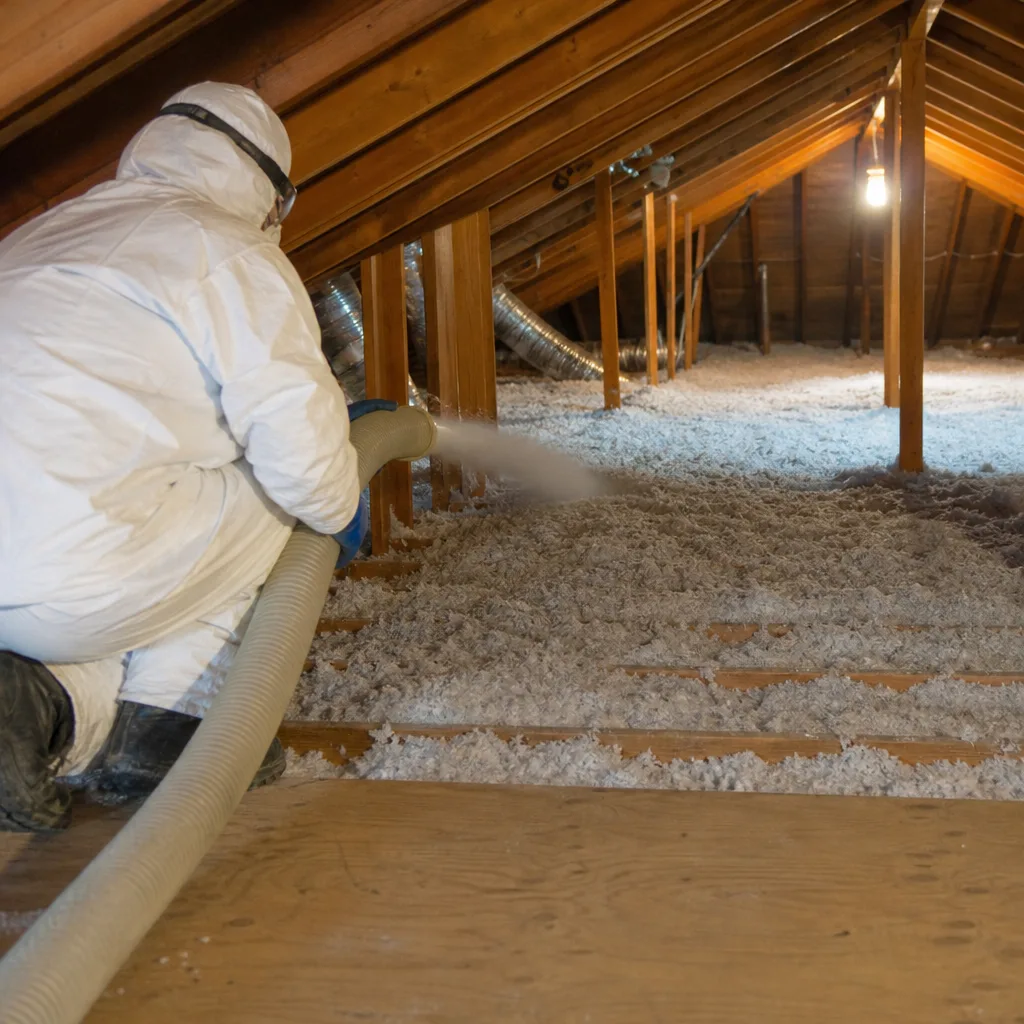
For a typical Crestline cabin with 800 to 1,200 square feet of attic floor, a full top-up to R-38 blown-in runs $1,400 to $2,800. Full removal of old, settled, or squirrel-damaged material with air sealing before new insulation runs $3,000 to $6,000, depending on attic size, roof pitch, and how much exclusion work is required at the vents and gaps. Radiant barrier as a standalone addition runs $1,100 to $2,800. Attic baffle and ventilation upgrades run $850 to $2,300. Every quote starts with a free attic inspection, because in a mountain cabin with a sloped roof and 60 years of history, no two jobs price out the same. Call (877) 265-5712 for a firm number on your attic.
We Also Serve Cities Near Crestline
Beyond Crestline, our crews and brand inventory serve Attic Insulation in Crestline and the surrounding mountain and valley communities. That includes Lake Arrowhead and the 92352 corridor, Muscoy and San Bernardino down in the valley, and Highland to the east. Same materials, same insulation-only focus, just a different driveway.
Serving Crestline, CA — Our Local Coverage Area
We’re based in the Crestline area and know this community well. Use the map below to see our service coverage — if you’re nearby, we can almost certainly help.
FAQs About Attic Insulation in Crestline
Your cabin sits above 4,000 feet, where winter temperatures regularly drop below freezing and snow stays on the roof for days or weeks, not hours. The mountain air is colder and the freeze-thaw cycle is longer, so heat loss through an under-insulated attic is constant and severe. Homes down in San Bernardino lose heat too, but their winters are mild by comparison. Add in the fact that Crestline’s mid-century cabins were built with little or no attic insulation, and the difference becomes dramatic. Call (877) 265-5712 to have your attic depth measured against what the mountain climate actually calls for.
Bare eave edges on steep sloped roofs, combined with open gable vents that let wildlife in. The original builds put minimal material up there, and what was installed has settled toward the center, leaving the rafter bays near the eaves uninsulated. Squirrels and other forest wildlife then use the open vents as entry points, gnawing through whatever material remains. The fix is air sealing and exclusion first, then adding material to R-38 minimum.
We start by finding every entry point, which in Crestline usually means the gable vents, eave edges, and any gap where roof sheathing meets framing. After excluding the animals, we seal the openings with pest-resistant material like Rockwool mineral wool, which is non-combustible and much less attractive to rodents than fiberglass. Then we air-seal the top plates and penetrations before adding new insulation. Call (877) 265-5712 and we’ll schedule an attic inspection focused on intrusion points.
Yes, but it’s detail-heavy work. Steep sloped rafter bays on a pier-and-beam cabin require careful baffle placement at the eaves, tight-fitting batts or spray foam against the sloped roof deck, and sealing at every rafter-to-top-plate junction. We do this routinely on Crystal Ridge and all areas around Crestline, and the material choice depends on your roof pitch and whether you have vaulted ceilings or an open attic. If you call (877) 265-5712, we can walk through what your specific roof assembly can take.
Ventilation, yes, absolutely. It prevents ice dams and keeps the roof deck cold so snow doesn’t melt and refreeze at your eaves. A radiant barrier is worth it on a Crestline home only if your attic is already properly ventilated and sealed. Since summer heat at this elevation is moderate, a radiant barrier is more about preventing uneven snow melt than cooling the house. For most Crestline cabins, we recommend fixing ventilation first, then evaluating whether a barrier earns its cost. Call (877) 265-5712 for an honest recommendation on both.
On a sloped-roof chalet off the Lake Gregory area, our crew found the original mid-century attic nearly bare, with blown-in material only over the center and bare slopes near the eaves, plus gnawed gaps at the gable vents where squirrels had moved in. We air-sealed the top plates and penetrations, installed R-38 Rockwool batts tight to the sloped rafters, and closed off the entry points before adding ventilation, so the cabin held heat through the next snow cycle instead of bleeding it out the roof. That’s the standard we bring to every attic in Crestline.
Written by Allen Decker, Owner at North Tustin Insulation, serving Crestline and the San Bernardino Mountains.