
Fast, Reliable Spray Foam Insulation Across Costa Mesa
Spray foam insulation in Costa Mesa typically runs $3.50 to $7.50 per board foot installed, with a full attic retrofit in a 1,200-square-foot ranch usually landing between $4,200 and $9,000. Most Costa Mesa jobs are completed in one to two days, and we schedule directly from our North Tustin shop so we’re on-site fast when the marine layer clears and your attic is ready to work in.
We know the difference between foaming a 1961 stucco-over-wood-frame bungalow off the 92627 flats and sealing a newer infill attic near South Coast Metro. The approach changes, the prep changes, and the moisture conversation changes. That’s the point of working with an insulation-only contractor who’s done this across Costa Mesa’s housing stock. Call (877) 265-5712 for a straight assessment of your home, not a pitch for whatever’s on the truck.
Why North Tustin Insulation Is Costa Mesa’s Preferred Spray Foam Insulation Company
The westside flats of Costa Mesa taught us something that spec sheets don’t: in this coastal climate, moisture control comes before R-value. Homes in 92626 and 92627 sit in the marine layer most mornings, and that fog doesn’t just sit outside. It gets into wall cavities, attic framing, and rim joist bays. We’ve pulled enough fog-stained, sagging paper-faced batts out of those 1950s-60s stucco-over-wood-frame walls to know that Spray Foam Insulation here is often a moisture-sealing job first and a thermal upgrade second.
We carry eight nationally recognized insulation brands, including Demilec and Icynene for spray foam, so your recommendation is driven by what your Costa Mesa home actually needs. We match the material to your home, not the other way around. Allen Decker runs the company with that as the operating rule, and every estimate follows it.
We’re a focused insulation contractor, not a generalist juggling roofing and HVAC. That concentration means our team works through the specific retrofit conditions Costa Mesa throws at us daily: coastal damp, old single-wall framing, and the Santa Ana heat spikes that punish an underperforming attic. We’ve built our reputation in Costa Mesa on honest prep work and brand-transparent recommendations, and we back that with free estimates and a detailed written scope before anyone touches a spray gun.
When you call, you get an insulation specialist who understands your neighborhood’s housing stock, not a sales script. For homes across Costa Mesa, that’s the difference between a foam job that traps moisture and one that stops it. Reach us at (877) 265-5712.
Rim Joist Spray Foam in Costa Mesa
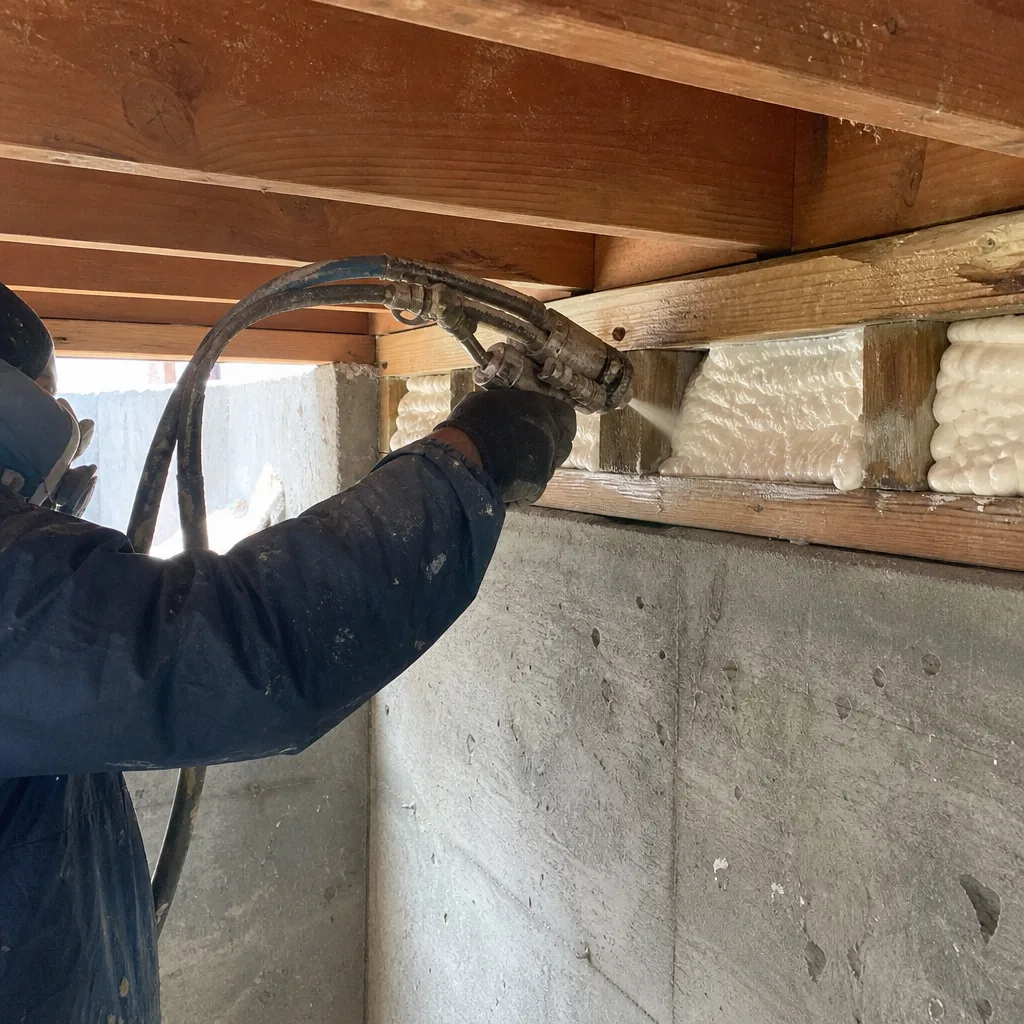
Rim joist spray foam in Costa Mesa seals the band joist where your floor framing meets the foundation, which is exactly where onshore damp air off the Pacific finds its way into older westside crawl spaces and condenses on cold wood all morning. In the 92626 and 92627 flats, we rarely find a rim joist bay that hasn’t been breathing fog for decades. Sealing those bays with closed-cell foam stops the moisture path before it becomes a rot problem, and it typically runs $1,800 to $3,600 depending on how many linear feet of band joist your footprint has and whether we’re working around existing batts.
Moisture-First Sealing in Older Bungalows
Costa Mesa’s older single-story homes were framed with no sill sealing and no rim joist treatment. Morning fog pushes damp air through those gaps, condenses on the cold band joist, and soaks whatever insulation is sitting against it. We pull the wet fiberglass or paper-faced material, dry the framing, and spray closed-cell foam directly against the rim.
In a tight crawl space where access is limited to a few feet of clearance, the job takes longer and costs more. We quote that honestly, and we never foam over wet wood. It seals the dew point out and leaves the rim dry.
Santa Ana Season Performance
When the marine layer burns off and Santa Ana winds push 95-degree dry air into Costa Mesa, unsealed rim joists become a convection path. Hot outside air gets pulled into the crawl space and up through the floor assembly. Closed-cell foam at the rim stops that air movement, which keeps conditioned air where it belongs and reduces the dust that blows in through those gaps during wind events off the Santa Anas.
Crawl Space Spray Foam Insulation in Costa Mesa
Crawl space spray foam insulation in Costa Mesa is about controlling what the coastal air does to the underside of your house. In older 92626/92627 homes with vented crawl spaces, the floor assembly sits above damp soil and fog-saturated air for most of the spring and early summer. That moisture condenses on cold floor joists, rusts fasteners, and feeds the musty smell that creeps up through the flooring. Sealing and foaming the crawl space typically runs $4,500 to $9,500 depending on the size of the footprint and whether we’re encapsulating or just treating the subfloor and rim areas.
Fog-Driven Condensation on Floor Framing
Costa Mesa’s marine layer is the main driver here, not cold winters. The damp air off the Pacific moves through unsealed crawl space vents and finds the coldest surface available, which is usually the underside of your floor deck in the morning. We’ve seen original subfloor fasteners rusted to the point of failure in 60-year-old western Costa Mesa homes where the crawl space was never sealed.
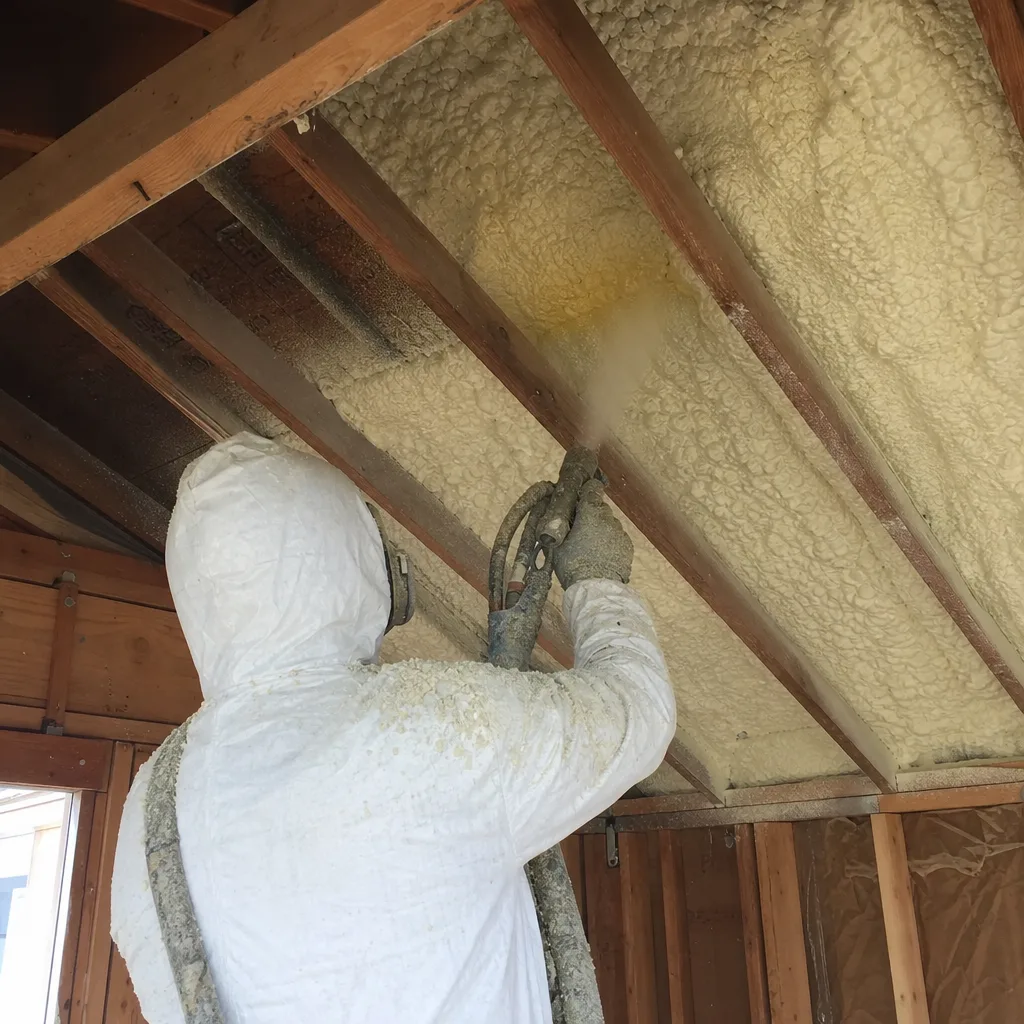
Closed-cell foam on the subfloor stops the condensation path by keeping warm, moist air from contacting the cool wood surface. The result is drier framing, fewer rust issues, and a home that stops smelling like a beach basement.
Sequencing the Retrofit
In an older Costa Mesa bungalow, the crawl space and rim joists often need treatment before the attic. If you foam the attic first and leave the rim unsealed, the crawl space keeps pulling damp air up through the walls. We sequence the work so the moisture barrier is continuous from the foundation up. That’s the Costa Mesa retrofit reality: seal low, then seal high.
Trusted Brands We Service in Costa Mesa
For Costa Mesa homes, we carry Demilec and Icynene spray foam systems, both closed-cell and open-cell, so the recommendation fits the application rather than the other way around. Demilec’s closed-cell foam gives us the compressive strength and vapor-sealing performance we want on older stucco-over-wood-frame retrofits, while Icynene open-cell works well in vented attics where we need an air barrier without trapping moisture in the framing. We also stock Owens Corning and GreenFiber products for Costa Mesa customers who need fiberglass or cellulose in other parts of the home. Because we’re an insulation-only contractor, we keep a full lineup available and can pull material for a Costa Mesa job without waiting on a distributor order.
Common Spray Foam Insulation Problems We See in Costa Mesa Homes
- Foam sprayed over damp, sagging paper-faced batts. In 1950s-60s westside homes, the original batts are often fog-stained and loaded with condensation. Foaming over them traps that moisture against the wood framing. We pull and dry before we spray.
- Unsealed rim joists left open after attic foam. Even when the attic is foamed, open rim bays in older Costa Mesa homes let damp Pacific air condense on cold wood and rust fasteners. The rim and crawl space need treatment too, or the moisture problem just moves.
- Unvented attic foam without interior moisture control. Morning fog cycles in Costa Mesa push humidity into the home, and if that interior moisture can’t escape, it condenses on the foam surface in the attic. We assess ventilation and vapor drive before recommending closed-cell in an unvented attic.
- Open-cell foam used where the marine layer demands closed-cell. Open-cell absorbs moisture in prolonged damp conditions. In Costa Mesa’s fog-heavy westside neighborhoods, we often specify closed-cell for rim joists, crawl space subfloors, and single-wall retrofits where a vapor seal matters.
Pricing for Spray Foam Insulation in Costa Mesa, CA
Spray foam pricing in Costa Mesa is typically quoted per board foot, and you’ll see $3.50 to $7.50 installed depending on open-cell versus closed-cell, depth, and access. A standard attic retrofit in a 1,200-square-foot westside ranch runs $4,200 to $9,000. Rim joist sealing runs $1,800 to $3,600, and a full crawl space treatment lands between $4,500 and $9,500. What moves the number in Costa Mesa specifically is prep work: if we have to pull out old fog-stained batts, dry framing, or work in a tight crawl space under an older bungalow, that labor is real and we quote it honestly. We offer free estimates, and we’ll walk you through the exact scope before you commit to anything. Call (877) 265-5712 to schedule a walkthrough at your home.
We Also Serve Cities Near Costa Mesa
North Tustin Insulation serves Costa Mesa and the surrounding Orange County communities, including Newport Beach, Fountain Valley, Huntington Beach, and San Joaquin Hills. If you’re in one of those cities and dealing with the same coastal moisture and older housing stock, the same team and the same brand lineup apply. Call us at (877) 265-5712 and we’ll schedule a site visit.
Serving Costa Mesa, CA — Our Local Coverage Area
We’re based in the Costa Mesa area and know this community well. Use the map below to see our service coverage — if you’re nearby, we can almost certainly help.
FAQs About Spray Foam Insulation in Costa Mesa
In the 1950s-60s stucco-over-wood-frame homes in 92626 and 92627, the original paper-faced batts are often sagging and condensation-stained from decades of morning marine-layer damp. Spraying closed-cell foam over that compromised material traps moisture against the framing and creates a rot condition. We pull the old batts, dry and treat the wood, then foam the cavity. It adds labor to the job, but skipping it is how Costa Mesa retrofits go wrong. Call (877) 265-5712 for an assessment of your wall cavities.
Yes. The marine layer pushes damp air into attics and wall cavities throughout the fog season, so moisture control is the first design consideration here. We assess ventilation, existing insulation condition, and vapor drive before choosing an open-cell or closed-cell system. Inland attics are usually solving a heat problem. Costa Mesa attics are solving a moisture problem first and a heat problem second. That changes the foam spec and the prep work.
Usually, yes. If damp air is entering through the rim joists and crawl space vents, foaming the attic first just moves the moisture problem around. Sealing the rim and treating the crawl space first stops the moisture at the source, then the attic foam makes the whole envelope work right. We’ll walk the job with you and tell you the correct sequencing. Estimates are free at (877) 265-5712.
We carry Demilec and Icynene spray foam systems. Demilec closed-cell is our go-to for damp-wall retrofits and rim joist sealing, while Icynene covers both open-cell and closed-cell applications where the job calls for a different vapor profile. Both are industry-recognized systems that deliver consistent results in Costa Mesa’s coastal conditions. We’ll recommend the right one for your home after seeing the site.
Closed-cell spray foam holds its shape and performance even when a Santa Ana event pushes attic temperatures past 140 degrees. It acts as both an air barrier and a thermal barrier, so the heat stays in the attic instead of radiating into your living space. That’s a real difference in Costa Mesa, where the fog keeps the load mild most of the year but the Santa Anas punish any weak spot in the envelope. For an exact quote on your attic, call (877) 265-5712.
Written by Allen Decker, Owner at North Tustin Insulation, serving Costa Mesa and the surrounding Orange County communities.