
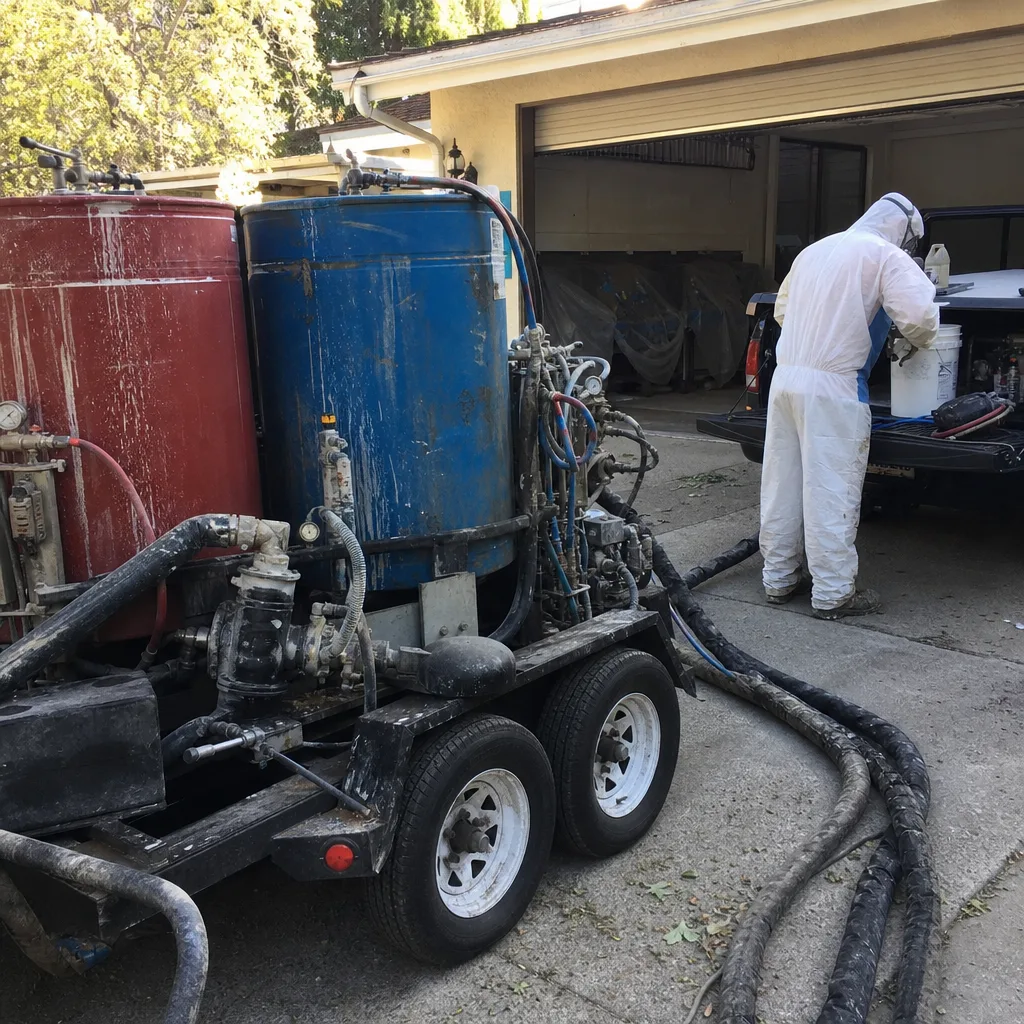
Fast, Reliable Spray Foam Insulation Across Crestline
Spray foam insulation in Crestline is a different job than it is down the hill. At 4,000-plus feet, your home faces snow, freeze-thaw cycles, and winter winds that flatland houses never contend with. That’s why we approach every Crestline job as a mountain retrofit, not a standard install. North Tustin Insulation brings spray foam expertise to cabins, chalets, and second homes throughout the 92325 zip code, with a focus on air-sealing, pest exclusion, and heat retention that actually holds up to a San Bernardino Mountains winter. Call (877) 265-5712 for a free estimate. We know what works here.
Why North Tustin Insulation Is Crestline’s Preferred Spray Foam Insulation Company
We’re not a general contractor who happens to install insulation on the side. Insulation is the only trade we work in, which means every crew member who drives up Highway 18 to Crestline is focused on one thing: making your home hold heat and keep out what shouldn’t be inside. We carry both Icynene and Demilec spray foam systems, two of the most respected names in the industry, and we match the foam type to the specific problem you’re dealing with. That matters in Crestline, where a mid-century cabin on pier foundations has completely different requirements than a newer two-story off Waters Drive or a chalet near Lake Gregory.
Crestline customers regularly tell us the same thing: previous contractors quoted them one brand, one approach, and no explanation. We take a different route. Our Spray Foam Insulation team looks at your home’s framing, foundation type, existing insulation, and pest history before recommending open-cell or closed-cell foam. Allen Decker built this company around material transparency, and that’s exactly what you get when we walk your property. We’ll tell you which brand fits your budget and performance goals, and we’ll explain why.
Response time to Crestline is quick. We regularly send crews up from the valley, and we schedule around mountain weather. Snow doesn’t surprise us. Freeze events don’t either. If you call (877) 265-5712, we’ll get you on the schedule and give you a straight answer about cost and timing.
Crawl Space Spray Foam Insulation in Crestline
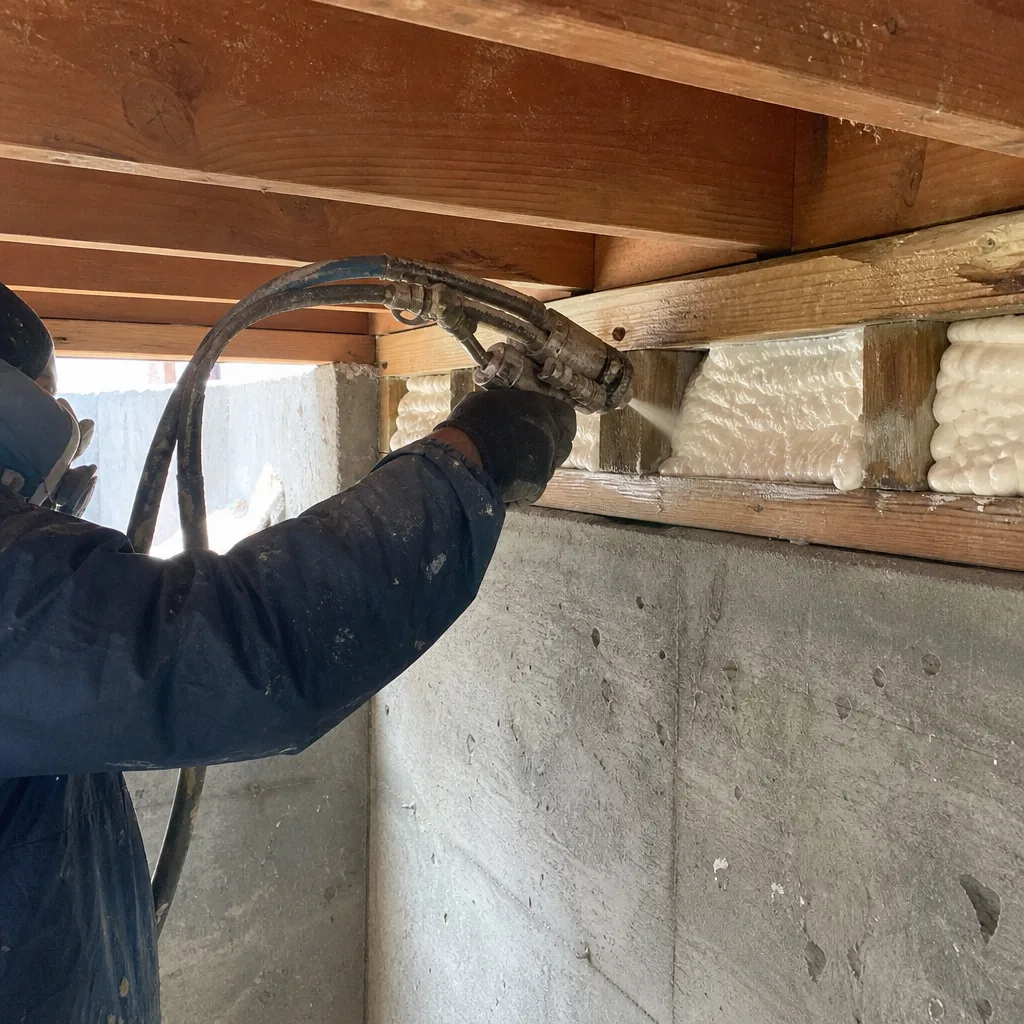
Crawl space spray foam insulation in Crestline is one of the most effective upgrades you can make to an older mountain home, and it’s also one of the most commonly botched. Crestline’s housing stock includes a high percentage of cabins and chalets built on pier-and-beam foundations, which means cold air moves freely beneath the floor joists all winter long. In a town that sees snow and freeze events every year, that open crawl space is effectively a heat sink pulling warmth out of your living space. We apply spray foam directly to crawl space walls, rim joists, and the subfloor underside, creating a continuous air and thermal barrier that stops cold infiltration at the source.
A typical crawl space spray foam job in Crestline runs $2,800 to $6,500 depending on square footage, access difficulty, and how much rodent remediation is required. That price range reflects the reality of mountain retrofits: many of these spaces have sloped terrain, tight access hatches, and old fiberglass that has to come out before new foam goes in. The result is a home that retains heat noticeably better, with fewer drafts rising through the floorboards. We typically handle this in one day for standard-sized crawl spaces, though larger properties near Valley of the Moon or up toward Skyland may require two.
Rim Joist Air-Sealing
In Crestline’s pier-and-beam homes, the rim joist is where cold air wins if it isn’t sealed properly. We apply a thick layer of closed-cell foam along the entire rim joist perimeter, sealing the seam between the foundation and the framed floor above. This single step often cuts air leakage dramatically, and it also blocks the gaps where rodents and insects push through. For most Crestline crawl spaces, this is the highest-value work we do.
Pest Exclusion Work
Spray foam on its own won’t stop determined squirrels, but combined with wire mesh and proper sealing around utility penetrations, it’s remarkably effective. We’ve seen too many Crestline homes where insulation was installed over rodent nesting and left in place. The foam provides a physical barrier and eliminates the easy entry points. That’s the kind of detail that separates a real mountain retrofit from a flatland blanket job.
Garage Spray Foam Insulation in Crestline
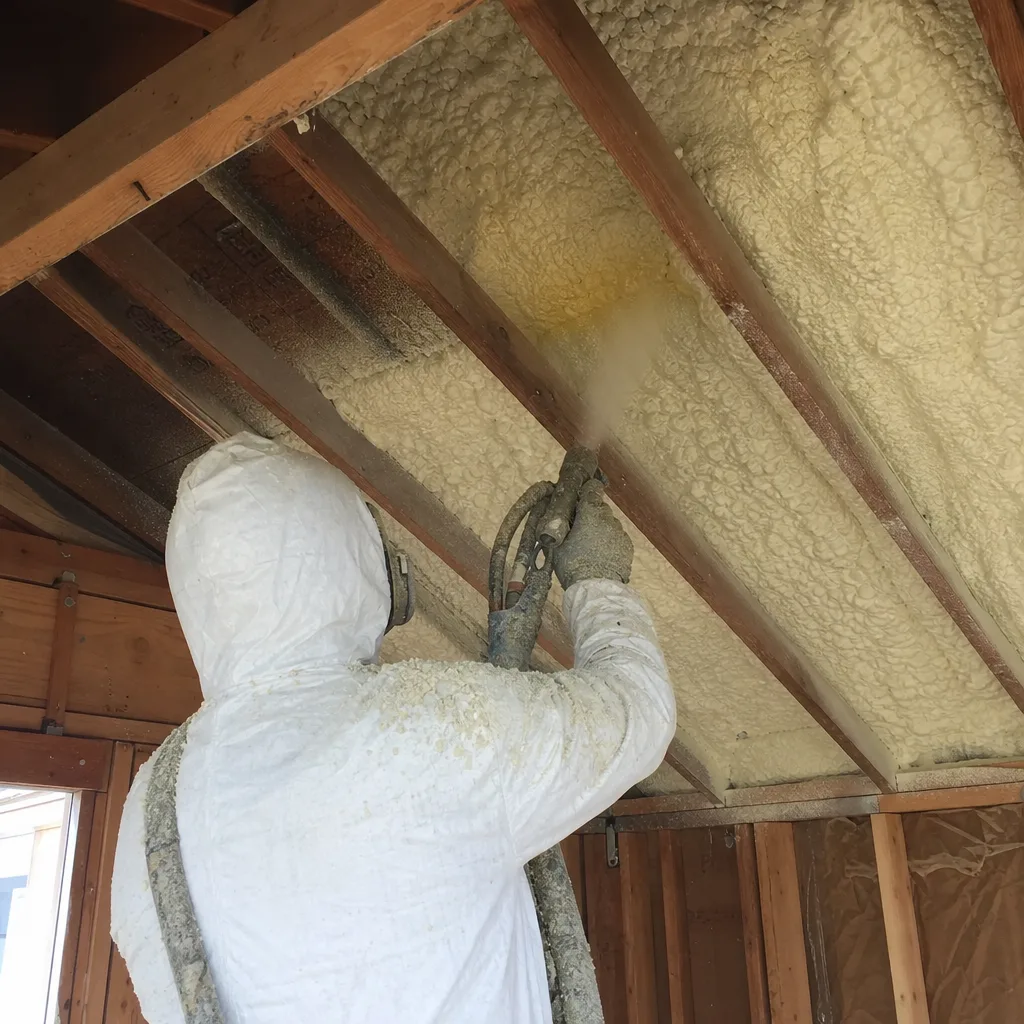
Garage spray foam insulation in Crestline addresses a space that most homeowners ignore until January hits. Attached garages in mountain homes act as a cold buffer zone between the outside air and the house. If your garage ceiling or shared wall with the house isn’t insulated, you’re losing heat through that boundary every single night. We see this constantly in Crestline: homes built in the 1960s and 1970s where the garage was barely insulated, if at all. Spray foam on the garage ceiling and walls makes an immediate difference in how the adjacent rooms feel, and it protects stored items from freeze damage during Crestline’s cold snaps.
Expect to pay $1,800 to $4,200 for a typical Crestline garage spray foam treatment, depending on ceiling height, whether we’re insulating just the ceiling or full walls, and access considerations. Garages with exposed framing are faster and more affordable; garages with drywall already up require more preparation. We most often recommend closed-cell foam for garage ceilings that sit below unfinished attic space, because it provides both thermal resistance and an air barrier in one application. For garages used as workshops or storage areas, the comfort improvement is substantial. Call (877) 265-5712 for a specific quote on your garage.
Garage Ceiling and Shared Wall
The most critical area in most Crestline garages is the ceiling and the wall shared with the living space. Cold air in the garage means the house wall next to it is constantly being cooled from one side, which pulls heat out of your rooms. Sealing that boundary with spray foam changes the thermal performance of the entire shared wall. It’s often the single best-value upgrade for comfort in older Crestline homes.
Freeze Protection for Stored Items
If you store paint, tools, or seasonal equipment in your Crestline garage, you already know what January does to that space. Spray foam stabilizes garage temperatures enough to prevent many freeze-related problems, and it keeps the garage noticeably warmer even without a dedicated heater. For detached garages used as workshops, we recommend full wall and ceiling coverage.
Trusted Brands We Service in Crestline
We service and install Icynene, Demilec, CertainTeed, and GreenFiber products in Crestline, and we stock the materials we need locally so we’re not delayed waiting on supply runs. Icynene and Demilec are our primary spray foam lines, and both handle mountain conditions well when applied correctly. GreenFiber cellulose is useful for blown-in retrofits where spray foam isn’t the right tool, and CertainTeed fiberglass covers standard batt applications. Eight brands total means you aren’t limited to whatever one product our crew happens to carry. We make the call based on what your specific home needs, and we’ll show you the product options before we start. That’s how Crestline homeowners end up with the right material, not just the most convenient one.
Common Spray Foam Insulation Problems We See in Crestline Homes
- Foam applied over rodent-contaminated insulation. Squirrel and rodent nesting in old fiberglass is incredibly common in forested Crestline neighborhoods. If spray foam is applied on top without removal and exclusion work, the pests come back, tear into the foam, and the whole install fails. We always clean out contaminated material first.
- Missing rim joist sealing in pier-and-beam foundations. Cold mountain air bypasses insulation at the rim joist, making even thick foam much less effective. Many older cabins near the forest have this exact configuration. The fix is air-sealing before or during foam application, not after.
- Improperly cured foam from cold-weather application. Two-component spray foam applied when substrate temperatures drop below 40°F can cure poorly, creating weak, powdery insulation that fails to bond. In Crestline’s winter climate, scheduling and surface preparation matter. We time installations for appropriate temperature windows.
- Payroll patch jobs that never fixed the real air leak. We see a lot of Crestline homes where someone spot-foamed a visible gap but missed the structural air leakage paths: rim joists, plumbing penetrations, and recessed lighting cans. A full assessment is the only way to stop stack effect in a mountain home.
Pricing for Spray Foam Insulation in Crestline, CA
Crestline spray foam pricing breaks down differently than valley work because of the housing stock. Most jobs involve older construction, awkward access, and pest remediation, all of which add labor hours. A standard crawl space retrofit ranges from $2,800 to $6,500. Garage ceiling and wall applications typically run $1,800 to $4,200. Full-attic spray foam along the roofline for heat retention usually falls between $4,500 and $9,000 depending on square footage and roof geometry. Rim joist sealing alone often costs $800 to $2,000 in a typical Crestline crawl space. We provide free estimates with those numbers broken down line by line. Call (877) 265-5712 and we’ll walk your property, take measurements, and give you a fixed quote before any work begins.
We Also Serve Cities Near Crestline
North Tustin Insulation provides Spray Foam Insulation in Crestline and regularly works in surrounding mountain and valley communities. Our crews schedule jobs in Lake Arrowhead, Muscoy, San Bernardino, and Highland, giving us broad coverage across the Inland Empire’s higher elevations and the flatlands below. If you’re in any of these areas and need spray foam work done, call (877) 265-5712 and we’ll work around your schedule.
Serving Crestline, CA — Our Local Coverage Area
We’re based in the Crestline area and know this community well, and we also provide Reflectix service in Crestline. Use the map below to see our service coverage — if you’re nearby, we can almost certainly help.
FAQs About Spray Foam Insulation in Crestline
Spray foam handles Crestline freeze events far better than fiberglass batts or blown-in cellulose alone because it creates a continuous air seal as well as a thermal barrier. Fiberglass loses R-value when cold air moves through it, which is exactly what happens during winter temperature swings at mountain elevations. Closed-cell foam, in particular, keeps performing at its rated R-value even when temperatures drop well below freezing, and it doesn’t settle or sag over time like some traditional materials. Call (877) 265-5712 to talk about which foam type fits your home’s specific exposure.
Yes, spray foam reduces rodent intrusion when installed alongside proper exclusion work. The foam seals the gaps and cracks where squirrels and mice enter, especially around rim joists, plumbing penetrations, and sill plates. In Crestline homes near the forest, we regularly combine foam application with wire mesh and gap sealing. Foam alone isn’t the entire answer, but it closes the pathways that make mountain cabins vulnerable. For a full assessment of your cabin’s entry points, call (877) 265-5712.
Closed-cell spray foam is almost always the best choice for Crestline’s pier-and-beam cabins. Closed-cell provides higher R-value per inch, adds structural rigidity to older framing, and acts as a moisture and air barrier in one pass. That matters in crawl spaces with exposed joists and rim boards where moisture and cold air both move freely. Open-cell has a place in attic roofline applications where you want a softer, vapor-permeable option, but for crawl spaces and rim joists close to the ground, closed-cell wins. We’ll recommend the right one after we inspect your foundation.
Spray foam is suitable for wildfire-adjacent homes, and closed-cell foam provides some fire resistance because it forms a char layer rather than melting or dripping when exposed to a flame. That said, no insulation is a fireproof shield. In Crestline’s forest-interface setting, we recommend pairing spray foam with standard fire-blocking at penetrations and maintaining proper defensible space around the structure. Spray foam also seals ember entry points, which is a genuine fire-safety benefit in wildfire country. For a full breakdown, call (877) 265-5712.
Spray foam performs well at Crestline’s elevation when the crew accounts for cold-weather application windows. Two-component foam requires substrate temperatures above approximately 40°F for proper adhesion and curing, so we schedule exterior-facing work around Crestline’s winter lows. At 4,000-plus feet, that means timing application for daytime warmth or using heated enclosures in cold months. Our crews are experienced with mountain scheduling, and we won’t force an application during weather that compromises the foam’s performance. For an honest assessment of your property’s application window, call (877) 265-5712.
Written by Allen Decker, Owner at North Tustin Insulation, serving Crestline and the San Bernardino Mountains.