Insulation Company in Crestline, CA
Blown in insulation is the workhorse retrofit for Crestline’s older mountain cabins and chalets, where original wall and attic cavities are often empty or holding a thin layer of compressed fiberglass from the 1970s. Most homes here sit above 4,000 feet, which means real snow, freeze events, and heating bills that climb fast when heat escapes through uninsulated framing. North Tustin Insulation has served Crestline since 2011, carrying eight brands across fiberglass, mineral wool, cellulose, and spray foam so the material recommendation is driven by your home’s construction, not by whatever happens to be on the truck. Call (877) 265-5712 for a free estimate.
Why Crestline Homes Are Different
Crestline is a mountain community in the San Bernardino Mountains, and the housing stock tells the story: mid-century cabins, chalets, and second homes, many built before insulation codes existed in any meaningful form. Pier-and-beam foundations and sloped lots are common, which makes crawlspace access tight and attic geometry awkward. Walls that were fine for a summer getaway become expensive to heat when the temperature drops into the teens, and snow sitting on a roof for days at a time pulls heat out of any attic that isn’t properly insulated and air-sealed.
The forest is the second factor. Crestline sits inside the San Bernardino National Forest interface, which means squirrels, rats, and other wildlife treat attics and crawlspaces as winter housing. In our experience, a Crestline insulation job is rarely just thermal – it’s a pest exclusion and air-sealing job at the same time. Loose fill cellulose and mineral wool both resist pests better than the old fiberglass batts homeowners find chewed through and compacted when we open up an attic. And because wildfire risk is a real consideration at this elevation, material choice matters: Rockwool is non-combustible, and dense-packed cellulose slows air movement that can feed a structure fire. We plan every Crestline job around cold-weather heat retention and forest-interface durability, not a generic California cooling load.
Our Main Crestline Services
Most Crestline homeowners reach out about one of two things: an attic that’s hemorrhaging heat all winter, or walls and rim joists that need an air seal only spray foam can deliver. Here’s how each plays out in a mountain home.
Attic Insulation in Crestline
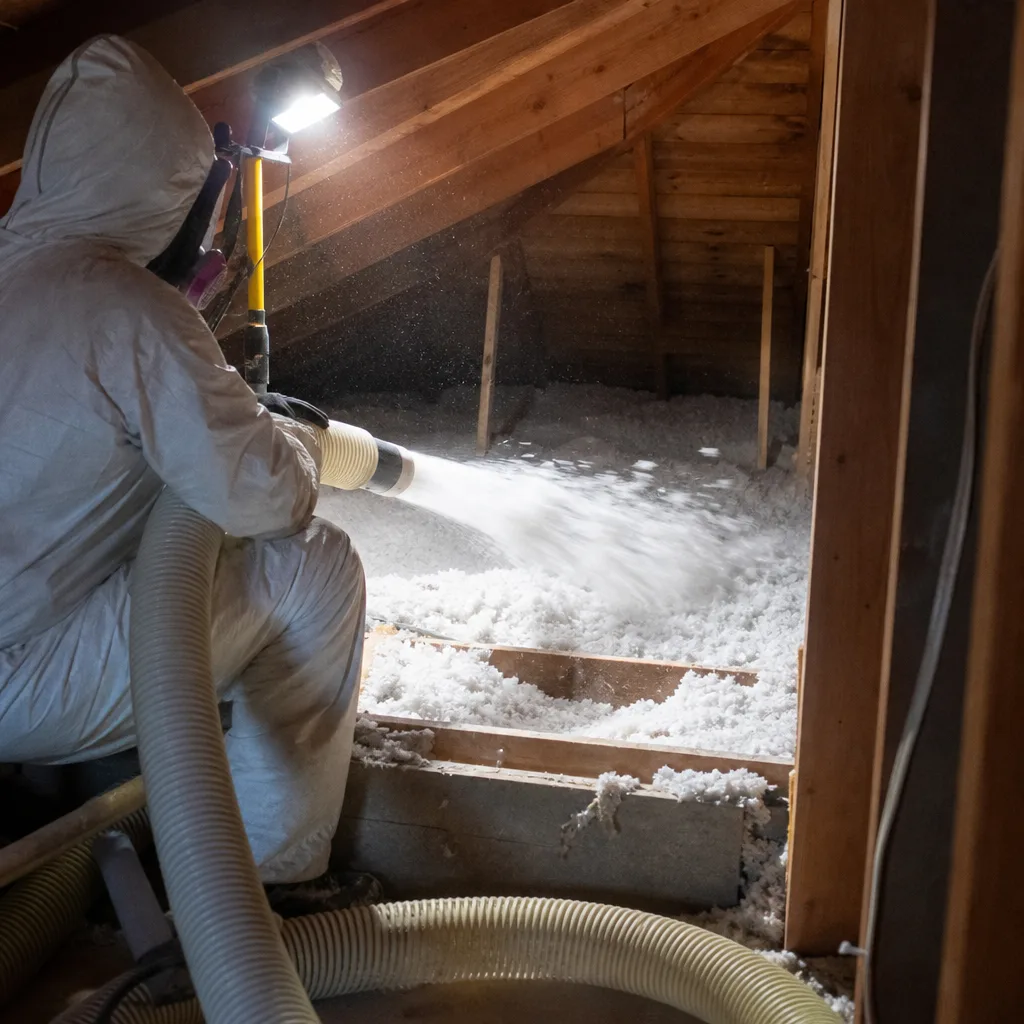
Attics in Crestline lose heat faster than any other part of the house, especially when snow sits on the roof and turns the ceiling plane into a cold sink. Older cabins often have R-19 fiberglass or less, compressed by decades of foot traffic and rodent activity. We pull the old material where needed, air-seal the top plates and penetrations, and bring the attic up to a level that actually holds heat in a mountain winter. Blown-in fiberglass and cellulose both work well here, and the right choice depends on your rafter depth and whether the attic is vented. For the full breakdown of options, see Attic Insulation in Crestline.
Spray Foam Insulation in Crestline
Spray foam earns its keep in Crestline on two fronts: it air-seals as it insulates, and it closes the small gaps that let wildlife and cold air into pier-and-beam foundations and cantilevered floors. Closed-cell foam in particular adds structural strength and acts as a vapor barrier, which matters in a climate where snow melt and freeze cycles push moisture into framing. We carry both Icynene and Demilec systems, so you’re getting a certified open- or closed-cell application, not a commodity install. Details on cost and when foam beats blown-in are on the Spray Foam Insulation in Crestline page.
What happens when you call
- 1
A real person answersNo phone trees — you reach a local pro.
- 2
You get an upfront price rangeHonest numbers before anyone is dispatched.
- 3
A background-checked tech heads outLicensed & insured, dispatched right away.
- 4
You approve before work beginsNothing starts until you say go.
Blown In Insulation in Crestline
Blown in insulation is the fastest, least disruptive way to add real R-value to an existing Crestline home, and it’s usually the right first move for a cabin or chalet with empty wall bays or a thin attic layer. Loose fill reaches around odd framing, into sloped ceiling cavities, and across the uneven attic floors common in older mountain construction. Blown-in cellulose from GreenFiber and blown-in fiberglass from CertainTeed, Johns Manville, and Knauf are all options we match to the specific cavity depth and air-sealing needs of your house, whether you’re adding to an existing layer or starting from scratch. Read more about the method on our Blown In Insulation hub.
Cellulose Insulation
Signs you need it
Rooms that swing hot and cold through the day and walls that feel cold to the touch in winter usually mean the existing cavity insulation is thin, settled, or was never there in the first place.
What it costs in Crestline
Cellulose insulation in Crestline typically runs $1.20 to $2.60 per square foot installed, with dense-packed wall cavities landing at the higher end of that range.
How we do it
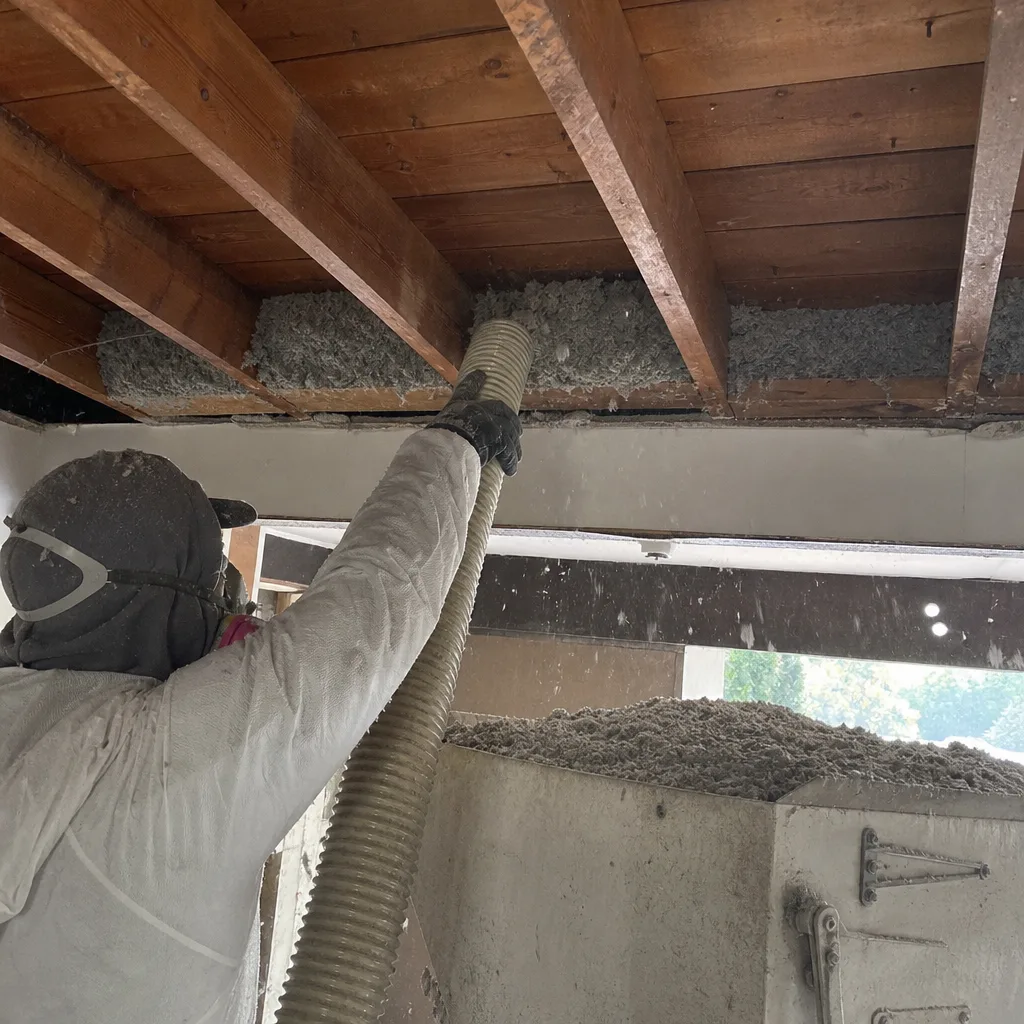
We drill access points into each stud bay, dense-pack GreenFiber cellulose to the correct pounds-per-cubic-foot density, and patch the holes so the walls look untouched.
Blown In Attic Insulation
Signs you need it
Snow that melts unevenly off a Crestline roof in winter, or an attic floor showing bare spots and compressed old batts, tells us the thermal barrier isn’t doing its job.
What it costs in Crestline
Blown in attic insulation in Crestline typically costs $1.20 to $2.60 per square foot installed, depending on final depth and whether we remove old material first.
How we do it
We air-seal the attic floor penetrations, mark the target depth with insulation rulers, and blow in loose fill fiberglass or cellulose to the R-value your roof assembly needs at this elevation.
Blown In Cellulose Insulation
Signs you need it
Drafty rooms, high January heating bills, and rodent damage in old attic batts are the three signals we see most often before a Crestline homeowner calls about blown in cellulose.
What it costs in Crestline
Plan on $1.20 to $2.60 per square foot for blown in cellulose in Crestline, with dense-packed walls and hard-to-reach sloped ceilings at the top of the range.
How we do it
We run a hose from the truck to the attic or wall cavity and blow GreenFiber recycled cellulose to a measured density that resists settling and blocks air movement.
Blown In Fiberglass Insulation
Signs you need it
If your attic has old fiberglass batts that are torn, compressed, or chewed through by squirrels, replacing them with blown in fiberglass gives you a continuous, gap-free thermal layer.
What it costs in Crestline
Blown in fiberglass in Crestline runs $1.20 to $2.60 per square foot installed, and it’s often the most cost-effective way to reach a consistent R-value across an irregular attic floor.
How we do it
We remove damaged batts where needed, seal the bypasses, and blow CertainTeed, Johns Manville, or Knauf loose fill fiberglass to an even depth across the entire attic.
Loose Fill Insulation
Signs you need it
Sloped ceilings, knee walls, and other awkward cavities in older Crestline cabins rarely have adequate insulation, and loose fill is the only material that fills them completely without opening the wall.
What it costs in Crestline
Loose fill insulation in Crestline costs $1.20 to $2.60 per square foot installed, with the final number tied to cavity depth, density, and how much access we have.
How we do it
We blow loose fill into the cavity through small access points until the target density is reached, then patch and leave the space sealed against air and pests.
What Blown In Insulation Costs in Crestline
| Item | Typical range in Crestline |
|---|---|
| Blown in attic insulation | $1.20 – $2.60 per sq ft |
| Blown in wall insulation (dense-pack) | $1.20 – $2.60 per sq ft |
| Loose fill in sloped ceilings / knee walls | $1.20 – $2.60 per sq ft |
How long does blown in insulation last in a Crestline home?
Loose fill fiberglass and cellulose both hold their R-value for decades when kept dry and pest-free, which is why air-sealing and wildlife exclusion are part of every job we do. Call (877) 265-5712 to get an exact scope for your home.
Is blown in insulation enough for a Crestline winter?
Yes, when it’s installed to the right R-value for 4,000-plus feet of elevation and paired with air-sealing. In mountain homes, the air leaks matter as much as the insulation depth. Call (877) 265-5712 for a free attic assessment.
Brands We Service in Crestline
We carry CertainTeed, GreenFiber, Icynene, and Demilec among our eight lines, and we keep the common densities and depths stocked for fast turnaround on Crestline attics and walls. When a brand or density change is needed mid-job, we pull from inventory rather than waiting on a supplier run. See our brands for the full lineup.
Pricing for Insulation Company in Crestline, CA
| Service | Typical range in Crestline |
|---|---|
| Attic insulation (blown in) | $1.20 – $2.60 per sq ft |
| Attic insulation (batt, new construction) | $1.20 – $2.60 per sq ft |
| Wall insulation (dense-pack cellulose) | $1.20 – $2.60 per sq ft |
| Loose fill in sloped ceilings | $1.20 – $2.60 per sq ft |
| Air sealing with insulation | $1.20 – $2.60 per sq ft |
| Crawlspace insulation | $1.20 – $2.60 per sq ft |
| Spray foam (open-cell) | $2.50 – $6.00 per sq ft |
| Spray foam (closed-cell) | $3.50 – $8.50 per sq ft |
| Insulation removal | $1.20 – $2.60 per sq ft |
In Crestline, the two biggest price drivers are access and pest damage: steep attics and tight pier-and-beam crawlspaces take more labor, and removing squirrel-damaged material or droppings adds scope before new insulation can go in. We give an upfront, line-item quote before any work starts, so the number we bid is the number you pay.
Neighborhoods We Serve in Crestline
We work throughout the 92325 ZIP code, from the lake-adjacent streets to the upper slopes where snow hangs around longest. Our schedule covers the whole mountain area in a single day’s drive, and we group calls by slope side so we can usually schedule your estimate within the week.
- Cedar Pines Park
- Valley of Enchantment
- Skyland
- Dart Canyon
- Lake Gregory area
Service Area – Cities Near Crestline
We serve the full San Bernardino mountain corridor and the flatlands below. If you’re in Lake Arrowhead, CA or Muscoy, CA, the same material and method options apply, adjusted for your altitude and housing stock. Down the hill, we cover San Bernardino, CA and Highland, CA with the same multi-brand, insulation-only approach.
Serving Crestline, CA — Our Local Coverage Area
We’re based in the Crestline area and know this community well. Use the map below to see our service coverage — if you’re nearby, we can almost certainly help.
FAQs About Insulation Company in Crestline
We schedule estimates in Crestline every week, and because our crew works the mountain corridor regularly, most homeowners get a visit within a few days of calling. We group appointments by slope side to reduce windshield time. Call (877) 265-5712 and we’ll find the next open slot for your area.
Most retrofit insulation in Crestline is permitted at the county level only when it’s tied to a larger remodel, but requirements shift by scope and structure type. We check current rules for your specific address before the estimate and handle any paperwork that’s actually required.
Yes, and it’s one of the most common foundation types we work with in Crestline. We air-seal the rim joists, exclude pests, and insulate the floor assembly to stop cold air from coming up through the floorboards. The access is tight, and we plan for it from the start rather than treating it as a surprise.
What happens when you call
- 1A real person answersNo phone trees — talk to a local insulation pro.
- 2You get an upfront price rangeHonest numbers before anyone is dispatched. No surprises.
- 3A background-checked tech heads outLicensed & insured, typically same-day.
- 4You approve before work beginsNothing starts until you say go.
What Crestline Customers Say
"Found and sealed a gap around the chimney chase that was basically an open chimney to the attic."
— Gabriela Herrera"Installed baffles at the soffits so the new insulation didn't block the ventilation, which the previous contractor apparently never considered."
— Ryan Rhodes"Spray foam in the rim joists in the basement. The cold floors above them are gone."
— Bethany Ziegler