
Fast, Reliable Spray Foam Insulation Across El Cerrito Corona
Spray foam insulation in El Cerrito Corona works differently than in most of Southern California, because the Corona basin punishes attics with triple-digit heat and Santa Ana wind events that dry out conventional insulation. In the 1980s to 2000s tract homes that fill the 92881 zip code, especially the south-hills neighborhoods off Foothill Parkway, spray foam applied to the roof deck or attic floor stops heat transfer in a way blown-in fiberglass simply cannot. If your upstairs rooms hit 85°F by mid-afternoon even with the AC running, the attic is the problem, and spray foam is usually the fix. Call (877) 265-5712 for a free estimate from Allen Decker and our spray foam crew – we work in El Cerrito Corona weekly, not occasionally.
Why North Tustin Insulation Is El Cerrito Corona’s Preferred Spray Foam Insulation Company
Most insulation contractors in Riverside County push whatever material they have in the truck. That is not how we work. North Tustin Insulation carries both Icynene and Demilec spray foam systems, so the recommendation for your El Cerrito Corona home is driven by what your attic actually needs – open-cell for interior sound and air sealing, closed-cell for the shallow vaulted cavities that dominate the south-hills tracts. We match the material to your home, not the other way around.
We know the specific pain of El Cerrito Corona summers. When the Santa Ana winds kick up and the attic hits 140°F, undersized batts and settled blown-in insulation stop doing their job. Homeowners in the Sierra Pacific tract, the Sycamore Creek area, and along Ridgeline Drive call us about the same thing: rooms that never cool down, AC bills that spike from June through October, and attics that feel like an oven when you open the hatch. Allen Decker has walked dozens of these attics and knows what the original R-11 to R-19 batts look like after 20 or 30 years of Corona heat – sagging, pulled away from the drywall, and barely doing anything.
Our spray foam team is insulation-only. Every technician, every brand relationship, and every estimate we write in El Cerrito Corona is focused on one trade. No roofing upsells. No HVAC add-ons. Just the right insulation system for your home, installed correctly, with the air sealing that makes it actually work.
Closed Cell Spray Foam Insulation in El Cerrito Corona
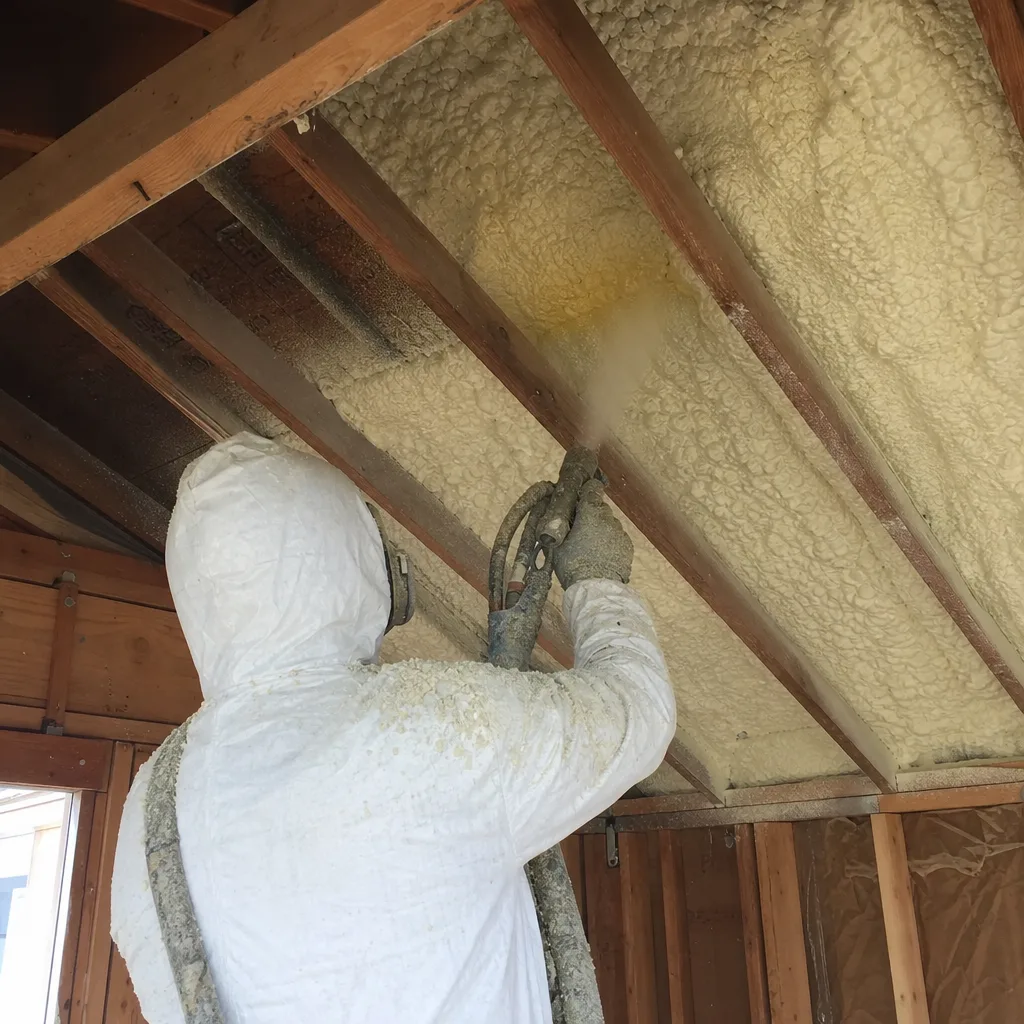
Closed Cell Spray Foam Insulation in El Cerrito Corona is the workhorse product for vaulted and cathedral ceilings, because it delivers the highest R-value per inch of any insulation we install – roughly R-6.5 to R-7 per inch – and it works in tight, low-pitch cavities where blown-in depth is impossible. When we spray closed-cell directly to the underside of the roof deck, the attic becomes a semi-conditioned space, which means the ceiling drywall stops absorbing 140°F attic heat in the afternoon. For a typical El Cerrito Corona home with vaulted ceilings and a low-pitch attic, closed-cell roof deck application runs $4.50 to $7.00 per board foot, which translates to roughly $9,000 to $18,000 depending on square footage and cavity depth.
Roof Deck and Gable End Sealing
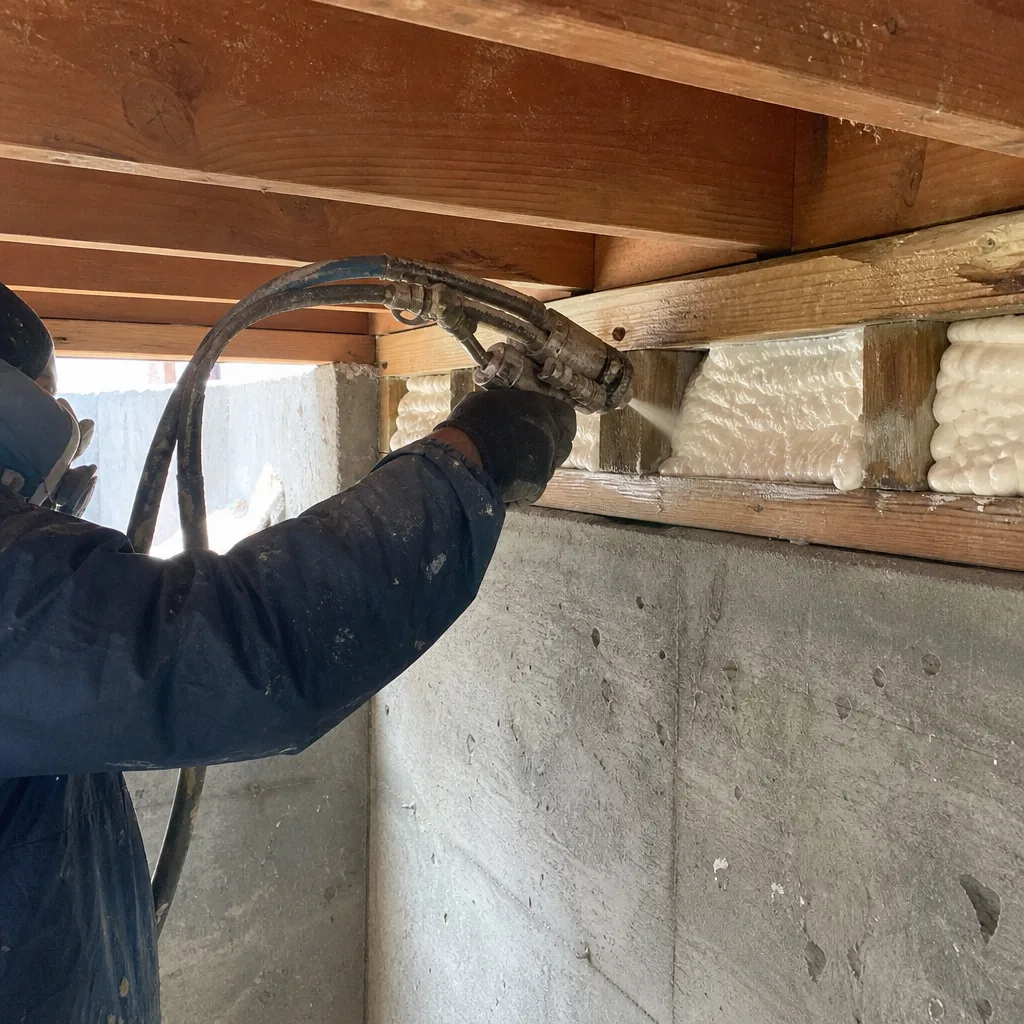
In south-hills tracts, closed-cell foam on the roof deck and gable ends creates an unvented attic assembly that keeps heat out before it ever reaches the ceiling plane. We recently sprayed closed-cell on a Sierra Pacific tract home off Foothill Parkway where the original R-13 batts had sagged away from the drywall, leaving the great room at 88°F by 4 p.m. even with the AC running nonstop. After air-sealing top plates and recessed cans and applying 3 inches of closed-cell to the deck and gable ends, the homeowner reported the upstairs cooling 8 to 10°F faster during the next 100°F afternoon.
When Closed-Cell Is the Only Real Option
If your El Cerrito Corona home has a low-pitch attic where you cannot stand upright, code-compliant blown-in depth is not physically achievable. Closed-cell spray foam applied to the roof deck is often the only way to hit Title 24 attic R-value without sacrificing interior ceiling height or tearing out drywall. It also adds structural rigidity to the roof assembly, which matters during high-wind Santa Ana events.
Open Cell Spray Foam in El Cerrito Corona
Open Cell Spray Foam in El Cerrito Corona is the right choice for vented attics and interior wall cavities where the priority is air sealing and sound dampening rather than maximum R-value per inch. Open-cell runs R-3.5 to R-3.7 per inch, so it needs more depth than closed-cell, but it expands more aggressively and fills irregular cavities around can lights, HVAC penetrations, and ceiling fan boxes better. For an El Cerrito Corona attic floor application, open-cell spray foam typically runs $1.80 to $3.20 per board foot, with most whole-attic jobs in the 92881 zip code landing between $6,500 and $14,000.
Attic Floor and Top Plate Coverage
Open-cell foam on the attic floor works because it seals as it covers. In El Cerrito Corona tract homes, the top plates where interior walls meet the attic are usually unsealed – a direct path for 130°F attic air to pour into wall cavities and reach your living space. Open-cell foam expands into every seam, gap, and void along the top plates, around recessed cans, and at plumbing and electrical penetrations. That air-sealing effect often delivers more immediate comfort than the R-value number alone would suggest.
Sound Control for El Cerrito Corona Interiors
Because open-cell foam is softer and more porous, it is the better choice for interior walls and floor joists where noise reduction matters – think bedrooms under a busy hallway, home offices, or bonus rooms over garages. In newer infill homes near the Corona hills, where lots are tighter and neighbors are closer, open-cell in shared walls cuts noise transfer noticeably.
Trusted Brands We Service in El Cerrito Corona
North Tustin Insulation installs both Icynene and Demilec spray foam systems, two of the most tested foam formulations in the industry, and we are authorized to install CertainTeed products across the broader insulation lineup. For El Cerrito Corona homeowners who want sustainability without giving up performance, we also carry GreenFiber recycled cellulose and Rockwool mineral wool – though for the shallow vaulted attics that dominate the south hills, spray foam is usually the material that actually solves the heat problem. Eight brands. One contractor. The right fit for your home, and the right product for a Corona summer.
Common Spray Foam Insulation Problems We See in El Cerrito Corona Homes
- Foam sprayed over failing original batts without air sealing first. In 1980s and 1990s Corona tracts, the original R-11 to R-19 fiberglass has usually sagged and pulled away from the drywall. If a contractor sprays foam over that without first air-sealing top plates and recessed cans, heat and moisture get trapped, and the drywall stays hot to the touch even after the job is done.
- Open-cell foam on the roof deck without proper ventilation or a vapor retarder. In low-pitch attics, open-cell applied directly to the underside of the deck can accumulate condensation during Santa Ana wind-driven moisture swings, leading to deck rot over time. This is a real failure mode we have corrected on several El Cerrito Corona homes, and it is why we specify closed-cell for unvented roof deck applications.
- Incomplete coverage around can lights and HVAC penetrations. Vaulted ceilings mean less attic access, and less access often means a rushed job that skips the awkward spots. Every unsealed can light, ceiling fan box, and duct boot is a thermal bridge that lets attic heat pour into the living space. In El Cerrito Corona, where afternoon attic temps routinely exceed 130°F, one missed penetration can undo the work of the whole system.
- Thin, uneven spray depth that fails Title 24 inspection. Cheap foam jobs in the 92881 area often use a half-inch of closed-cell and call it done, which will not meet energy code and will not stop the heat. Proper application in this climate means full cavity fill or code-compliant depth on the roof deck, with documented thickness at every inspection point.
Pricing for Spray Foam Insulation in El Cerrito Corona, CA
For El Cerrito Corona homes, closed-cell spray foam applied to a vaulted attic roof deck runs $4.50 to $7.00 per board foot, while open-cell attic floor work runs $1.80 to $3.20 per board foot. A typical 1,800 to 2,500 square foot tract home in the 92881 zip code will land between $9,000 and $18,000 for closed-cell roof deck work, or $6,500 to $14,000 for open-cell attic coverage. What changes the number is cavity depth, access to the attic, how many can lights and penetrations need sealing, and whether old insulation has to be removed first. Call (877) 265-5712 and we will put together an exact quote for your El Cerrito Corona home – estimates are free, and we will tell you honestly whether spray foam is the right call or whether blown-in or batts would serve you better.
We Also Serve Cities Near El Cerrito Corona
Our Spray Foam Insulation team covers the entire Corona basin, including El Cerrito Corona, Corona, Home Gardens, Eastvale, and Norco. If you are in a neighboring city with the same triple-digit summer heat and tract-built housing stock, we can help with the same material-matched approach.
Serving El Cerrito Corona, CA — Our Local Coverage Area
We’re based in the El Cerrito Corona area and know this community well. Use the map below to see our service coverage — if you’re nearby, we can almost certainly help.
FAQs About Spray Foam Insulation in El Cerrito Corona
Yes, and in most cases spray foam is the only insulation that works well in those low-pitch cavities. Closed-cell foam applied directly to the underside of the roof deck delivers R-6.5 to R-7 per inch, which meets Title 24 attic R-value requirements in shallow spaces where blown-in depth is physically impossible. Call (877) 265-5712 and Allen Decker can assess your specific attic.
For most El Cerrito Corona homes, spray foam outperforms added blown-in insulation because it addresses the real problem: air leakage and radiant heat from the roof deck. Blown-in fiberglass slows conductive heat, but it does not seal top plates, can lights, and other penetrations, and it cannot be applied directly to the roof deck in shallow vaulted cavities. Closed-cell spray foam stops heat at the source and seals the air leaks at the same time.
Closed-cell foam is denser, runs about R-6.5 to R-7 per inch, and works as an air and vapor barrier, making it the right product for unvented roof deck applications in Corona’s shallow attics. Open-cell foam is lighter, runs R-3.5 to R-3.7 per inch, and expands more aggressively, making it better for vented attic floors where air sealing is the priority. In Corona’s climate, closed-cell on the roof deck is usually the stronger answer for vaulted ceilings, while open-cell works well on flat attic floors.
In many El Cerrito Corona tract homes, yes. The original R-11 to R-19 batts have usually sagged, compressed, and pulled away from the drywall, and spraying over them traps heat and moisture without fixing the air sealing problem. Removing failed insulation first lets us seal top plates, recessed cans, and penetrations properly, then apply foam at the right depth for the cavity.
Spray foam expands to fill every seam and void around recessed cans, top plates, ceiling fan boxes, and HVAC penetrations as it is applied. That creates an air seal that blown-in insulation cannot match, and it is the single biggest comfort win for El Cerrito Corona homes where afternoon attic heat pours through those openings into the living space.
Written by Allen Decker, Owner at North Tustin Insulation, serving El Cerrito Corona and the Corona basin.