
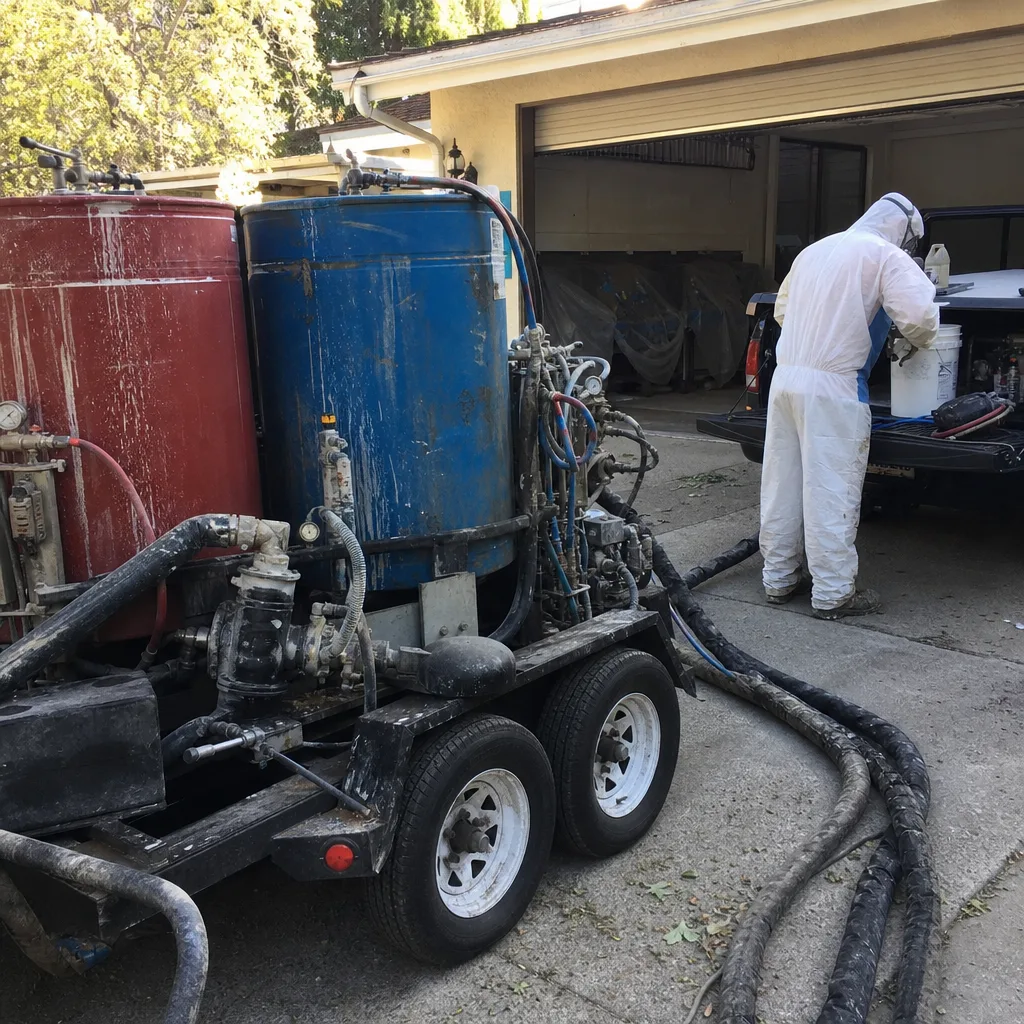
Fast, Reliable Spray Foam Insulation Across Highgrove
If you live in Highgrove and your attic turns into an oven every summer, spray foam is likely the fix. We’re North Tustin Insulation, and we work in Highgrove regularly, so we know exactly what these 1970s ranch homes deal with: thin original batts, failing foil radiant barriers, and attic temperatures that climb past 140°F when it’s 100°F outside. Spray foam air-seals the attic and blocks that heat before it pushes into your living space. Call us at (877) 265-5712 for a free estimate, and we’ll send someone out to look at your roof deck and attic hatch, not just hand you a brochure.
Key Takeaways:
- Closed-cell spray foam adds structural strength and an air seal in one pass, ideal for Highgrove’s hot, vented attics.
- Open-cell spray foam is the budget-friendlier option for interior walls and sound control, but it needs a thermal barrier on roof decks here.
- Older Highgrove homes almost always need foil radiant barrier removal before foam goes on.
- We carry Icynene and Demilec spray foam systems, so you get a real product choice, not whatever’s in the truck.
Why North Tustin Insulation Is Highgrove’s Preferred Spray Foam Insulation Company
Highgrove homeowners tend to be direct. They want to know what material is going in, what it costs, and whether it’ll actually fix the problem. That fits how we work. We carry eight insulation brands across fiberglass, mineral wool, cellulose, and spray foam, so when we recommend Icynene closed-cell for a Highgrove roof deck, it’s because that’s the right call for that attic, not because we only know one product.
Our crew knows Highgrove’s housing stock. The single-story ranch and tract homes off Cedar Street, the newer infill on the east side, the 92313 lots off Barton Road. We know these attics often have original R-11 batts and foil radiant barriers that never did much. And we schedule attic work in Highgrove for early morning in summer months, because working in a 140°F attic at 2 p.m. is dangerous. We’re not a general contractor dabbling in insulation. This is all we do. Allen Decker runs our team, and he’s built it around one trade: insulation performance.
We don’t have a showroom in Highgrove, but we don’t need one. We bring samples and product specs to your kitchen table, walk the attic with you if you want, and write up a plan that makes sense for your house. Estimates are free.
Closed Cell Spray Foam Insulation in Highgrove
Closed Cell Spray Foam Insulation in Highgrove is the workhorse for roof decks and attics where summer heat is the enemy. It cures dense, roughly R-6.5 to R-7 per inch, and it acts as an air barrier, vapor barrier, and structural stiffener all at once. For a Highgrove home with a vented attic and an aging AC unit, closed-cell on the roof deck can drop attic temperatures dramatically and stop radiant heat before it reaches the ceiling below.
A typical closed-cell spray foam job in Highgrove runs $2.50 to $4.50 per board foot, installed. For a standard 1,200 to 1,600 square foot ranch attic with a roof deck application, most homeowners land in the $6,000 to $11,000 range depending on depth and prep work. That prep work matters here, because many Highgrove attics have foil radiant barriers that need to come out first.
Roof Deck and Gable End Applications
In Highgrove’s unincorporated Riverside County heat, roof deck foam is the single biggest improvement most of these homes can get. We spray directly to the underside of the roof sheathing, which keeps the attic itself from becoming a heat sink. When we did a 1972 ranch off Cedar Street, the attic temp dropped by roughly 30°F the next afternoon after two inches of closed-cell went on the roof deck and gable ends.
Rim Joist and Band Board Sealing
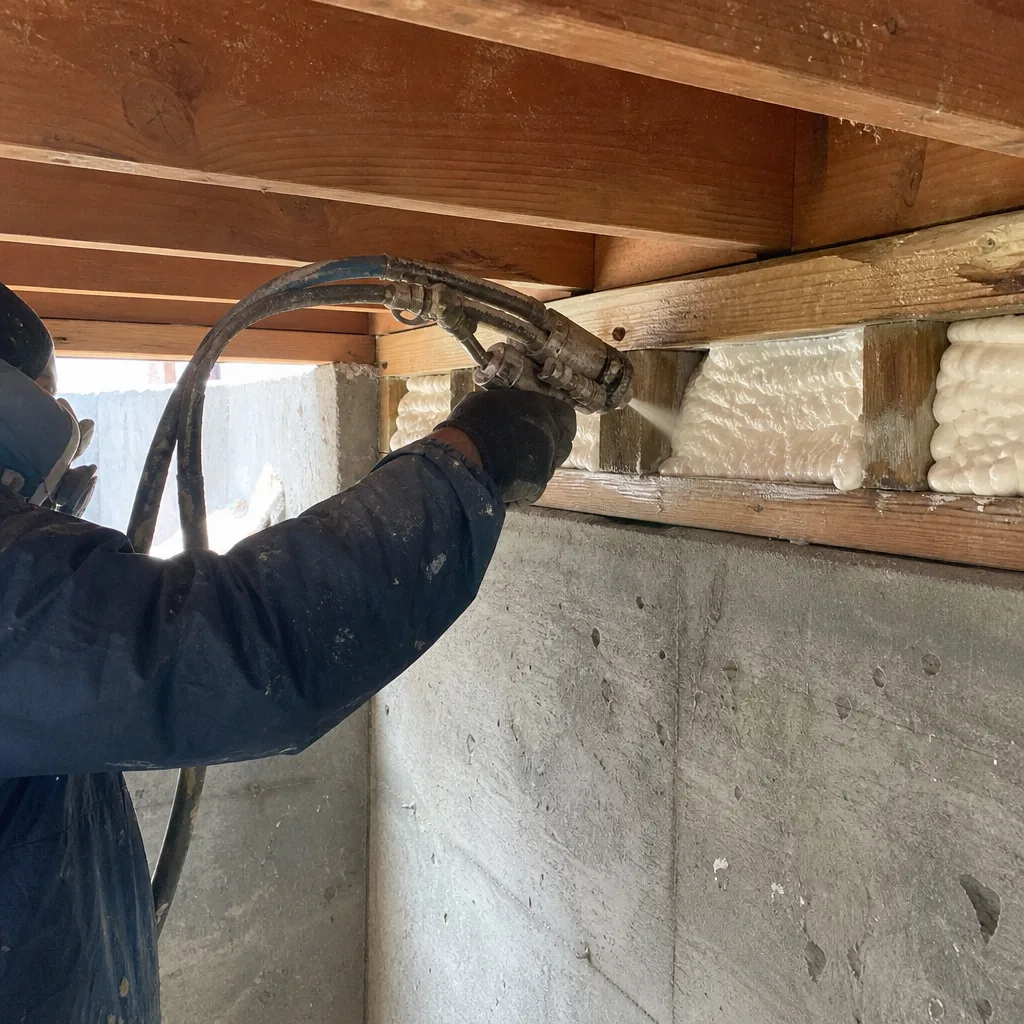
Highgrove’s older tract homes leak air at the rim joist where the floor framing meets the foundation. Closed-cell foam seals that gap and stops both air movement and pest entry. It’s a small job, usually $800 to $1,800, but it makes a surprising difference in how hard your HVAC works.
Open Cell Spray Foam in Highgrove
Open Cell Spray Foam in Highgrove is the right call when you need air sealing and sound control without the full dense pack. It cures softer and expands more, which makes it good for filling irregular cavities in walls and between floor joists. In a Highgrove ranch, open-cell on attic knee walls or in interior wall cavities can cut airflow and quiet down rooms that face Grand Terrace or Colton’s truck traffic.
Open-cell in Highgrove typically runs $1.50 to $3.00 per board foot installed. A full attic roofline in a smaller ranch can land between $4,000 and $8,000. One important note for Highgrove specifically: open-cell should not be left exposed on a roof deck in this climate. It needs a thermal barrier or drywall covering, otherwise the sustained 100°F+ summer heat can cause off-gassing and early degradation, especially in vented attics.
Interior Wall and Sound Control
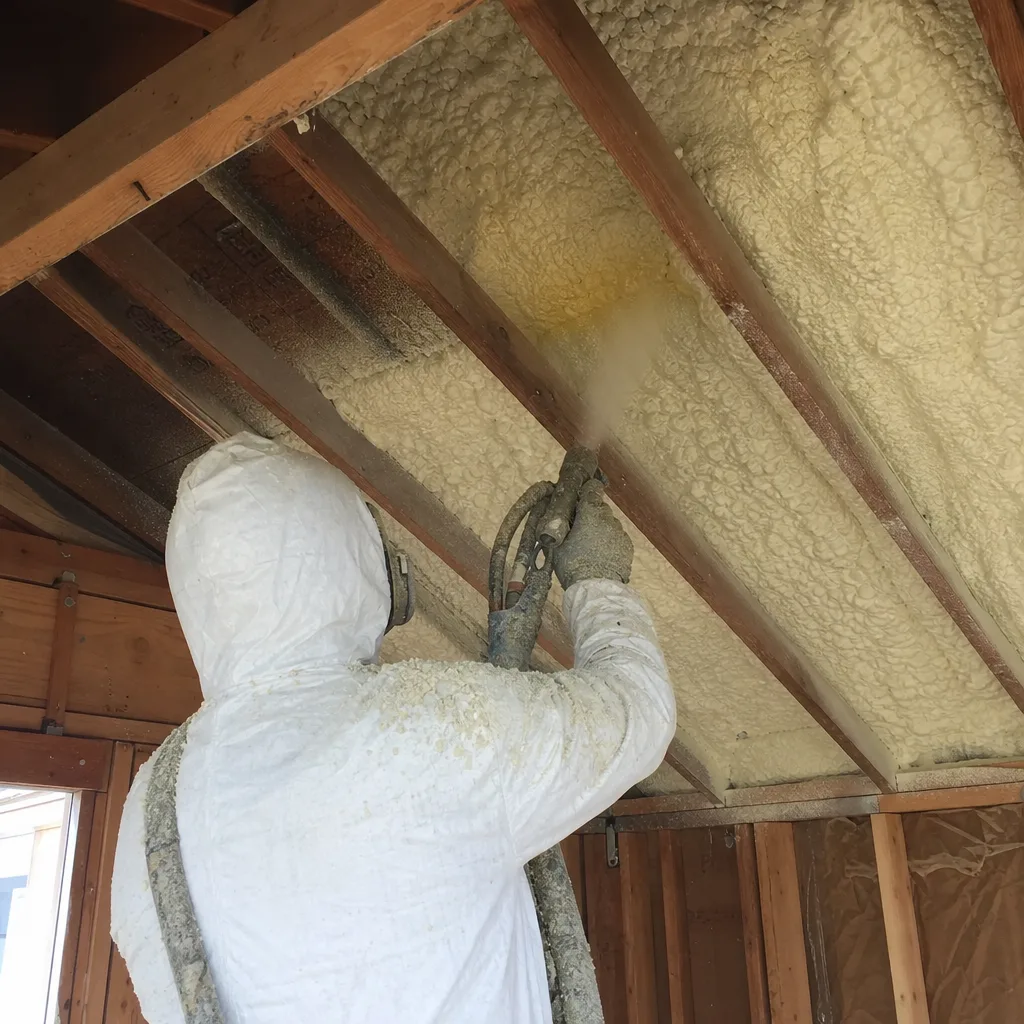
Open-cell foam in interior walls helps with noise transfer and air movement between rooms. For Highgrove homeowners who work from home or have bedrooms facing a busy road, this is a practical, lower-cost option compared to closed-cell. We use Demilec open-cell systems for these jobs because the expansion characteristics fit older framing well.
Attic Floor and Top-Plate Sealing
In a vented attic, open-cell can also go on the attic floor over the existing ceiling plane, sealing top plates and around can lights. This is a strong approach for Highgrove homes where the roof deck itself isn’t being converted to conditioned space. Costs usually run $3,500 to $7,000 for a mid-sized ranch.
Trusted Brands We Service in Highgrove
We carry Icynene and Demilec spray foam systems, which means you’re getting two of the most respected names in the industry, not a commodity product. Icynene’s closed-cell cures hard and fast, ideal for Highgrove roof decks where we need adhesion on older lumber. Demilec’s open-cell gives us flexibility on wall cavities and sound control jobs. We also stock CertainTeed and GreenFiber for hybrid jobs, where part of the attic gets spray foam and part gets a blown-in or batt overlay. We keep product data sheets and spec numbers on hand for Highgrove customers, so you can verify exactly what’s going in. One contractor, eight brands, matched to your house.
Common Spray Foam Insulation Problems We See in Highgrove Homes
- Foil radiant barriers failing under foam. Foam sprayed over an existing foil barrier traps moisture and heat, causing the barrier to delaminate and the foam to lose adhesion. We remove the old barrier before spraying in nearly every Highgrove attic we work in. Skipping that step is the most common reason spray foam fails locally.
- Open-cell degradation on vented roof decks. In Highgrove’s sustained summer heat, open-cell foam left exposed on a roof deck can off-gas and break down. If you’re sealing the roofline, closed-cell is almost always the right material here. We’ll tell you if open-cell is a bad fit.
- Oversized attic hatches and pull-down stairs left unsealed. Older Highgrove ranches often have big attic access points that get skipped during air sealing. A gap around a hatch or pull-down stair assembly undermines the entire foam job. We seal and weatherstrip these as part of every attic scope.
- Skimpy original R-11 batts doing nothing. The 1970s tract builds across Highgrove shipped with minimal insulation, and decades of settling and rodent traffic have made it worse. Foam over degraded batts without removal creates a trapped moisture sandwich. We pull the old material, seal the top plates, then spray.
Pricing for Spray Foam Insulation in Highgrove, CA
Here’s what you’re looking at in Highgrove, based on the jobs we do out here. Closed-cell roof deck foam on a typical 1,400 square foot ranch runs $7,000 to $11,000. Open-cell attic floor applications land between $3,500 and $7,000. Rim joist sealing is a smaller job at $800 to $1,800. Foil barrier removal and attic prep adds $400 to $1,200 depending on accessibility and how much material needs to come out. These aren’t quotes, they’re ranges based on Highgrove’s actual housing stock. Your attic’s square footage, access difficulty, and whether we’re removing old insulation will move the number. Call (877) 265-5712 and we’ll give you a firm number after we see the space. Free, no obligation.
We Also Serve Cities Near Highgrove
We run crews to Highgrove regularly, and we cover the surrounding Inland Empire communities too. That includes Highgrove itself, plus Grand Terrace, Colton, Loma Linda, and Rubidoux. If you’re in any of these areas and your attic’s under-insulated, the same Spray Foam Insulation approach applies. Same brands, same crew, same upfront pricing.
Serving Highgrove, CA — Our Local Coverage Area
We’re based in the Highgrove area and know this community well. Use the map below to see our service coverage — if you’re nearby, we can almost certainly help.
FAQs About Spray Foam Insulation in Highgrove
Yes. Foam sprayed over an existing foil radiant barrier traps moisture between the barrier and the foam, causing the barrier to delaminate and the foam to lose adhesion. In Highgrove’s hot attics, this failure happens fast. We remove the old foil before spraying, which adds prep labor but prevents a much costlier removal and re-spray down the road. Call (877) 265-5712 for a prep-included quote.
Closed-cell spray foam alone, applied at two inches or more on the roof deck, is usually sufficient without a separate radiant barrier. It blocks both conductive and radiant heat transfer and air-seals the attic simultaneously. In some Highgrove homes with particularly brutal western exposure, we’ll discuss adding a supplemental approach, but foam is doing the heavy lifting. We’ll assess your specific roof orientation when we walk the attic.
A 1970s Highgrove ranch typically has R-11 batts that have settled to something worse. Two inches of closed-cell foam adds roughly R-13 to R-14 and, critically, adds the air seal the old batts never provided. The effective R-value gain is larger than the printed number because air infiltration is stopped. Homeowners usually notice the change the first hot afternoon after installation. Call us at (877) 265-5712 for an attic assessment.
Those oversized hatches and pull-down stair assemblies are air leaks, and foam itself won’t fix them unless the opening is sealed and weatherstripped. We seal the perimeter and add a foam or rigid panel to the attic side of the hatch as part of the job. It’s included in our attic sealing scope, not a line-item upsell. Skipping it would leave a hole that undermines the entire foam installation.
Highgrove attics in summer can hit 140°F or higher by mid-afternoon, which is dangerous for anyone working up there and also affects how foam cures. We schedule Highgrove attic work for early morning, typically a 6:30 or 7 a.m. start, to get the foam applied before the heat peaks. Closed-cell foam cures better at moderate temperatures, so it’s a safety and a quality decision. If you’re in Highgrove and need attic foam, call (877) 265-5712 and we’ll get you on the morning schedule.
Ready to get that Highgrove attic sealed before the next heat wave hits? Call North Tustin Insulation at (877) 265-5712 for a free estimate. We’ll inspect your roof deck, check the foil barrier situation, and give you a straight answer on closed-cell versus open-cell. No pressure, no vague pricing. Just a clear plan from Allen Decker’s insulation-only crew, built for Inland Empire summers.
Written by Allen Decker, Owner at North Tustin Insulation, serving Highgrove and the surrounding Inland Empire communities.