
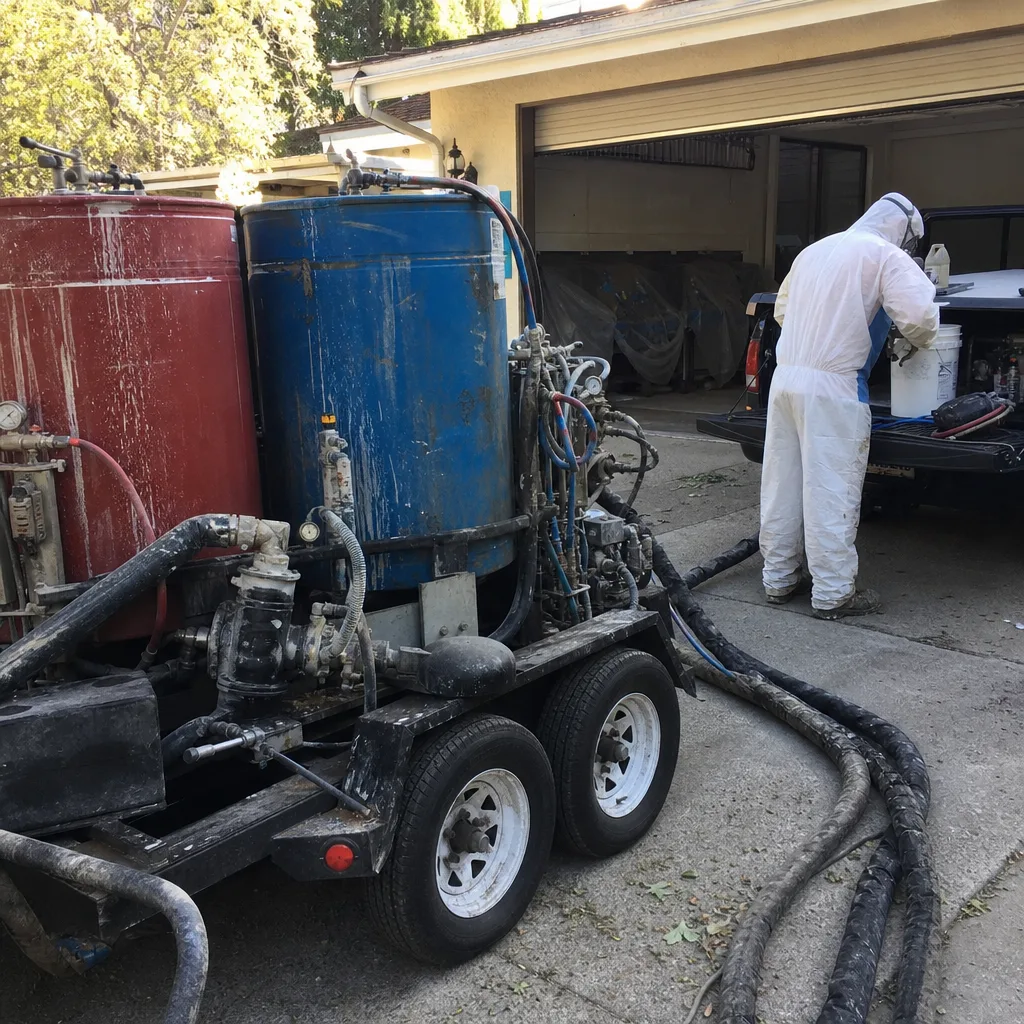
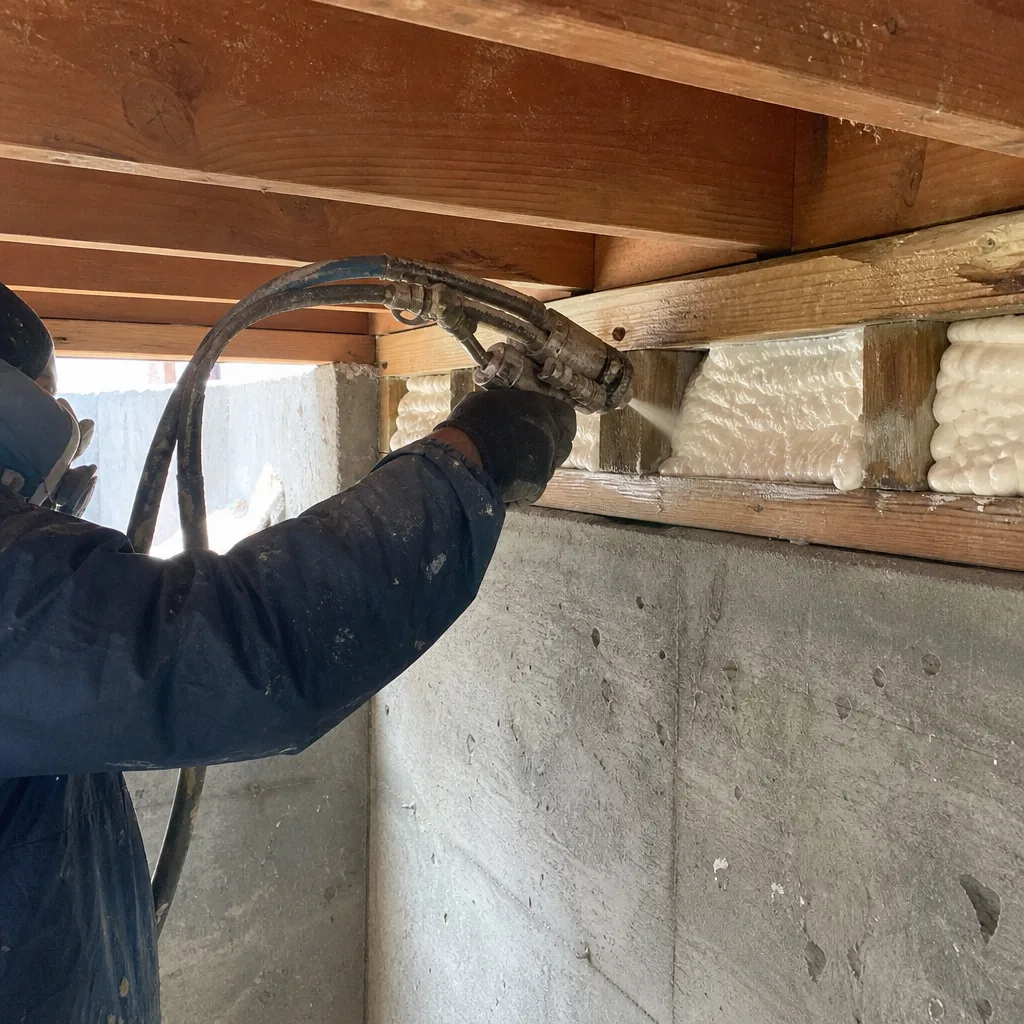
Fast, Reliable Spray Foam Insulation Across La Puente
If your La Puente home still has its original 1950s or 60s attic insulation, you’re losing money every month. Spray foam insulation in La Puente homes typically costs $2.50 to $6.50 per square foot depending on whether you choose open-cell or closed-cell, and the job usually takes one to two days. We know these houses because we’ve worked in enough of them: single-story stucco boxes off Amar Road, Valley Boulevard, and Hacienda Boulevard where the attic hits 150°F by noon in August and the original R-11 batts have given up. Call us at (877) 265-5712 for a straight answer on what your attic actually needs.
Why North Tustin Insulation Is La Puente’s Preferred Spray Foam Insulation Company
We’re an insulation-only contractor, which means every person on our crew works on one trade and one trade only. Allen Decker built this company around a simple idea: carry multiple brands, know multiple methods, and match the material to the house instead of pushing one product on every job. Homeowners in La Puente call us because we can look at a 1960s tract house on a slab and tell them honestly whether they need closed-cell foam, open-cell foam, or whether blown-in fiberglass with a radiant barrier is the smarter spend. That honesty matters in a city where most insulation work gets sold by general contractors who sub it out to whoever’s available.
We carry eight nationally recognized insulation brands, including Icynene and Demilec for spray foam, Owens Corning and CertainTeed for fiberglass, and GreenFiber for recycled cellulose. Having that lineup means our recommendation isn’t driven by what’s sitting in the warehouse. It’s driven by what your attic actually needs. Our Spray Foam Insulation team has worked in tight, low-clearance attics all over the San Gabriel Valley, and we know how to get foam into the awkward corners of a low-pitch comp shingle roof without making a mess of your ceiling.
La Puente homeowners also appreciate that we carry both open-cell and closed-cell foam systems. That’s not common. Most contractors pick one and sell it hard. Open-cell is cheaper and works well for interior sound control and air sealing. Closed-cell costs more but adds structural rigidity and acts as a vapor barrier, which matters in an inland valley climate where summer humidity may be low but the temperature swings are punishing. The choice should follow the house, not the truck.
Spray Foam Attic Insulation in La Puente
Spray Foam Attic Insulation is the single most effective upgrade for a La Puente home with a low-pitch comp shingle roof, because the real problem isn’t the R-value up there. It’s the air transfer. Older tract houses in the 91744 and 91746 zip codes were framed fast and cheap, with recessed can lights, plumbing chases, and top plates that were never sealed. Hot attic air pushes through those gaps into the living space, and your air conditioner fights it all afternoon. Sealing the ceiling plane with closed-cell foam changes the physics of the house. You’re not just adding insulation. You’re locking out the heat gain at its source.
In La Puente, attic spray foam typically runs $3.50 to $6.50 per square foot for closed-cell and $2.50 to $4.50 for open-cell. Most single-story houses here have between 1,000 and 1,500 square feet of attic floor, so you’re generally looking at a full-attic job in the $5,000 to $9,000 range depending on access and prep. Prep matters. A lot of these pre-1978 attics contain old batt insulation that’s sagging, rodent-damaged, or crushed under the air handler. That material has to come out before foam goes in, and that removal adds labor hours to the job.
Removing Old Batts Before Foam
In La Puente’s older tract homes, it is almost always a mistake to spray foam over original R-11 batts. The old material is often compressed to half its original thickness, which means it isn’t doing much anyway, and if it’s been hosting rodents, you don’t want to seal that mess into your ceiling. We remove the degraded material, inspect the deck and joists, and only then does the foam crew start. On a 1962 stucco tract house near La Puente High School, we found the original batts sagging between joists and a nest of rodent-compromised insulation under the air handler. We removed all of it, sealed every ceiling penetration and top plate with closed-cell foam, then applied a radiant barrier over the new insulation. The homeowner reported a 12°F drop in afternoon room temperature and a quieter HVAC system. That’s the outcome a correct prep sequence gets you.
Why Low-Pitch Roofs Need Closed-Cell
Most La Puente homes have shallow roof pitches that hold heat close to the attic floor. Open-cell foam breathes, which means it allows some moisture and temperature transfer. In an attic that hits 150°F every summer afternoon, open-cell can gradually lose effectiveness. Closed-cell foam forms a dense, airtight layer that resists that heat load year after year. If your budget can’t stretch to full closed-cell, the smart compromise is closed-cell at the ceiling plane and the roof deck edges, with blown-in fiberglass or cellulose on top. We spec that kind of hybrid system often, and it performs well in this climate.
Spray Foam Wall Insulation in La Puente
Spray Foam Wall Insulation in La Puente is a less common request than attic work, and there’s a straightforward reason for that. Most of these homes are stucco tract houses on slab foundations where the exterior walls were built with zero cavity insulation. Adding foam to those walls means one of two things: either you open up the interior drywall, or you inject foam through small holes drilled from the outside or inside. Both methods work. Both cost more than attic work. But for certain rooms, particularly west-facing bedrooms that absorb afternoon sun on Valley Boulevard or Amar Road, wall foam can be the difference between a room that stays at 78°F and one that climbs to 84°F by 4 p.m.
For an average single-story La Puente home, injecting open-cell foam into exterior walls runs $2.00 to $3.50 per square foot of wall area. A full exterior wall retrofit on a 1,200-square-foot house typically lands between $5,000 and $9,000. If you’re already remodeling a kitchen or bathroom and the walls are open, foam installation drops significantly because the labor to open and close the wall goes away. That’s the time to do it. We’ve worked with several La Puente homeowners who timed wall foam to coincide with a re-pipe or an electrical panel upgrade, and the marginal cost was reasonable.
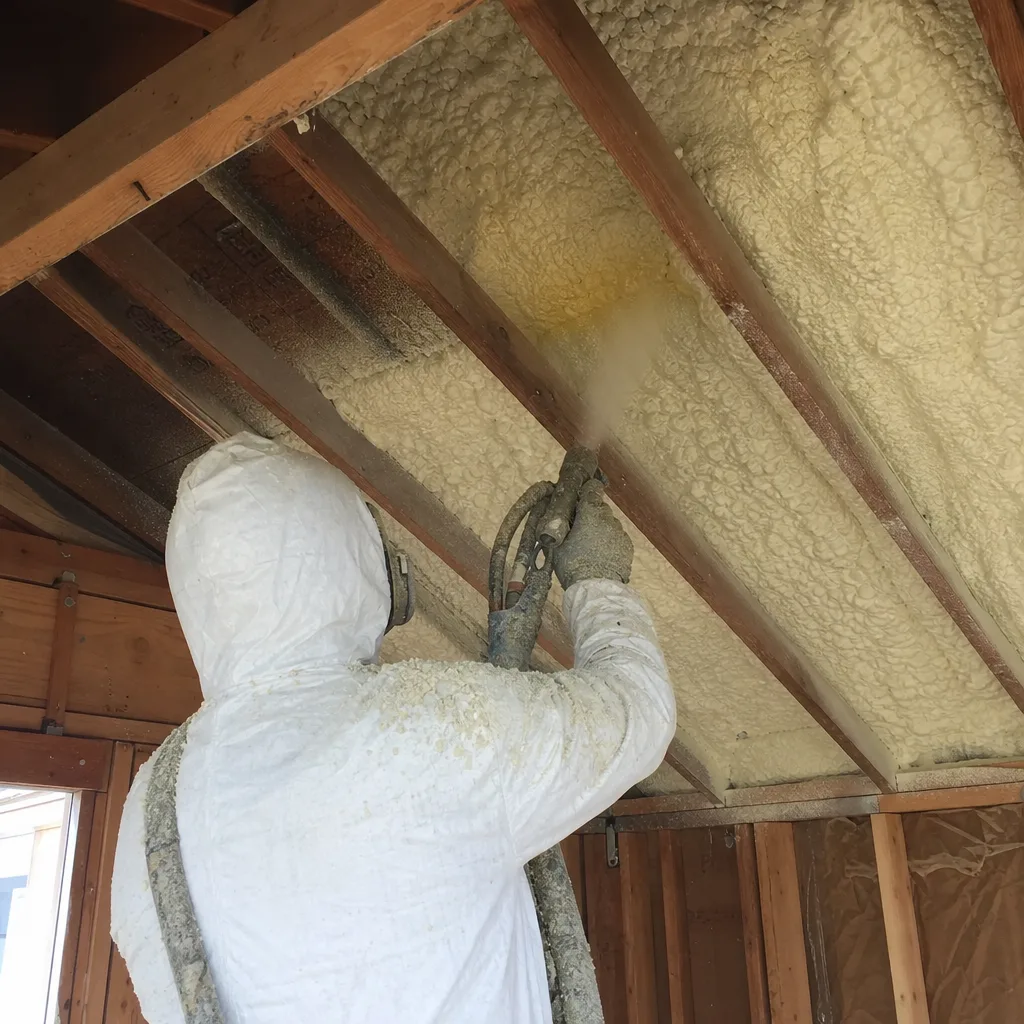
Injection Foam for Existing Walls
Injection foam is the practical option for La Puente stucco houses where you’re not planning a remodel. We drill small access holes, inject foam into the stud cavities, and patch the holes so they disappear under paint. It’s slower than open-wall work and it can’t fill every void perfectly, but it makes a measurable difference in thermal comfort. For homes on tight lots where neighbor proximity is real, injection foam also means we’re not tearing off large sections of exterior stucco that would need re-plastering and paint matching.
Stucco, Slab, and Spray Foam
The combination of stucco cladding and slab-on-grade foundations in La Puente creates a specific insulation profile. Stucco has modest thermal mass but poor insulating value on its own, and a slab foundation wicks heat into the house through the floor perimeter. Wall foam addresses the wall component of that equation. If you want a meaningful reduction in summer heat gain, attic air sealing plus attic insulation is still the first move, but wall injection is the logical second step once the attic is done. We’ll never push wall foam as a first fix in a house that still has a sealed-attic problem.
Trusted Brands We Service in La Puente
We stock and install spray foam from Icynene and Demilec, two of the most respected names in the industry. Icynene open-cell is a favorite for interior retrofit work where sound control matters as much as insulation. Demilec closed-cell is our go-to for La Puente attic decks and rim joist sealing because of its density and long-term stability in high-heat conditions. We also carry Owens Corning and CertainTeed fiberglass for hybrid systems, and GreenFiber cellulose for homeowners who want a recycled-content option. Having all of these in our lineup means we don’t have to invent a reason to sell you the wrong product. You get what your house needs, and we can install it correctly the first time.
Common Spray Foam Insulation Problems We See in La Puente Homes
- Crushed R-11 batts under HVAC equipment. The original 1950s and 60s insulation in these attics is often flattened under air handlers and duct runs, leaving bare spots that act like open windows. Spray foam bridges those voids, but only if the old material comes out first.
- Rodent and bird damage in older attics. La Puente’s mature trees and older construction means attics here see real animal traffic. Compromised insulation has to be removed before foam goes in, and all entry points sealed with closed-cell foam at the eaves and gable ends.
- Degraded open-cell foam from constant heat exposure. Low-pitch comp shingle roofs hold heat close to the attic floor, and open-cell foam that wasn’t spec’d for high-heat conditions can lose performance. Closed-cell foam or a radiant barrier solves this permanently.
- Unsealed top plates and can light gaps. Almost every pre-1980 tract house in La Puente has air leaks where interior walls meet the attic, plus recessed can lights that dump heat directly into the house. Sealing these penetrations is the highest-value part of any attic foam job.
Pricing for Spray Foam Insulation in La Puente, CA
Here are real numbers for the La Puente market. Full-attic closed-cell spray foam on a 1,200-square-foot single-story tract house runs $4,200 to $7,800. Open-cell runs $3,000 to $5,400. Wall injection foam for a typical three-bedroom stucco house runs $5,000 to $9,000 depending on wall area and access. Rim joist sealing in a raised section of floor, which applies to some homes near the hills in 91744, runs $800 to $1,800. Low-clearance attics that require extra crawl time and prep work may add 10 to 15 percent to the total. We give exact, written quotes before any work starts. Call (877) 265-5712 and we’ll schedule a walkthrough.
We Also Serve Cities Near La Puente
Our Spray Foam Insulation in La Puente work regularly takes us into the surrounding communities, and we’re equally comfortable in Valinda, Avocado Heights, West Puente Valley, and Hacienda Heights. The housing stock is similar across these neighborhoods, which means the same local knowledge applies. If you’re a few blocks over the city line, the process is identical and the pricing is the same.
Serving La Puente, CA — Our Local Coverage Area
We’re based in the La Puente area and know this community well. Use the map below to see our service coverage — if you’re nearby, we can almost certainly help.
FAQs About Spray Foam Insulation in La Puente
Yes, spray foam works in low-clearance 2×4-rafter attics because it’s applied as a liquid and expands to fill the cavity. Closed-cell foam achieves high R-value in just 2 to 3 inches, so it’s actually the best option when vertical space is limited. We do these low-clearance La Puente attics routinely, and the work just requires more crawl time. Call (877) 265-5712 for a specific assessment of your attic.
Yes, you should remove sagging or rodent-compromised R-11 batts before spraying foam. Spraying over compressed or contaminated batts locks in a substandard assembly and can trap moisture and odors. Removal adds prep labor to the job but is almost always the right call in La Puente’s older tract homes.
Yes, spray foam helps dramatically with inland valley attic heat gain because it seals the air leaks that let superheated attic air push into your living space. On La Puente’s low-pitch comp shingle roofs, closed-cell foam at the ceiling plane combined with a radiant barrier can reduce afternoon attic-driven temperature gain by 10 to 15 degrees or more. That’s the observation we’ve seen on jobs throughout 91744 and 91746.
Yes, injection foam can be installed through small holes drilled in your stucco or drywall without opening up entire walls. The holes are patched to match and disappear under paint. It’s the standard method for La Puente slab-on-grade stucco homes where a full remodel isn’t planned. Give us a call at (877) 265-5712 for a walkthrough and a price.
Spray foam is fully compatible with slab foundations and stucco construction because it doesn’t rely on wall cavities matching standard dimensions. It expands to fill whatever cavity exists, including the irregular framing common in 1950s and 60s tract houses. The bigger consideration is that stucco and slab homes carry heat through the wall and floor perimeter, so combining attic foam with wall injection foam yields the best result.
Written by Allen Decker, Owner at North Tustin Insulation, serving La Puente and the surrounding San Gabriel Valley communities.