
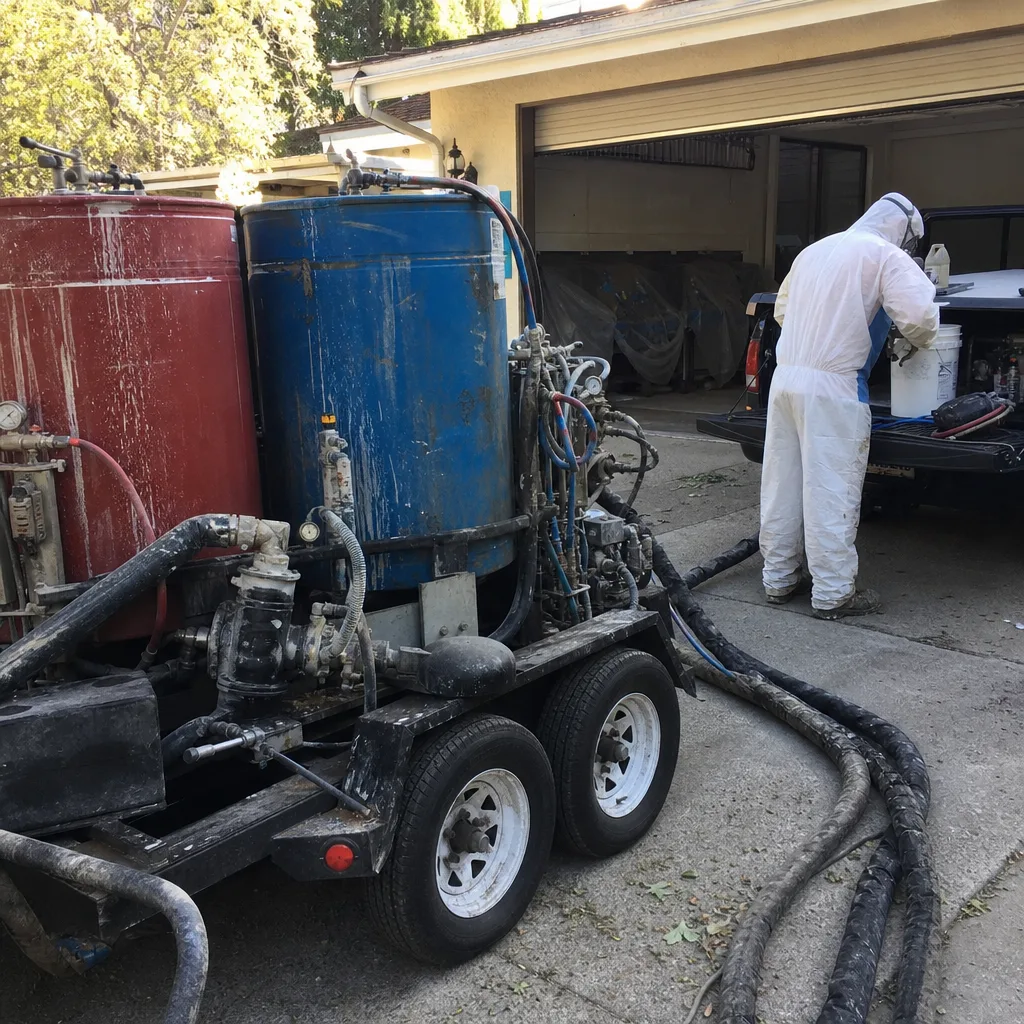
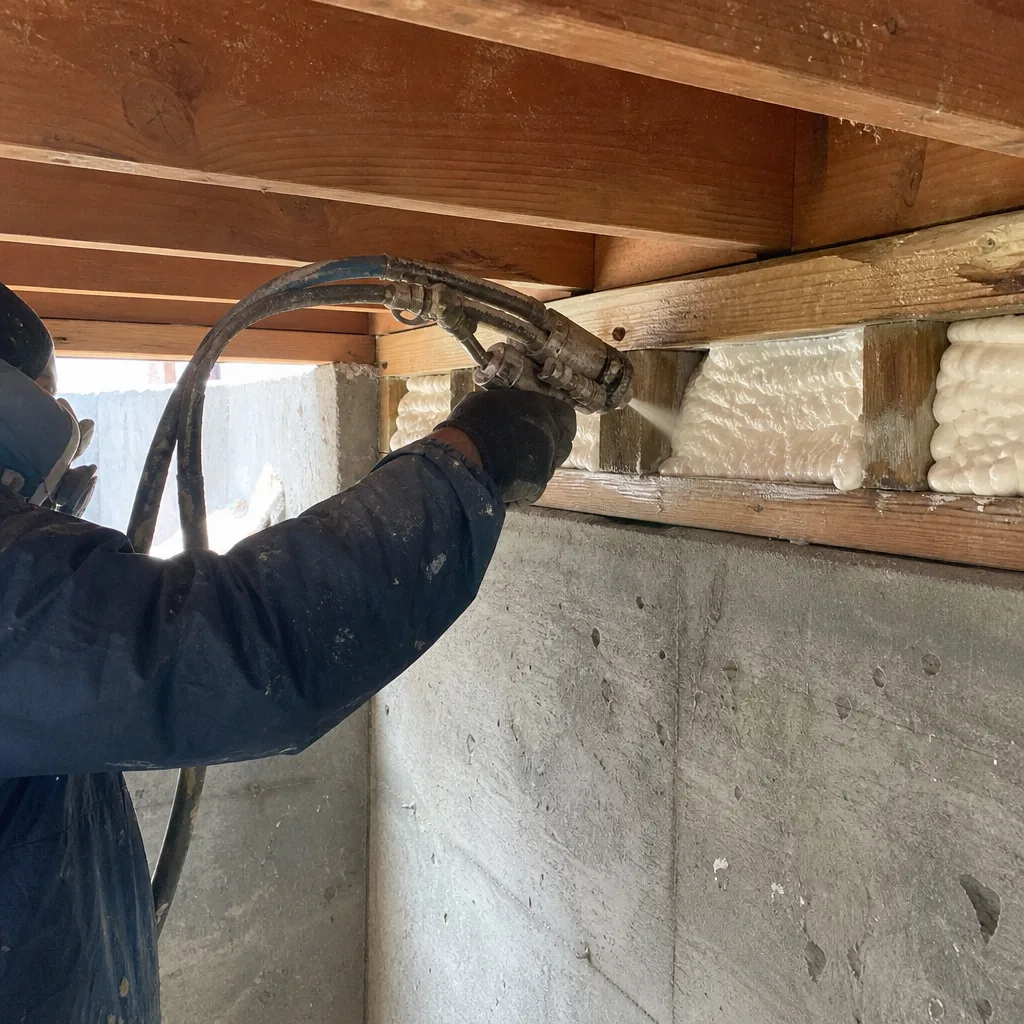
Fast, Reliable Spray Foam Insulation Across Laguna Beach
Spray foam insulation in Laguna Beach costs roughly $2.80 to $7.50 per board foot installed, with most whole-attic or roof-deck projects landing between $4,500 and $14,000 depending on foam type and access. That’s the honest range before we’ve seen your roofline. If you’re in a 1920s Canyon cottage or a hillside bungalow off Bluebird Canyon Drive, the number changes based on what’s behind those original redwood boards – and that’s exactly why we send a specialist, not a salesperson, to look first. Call (877) 265-5712 for a free estimate and we’ll tell you what your house actually needs.
Why North Tustin Insulation Is Laguna Beach’s Preferred Spray Foam Insulation Company
Laguna Beach homes are not interchangeable with the rest of Orange County. We’ve foamed attics and roof decks in the historic district near Main Beach, in Canyon cottages with knob-and-tube wiring still live in the rafters, and in mid-century bungalows above Bluebird Canyon where June gloom lingers until noon. Each one required a different approach. Our Spray Foam Insulation team carries both Icynene and Demilec systems, so we’re not stuck recommending the one foam we happen to buy in bulk. That matters here more than most places, because the wrong open-cell or closed-cell decision against redwood sheathing creates condensation problems you won’t see in Irvine or Mission Viejo.
Allen Decker leads our team, and every Laguna Beach estimate includes a roof-deck moisture assessment before we quote a board foot. That’s unusual. Most contractors bid from the driveway. We check what’s above the ceiling first – the marine layer that rolls in off the Pacific pushes dew points up for weeks at a time, and that changes the physics of every foam decision you make.
Closed Cell Spray Foam Insulation in Laguna Beach
Closed Cell Spray Foam Insulation in Laguna Beach runs about $4.50 to $7.50 per board foot and is the most common choice for unvented roof decks where the goal is both thermal control and structural rigidity. It adds about R-6.5 to R-7 per inch, which matters when ceiling cavities are shallow – and in Laguna’s 1920s and 1930s cottages, they almost always are. Those early wood-frame homes were built for summer breezes, not air conditioning, and the rafter bays were never sized for insulation.
The catch here isn’t the R-value. It’s the moisture carrying through the foam to the back side of the sheathing. On a dry inland tract home, closed-cell foam done tight to the deck works as intended. Against original redwood boards that have been dampened by marine-layer fog for eighty years, it can trap what was already in the wood. We see it most in hillside cottages where the roof orientation faces the canyon and holds condensation longer than a bluff-facing roofline would.
Where Closed-Cell Makes Sense in Laguna
Closed-cell foam earns its cost in Laguna Beach homes with flat or low-slope sections, unvented roof decks, or rim joists where salt air finds its way into the framing. It also acts as an air barrier, which cuts the cold drafts that push through open-rafter ceilings in the older canyon neighborhoods.
When We Recommend Against It
If your cottage still has knob-and-tube wiring live in the attic, closed-cell foam sprayed over that wiring is a code issue and an inspection fail. We coordinate with a licensed electrician before we foam. That step adds time and cost, but skipping it creates a bigger, more expensive problem later.
Open Cell Spray Foam in Laguna Beach
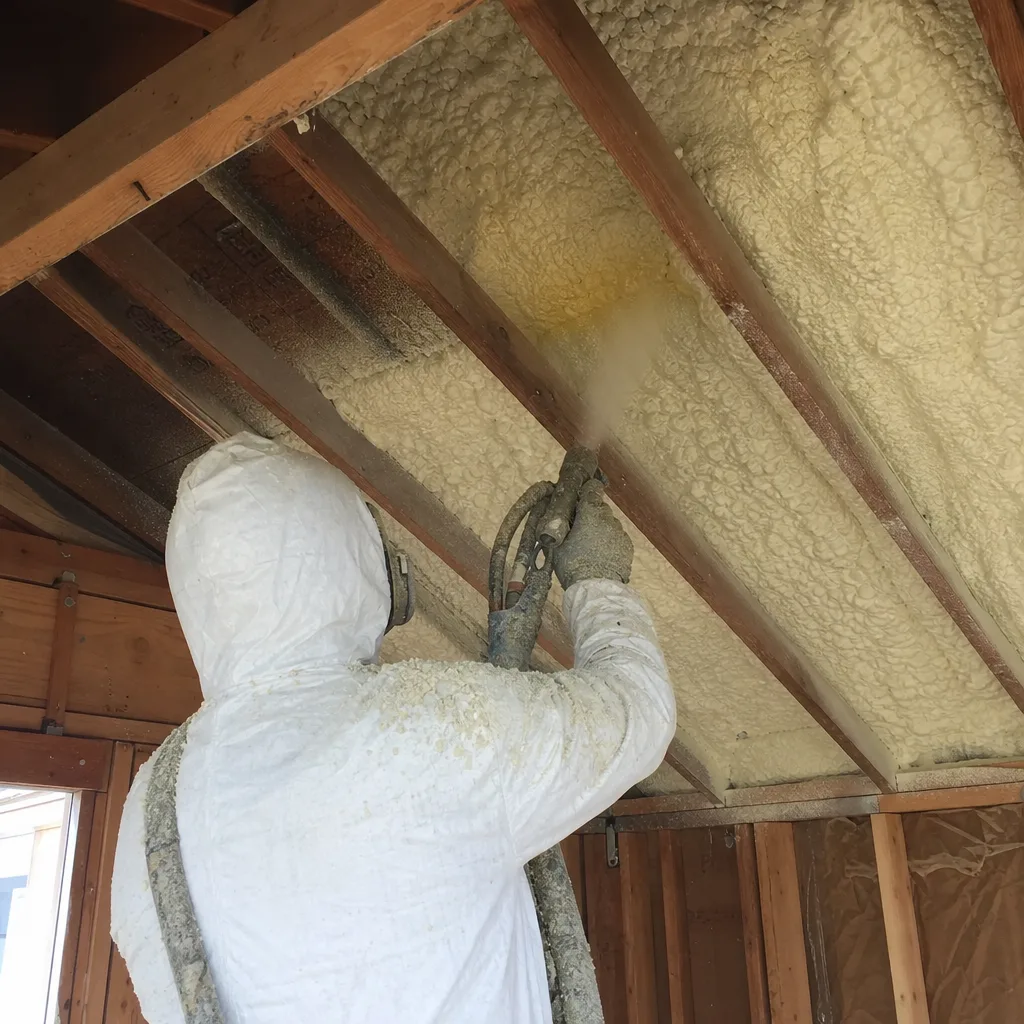
Open Cell Spray Foam in Laguna Beach runs about $2.80 to $4.80 per board foot and is often the better fit for historic hillside cottages where the roof deck needs to breathe to the interior. It delivers about R-3.5 to R-3.7 per inch, so you need more inches to hit the same R-value as closed-cell – but that’s not a dealbreaker when rafter bays are accessible.
The reason we reach for open-cell more often in Laguna than inland is simple: it’s vapor permeable. That means moisture in the redwood sheathing can dry through the foam layer toward the living space instead of being sealed against the wood. In the fog belt, that’s a feature, not a compromise. The same foam spec that seals a dry attic in Rancho Santa Margarita would lock moisture into an original redwood roof deck in Laguna Canyon.
Open-Cell Over Exposed Rafters
For cottages with open-rafter ceilings you want to keep visible, open-cell foam can be applied to the underside of the roof deck and left exposed or covered with a light finish. We’ve done this on Canyon Acres homes where the owner wanted the original timber framing to stay visible while stopping the fog-season condensation that dripped onto the beams.
Pairing Open-Cell with a Vapor Retarder
The right open-cell spec in Laguna often includes a vapor-retarder layer coordinated with the framing and sheathing condition. It’s not a product we add to every job. It’s a judgment call based on what we find when we map dew points across the roof deck in the first week of June, when the marine layer sits thickest.
Trusted Brands We Service in Laguna Beach
We’re not tied to one manufacturer, and that gives Laguna Beach homeowners real options. For spray foam jobs we install both Icynene and Demilec systems, two of the most established open- and closed-cell product lines on the market. For homes where spray foam isn’t the right call – and we’ll tell you when it’s not – we also carry Owens Corning fiberglass and GreenFiber cellulose, so the recommendation comes from what your roof deck and budget can actually support. We keep a working inventory of the products and accessories our Laguna jobs use most, which means less waiting on parts when a mid-project condition changes. That happens more often in 90-year-old attics than anyone likes to admit.
Common Spray Foam Insulation Problems We See in Laguna Beach Homes
- Condensation staining on original redwood ceilings. Closed-cell foam sprayed tight to redwood roof sheathing traps marine-layer moisture, and within one fog season the ceiling boards show dark condensation marks. The fix usually involves removing a test strip of foam, mapping dew points, and re-detailing with a vapor-permeable assembly.
- Knob-and-tube wiring buried under foam. Homes built in the 1920s through 1950s in Laguna’s historic district still have live knob-and-tube in attic cavities. Foam sprayed over it fails inspection and creates a fire-safety hazard. We require an electrician to address the wiring before any foam goes in.
- Thermal bridging at open-rafter transitions. Cottages with exposed rafters and no foam on the rafter edges get warm interior and cold exterior surfaces at transition points, which drives uneven condensation at block transitions between canyon and coast microclimates. Foam needs to cover the edge of every rafter, not just the bays.
- Salt-air corrosion on fasteners and flashings. Laguna’s coastal air eats at metal roof fasteners, pipe flashings, and any steel embedded near the roof line. We inspect these before foaming, because sealing corroded hardware behind a foam layer means it fails invisibly until water has done real framing damage.
Pricing for Spray Foam Insulation in Laguna Beach, CA
Here’s what Laguna Beach homeowners should expect to pay, in plain numbers:
- Open-cell spray foam, roof deck: $2.80 to $4.80 per board foot, installed
- Closed-cell spray foam, roof deck: $4.50 to $7.50 per board foot, installed
- Whole attic or roof-deck retrofit on a 1930s cottage: $4,500 to $11,000, depending on bay depth, access, and wiring condition
- Rim joist spray foam (coastal crawlspace): $900 to $2,800, depending on joist count and salt damage
What moves the number: whether your attic still has knob-and-tube wiring that needs an electrician first (that adds cost but it’s non-negotiable), how many rafter bays are accessible from a drop-down stair, and whether the roof deck has water staining that needs to dry before foam is applied. Estimates are free, and we walk you through the math in person. Call (877) 265-5712 to schedule one.
We Also Serve Cities Near Laguna Beach
North Tustin Insulation serves Laguna Beach directly and works regularly in the surrounding coastal and canyon communities. You’ll find us in San Joaquin Hills, Aliso Viejo, Laguna Woods, and Laguna Hills, where homes share the same marine-layer conditions but often have different framing details and wiring histories.
Serving Laguna Beach, CA — Our Local Coverage Area
We’re based in the Laguna Beach area and know this community well. Use the map below to see our service coverage — if you’re nearby, we can almost certainly help.
FAQs About Spray Foam Insulation in Laguna Beach
Yes, but only with a moisture assessment first. We map dew points across the roof deck before choosing a foam type and thickness. In most 1930s Canyon cottages, open-cell foam with a coordinated vapor-retarder strategy lets the original redwood sheathing dry toward the interior instead of trapping fog-season moisture. We recently re-detailed a 1930s bungalow off Canyon Acres where closed-cell foam had caused condensation staining within one fog season – the fix was open-cell plus a vapor retarder, and the historic ceiling boards stayed exposed and dry. Call (877) 265-5712 for a free moisture assessment on your roof deck.
Only after an electrician addresses the wiring. Knob-and-tube buried under spray foam is a fire hazard and an automatic inspection failure, so we require a licensed electrician to decommission or replace the wiring before we foam. We coordinate with your electrician and schedule the foam application immediately after the wiring work is done so the attic isn’t open longer than necessary. The cost of rewiring is separate from the foam quote, but we’ll tell you what to expect before you commit.
The marine layer. Laguna Beach sits in a fog belt where June gloom can hold for weeks, pushing dew points high enough that moisture condenses on unvented or wrongly specified foam surfaces. Inland cities like Irvine experience the same summer heat without the same sustained humidity, so a closed-cell spec that works there can trap moisture against original redwood sheathing here. The canyon-to-coast temperature swings also vary block by block – a cottage at the bottom of Bluebird Canyon sees different condensation patterns than a bluff-top home off Coast Highway. We’ve learned to check the specific microclimate, not just the ZIP code.
They affect exterior changes and anything visible from the street. Spray foam applied to the underside of a roof deck or inside an attic cavity usually doesn’t trigger design review because it’s not visible from the outside. But if the work involves changes to rooflines, adding exterior vents, or modifying original architectural features, the historic district rules may apply and the timeline may extend. We factor that in before we schedule, and we’ll flag any design-review exposure in writing so there are no surprises.
For most Laguna hillside bungalows with 2×6 or mixed-dimension rafter bays, we recommend a full cavity fill of open-cell foam at 5.5 to 6 inches when the roof deck shows no water staining and drying to the interior is the priority. Closed-cell at 3 to 3.5 inches makes sense when the deck is clean, the rafter bays are shallow, and you need maximum R-value per inch plus an air barrier. There’s no one-size answer – the existing redwood sheathing condition and the roof orientation determine which approach creates the fewest moisture problems. Call (877) 265-5712 and we’ll assess your specific roof deck.
Written by Allen Decker, Owner at North Tustin Insulation, serving Laguna Beach and surrounding coastal communities.