
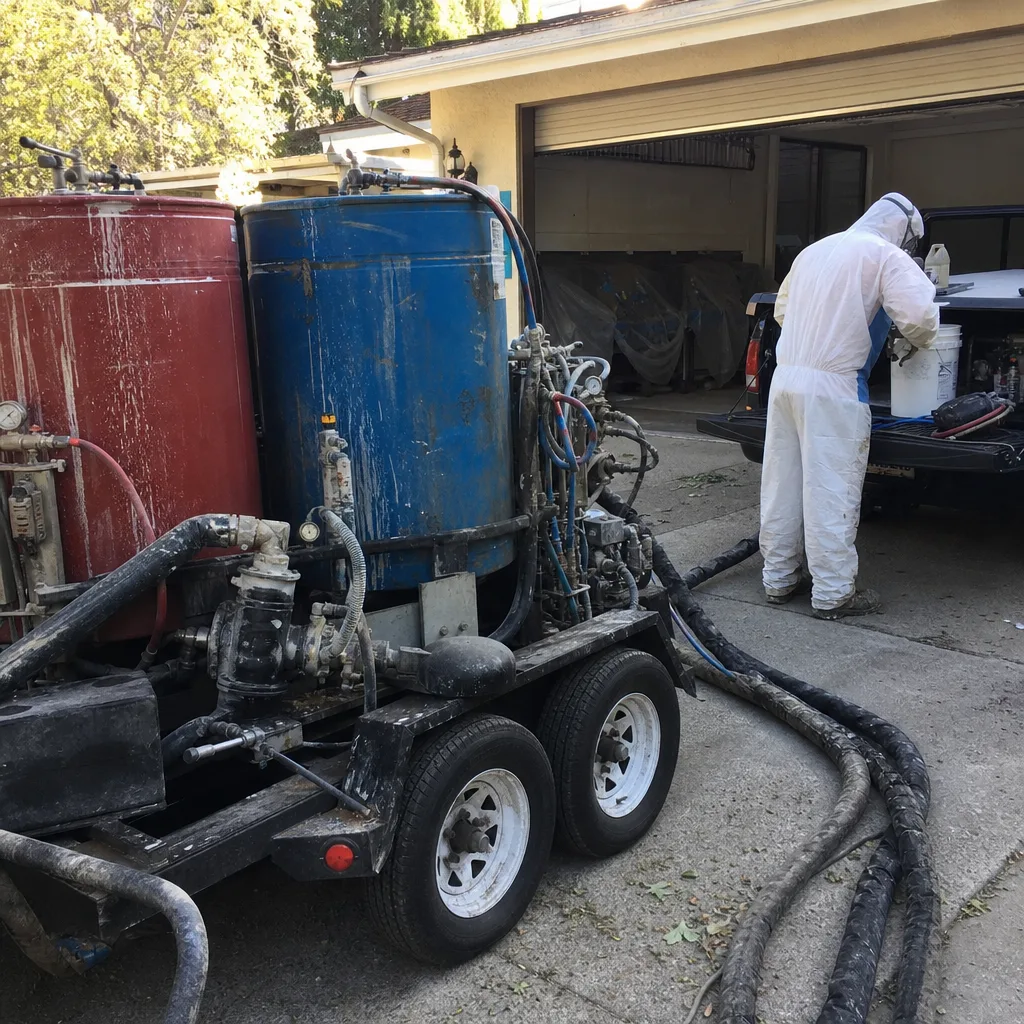
Fast, Reliable Spray Foam Insulation Across Valinda
Spray foam insulation in Valinda typically costs $2,800 – $6,400 for a 1,200 – 1,800 sq ft attic retrofit, with wall cavity injections running $1,900 – $3,800 and rim joist sealing at $1,100 – $2,400. Most jobs wrap in one day. If your 91744 home was built in the 1950s or 60s, you’re likely living with collapsed batts and attic temperatures that climb past 140°F in July. We know these postwar tract houses inside out, because we work on them every week. Call (877) 265-5712 for a free estimate, and we’ll be straight with you about what your home actually needs versus what it doesn’t.
Why North Tustin Insulation Is Valinda’s Preferred Spray Foam Insulation Company
We’re an insulation-only contractor. That’s not a slogan. It means our crews aren’t splitting attention between roofing and HVAC and whatever else happens to come through the door. Every conversation we have with a Valinda homeowner is about one thing: getting the right material into the right cavity at the right density. We carry eight nationally recognized brands across fiberglass, mineral wool, cellulose, and Spray Foam Insulation, including Icynene and Demilec for open- and closed-cell applications. When we recommend Demilec closed-cell foam for a rim joist, it’s because the job calls for that product’s vapor and air-sealing properties. Not because we couldn’t get anything else.
Allen Decker runs our spray foam work personally. He’s the one who walks the attic with a thermal camera after a job, checking for the kind of gaps that only show up at 140°F on a west-facing wall. Valinda customers call us because the recommendation they get is tied to their house, not to our inventory. And when a 1958 stucco home near Temple Avenue shows up on our schedule, we already know what we’re going to find before we climb the ladder.
Spray Foam Wall Insulation in Valinda
Spray Foam Wall Insulation in Valinda’s older homes usually means injecting open-cell foam into wall cavities that were never insulated to begin with, or that hold fiberglass batts that settled into a thin, useless mat decades ago. We see this constantly in 1950s single-story tract houses along Temple Avenue and Valinda Avenue, where the original builders skipped wall insulation entirely on some models. The fix involves drilling small access holes through stucco or drywall, blowing foam to fill the cavity, and patching cleanly. Most wall cavity jobs in Valinda run $1,900 – $3,800 depending on wall area and access.
Open-Cell for Existing Walls
Open-cell foam expands slowly and presses into old wall cavities without bowing drywall or cracking brittle 60-year-old stucco. It also lets moisture move through the assembly, which matters on Valinda’s postwar wood-frame homes where a vapor trap can rot framing from the inside.
Closed-Cell for New Detached Builds
When a Valinda homeowner adds a workshop or ADU, closed-cell foam makes more sense: higher R-value per inch, and it acts as its own air and vapor barrier. We spray Demilec closed-cell in detached structures because those buildings have different moisture profiles than the main house.
Rim Joist Spray Foam in Valinda
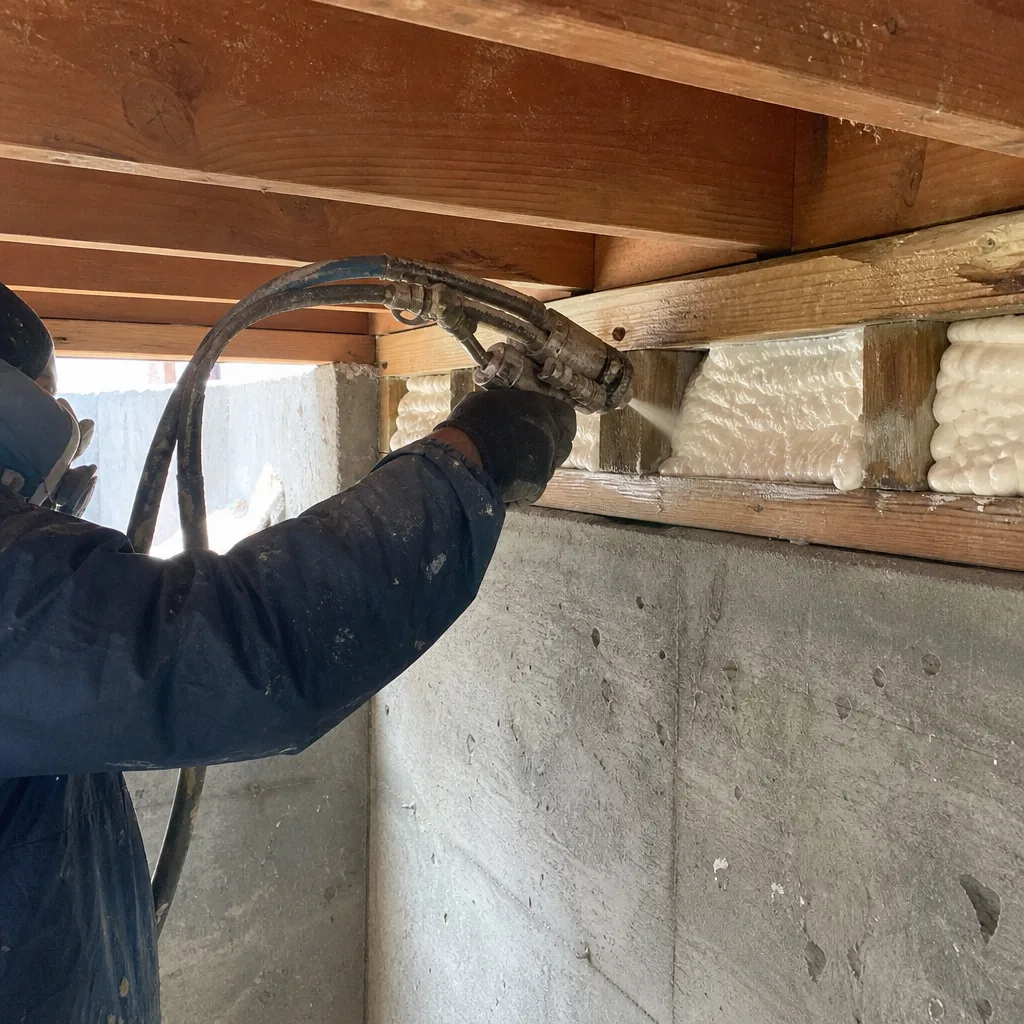
Rim Joist Spray Foam in Valinda homes is one of the highest-payback insulation upgrades we do. The rim joist, that band of wood where your floor framing meets the foundation, is a notorious air leak. In Valinda’s 1950s tract stock, gaps around rim joists are often so large you can see daylight from inside the crawlspace. We seal them with closed-cell foam in a continuous bead, which stops hot San Gabriel Valley air from infiltrating the conditioned space. A typical rim joist job in Valinda costs $1,100 – $2,400, including prep and cleanup.
Why Closed-Cell Beats Caulk Here
Caulk and spray cans can’t fill the irregular gaps common in older framing. Closed-cell foam expands to form a rigid, durable air seal that also adds structural stiffness. This matters on older homes where rim boards have dried and pulled slightly apart over six decades of summer heat.
Continuous Sealing, Especially Around Workshop Doors
We recently sprayed open-cell Icynene along the rim joists and wall cavities of a 1958 single-story stucco home near Valinda Avenue and Temple Avenue, where the original batts had collapsed and the attic was hitting 140°F on 95°F days. The homeowner wanted a one-trip solution for a detached workshop with heavy doors, so we used a high-lift spray rig and verified coverage with a thermal camera before leaving, cutting their cooling load noticeably. If we don’t seal continuously around the perimeter, those heavy workshop door gaps will keep leaking air no matter how much foam we spray elsewhere.
Trusted Brands We Service in Valinda
We install Icynene and Demilec spray foam systems, two of the most respected names in residential insulation. We also carry CertainTeed and GreenFiber for jobs where fiberglass batts or blown-in cellulose outperform foam. Valinda homeowners get a straight answer about product choice: closed-cell Demilec where moisture control matters, open-cell Icynene where cost per R-value wins, GreenFiber where a homeowner wants recycled content. We don’t push one brand. We push the right one.
Common Spray Foam Insulation Problems We See in Valinda Homes
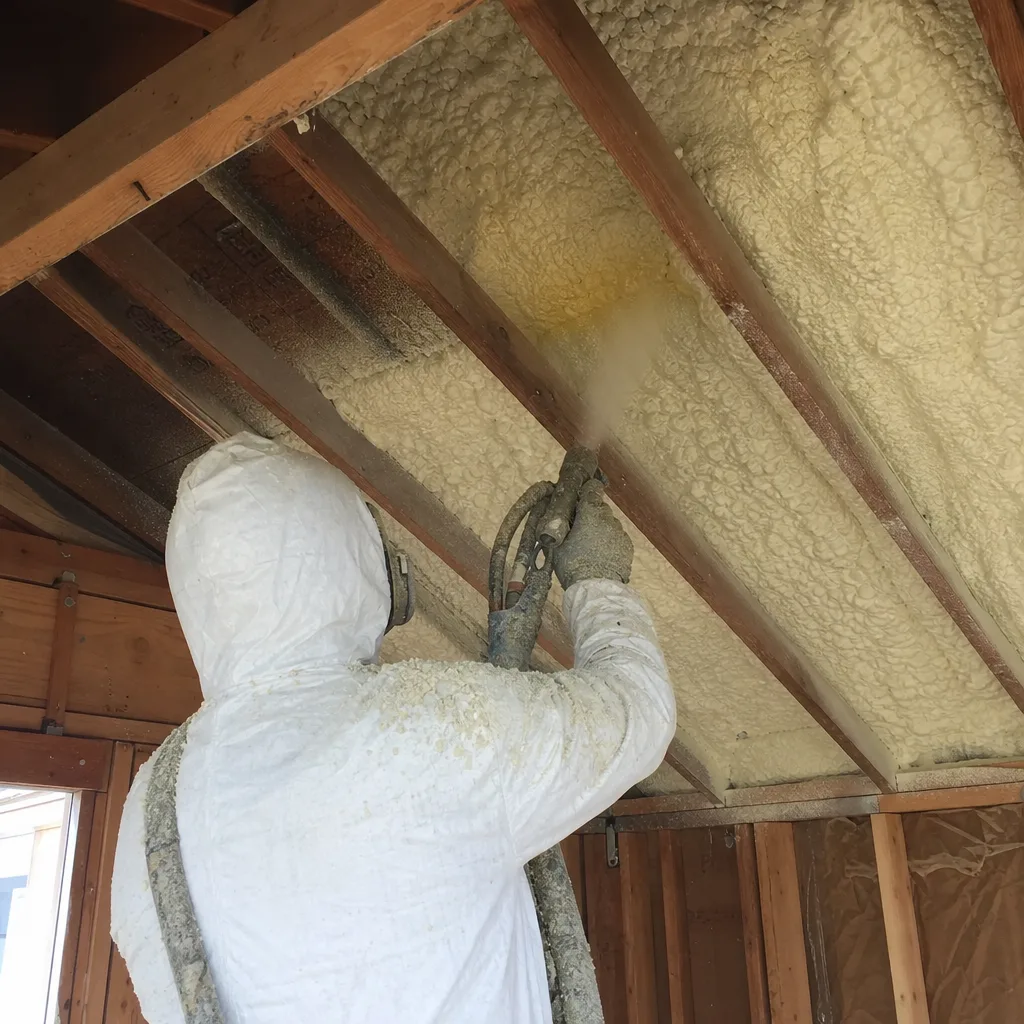
- Exothermic scorching on low-pitched attics. When foam is sprayed too thick in one pass on a low-pitched 1950s attic ceiling, it generates heat as it cures. We’ve seen char marks on old framing from previous contractor mistakes. We spray in lifts and let each pass cure before adding more.
- Gap-riddled rim joist seals around workshop doors. Valinda has a lot of detached workshops and oversized garage doors. If rim joist foam isn’t applied continuously around those openings, hot valley air pours in through the gaps and the foam job barely moves the needle.
- Moisture traps from wrong foam on stucco walls. Closed-cell foam on older stucco walls without considering vapor movement can trap moisture inside the cavity. We’ve opened up Valinda walls with hidden mold behind stucco from exactly this mistake. Open-cell is usually the right call on 1950s wood-frame exteriors.
- Degraded original batts compounding heat gain. Valinda’s single-pane or aluminum-frame windows already struggle with summer heat. When the attic batts above them have collapsed to R-9 or worse, the whole house bakes. Foam retrofits in these homes need to account for the window factor, not just the attic.
Pricing for Spray Foam Insulation in Valinda, CA
Valinda’s market runs a touch under some neighboring San Gabriel Valley cities because of the high concentration of smaller postwar homes, but the permitting path through LA County can add $300 – $700 in documentation and inspection fees compared to an incorporated city. Here’s what you’re looking at:
- Attic spray foam retrofit (1,200 – 1,800 sq ft): $2,800 – $6,400
- Wall cavity spray foam injection: $1,900 – $3,800
- Rim joist sealing: $1,100 – $2,400
- Garage ceiling spray foam: $900 – $2,100
- Roof deck spray foam: $3,200 – $6,800
Get a free estimate at (877) 265-5712. We’ll give you a number before we leave the driveway, not a vague “it depends.”
We Also Serve Cities Near Valinda
Our crews cover Valinda and the surrounding communities, including La Puente, West Covina, South San Jose Hills, and Hacienda Heights. If you’re on the edge of 91744 and not sure whether we cover your street, just call. We’ll tell you straight.
Serving Valinda, CA — Our Local Coverage Area
We’re based in the Valinda area and know this community well. Use the map below to see our service coverage — if you’re nearby, we can almost certainly help.
FAQs About Spray Foam Insulation in Valinda
Yes, most structural spray foam work in Valinda requires an LA County Building Code permit because Valinda is an unincorporated county island, not part of West Covina or La Puente. West Covina processes permits through its own city building department, which can be faster and less document-heavy. In Valinda, expect LA County to review Title 24 compliance, duct sealing, and attic R-value documentation before sign-off. We handle the paperwork end of this for our customers. Call (877) 265-5712 and we’ll walk you through what your specific job triggers.
Yes, but the application method matters. Low-pitched attics with tight clearances require spraying in thinner lifts so the foam cures without exothermic heat buildup, which can scorch old wood framing. We spray open-cell foam in these attics because it expands less aggressively and is easier to control in tight spaces. If your attic is really tight, we’ll tell you before quoting.
It will cut attic temperature spikes substantially, often by 30 – 50°F on the hottest days, and reduce cooling load by air-sealing the ceiling plane. But foam alone won’t fix single-pane aluminum windows or unshaded west walls. On Valinda’s hottest days, the foam keeps the heat that builds in the attic from pressing down into your living space. That’s where the real bill savings come from.
Seal the rim joist and the door perimeter continuously with closed-cell foam first, then address wall cavities. Heavy doors leak air along their tracks and frames no matter what, so the foam needs to form an unbroken air barrier around those openings. We use a high-lift rig to reach tall workshop doors without scaffolding. One trip usually covers the whole detached structure.
Foam performs well behind stucco as long as you use the right product. Open-cell foam allows moisture to pass through, which is what you want in a 1950s wood-frame wall that gets occasional damp from stucco cracks or sprinkler overspray. The windows matter separately: if you still have aluminum frames, they’ll conduct heat regardless of wall insulation. We’ll tell you whether foam in the walls is worth it or whether your money’s better spent on windows first.
Written by Allen Decker, Owner at North Tustin Insulation, serving Valinda since our first attic retrofit in the 91744 area.
Ready to get your Valinda home sorted before the next heat wave? Call North Tustin Insulation at (877) 265-5712 for a free estimate. We’ll come out, look at what you’ve actually got, and give you a straight answer on whether spray foam is worth it in your house.